Some 600 million years ago, during the Ediacaran Period, Earth’s magnetic field produced rock records that defied explanation, with poles appearing to dash across the globe at unrealistically high speeds. Scientists had long debated whether supercharged tectonic plates or other exotic forces drove this apparent mayhem. A recent Yale-led study, published in Science Advances, applied innovative statistical tools to paleomagnetic data and uncovered an underlying order: the field exhibited structured global shifts rather than pure randomness. This breakthrough promises to refine maps of prehistoric continents and oceans.
The Ediacaran Enigma Baffled Experts for Decades
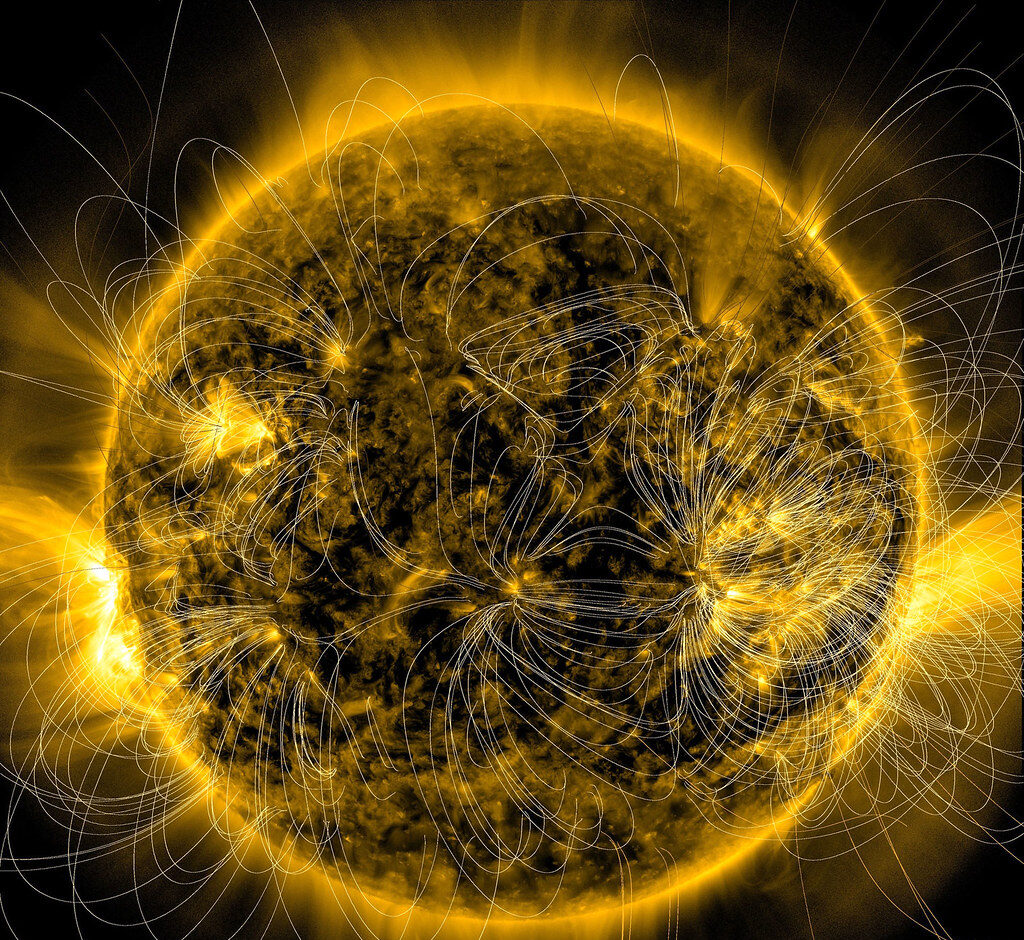
The Ediacaran Enigma Baffled Experts for Decades (Image Credits: Flickr)
Rocks from the Ediacaran era, spanning roughly 630 to 540 million years ago, preserved magnetic signals that fluctuated wildly, unlike the steadier patterns in surrounding geological epochs. In typical periods, tectonic plates drifted slowly, climates held relatively steady, and the magnetic field nudged gently between poles, occasionally flipping polarity. Yet Ediacaran data suggested continents racing far faster than observed rates, complicating efforts to reconstruct ancient geography.
Researchers grappled with conflicting theories. Some proposed unusually rapid plate motions, while others invoked true polar wander, where Earth’s outer layers realign with its spin axis over millions of years. These ideas persisted because traditional analyses treated the field as uniformly behaved across time, masking subtler dynamics.
High-Precision Sampling in Morocco’s Anti-Atlas
An international team, led by Yale Ph.D. student James S. Pierce and professor David A. D. Evans, zeroed in on volcanic layers in Morocco’s Anti-Atlas mountains. Collaborators from Cadi Ayyad University pinpointed well-preserved Ediacaran rocks, ideal for capturing fine-scale magnetic imprints. Field crews extracted oriented samples layer by layer, ensuring stratigraphic precision.
Back at Yale’s Paleomagnetic Laboratory, sensitive instruments detected faint signals in these specimens. Teams from Dartmouth College, Switzerland, and Germany supplied exact radiometric dates, anchoring changes to timescales of mere thousands of years. Pierce noted, “Previous studies often employed traditional analytical tools that assumed the Earth’s magnetic field behaved similarly in the past as it does now. We took a fresh approach.”
A New Statistical Lens Uncovers Global Pole Shifts
The core innovation lay in a novel statistical method tailored to Ediacaran data. Rather than discarding variability as noise, the approach modeled pole paths as tumbling across the planet, not merely wobbling near the spin axis. Results showed shifts unfolding over thousands of years – far too swift for plate tectonics or true polar wander, which demand millions.
Evans explained, “We are proposing a new model for the Earth’s magnetic field that finds structure in its variability rather than simply dismissing it as randomly chaotic.” When averaged against slower-forming sedimentary rocks, pole positions stabilized, affirming an erratic yet organized field. This ruled out hyper-speed continents and pointed to dynamo instabilities deep in Earth’s core.
- Rapid changes: Thousands of years, not millions.
- Global tumbling: Poles traversed the planet systematically.
- Structured variability: Chaos masked coherent patterns.
- Core link: Possible tie to inner core growth phases.
Reshaping Reconstructions of Prehistoric Earth
The findings bridge a critical gap in paleogeography. Ediacaran rocks had long thwarted global plate models, isolating reconstructions before and after this interval. Robust statistical tools now enable precise continent-ocean maps, linking billion-year tectonic narratives from primordial crust to modern configurations.
Evans, whose career focused on continental motions, reflected, “The Ediacaran Period has posed a major barrier… because global paleomagnetic data just didn’t make much sense. If our proposed methods prove robust, we can bridge the gap.” Funded partly by the National Science Foundation, the work sets a precedent for analyzing other anomalous epochs.
Key Takeaways
- Ediacaran magnetic “wildness” stemmed from rapid, structured pole tumbling, not tectonic frenzy.
- High-resolution Moroccan samples and new stats transformed chaotic data into mappable insights.
- Unlocks accurate ancient geography, unifying Earth’s deep-time plate history.
This discovery illuminates how Earth’s protective shield once danced unpredictably, yet coherently, shaping the stage for life’s prelude to the Cambrian explosion. As geologists refine these models, they edge closer to a seamless chronicle of our planet’s restless surface. What secrets might the next rock layer reveal? Share your thoughts in the comments.