Northern Mozambique – Wild honeyguide birds collaborate with local hunters through specialized vocal signals that vary by region, demonstrating a remarkable adaptation to human cultural differences.
A Timeless Partnership Takes Flight
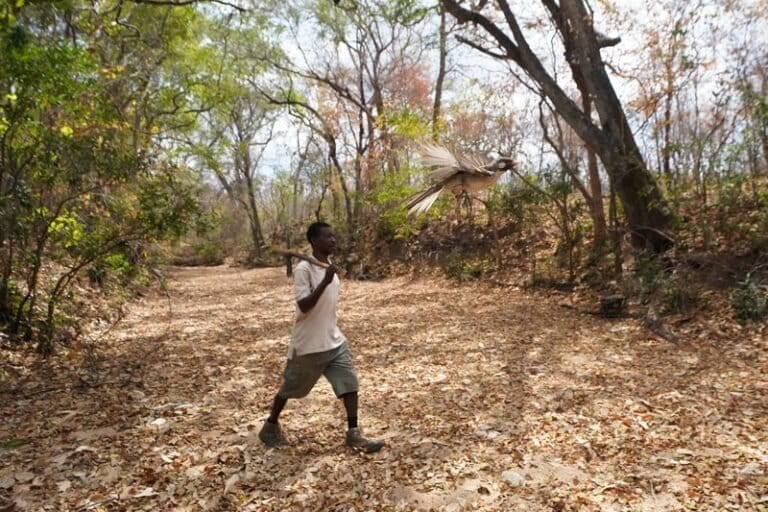
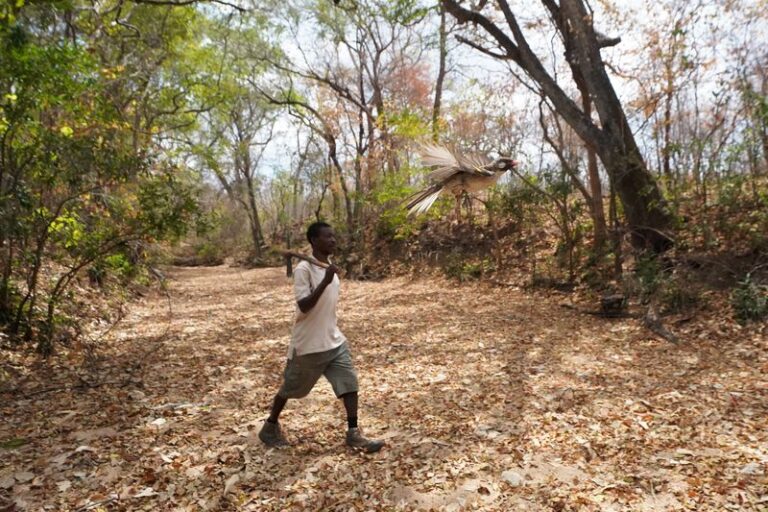
A Timeless Partnership Takes Flight (Image Credits: Imgs.mongabay.com)
Greater honeyguides lead humans to bees’ nests in exchange for access to wax and larvae, a symbiosis that boosts honey yields far beyond what hunters achieve alone. Researchers documented this interaction across 13 villages in the Niassa Special Reserve, where Yao communities depend on wild honey for their livelihoods.
Teams from the University of Cape Town’s FitzPatrick Institute of African Ornithology recorded calls from 131 honey-hunters to uncover patterns in this interspecies dialogue. The birds respond to these signals without any training or domestication, highlighting one of nature’s rare two-way communications.
Honey-hunters issue recruitment calls over long distances to attract the birds, followed by quieter coordination calls during the guide to the nest. This system has sustained communities for generations, with recent studies revealing unexpected layers of complexity.
Calls Evolve Like Human Dialects
Analysis showed that the vocal signals form regionally distinct dialects, with differences growing sharper as the distance between villages increases. Trills, grunts, whoops, and whistles varied systematically, not due to habitat acoustics but through cultural processes within communities.
Honey-hunters who relocated to new villages quickly adopted the local calls, underscoring how traditions transmit and adapt. Lead researcher Jessica van der Wal noted, “These regional honey-hunting calls pattern across space in a way that looks remarkably similar to human dialects.”
Such variation mirrors linguistic evolution, where neighboring groups develop subtle distinctions over time. Environmental factors failed to explain the patterns, pointing instead to social learning among humans.
Birds Adapt to the Local Lingo
Honeyguides appear to learn these dialects too, maintaining successful cooperation despite call variations. Prior experiments indicated birds respond more readily to familiar signals than those from distant regions, suggesting ongoing mutual adjustment.
Senior author Claire Spottiswoode observed, “Humans learn and maintain the local signals needed to cooperate with honeyguides, and honeyguides are in turn probably learning and so helping to reinforce these local human dialects.”
The study, published in People and Nature, builds on earlier work showing birds discriminate between calls from Tanzania and Mozambique. This flexibility ensures the partnership thrives across the landscape.
Cultural Signals Shape Wildlife Bonds
The findings reveal how human cultural diversity influences interactions with wild animals, offering insights into communication evolution. In the Niassa Special Reserve, this alliance remains vital as forests face pressures from development and climate change.
Researchers collaborated closely with local communities, blending scientific methods with indigenous knowledge. The work emphasizes preserving these traditions to sustain both people and birds.
Key Takeaways
- Honey-hunters use trills, grunts, whoops, and whistles that form dialects varying by village distance.
- Honeyguides learn local calls, enabling consistent cooperation without training.
- Cultural, not environmental, factors drive signal diversity, akin to human languages.
This extraordinary exchange between species challenges assumptions about animal cognition and human impact on wildlife. As studies like this illuminate hidden dialogues in nature, they remind us of the delicate balances supporting traditional livelihoods. What do you think about this bird-human partnership? Tell us in the comments.