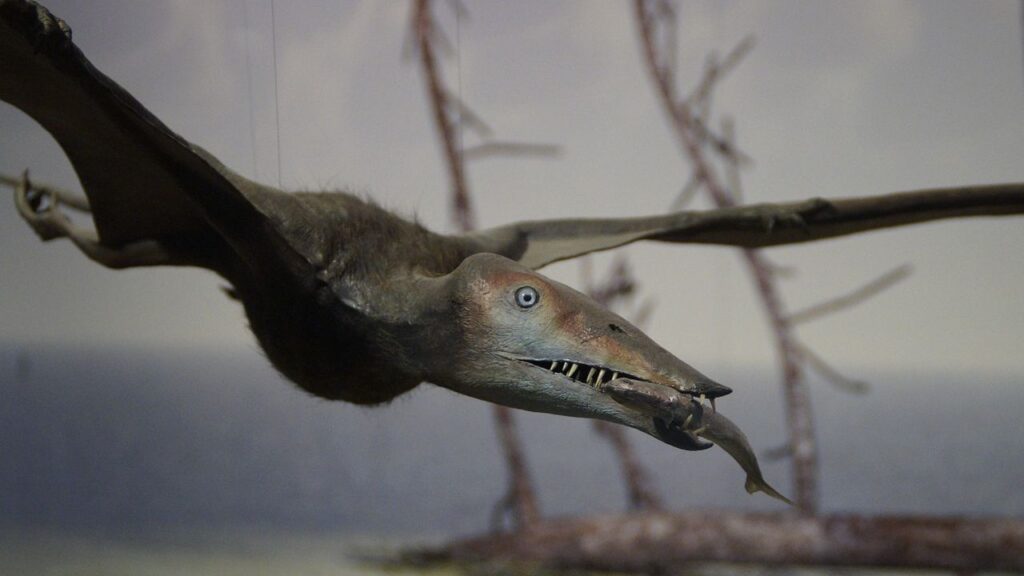
When you think about creatures soaring through ancient skies, you might picture something similar to modern birds. Yet pterosaurs took to the air in ways that challenge everything we thought we knew about flight. These remarkable reptiles dominated the skies for over 160 million years, long before birds evolved their first feather. They ranged from sparrow-sized insect hunters to giraffe-sized giants with wingspans exceeding thirty feet, heavier than any modern flying creature.
How did they manage it? The answer lies in a fascinating combination of biological innovations that evolved independently from anything we see today. Their wing membranes weren’t simple leather flaps but complex sensory organs. Their bones defied conventional engineering wisdom. Let’s dive into the aerodynamic secrets that allowed these ancient reptiles to become masters of prehistoric skies.
Membrane Wings Built Like High-Tech Sensors
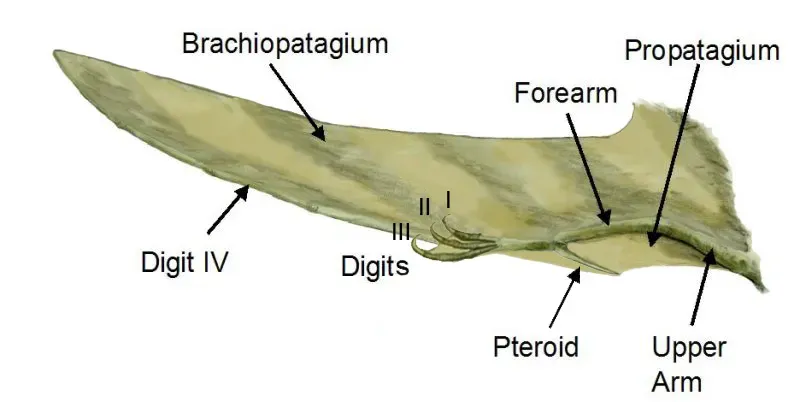
You might assume pterosaur wings were just simple skin stretched between bones, yet recent fossil discoveries reveal they were far more sophisticated structures with long fibers extended from front to back forming stabilizing supports, with separate muscle fibers helping pterosaurs adjust tension and shape while veins and arteries kept the wings nourished with blood. Think of them less like sails and more like smart fabric that could constantly respond to air currents. The outer layer was thin and skin-like, but beneath that ran networks of blood vessels, bundles of muscle, and stiffening fibers known as actinofibrils, which worked together to create a surface that could shift in shape in response to flight needs with muscles allowing for active control by tightening or loosening the wing tension on demand.
The fibrils themselves were slightly elastic and could slide across each other where they were packed tightly, which in tandem with the elastic nature of the muscles fibres made the wing as a whole highly elastic, meaning it could be quite compact when at rest and contracted but unfurl to a large size and remain quite rigid when necessary. The denser packing of these fibers near the wingtips provided stiffness where it mattered most while allowing flexibility closer to the body for folding. It’s hard to say for sure, but this design appears brilliantly optimized for both power and control.
Low-Speed Specialists Adapted for Soaring
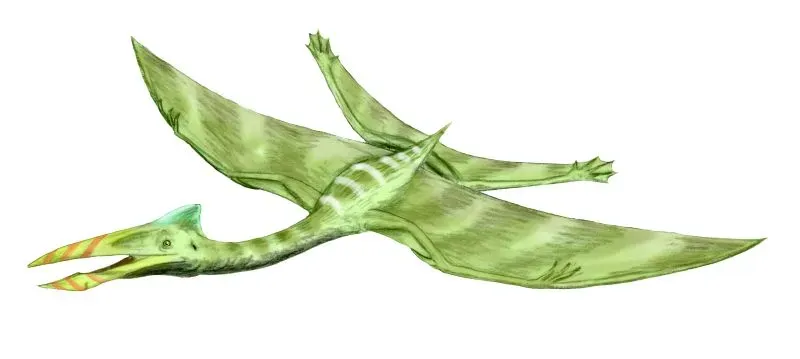
Wind tunnel tests revealed that pterosaur wing sections had substantially higher profile drag and maximum lift coefficients than those assumed before, suggesting that large pterosaurs were aerodynamically less efficient and could fly more slowly than previously estimated while being adapted to low-speed flight, unsuited to marine style dynamic soaring but adapted for thermal slope soaring and controlled low-speed landing. Here’s the thing: being “less efficient” wasn’t actually a disadvantage for their lifestyle. The maximum lift capability of a pterosaur wing was substantially higher than in birds, enabling slow flight and mitigating the allometric constraint on size that manifests in the fast landing speeds of large extant birds.
Let’s be real, this is what allowed them to land safely despite their enormous size. The trade-off for pterosaurs would have been extreme vulnerability to strong winds and turbulence, not unlike modern-day paragliders. Picture them catching thermal updrafts over ancient seas, spiraling upward effortlessly rather than battling through stormy conditions like seabirds do today.
Bones Lighter Than Air But Stronger Than Steel
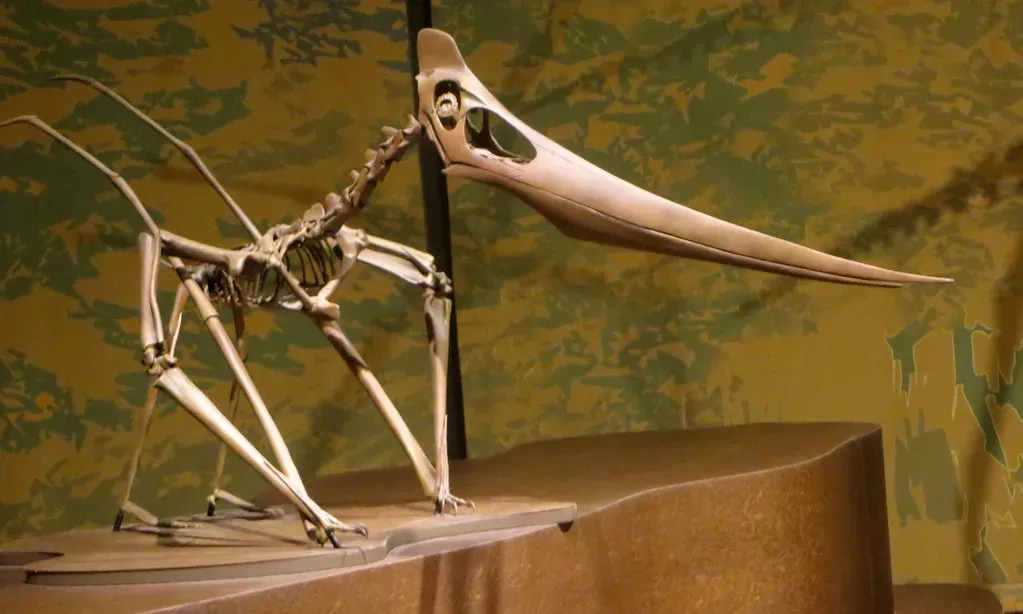
Pterosaur bones were hollow and air-filled like those of birds, with bone walls that were often paper-thin. Yet calling them fragile would be misleading. To achieve the strength necessary to hold up its head and carry prey while keeping the bone lightweight enough for flight, the vertebra has spokes like a bicycle wheel that connect a center column to the outer surface of the bone, with the spokes following a helical pattern like a spiral staircase leading through the inside of the bone.
A mathematical model of the vertebrae showed how effective the spokes are at strengthening the bone without adding much weight, as just fifty spokes would allow the pterosaur to lift ninety percent more weight than if it had no spokes at all, meaning it could carry away prey that weighed up to twenty-four pounds. Pterosaur bones contained a complex network of tiny canals making them both lightweight and incredibly strong, with the unique network of canals and pores once used for nutrient transfer also helping protect against microfractures by deflecting cracks, serving both biological and mechanical functions. Honestly, engineers today are only beginning to grasp how brilliant this design really was.
Quadrupedal Launch: The Leapfrog Technique
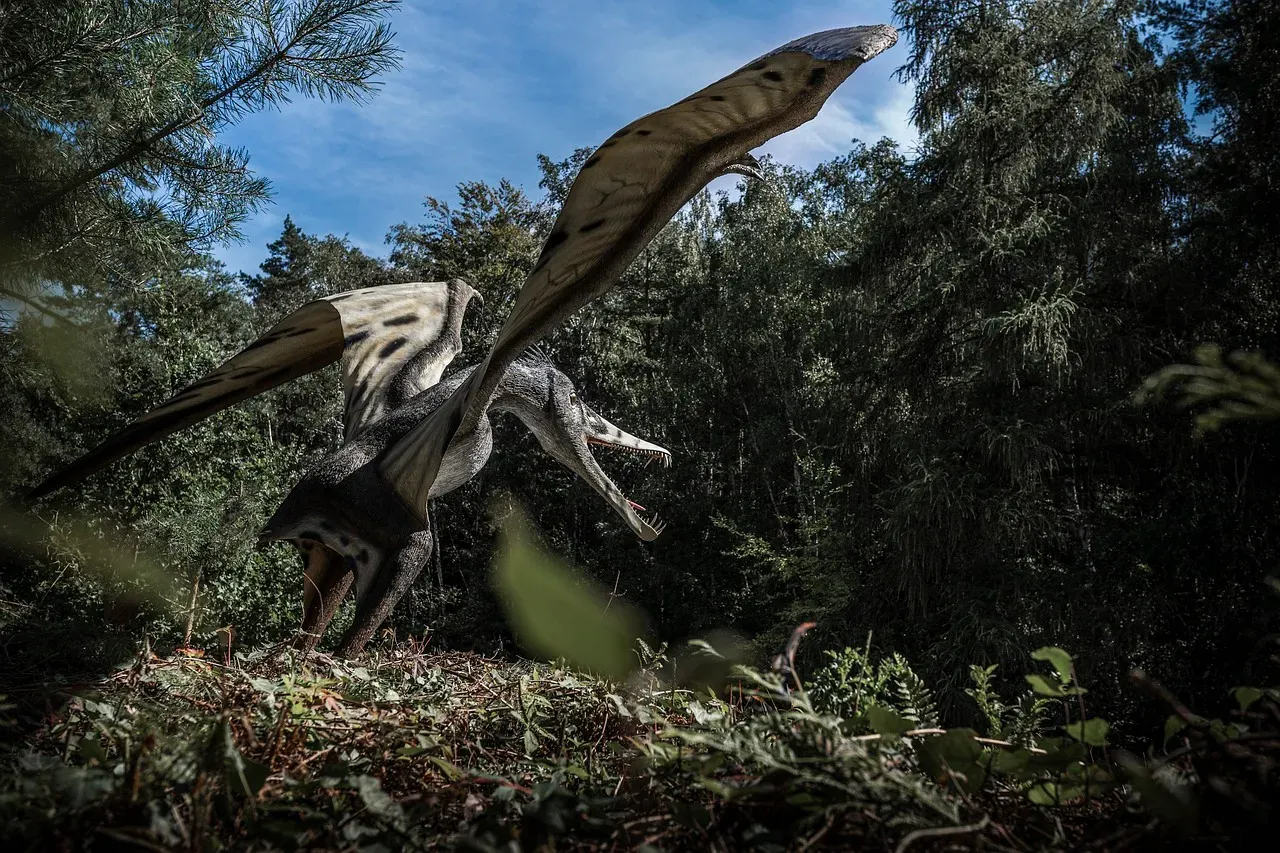
After analyzing the biomechanics of the creatures, researchers propose that pterosaurs took flight by using all four limbs to make a standing jump into the sky, not by running on their two hind limbs or jumping off a height as more widely assumed. This was their secret weapon for getting airborne. The results showed pterosaurs had much stronger front limbs than legs, with the reverse being true of birds. Basically, the bone in the thigh snaps if you put the amount of force on it that’s required to get them off the ground just using the hind limbs for the giants.
Takeoff starts with a powerful jump, and four-limbed pterosaurs had double the power, with the legs pushing first followed by the arms for a perfect one-two push-off. Some have compared the move to pole-vaulting. Using all four legs, it takes less than a second to get off of flat ground, no wind, no cliffs. Picture a massive creature the size of a giraffe vaulting itself skyward in under a second. What would you have guessed if you’d only seen the fossil without this analysis?
Muscular Wing Roots for Aerodynamic Smoothing
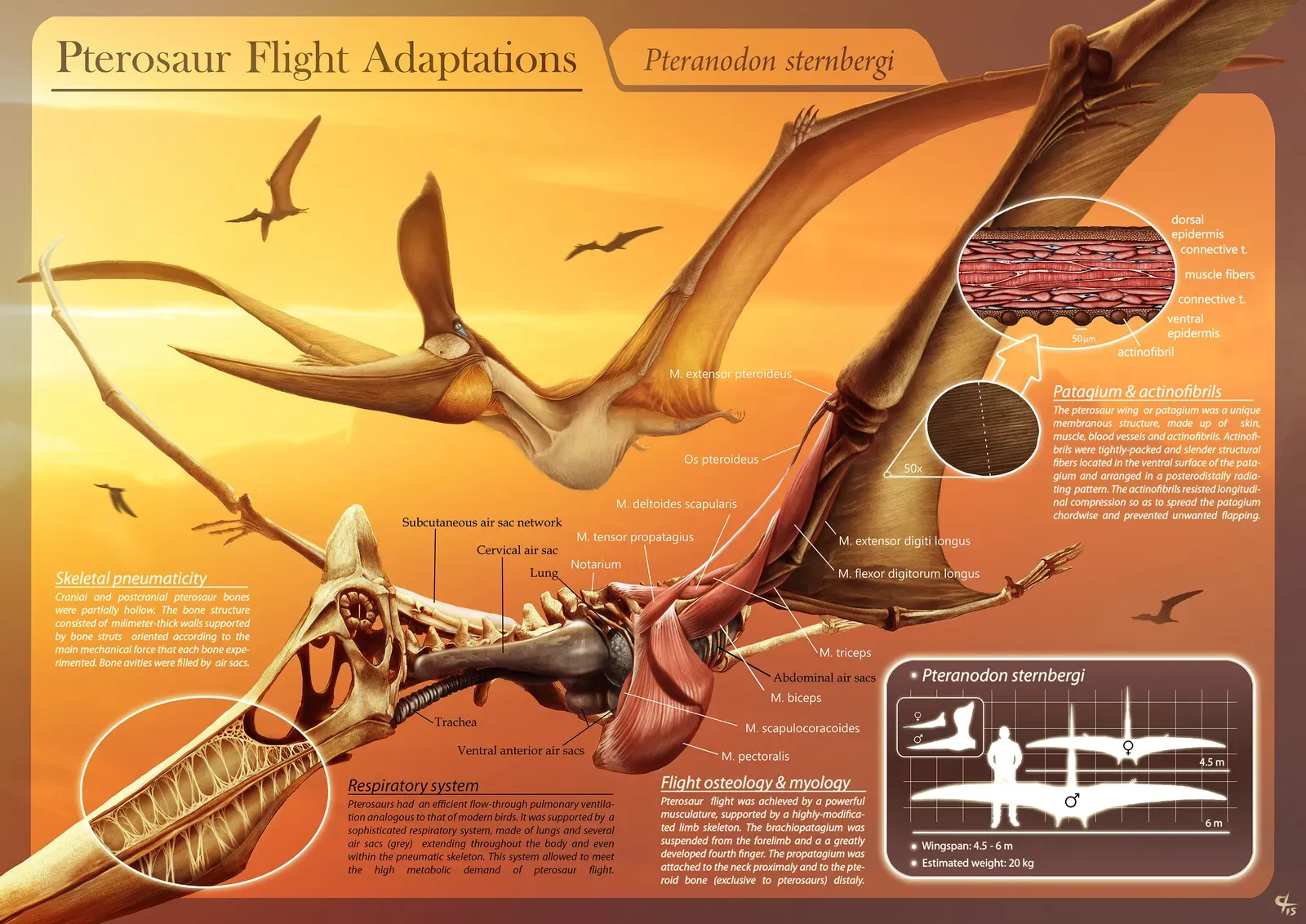
Using laser-stimulated fluorescence, researchers observed direct soft tissue evidence of a wing root fairing in a pterosaur, a feature that smooths out the wing-body junction reducing associated drag as in modern aircraft and flying animals, and unlike bats and birds the pterosaur wing root fairing was unique in being primarily made of muscle rather than fur or feathers. This muscular fairing served multiple purposes that would make aerospace engineers jealous. As a muscular feature pterosaurs appear to have used their fairing to access further flight performance benefits through sophisticated control of their wing root and contributions to wing elevation and anterior wing motion during the flight stroke.
So rather than just being a passive streamlined shape like aircraft fairings, these structures could actively contribute to flight control. It’s essentially a movable, muscular drag-reduction system that simultaneously generates force. No modern flying animal or aircraft has quite replicated this multifunctional approach, though biomimicry researchers are certainly trying.
Brain Architecture Optimized for Flight Control
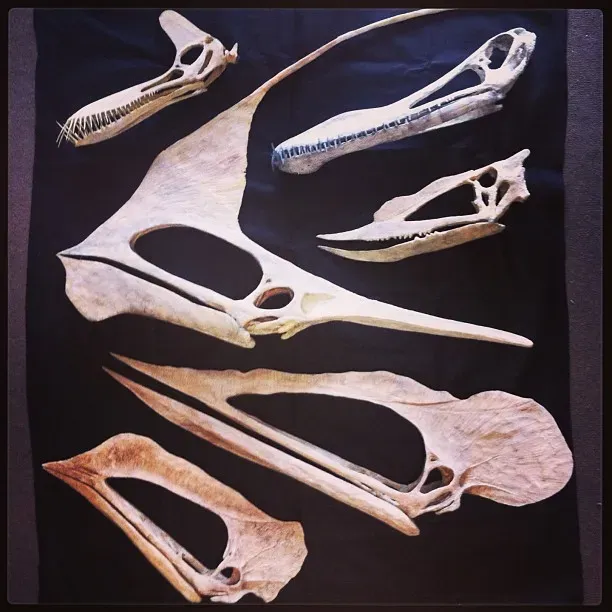
The flocculus is a brain region that integrates signals from joints muscles skin and balance organs, and the pterosaurs’ flocculi occupied seven point five percent of the animals’ total brain mass, more than in any other vertebrate. That’s roughly about four times larger proportionally than in birds. Called the flocculus, this lobe of the cerebellum has important connections with the vestibular apparatus, the eye muscles and neck muscles which work together to stabilize and sharpen an image of prey upon the retina, and the flocculus may also connect to the membrane covering the wing gathering massive amounts of sensory information on body orientation amidst aerodynamic forces.
Scientists found that pterosaurs evolved flight early on in their existence and that they did so with a smaller brain similar to true non-flying dinosaurs, with their brains staying small yet they still evolved flight. The large floccular lobe allowed them to stabilize their vision and balance as they soared through the skies, with this rapid development of the cerebellum in early pterosaurs suggesting that flight did not evolve gradually as it did in birds. Instead, flight appears to have emerged suddenly in a dramatic evolutionary burst.
Wing Flexibility and Shape-Shifting Capability
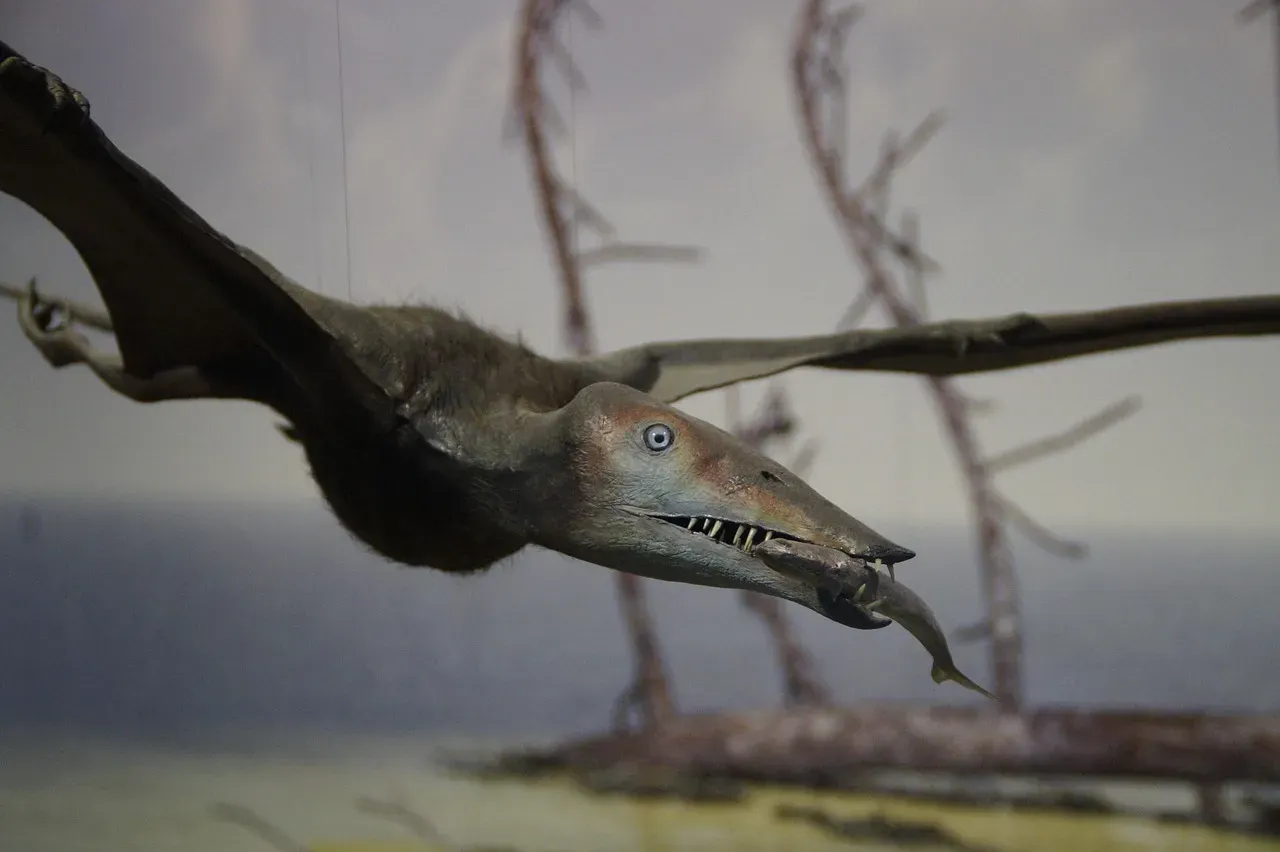
With a flexible membrane, the flight envelope was extended to lower speeds owing to the enhanced high lift capability and progressive stall of these sections, and since the animals presumably had some control over the wing camber the envelope curve around the results with the flexible membrane best shows the full range of performance, with the low-speed flight capability being extended and combined with a softer stall which would have enhanced control during landing manoeuvres when low speed high drag and high lift are required. This ability to morph their wings in real-time gave them extraordinary control.
Simple mechanics as well as anatomical parsimony imply that spanwise tension with no requirement for a tendon is more likely to have been the case in pterosaur wings. The membrane pulled along the length of the wing rather than requiring additional supporting structures along the trailing edge. Pterosaur wings were not just broad sails but complex structures designed specifically to resist fluttering, a common issue faced by both natural and manmade flyers alike during turbulent conditions. Engineers designing flexible-wing drones are studying these ancient solutions to problems that still plague modern aircraft design.
The Pneumatic Skeleton: Breathing Into Bones
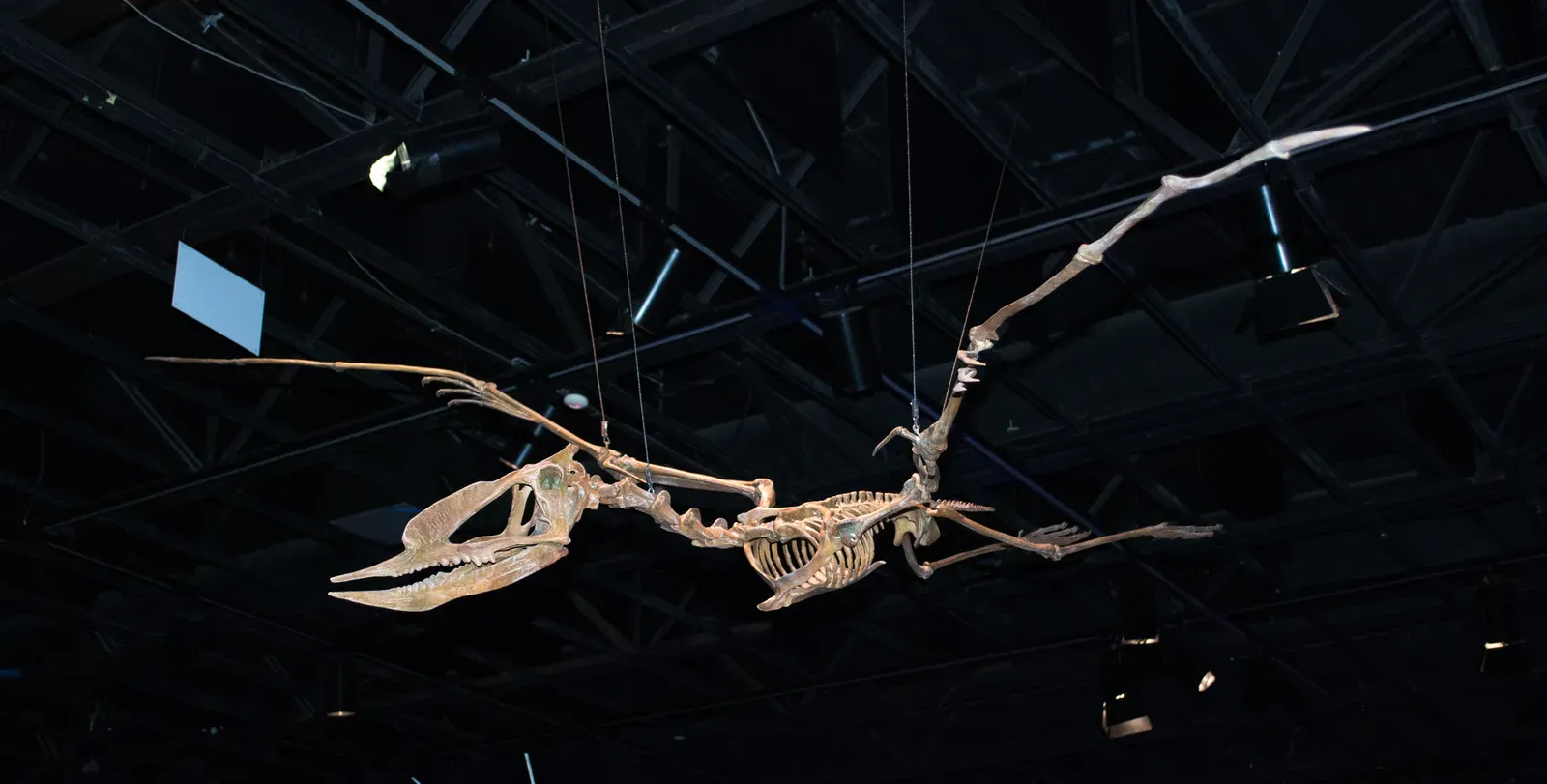
Pterosaurs had a highly specialised respiratory system similar to that of birds with air sacs in addition to their lungs which is a much more effective breathing system important for providing the large amounts of energy needed for flight, with pterosaurs having air sacs in their necks and trunk while larger creatures also had them in their wings. In many cases the air sacs invade the bones and hollow them out making their wing bones extremely thin-walled, which is referred to as skeletal pneumaticity and is another important element contributing to large pterosaurs’ ability to fly.
Pterosaur pneumaticity is believed to be a key feature that allowed pterosaurs to reach their large sizes, with evidence of it in the axial skeleton of the Triassic pterosaurs identified by the presence of pneumatic foramina, small holes that go into the bone cavity where the respiratory system would enter the bone through structures called diverticulae. This wasn’t just about weight reduction. The air-filled bones also helped regulate body temperature during flight and probably increased oxygen efficiency during the demanding work of powered flight. It’s hard to say for sure, but this respiratory innovation may have been as important to their success as their wing design itself.
Convergent Solutions to an Ancient Challenge
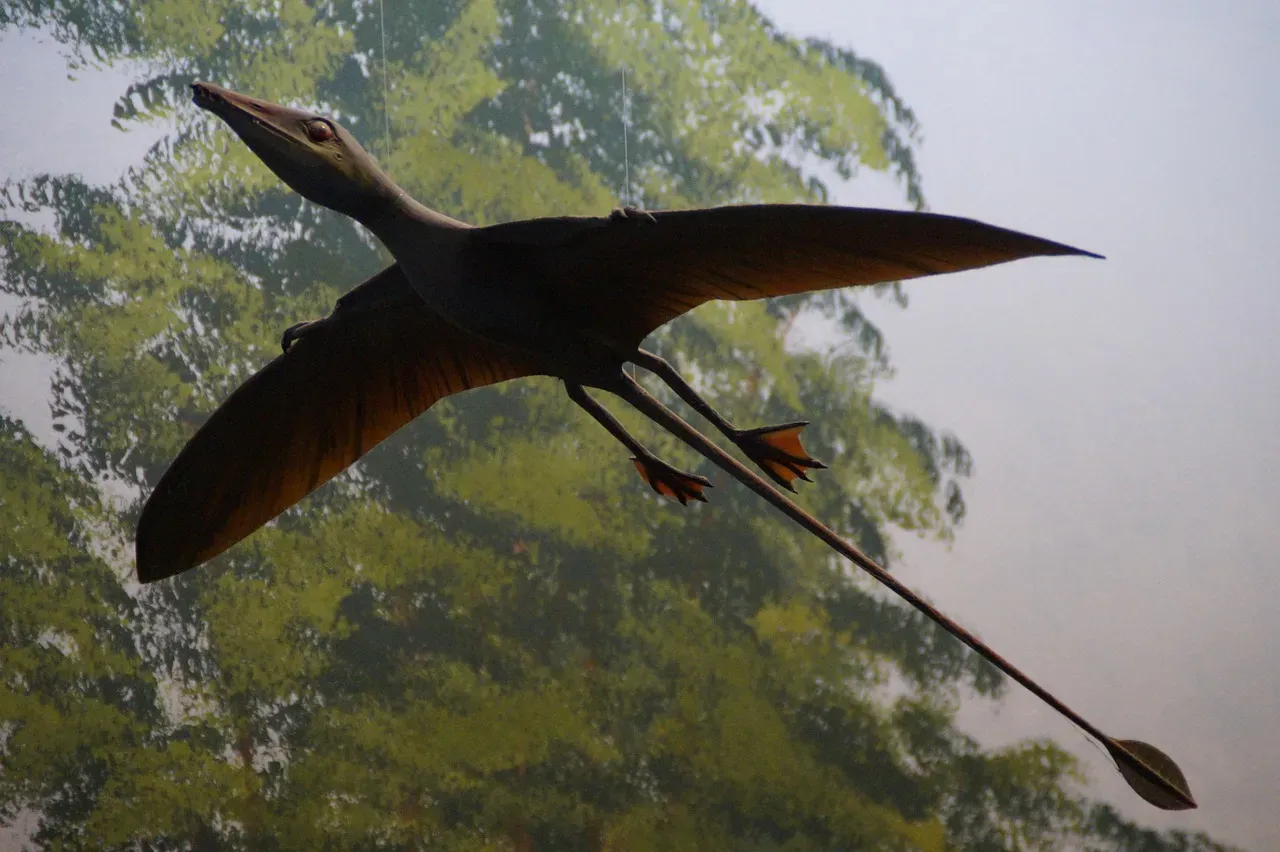
Pterosaurs, birds, and bats each independently evolved flight, yet each group solved the problem in radically different ways. Both groups flew but they just did it with different plans, as pterosaurs launched with compact brains tuned for balance and sight while birds took off with dinosaur brains and remodeled them over time, with each solving the riddle of flight in its own way. The pterosaur approach emphasized sensory integration and rapid reflexes over raw processing power. Their membrane wings provided constant feedback that their enlarged floccular lobes processed instantly.
The overall brain shape of pterosaurs most closely resembled that of small bird-like dinosaurs such as troodontids and dromaeosaurids, animals that had little or no powered flight ability, yet pterosaurs and birds still represent two independent experiments in the evolution of flight with birds inheriting a brain already adapted from their non-flying dinosaur ancestors while pterosaurs evolved their flight-ready brains at the same time they developed their wings. What’s truly fascinating is that neither solution was objectively “better.” Pterosaurs ruled the skies for over 160 million years before disappearing in the same extinction event that claimed the non-avian dinosaurs. Their aerodynamic secrets worked brilliantly for an inconceivably long span of time.
These ancient flyers achieved something that still challenges our best engineering minds today. They combined lightweight construction with structural strength, flexible control surfaces with stable flight, and complex sensory integration with relatively modest brain size. Honestly, the more we learn about pterosaur flight mechanics, the more impressed we should be. Modern aerospace engineers are now studying their fossil bones at microscopic levels, hoping to unlock secrets that might revolutionize aircraft design. The prehistoric skies held masters of flight whose innovations we’re only beginning to fully appreciate. What do you think about these ancient aeronauts? Did you expect that such massive creatures could have been so elegantly engineered for flight?