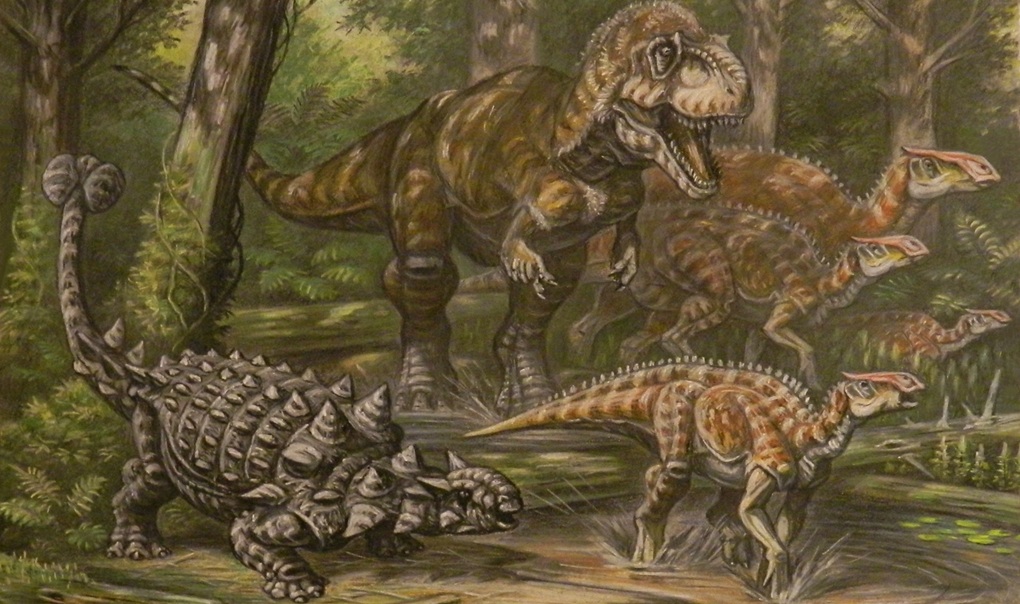
The unearthing of massive, otherworldly bones from deep within the Earth’s crust has profoundly altered humanity’s perception of time. Before dinosaur discoveries, our understanding of Earth’s history was limited largely by religious texts and philosophical speculation. The revelation that enormous reptilian creatures once dominated our planet for over 165 million years fundamentally challenged existing frameworks of time and forced a dramatic recalibration of our place in the cosmic calendar. From the first puzzling finds that confounded 19th-century naturalists to the sophisticated paleontological techniques of today, dinosaur discoveries have stretched our temporal imagination and transformed our perception of Earth’s deep history in ways that continue to reverberate through science and culture.
The First Dinosaur Puzzles: Early Discoveries That Challenged Time
When large fossilized bones began emerging from quarries and cliffs in the early 19th century, they presented a profound intellectual challenge to the existing worldview. Before these discoveries, many Western scholars adhered to a biblical chronology that suggested Earth was merely thousands of years old. The identification of the first dinosaurs by scientists like Mary Anning, Gideon Mantell, and William Buckland forced a radical rethinking of this timeline. These early paleontologists couldn’t immediately comprehend what they were seeing – enormous reptile-like creatures that seemed to belong to no known world. The sheer size and alien nature of these fossils suggested a past so distant and different from our own that it demanded explanation, ultimately helping to crack open the door to deep time conceptualization.
The Geological Time Scale Revolution

Dinosaur discoveries played a crucial role in the development and refinement of the geological time scale, fundamentally altering how scientists organized Earth’s history. As more fossils emerged from different rock layers, it became clear that distinct types of dinosaurs had existed at different times, allowing paleontologists to use them as “index fossils” to identify specific geological periods. The Triassic, Jurassic, and Cretaceous periods – now familiar terms even to schoolchildren – gained definition and meaning largely through dinosaur remains. These prehistoric creatures essentially became the historical markers of deep time, allowing scientists to divide Earth’s history into comprehensible chapters. Without dinosaur fossils, our ability to navigate the immense expanses of geological time would be significantly diminished, making them instrumental in creating the temporal framework we use today.
Darwin’s Theory and Dinosaur Evidence
The discovery of dinosaurs provided crucial evidence supporting Charles Darwin’s revolutionary theory of evolution through natural selection. Dinosaur fossils revealed creatures that no longer existed, contradicting the prevailing notion that species were unchanging and permanent features of creation. The fossilized progression of dinosaur species through different geological strata demonstrated evolutionary change occurring over vast timescales. When Darwin published “On the Origin of Species” in 1859, dinosaur discoveries had already prepared the scientific community to consider the radical implications of biological change over millions of years. The extinction of dinosaurs particularly highlighted Darwin’s concept of “survival of the fittest” on a grand scale, showing that even the most dominant life forms could disappear when conditions changed. Dinosaurs thus became powerful symbols of both evolutionary adaptation and the contingent nature of survival in Earth’s long biological history.
Public Imagination and the Dinosaur Effect

Unlike many scientific discoveries, dinosaurs captured the public imagination in ways that made deep time concepts accessible to ordinary people. The Crystal Palace dinosaur sculptures unveiled in London in 1854 represented the first public visualization of prehistoric life and drew enormous crowds who could suddenly envision Earth’s ancient past. This popularization of dinosaurs created a cultural bridge to scientific concepts of geological time that might otherwise have remained abstract and inaccessible. Museum displays of towering dinosaur skeletons gave tangible form to the otherwise incomprehensible expanse of millions of years. The visceral impact of standing beside a Tyrannosaurus rex skeleton accomplished what scientific papers alone could not – it made the reality of deep time emotionally and psychologically real to the general public. This “dinosaur effect” continues today through films, books, and exhibitions that use these extinct creatures as ambassadors from the deep past.
Mass Extinction and Time’s Punctuations
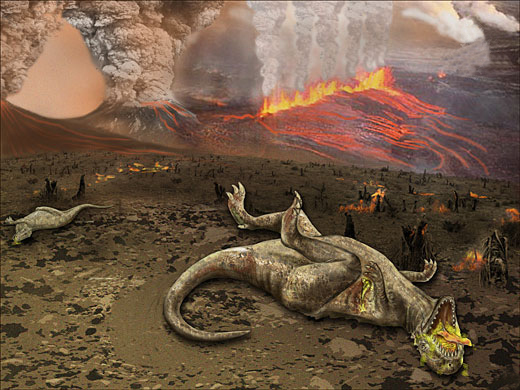
The mysterious disappearance of dinosaurs after their long reign led to one of paleontology’s most important insights: that Earth’s history is punctuated by catastrophic mass extinction events. The discovery of the K-Pg (formerly K-T) boundary, a thin geological layer marking the dinosaur extinction approximately 66 million years ago, revealed that time doesn’t always flow smoothly but can be interrupted by dramatic planetary upheavals. The eventual identification of a massive asteroid impact as the likely cause of dinosaur extinction introduced the concept that Earth’s biological timeline can be radically altered by extraterrestrial events. This realization transformed our understanding of temporal patterns in Earth’s history, suggesting that evolution proceeds through both gradual change and sudden, world-altering events. Dinosaurs thus helped reveal time’s dual nature – the slow progression of adaptive change punctuated by moments of catastrophic reset.
Radiometric Dating and the Age of Dinosaurs

The quest to determine exactly when dinosaurs lived spurred crucial advancements in geochronology, particularly through the development of radiometric dating techniques. Early estimates of dinosaur antiquity relied on relative dating methods and could only suggest they were “very old,” but the discovery of radioactive isotopes in the early 20th century revolutionized temporal precision. By measuring the decay of isotopes like potassium-40 to argon-40 in volcanic rocks associated with dinosaur fossils, scientists could assign actual numerical ages to these ancient creatures. This breakthrough transformed vague notions of “prehistoric times” into specific millions of years, revealing that dinosaurs dominated Earth from approximately 230 to 66 million years ago. The application of these dating techniques to dinosaur-bearing rocks helped establish absolute chronologies for Earth’s history, fundamentally changing our relationship with deep time by making it measurable and specific.
Uniformitarianism Versus Catastrophism

Dinosaur discoveries played a pivotal role in the historical debate between uniformitarianism (the idea that geological processes occur gradually and consistently) and catastrophism (the notion that Earth’s features form through sudden, violent events). The existence of dinosaurs initially seemed to support catastrophist views, as these strange creatures appeared to have been wiped out by some terrible cataclysm. However, the study of dinosaur evolution over millions of years also revealed gradual changes that aligned with uniformitarian principles. Modern understanding now incorporates elements of both perspectives, recognizing that Earth’s history includes both gradual processes and periodic catastrophes. Dinosaur research thus helped science move beyond this false dichotomy toward a more nuanced view of geological time. The asteroid impact theory of dinosaur extinction represents a perfect synthesis – a catastrophic event within the context of uniform natural laws – demonstrating how dinosaur studies helped refine our fundamental understanding of how time operates in Earth’s systems.
Birds as Living Dinosaurs: Collapsing Time

One of the most profound conceptual shifts prompted by dinosaur research was the realization that dinosaurs never completely went extinct – they survive today as birds. The discovery of feathered dinosaur fossils and the identification of anatomical similarities between theropod dinosaurs and modern birds collapsed the perceived temporal distance between “prehistoric times” and the present. This revelation fundamentally altered our relationship with deep time by demonstrating its continuity with the present. The hummingbird at a backyard feeder is, in evolutionary terms, a living dinosaur – a direct descendant of the terrible lizards that once dominated Earth. This reframing of birds as avian dinosaurs transforms our perception of time from a linear progression of separate eras to a continuous flow of evolving life forms. In recognizing birds as living dinosaurs, we acknowledge that the Mesozoic era has never truly ended but continues in the winged descendants of those ancient rulers.
Dinosaur Behavior and the Animation of Deep Time
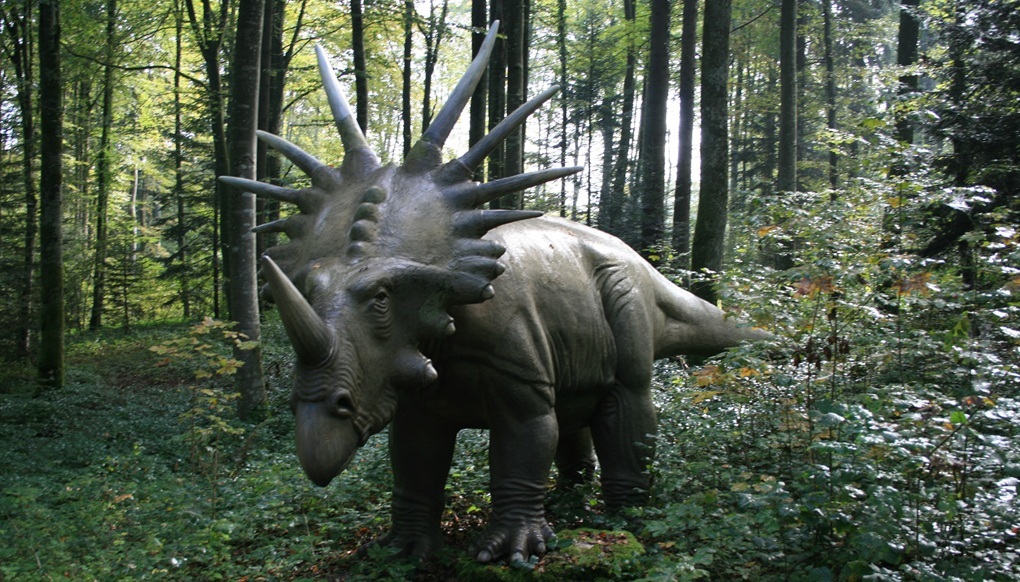
Advances in understanding dinosaur behavior through fossil evidence have profoundly enlivened our conception of deep time, transforming it from a static backdrop to a dynamic living past. Discoveries of dinosaur nests, eggs, and juvenile specimens revealed parental care among some species, while trackways showed evidence of herding behavior and predator-prey interactions. These insights into dinosaur lives helped scientists and the public conceptualize the Mesozoic not as a distant, frozen time period but as 165 million years of vibrant ecological interactions among living creatures. The identification of dinosaur social behaviors particularly challenged the early perception of these animals as evolutionary failures, instead revealing sophisticated adaptations that enabled their long dominance. By populating ancient landscapes with behaviors recognizable to modern observers, dinosaur paleobiology has made deep time more accessible and relatable, transforming abstract millions of years into comprehensible narratives of life’s struggles and adaptations across the ages.
Global Distribution and Continental Drift
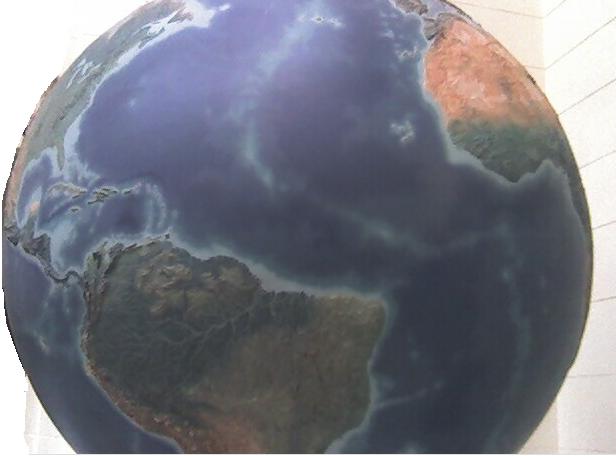
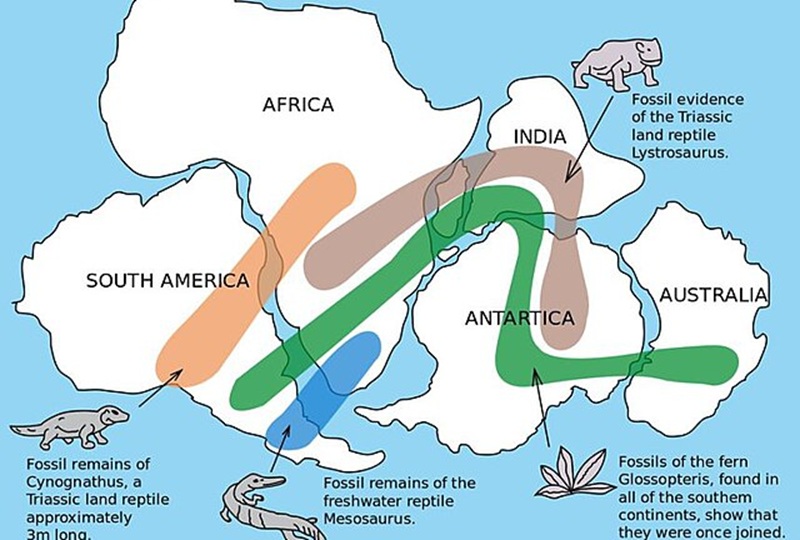
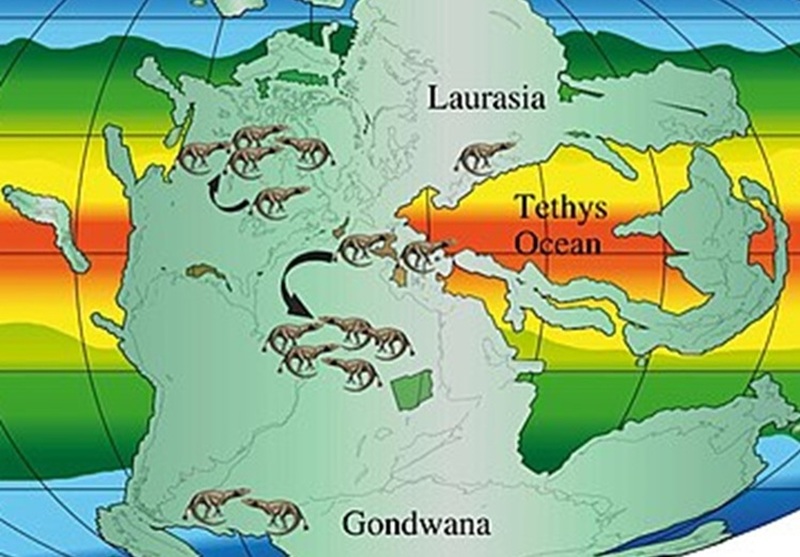
The discovery of similar dinosaur species on continents now separated by vast oceans provided crucial evidence for the theory of continental drift, fundamentally altering our understanding of Earth’s physical changes over time. When paleontologists found nearly identical dinosaur fossils in Africa and South America, it suggested these now-distant landmasses must once have been connected. Dinosaur discoveries thus helped validate Alfred Wegener’s controversial continental drift hypothesis, later refined into the theory of plate tectonics. This revelation transformed our perception of Earth itself from a static stage where life evolved to a dynamic planet constantly reshaping its surface over geological timescales. Dinosaur distributions revealed that not only had life forms changed over time, but the very geography of Earth had undergone dramatic transformations. This double motion – of evolving life on shifting continents – significantly complexified our understanding of deep time, revealing it as a period of multiple simultaneous changes operating at different rates.
Climate Change Records and Environmental Time

Dinosaur fossils have provided valuable insights into ancient climate conditions, expanding our conception of time to include environmental changes across geological epochs. By studying the plant fossils associated with dinosaur remains, analyzing bone growth patterns, and examining isotope ratios in fossil teeth, paleontologists can reconstruct the climate conditions that prevailed during different dinosaur eras. These reconstructions reveal that dinosaurs lived through periods of significant climate variation, including intervals of warming and cooling, demonstrating the dynamic nature of Earth’s environmental systems over deep time. The recognition that dinosaurs survived through multiple climate shifts but ultimately succumbed (in non-avian forms) to the aftermath of the Chicxulub impact has particular resonance in our current era of anthropogenic climate change. Dinosaur climate studies have thus expanded our temporal awareness to include not just the progression of life but the parallel story of Earth’s changing environmental conditions, adding another dimension to our understanding of time’s passage.
Dinosaurs in Culture: Popularizing Deep Time
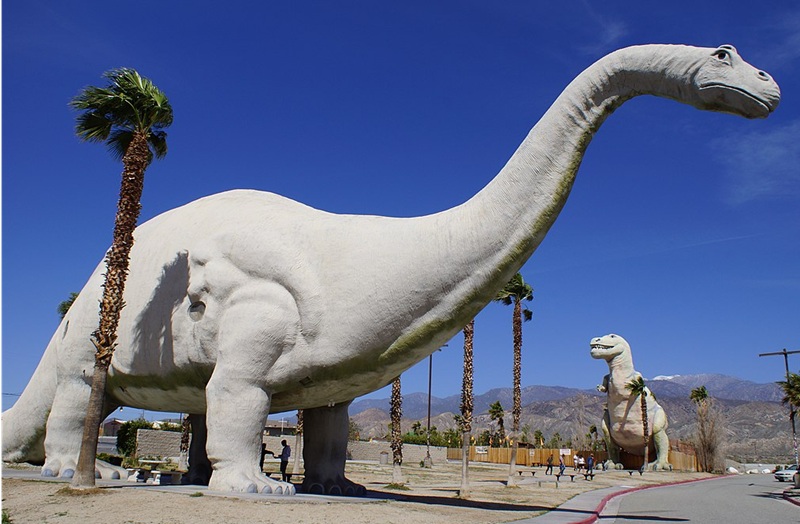
The cultural impact of dinosaurs has made concepts of deep time accessible to the general public in unprecedented ways, translating complex scientific temporality into popular understanding. From Sir Arthur Conan Doyle’s “The Lost World” to Spielberg’s “Jurassic Park,” dinosaurs have served as powerful cultural ambassadors from Earth’s distant past, bringing abstract geological timescales into everyday consciousness. Children’s fascination with dinosaurs often represents their first encounter with deep time concepts, making these extinct creatures crucial early education tools for temporal thinking. Museum exhibitions featuring dinosaurs consistently rank among the most popular public science displays, attracting millions of visitors who might otherwise never engage with paleontological concepts. Through their persistent cultural presence in books, films, toys, and games, dinosaurs have normalized the concept of a world existing millions of years before human civilization, subtly reshaping public temporal consciousness. This cultural permeation has made deep time a familiar concept rather than an alienating scientific abstraction, representing one of dinosaur paleontology’s most significant contributions to modern thought.
The Anthropocene Perspective: Humans in Dinosaur Time

Perhaps the most profound impact of dinosaur discoveries on our temporal perspective is the humbling recognition of humanity’s brief existence compared to dinosaur dominance. Non-avian dinosaurs ruled Earth for approximately 165 million years, while modern humans have existed for only about 300,000 years – less than 0.2% of dinosaur reign. This stark contrast has fundamentally altered our species’ self-perception, challenging human exceptionalism and placing our civilization within a vastly expanded temporal context. As we enter what many scientists call the Anthropocene – an era defined by human impact on Earth’s systems – the dinosaur timeframe provides crucial perspective on the potential fragility of our dominance. The recognition that Earth thrived for millions of years without humans, and that even the mighty dinosaurs eventually faced extinction, introduces a sobering temporal humility. Dinosaur discoveries thus continue to reshape our relationship with time by contextualizing the human story within Earth’s much longer biological narrative, suggesting both the insignificance of our brief existence and the profound responsibility of our outsized planetary impact.
Conclusion

Dinosaur discoveries have fundamentally reshaped humanity’s relationship with time, expanding our temporal horizon from thousands to billions of years and transforming how we conceptualize our place in Earth’s history. From the early puzzling fossils that challenged biblical chronologies to the sophisticated understanding of dinosaur evolution that connects them to modern birds, these prehistoric creatures have served as invaluable guides to deep time. They have provided crucial evidence for evolution, continental drift, and mass extinction events while capturing public imagination in ways that make abstract temporal concepts accessible. As we confront planetary challenges in the Anthropocene, the dinosaur timeline offers both humbling perspective and cautionary lessons about adaptation and survival. In revealing Earth’s ancient past, dinosaurs continue to influence how we envision our species’ future, demonstrating that time itself is not just a measurement but a profound dimension of understanding our place in the universe.