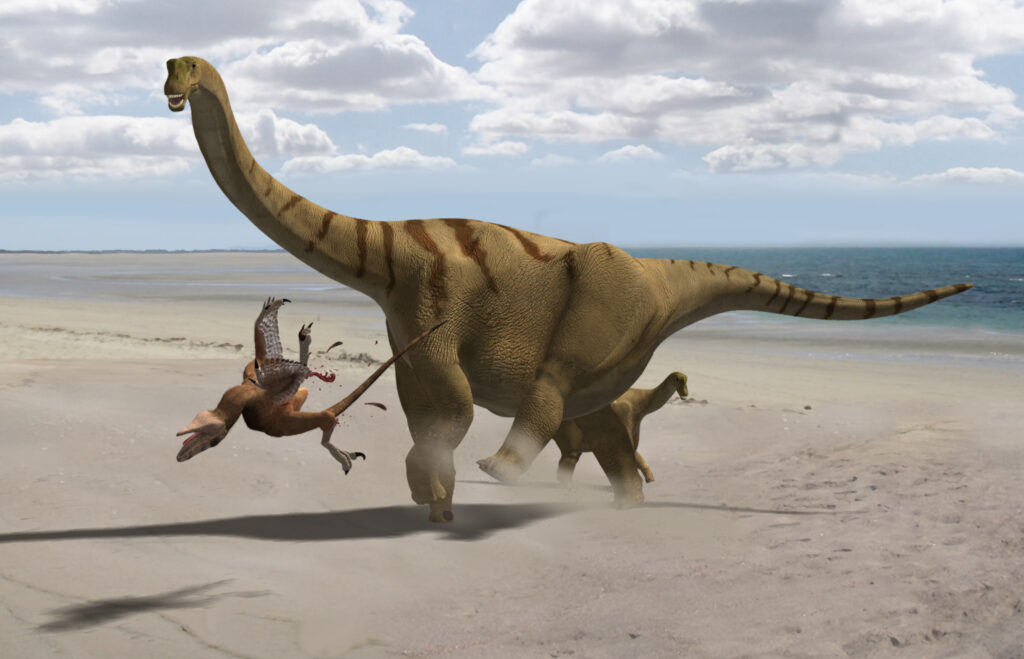
Picture this: you’re standing next to a massive semi-truck, feeling dwarfed by its imposing presence. Now imagine that truck suddenly sprouting a neck longer than a school bus, growing legs thick as tree trunks, and developing a tail that could sweep a car off the road. That’s essentially what paleontologists are dealing with when they try to wrap their heads around sauropod dinosaurs – creatures so monumentally large that scientists literally had to use trucks as measuring sticks to help people understand their incredible mass.
The Colossal Challenge of Weighing Extinct Giants
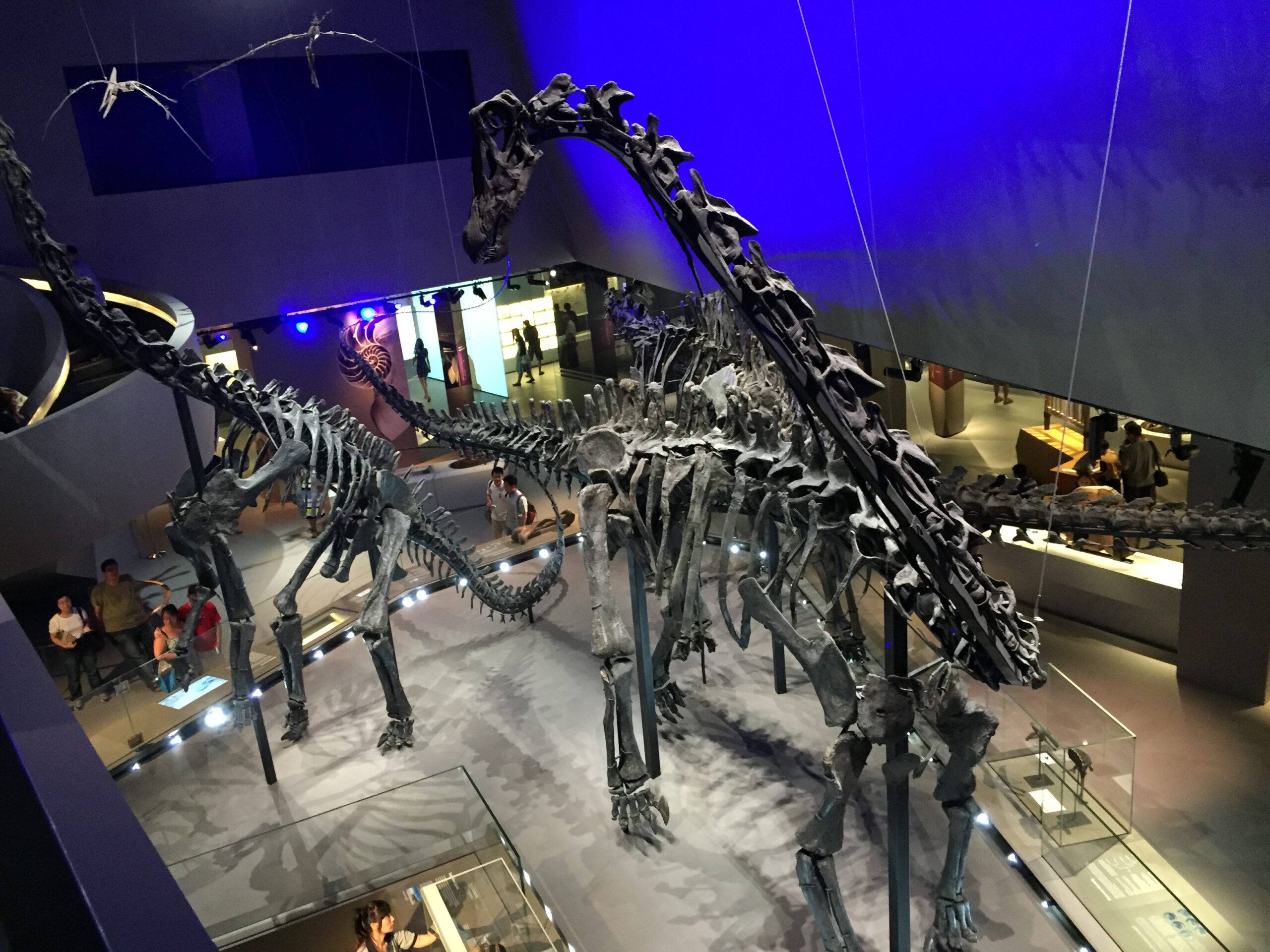
Determining the weight of a creature that died out 66 million years ago presents one of paleontology’s most fascinating puzzles. Unlike measuring the length of a fossilized femur or counting vertebrae, calculating body mass requires scientists to become detective-archaeologists, piecing together clues from incomplete skeletal remains.
The challenge becomes even more daunting when you consider that sauropods represent the largest land animals that ever walked our planet. These weren’t just big dinosaurs – they were living, breathing skyscrapers with heartbeats. Scientists needed a way to communicate these mind-boggling weights to the public, and comparing them to familiar objects like trucks became their go-to method.
Meet the Heavyweight Champions of the Mesozoic
When paleontologists talk about sauropod weight champions, names like Argentinosaurus, Patagotitan, and Dreadnoughtus dominate the conversation. These titanosaurs pushed the boundaries of what seems physically possible for a land animal. Argentinosaurus, discovered in Argentina, likely tipped the scales at somewhere between 50 to 90 tons – that’s equivalent to 12 to 18 adult elephants standing on a scale together.
Patagotitan mayorum, another Argentine giant, represents one of the most complete massive sauropod skeletons ever found. Scientists estimate this behemoth weighed around 69 tons, making it heavier than most commercial aircraft. The sheer size of these creatures challenges our understanding of biology and physics, raising questions about how such massive animals could even support their own weight.
The Truck Comparison That Changed Everything
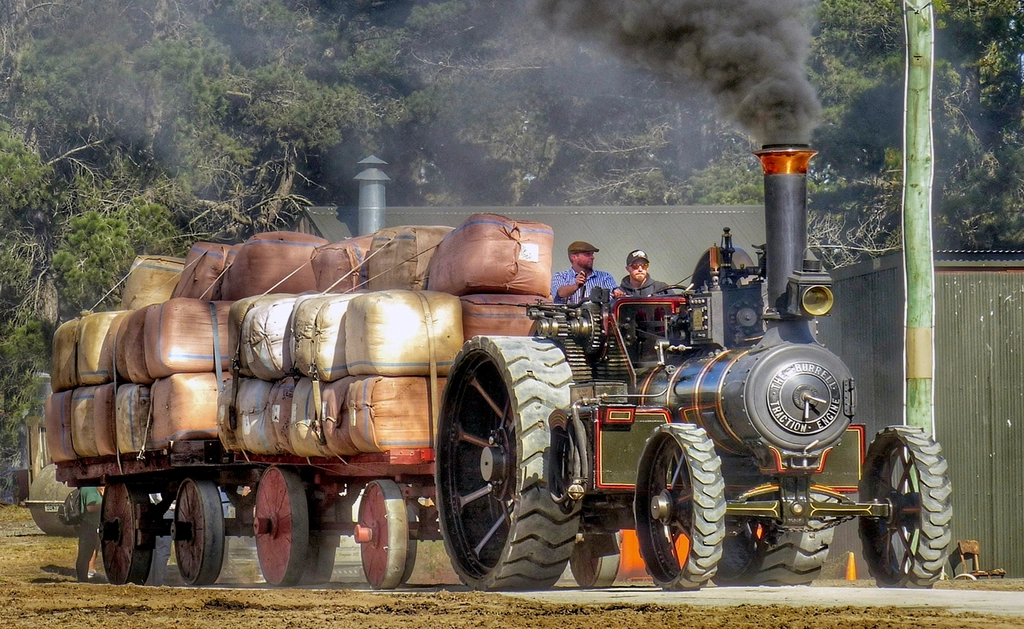
The breakthrough moment came when researchers realized they needed relatable analogies to help people grasp these astronomical weights. A single adult Argentinosaurus weighed as much as 14 fully loaded garbage trucks or about 20 pickup trucks. This comparison wasn’t just for dramatic effect – it served a crucial scientific communication purpose.
By using trucks as reference points, scientists could instantly convey the magnitude of these ancient giants to audiences worldwide. The comparison worked because trucks are universally recognizable, and their weight is something most people can at least conceptually understand. When you hear that a dinosaur weighed as much as a convoy of 18-wheelers, the scale becomes viscerally real.
Revolutionary Scanning Techniques Reveal Hidden Secrets
Modern paleontology has embraced cutting-edge technology to solve the weight mystery of sauropods. CT scanning and 3D modeling have revolutionized how scientists approach mass estimation. Instead of relying solely on bone measurements and educated guesses, researchers can now create detailed digital models of entire skeletons.
These technological advances allow scientists to estimate muscle attachment points, calculate body volume, and even model internal organs with unprecedented accuracy. The process involves scanning fossilized bones, creating digital reconstructions, and using complex algorithms to estimate soft tissue mass. This high-tech approach has refined weight estimates and confirmed that some sauropods were even heavier than previously thought.
The Physics of Supporting Massive Bodies
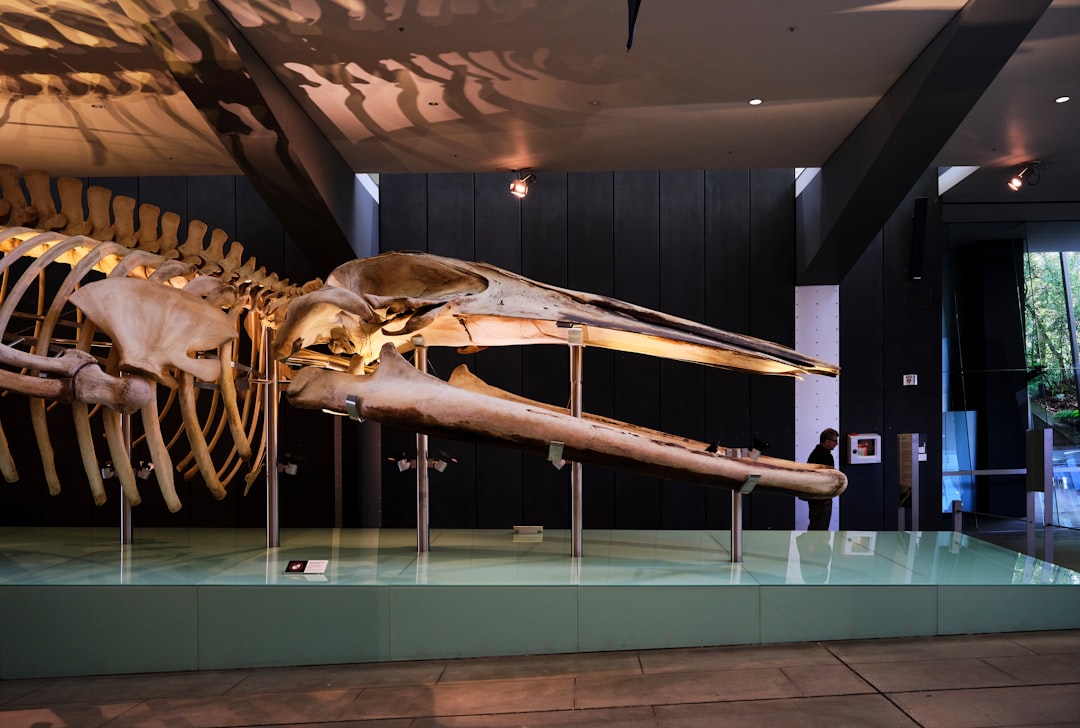
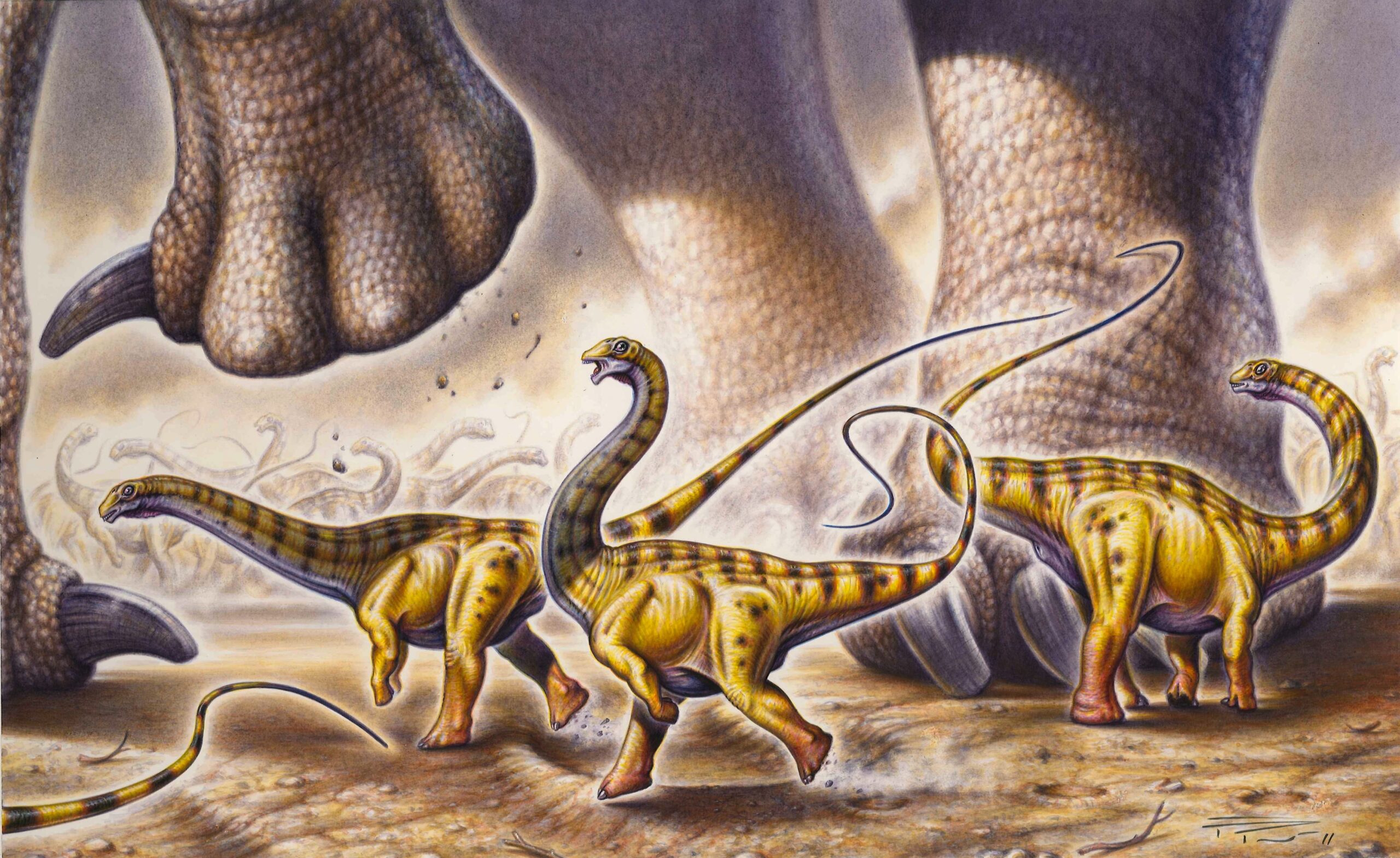
Standing under a sauropod would have been like standing beneath a living building – one that somehow managed to walk around without collapsing under its own weight. The engineering challenges these animals faced were extraordinary, requiring specialized adaptations that pushed biological limits to their absolute maximum.
Their bones weren’t solid like those of smaller animals but were filled with air pockets called pneumatization. This adaptation, borrowed from their bird relatives, reduced weight while maintaining structural integrity. Think of it as nature’s version of lightweight concrete – strong enough to support massive loads while being significantly lighter than solid bone.
The leg bones of sauropods were proportionally thicker than those of any modern land animal, resembling massive concrete pillars more than typical animal limbs. These adaptations were absolutely necessary; without them, these giants would have been physically impossible.
Comparing Modern Giants to Ancient Titans
Today’s largest land animal, the African elephant, weighs a maximum of about 6 tons – making it seem almost petite compared to sauropods. An adult male elephant would have barely reached the knee of a fully grown Argentinosaurus, highlighting just how dramatically these ancient creatures dwarfed anything alive today.
Blue whales, the largest animals currently living, can reach weights of up to 200 tons, but they have the advantage of water buoyancy to support their massive bodies. Sauropods accomplished their incredible size while dealing with the full force of gravity, making their achievement even more remarkable from an engineering perspective.
The Digestive System of a Walking Mountain

Feeding a body that massive required a digestive system unlike anything we see in modern animals. Scientists estimate that large sauropods needed to consume between 880 and 1,320 pounds of vegetation daily – that’s roughly equivalent to eating a small car’s worth of plants every single day.
Their digestive strategy involved swallowing stones called gastroliths, which helped grind up tough plant material in their stomachs. This process was essential because sauropods couldn’t chew their food like modern mammals. Instead, they relied on these internal grinding stones and powerful stomach acids to break down the massive quantities of vegetation they consumed.
The energy requirements were staggering – imagine trying to fuel a truck that needed to run 24 hours a day while carrying a maximum load. That’s essentially what these animals’ metabolisms had to accomplish just to keep their massive bodies functioning.
Heart Power: Pumping Blood to Extreme Heights
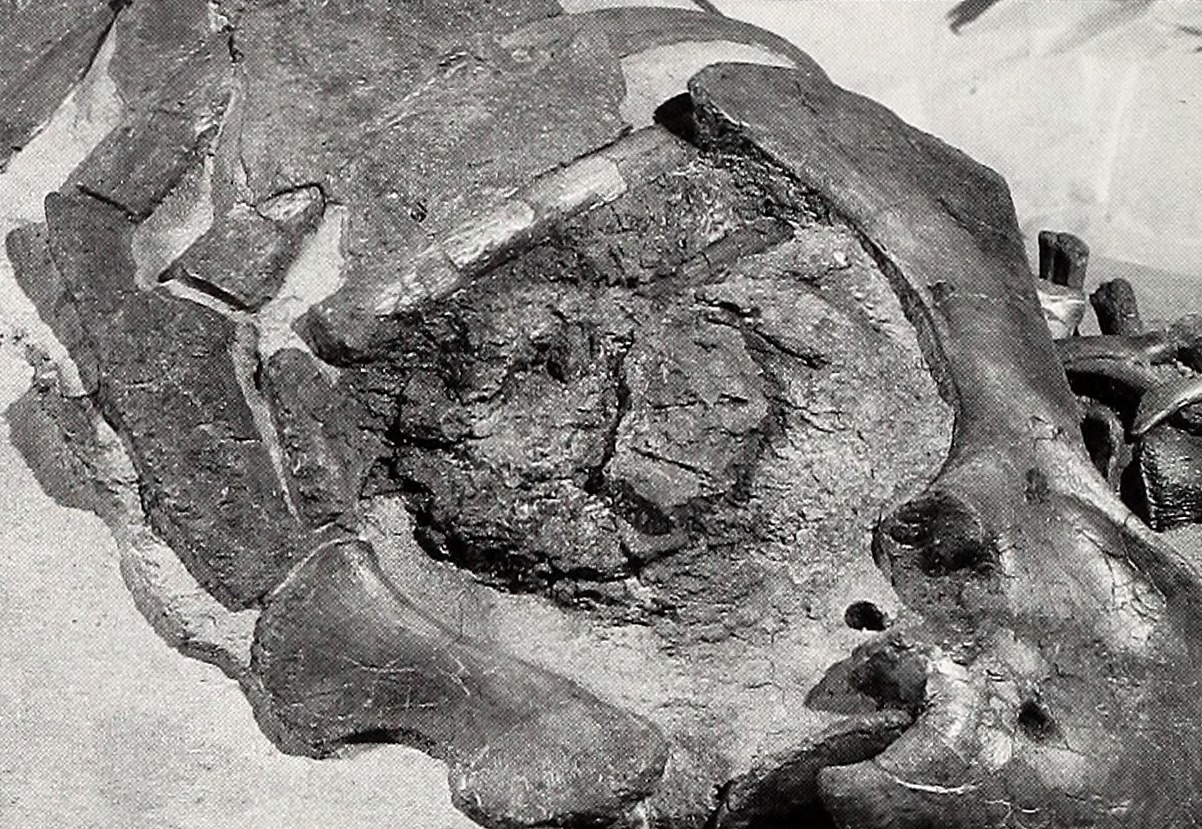
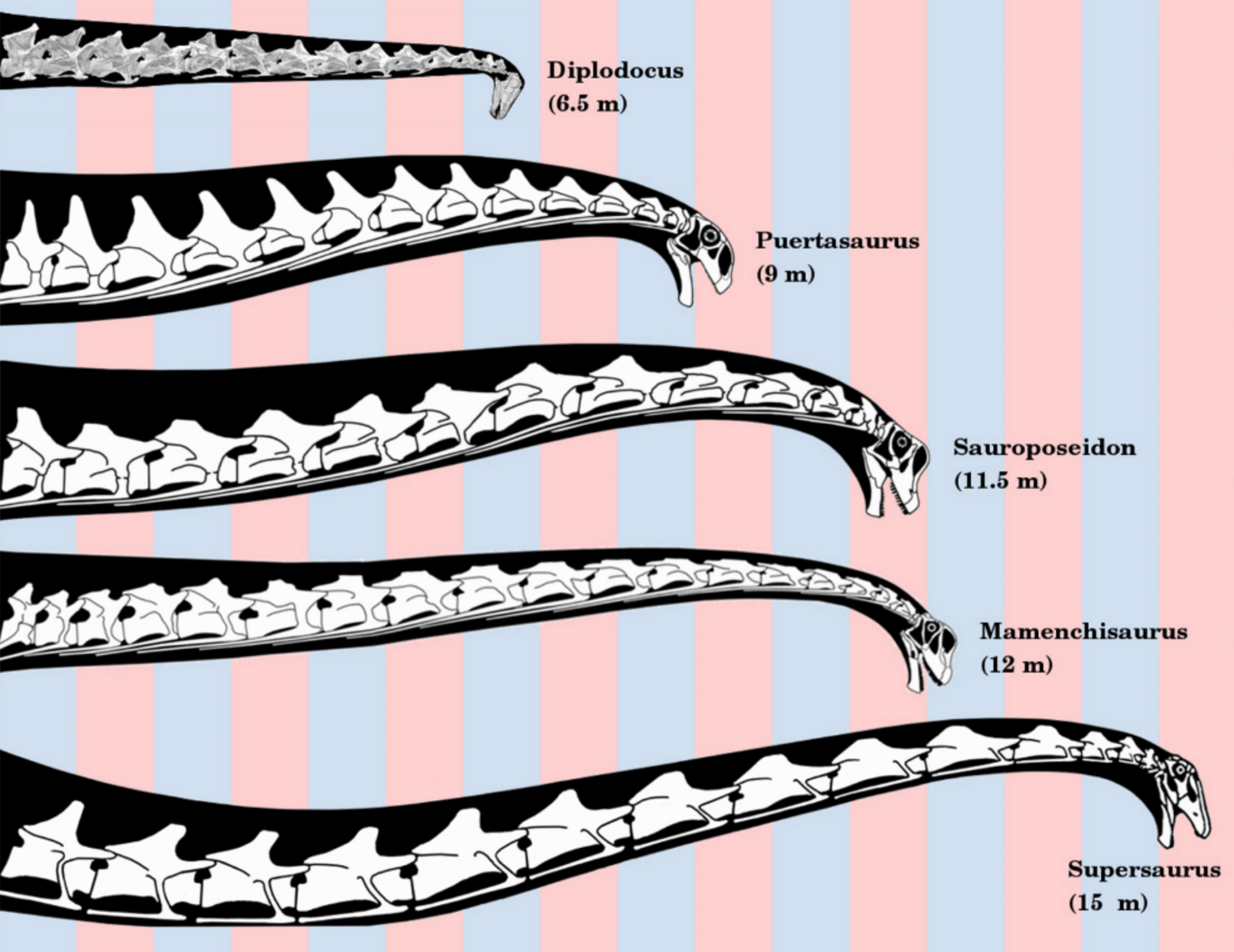
The cardiovascular challenges faced by sauropods were mind-boggling. Their hearts had to pump blood up necks that could reach heights of 40 feet or more – equivalent to pumping blood to the fourth floor of a building. This required blood pressure levels that would be fatal to most modern animals.
Scientists estimate that sauropod hearts weighed between 440 and 880 pounds, roughly the size of a small car engine. These massive hearts beat with tremendous force, generating blood pressure readings that would make modern doctors faint. The entire cardiovascular system had to be radically different from anything we see in contemporary animals.
Fossil Evidence: Piecing Together the Weight Puzzle
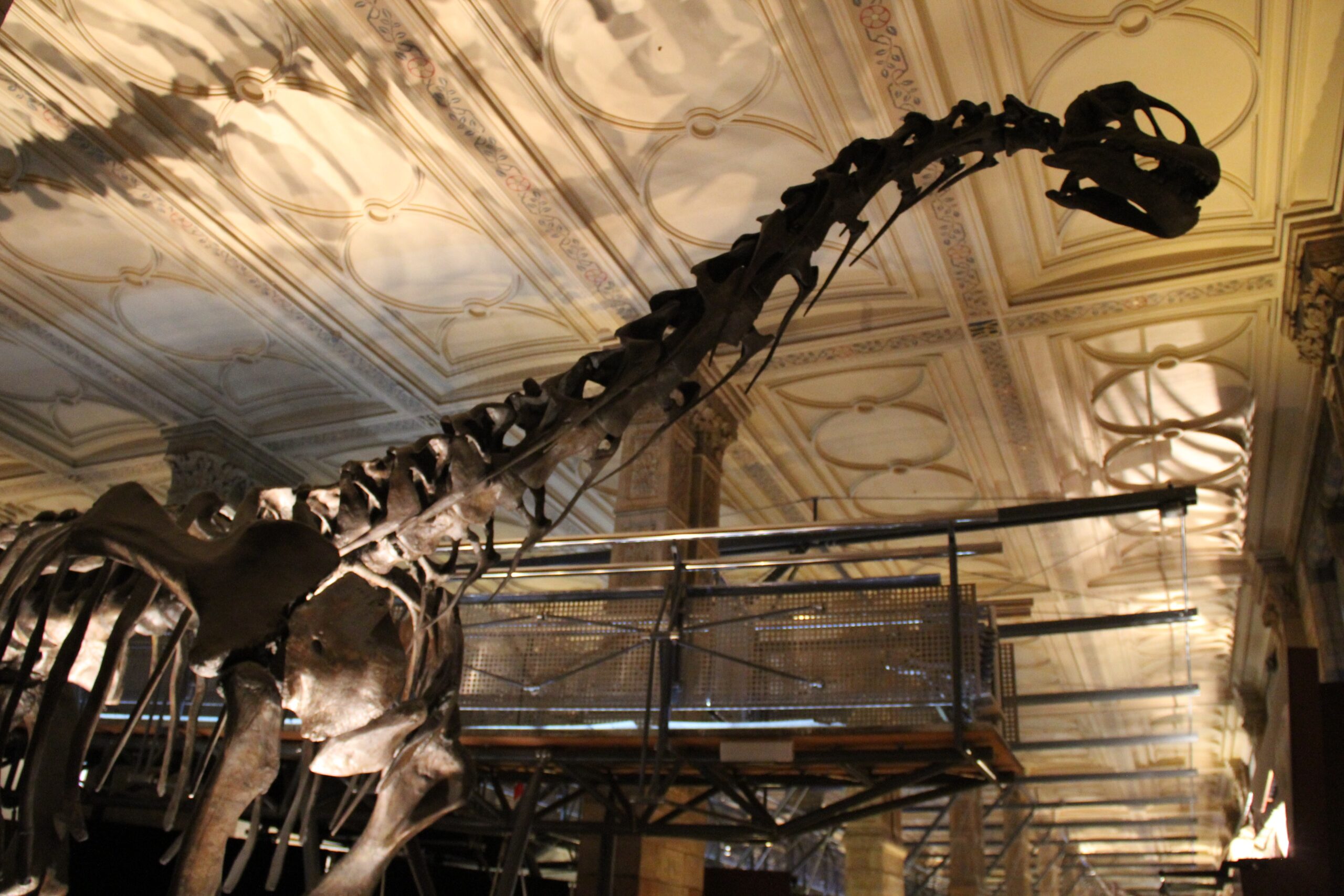
The journey to understanding sauropod weights begins in remote fossil sites where paleontologists carefully excavate bones that have been buried for millions of years. Each discovery adds another piece to the puzzle, but the picture remains frustratingly incomplete since soft tissues rarely fossilize.
Trackways – fossilized footprints – provide crucial evidence about sauropod movement and weight distribution. The depth and spacing of these ancient footprints offer clues about how these massive animals walked and how their weight was distributed across their four legs. Some trackways show impressions so deep they suggest animals weighing well over 50 tons.
Coprolites, or fossilized dung, might seem like an unusual source of scientific information, but they provide invaluable insights into sauropod diets and digestive efficiency. The size and composition of these ancient droppings help scientists understand how much food these giants needed to consume daily.
Environmental Impact of Sauropod Herds
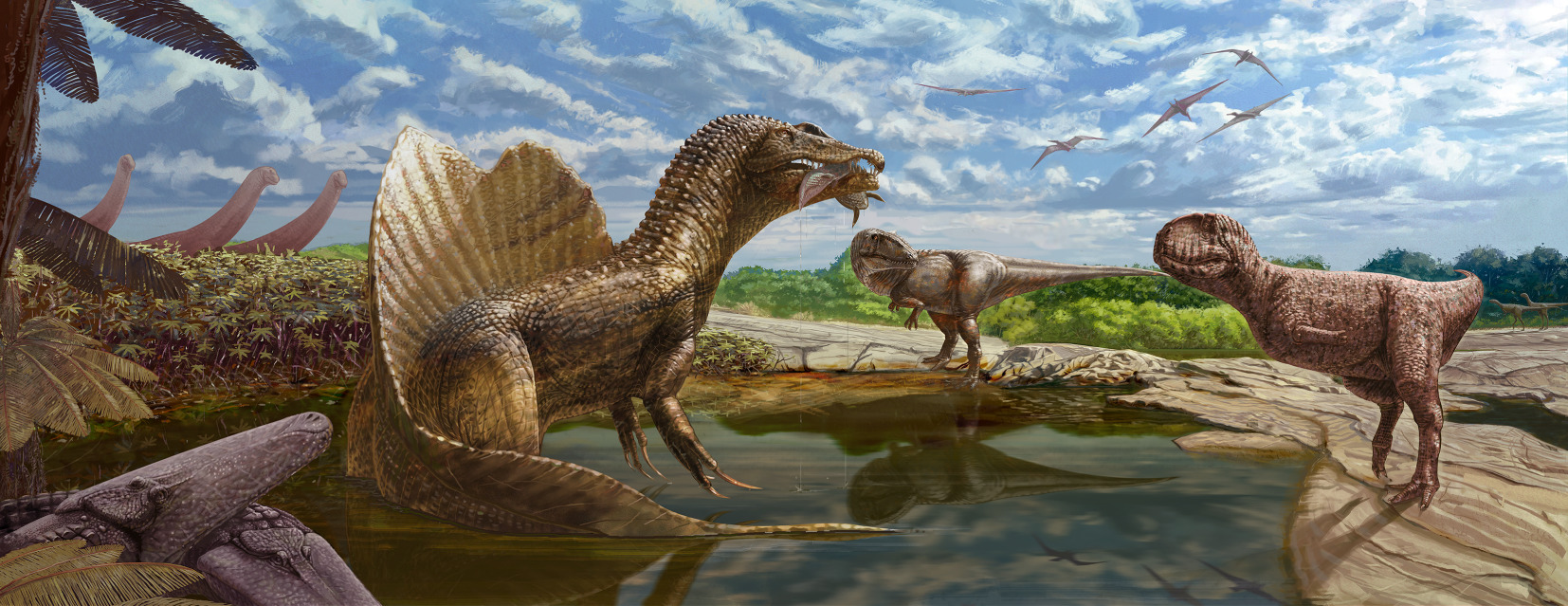
Imagine a herd of creatures, each weighing as much as a loaded semi-truck, migrating across ancient landscapes. The environmental impact would have been comparable to a fleet of construction vehicles reshaping the terrain. Sauropod herds likely created their own ecological pathways, trampling vegetation and creating clearings that influenced entire ecosystems.
Their massive appetites meant they could strip entire forests bare, fundamentally altering plant communities across vast areas. This ecological engineering probably played a crucial role in shaping Mesozoic landscapes, creating a dynamic relationship between these giant herbivores and their environment.
The Controversy: How Heavy Were They Really?
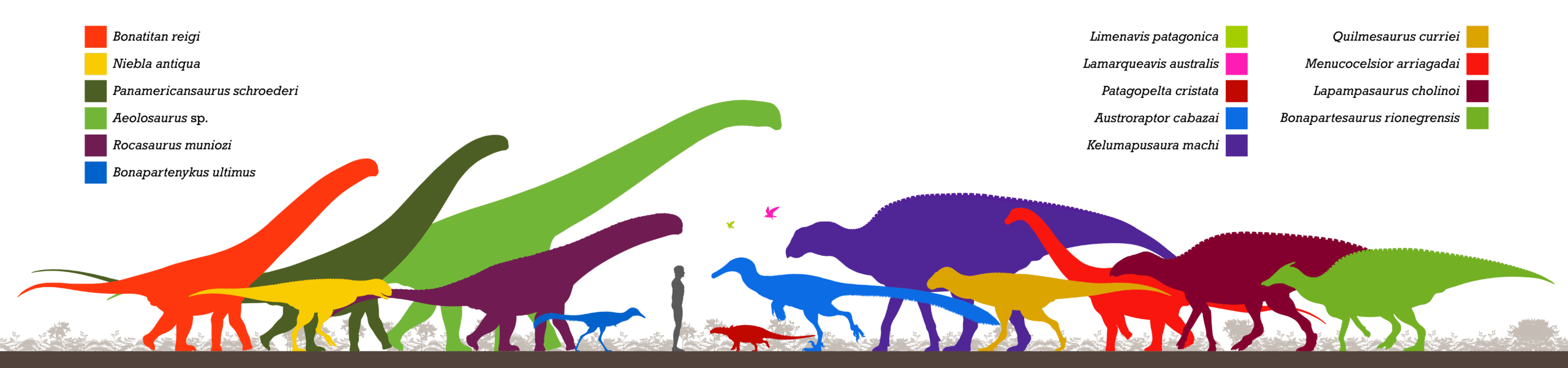
The scientific community continues to debate exact sauropod weights, with estimates varying wildly depending on the methodology used. Some researchers argue for more conservative estimates around 30-40 tons for the largest species, while others push for weights exceeding 100 tons for the most massive individuals.
This ongoing debate reflects the inherent challenges in estimating the mass of extinct animals. Different reconstruction methods, varying assumptions about body composition, and incomplete fossil evidence all contribute to the uncertainty. The truck comparisons help communicate these ranges to the public, but the underlying science remains contentious.
Recent discoveries continue to push the boundaries of what scientists thought possible. Each new fossil find has the potential to revolutionize our understanding of sauropod biology and challenge existing weight estimates.
Modern Technology Meets Ancient Mysteries

Today’s paleontologists have access to tools that would have seemed like science fiction just a few decades ago. Computer modeling, biomechanical analysis, and advanced imaging techniques allow researchers to test theories about sauropod locomotion and weight distribution with unprecedented precision.
Virtual reality reconstructions now allow scientists to “walk” alongside digital sauropods, observing how these massive creatures might have moved and interacted with their environment. These simulations help validate weight estimates by testing whether proposed body masses are compatible with realistic movement patterns.
Machine learning algorithms analyze vast databases of modern animal proportions to refine estimates of sauropod soft tissue distribution. This approach represents a quantum leap forward from the educated guesswork that characterized earlier paleontological research.
The Future of Sauropod Weight Research
As technology continues advancing, scientists are developing even more sophisticated methods for estimating sauropod weights. Synchrotron scanning, originally developed for particle physics research, now allows researchers to examine fossilized bones at the molecular level, revealing details about bone density and internal structure that were previously impossible to detect.
New fossil discoveries in unexplored regions of the world promise to expand our understanding of sauropod diversity and size ranges. Recent finds in China, Africa, and South America suggest that we may have only scratched the surface of sauropod gigantism.
The integration of multiple scientific disciplines – from engineering to computer science to molecular biology – is creating a more comprehensive picture of how these ancient giants lived and moved. Future research will likely refine our weight estimates and provide even more accurate truck comparisons for public communication.
Conclusion: Giants That Redefined Possible
The story of sauropod weight estimation represents one of paleontology’s greatest detective stories, where scientists use everything from advanced scanning technology to simple truck comparisons to unlock the secrets of creatures that lived millions of years ago. These ancient giants pushed the boundaries of what’s biologically possible, achieving sizes that make modern elephants look like house cats and requiring cardiovascular systems that would make a jet engine seem modest.
The truck comparison that revolutionized public understanding of sauropod mass wasn’t just a clever marketing tool – it was a bridge between the incomprehensible and the relatable. When we envision a convoy of 18-wheelers somehow growing legs and a neck, we begin to grasp the true magnitude of these prehistoric titans.
As new discoveries continue to emerge from fossil sites around the world, our understanding of sauropod weights will undoubtedly evolve. What remains constant is the sense of awe these creatures inspire – living proof that our planet once supported life forms so massive they challenge our very conception of what’s possible in the natural world. Did you ever imagine that scientists would need trucks to help us understand dinosaurs?