
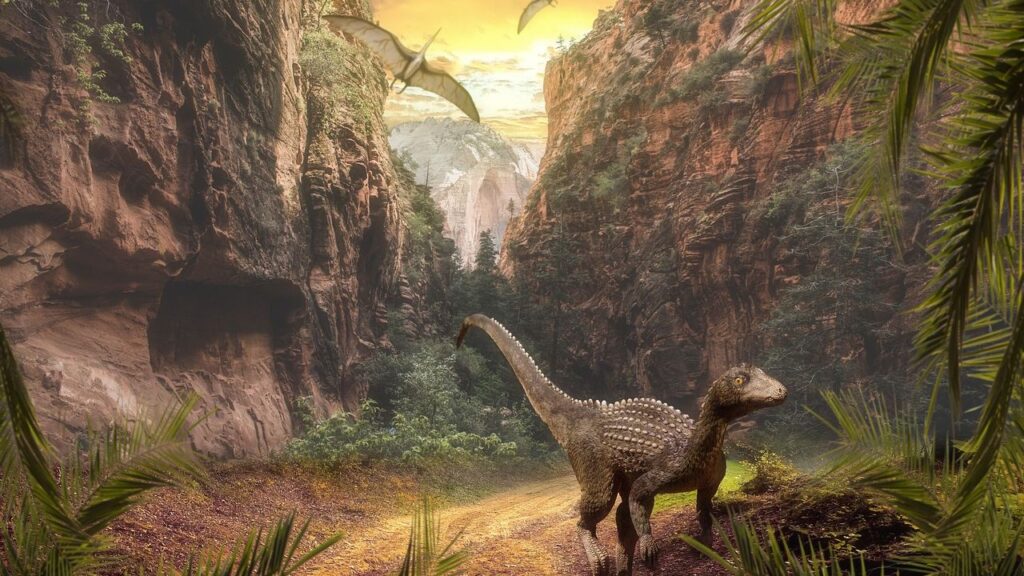
Try to imagine your entire life, then stretch it out to a hundred years. Now multiply that by millions, and you’re still not even close to how long dinosaurs ruled this planet. We tend to cram them into a tiny mental box labelled “prehistoric,” like they were some brief experimental phase before mammals showed up, but that picture is wildly wrong. Dinosaurs did not just come and go; they dominated Earth for an almost unthinkable span of time.
What makes this even more mind‑bending is how recent our own story is by comparison. Modern humans are a geological blink, while dinosaurs were the long-running main series. If Earth’s history were a 24‑hour day, humans would appear in the last fraction of a second before midnight, and the dinosaurs would have been holding the stage for hours. Once you see the numbers laid out, it’s hard not to feel both tiny and completely fascinated.
The Mind-Blowing Timeline: From Dinosaur Debut To Final Curtain
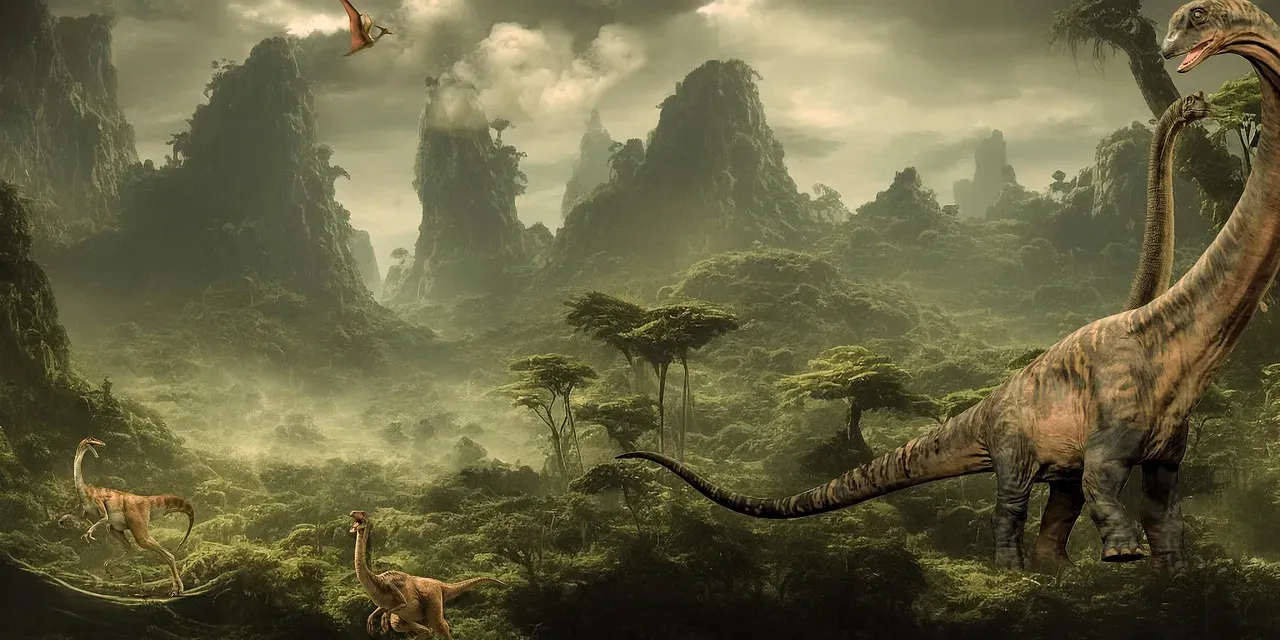
Dinosaurs first appeared in the late Triassic period, roughly about 235 to 230 million years ago, and they stuck around until about 66 million years ago. That means they ruled Earth for around 165 to 170 million years, depending on where you start the clock. For contrast, our own species, Homo sapiens, has been around for something like only a few hundred thousand years, and what we call “civilization” is just a tiny slice at the end of that. When you put those side by side, humanity is not even a full footnote yet.
Here’s another way to picture it: if you turned the age of dinosaur dominance into a long road trip across an entire continent, modern humans would be the last step from your driveway to your front door when you come back home. We get excited about events that happened fifty years ago and call them history, while dinosaurs saw mountain ranges rise, seas open and close, and entire ecosystems come and go across many millions of years. Calling their reign “long” almost feels like an insult; it was more like a geological dynasty.
Before The Giants: The Strange World Dinosaurs Inherited
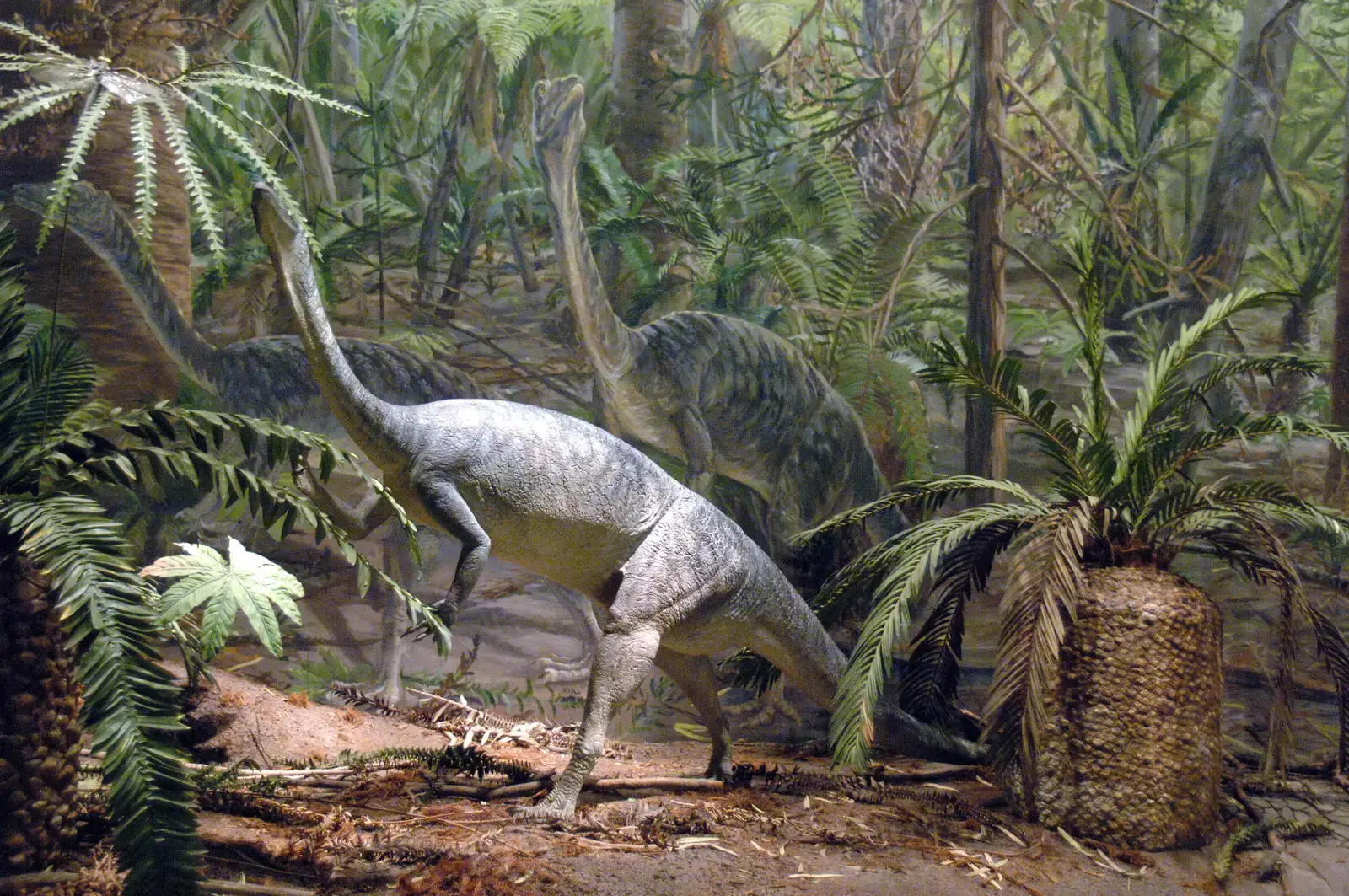
When dinosaurs first appeared, they were not born into some empty, monster-free Earth. The planet was already full of life, from weird-looking early reptiles to mammal-like creatures and forests of ancient plants. The supercontinent Pangaea still existed, so land was mostly one enormous, connected mass stretching from pole to pole. The climate was generally warm, and there were no polar ice caps like we see today, which meant very different weather patterns and habitats.
Early dinosaurs did not immediately dominate this world; at first they were just one of many small players in a crowded cast. Some were modest, lightly built animals running on two legs, not the skyscraper-sized giants people picture from movies. It took time, environmental change, and a series of extinctions among their competitors for dinosaurs to rise from background characters to headliners. Their eventual success was not a quick takeover but a slow, opportunistic climb over millions of years.
The Triassic To Jurassic Takeover: How Dinosaurs Rose To Power
The real breakout moment for dinosaurs came after a major extinction event at the end of the Triassic period, more than 200 million years ago. Many rival groups, especially large reptile predators, were wiped out, opening up space in ecosystems around the globe. In that newly emptied ecological stage, dinosaurs were well-positioned to expand. They were generally active, often fast-moving, and their upright posture helped them move efficiently over long distances.
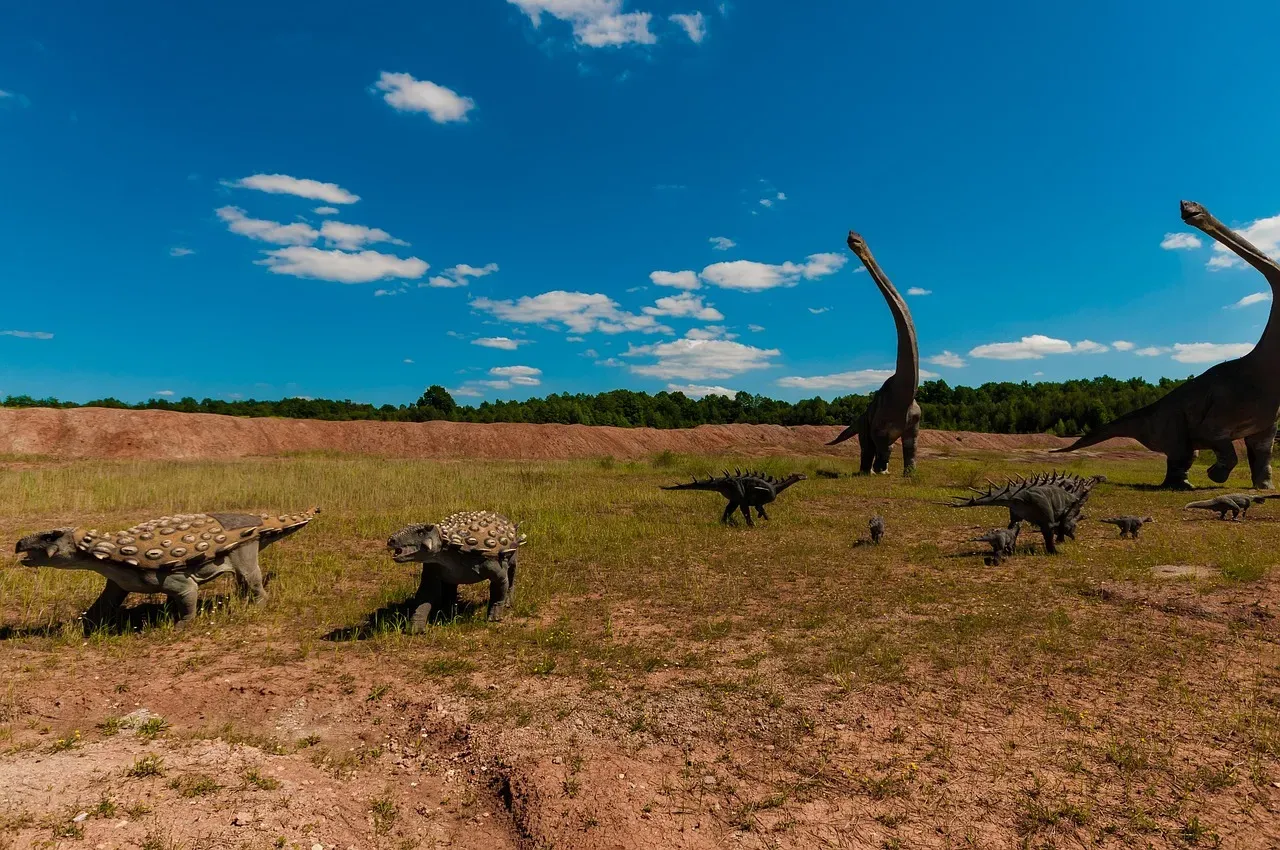
By the early Jurassic period, dinosaurs were spreading into almost every available niche on land, from small, agile hunters to huge plant-eaters. Over time, they grew larger, more diverse, and more specialized, turning into everything from long-necked sauropods to armored tanks with tail clubs. If you could walk through a Jurassic landscape, it would feel like stepping onto a different planet where almost every impressive big animal you saw was some kind of dinosaur. The rise of dinosaurs was not a brief fad; it was a reshaping of life on land.
The Long Middle Reign: Dinosaurs As The Normal, Everyday Wildlife
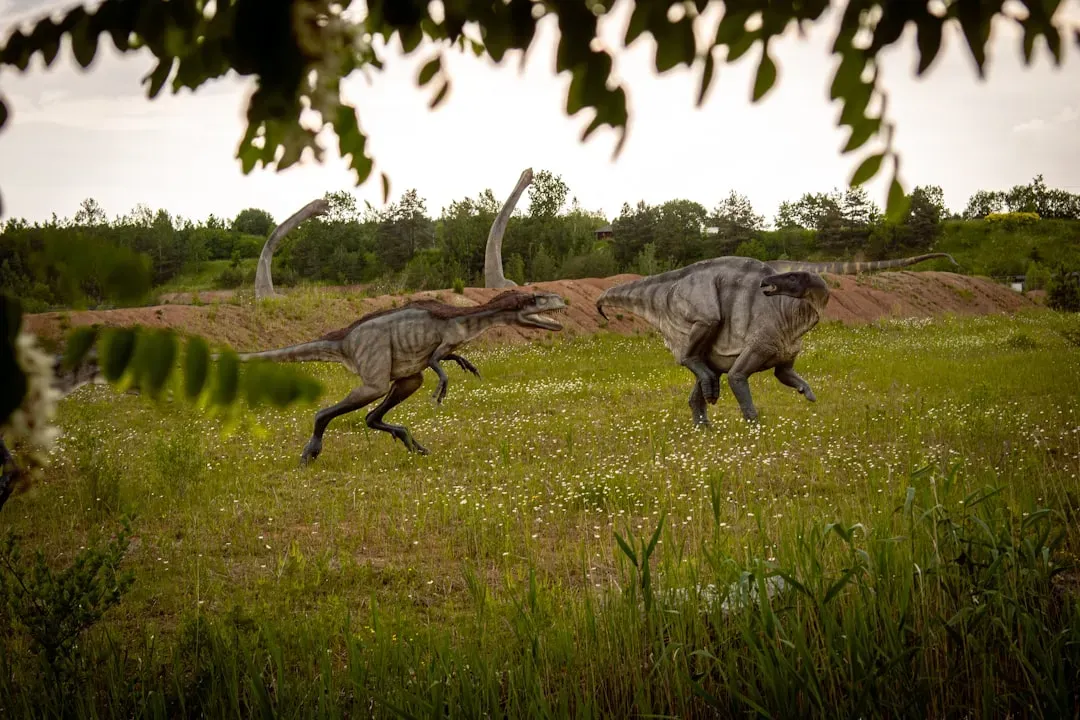
One of the strangest things to wrap your head around is that, for most of their time on Earth, dinosaurs were not exotic or unusual at all. They were simply the standard wildlife. If you were alive during much of the Jurassic or Cretaceous periods, seeing a dinosaur would be as normal as seeing a deer, crow, or lizard today. The idea that they are bizarre or alien comes from our perspective, looking back after they are gone.
During this long middle stretch, dinosaurs lived in forests, plains, coastal areas, and even polar regions that were much warmer than today. They shared their world with early mammals, flying reptiles, and evolving plants like flowering species that would later become familiar trees and flowers. For tens of millions of years, predators hunted, herds migrated, nests were built, and young dinosaurs grew up and died, generation after generation. It was not a single dramatic moment but an everyday, repeating rhythm of life, stretched out over a timescale that almost defies comprehension.
The Catastrophic End: A Sudden Stop After A Very Long Run
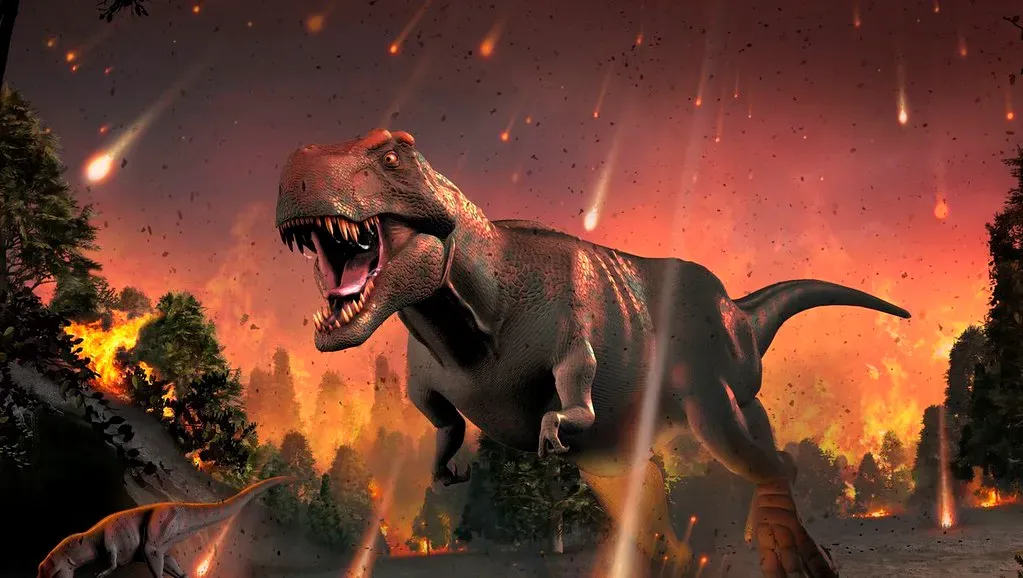
For all their long-term success, the non-bird dinosaurs met a sudden and brutal ending about 66 million years ago. Geological evidence points to a massive asteroid impact in what is now the Yucatán Peninsula, along with intense volcanic activity and shifting climates. The impact unleashed unimaginable energy, triggering fires, dust clouds, and climate disruption on a global scale. Habitats collapsed, food chains fell apart, and many large animals simply could not adapt fast enough.
What feels almost unfair is the contrast between the length of their reign and the speed of their downfall. After thriving for about 165 million years, many dinosaur lineages disappeared within what was, in geological terms, an instant. From our point of view, it is like watching the longest-running show on Earth suddenly cut to black mid-scene. Their extinction was not a slow fade-out at the end of a natural lifespan; it was more like an abrupt, catastrophic plot twist.
The Survivors: How Dinosaurs Technically Never Went Fully Extinct
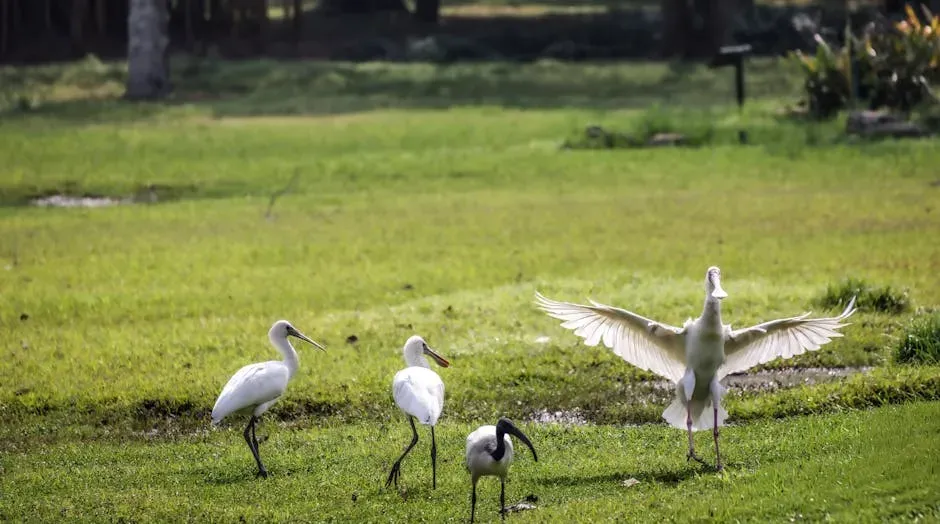
Here’s the twist that surprises a lot of people: not every dinosaur died out. While the large, ground-dwelling dinosaurs vanished at the end of the Cretaceous period, one branch survived and kept evolving. Those survivors are what we now call birds. In modern biology, birds are classified as a type of dinosaur, descended from small, feathered, theropod ancestors that managed to make it through the extinction crisis.
That means that in a strictly scientific sense, dinosaurs are not just a thing of the past; they are literally flying over your head and visiting your backyard feeders today. The robin you see on your lawn, the pigeon downtown, the hawk circling high above a field – all of them are part of the dinosaur family tree. It is a humbling and slightly wild thought: the age of dinosaurs did not fully end; it changed shape. Their reign on Earth, if you include birds, stretches from the late Triassic right up to this very moment.
Humans Versus Dinosaurs: Who Really “Owned” The Planet Longer?
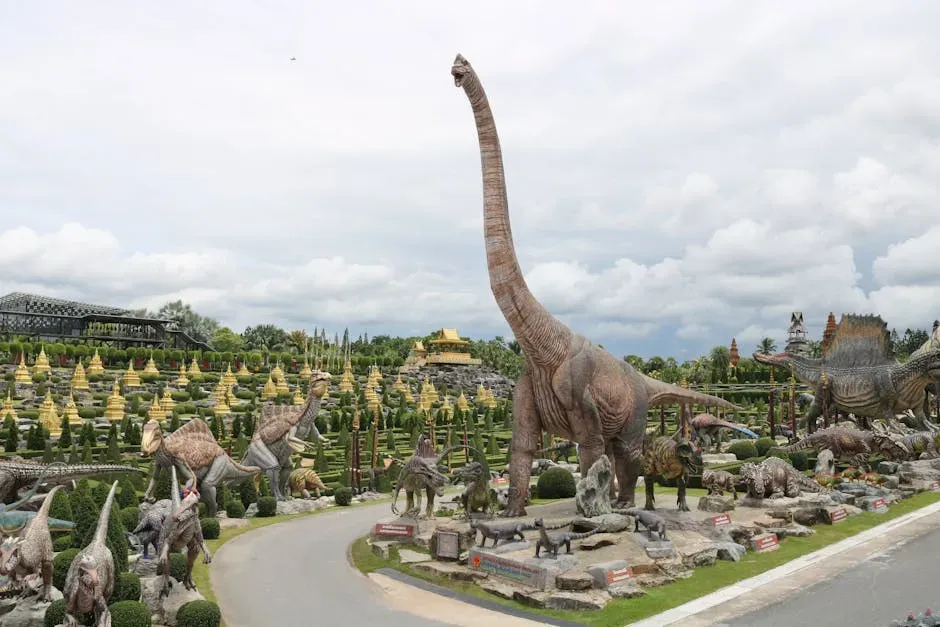
When people talk casually about humans “taking over” the planet, it is easy to forget how extremely recent that takeover is. Modern humans have existed for only a tiny fraction of the time dinosaurs roamed Earth. The length of human civilization, from the earliest cities to today’s skyscrapers and smartphones, barely registers compared to the span of dinosaur history. If the age of dinosaurs were a massive library, our entire story so far would be a single page slipped into the back cover.
From a purely time-based perspective, dinosaurs were far more successful rulers of Earth than we are so far. They persisted through enormous climate shifts, continental breakups, and countless ecological changes. Our technological influence is huge, but it has only played out over a few centuries, which is practically no time at all in geological terms. It raises an uncomfortable but important question: are we going to be a brief, flashy moment in Earth’s history, or can we match even a fraction of the durability dinosaurs showed?
Conclusion: Dinosaurs, Deep Time, And What Their Reign Says About Us
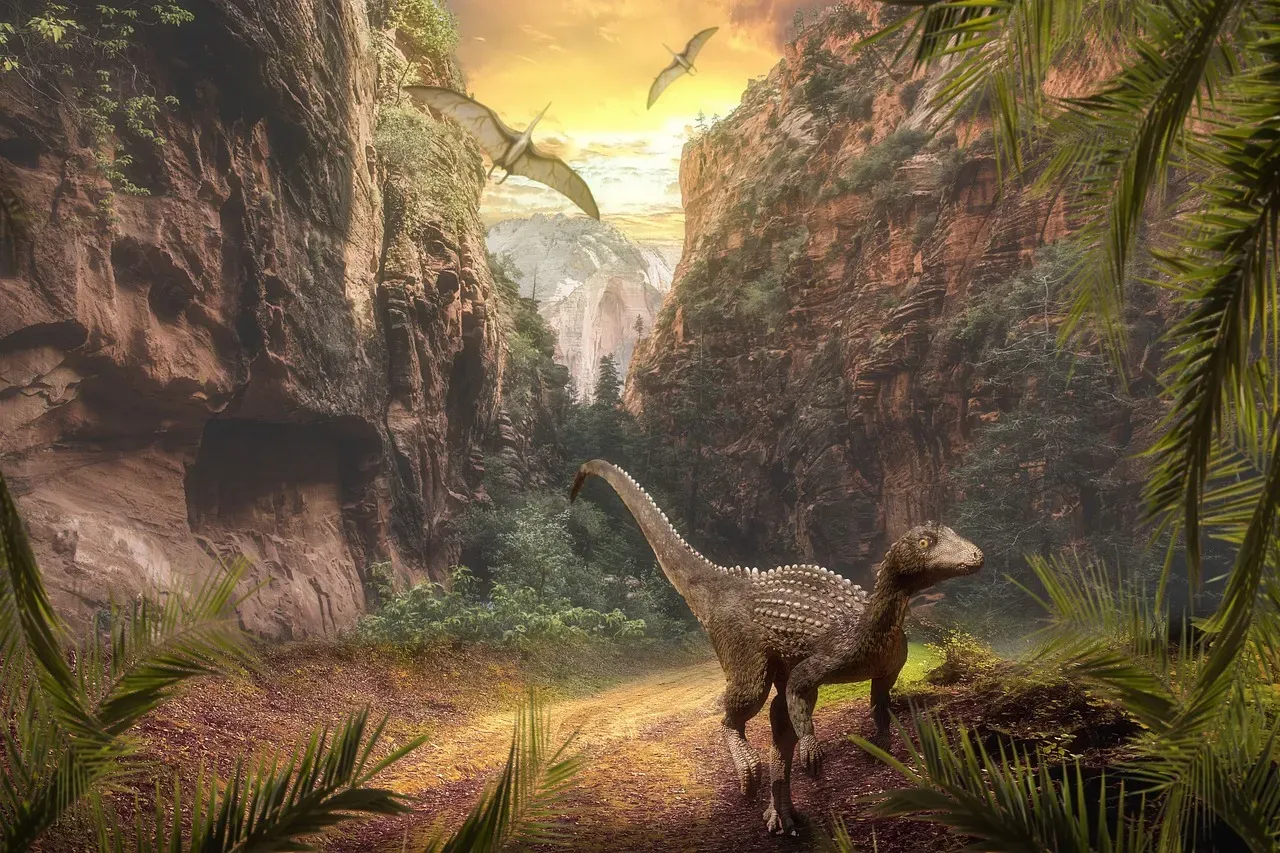
When you look honestly at the numbers, it becomes clear that dinosaurs were not just big animals with sharp teeth; they were long-term champions of survival on a restless planet. Their dominance stretched for well over a hundred and sixty million years, while we are still basically newcomers testing out how to live on a global scale. In my view, their story is less a tragic tale of monsters wiped out and more a sobering reminder that even the mightiest can vanish quickly if the world around them shifts fast enough.
To me, the most important lesson from the age of dinosaurs is not that everything dies, but that nothing about dominance is guaranteed. They remind us that Earth’s history is deep, wild, and indifferent to who thinks they are in charge at any given moment. We can either see that and grow wiser, or keep assuming our brief success makes us untouchable. When you think about how long dinosaurs truly ruled, and how fast they fell, it is hard not to wonder: if someone studies our fossils millions of years from now, will they see us as a long-running chapter – or just a short, dramatic footnote?