You probably know the basic story: dinosaurs dominated, an asteroid struck, and mammals took over. Simple, right? The reality is far more fascinating than that. The tale of how our ancient ancestors went from dodging dinosaur footsteps to inheriting an entire planet is filled with disaster, survival, and unexpected twists.
Picture a world where the mightiest creatures on land suddenly vanished in geological fast-forward. What happened next wasn’t just luck. It was an intricate dance of timing, adaptation, and opportunity that would reshape life on Earth for the next sixty-six million years. Let’s dig into how an ancient catastrophe became the ultimate turning point for mammals.
The Day Everything Changed Forever
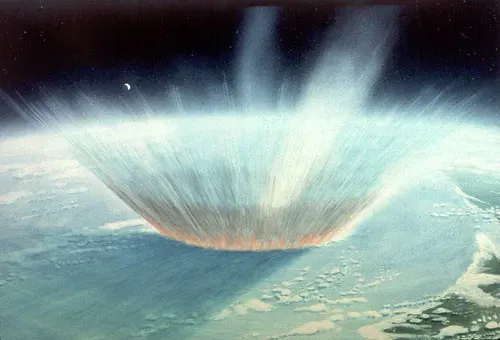
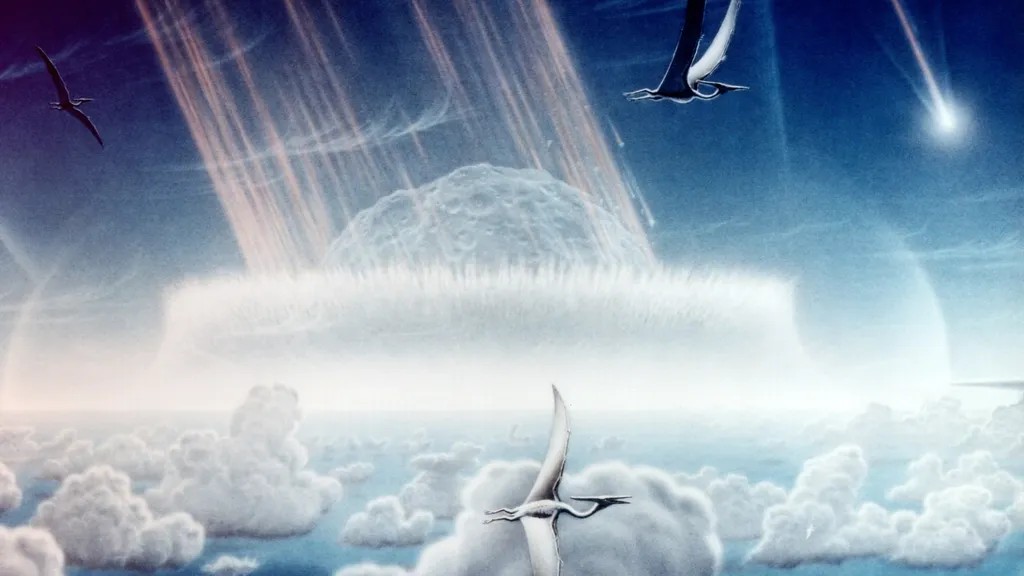
Roughly sixty-six million years ago, an asteroid the size of Mount Everest came hurtling through space faster than any jet airliner. Think about that for a moment. A mountain-sized rock traveling at unimaginable speeds, heading straight for our planet.
The impact struck what is now Mexico’s Yucatán Peninsula with the force of more than a billion nuclear bombs, punching a hole in Earth’s crust more than ten miles deep and over one hundred miles wide. Tsunamis, wildfires, earthquakes and volcanic eruptions raged around the planet while dust and soot clogged the atmosphere, turning the world dark for years as plants couldn’t photosynthesize, forests collapsed, herbivores died, and carnivores followed. Honestly, it’s hard to even grasp the scale of destruction.
Mammals Were Already Waiting in the Wings
Here’s where things get interesting. Mammals didn’t follow dinosaurs in evolutionary history but both groups trace their origins to the same time and place: around 225 million years ago, when all of Earth’s land was gathered into the supercontinent Pangea. They were neighbors from the start.
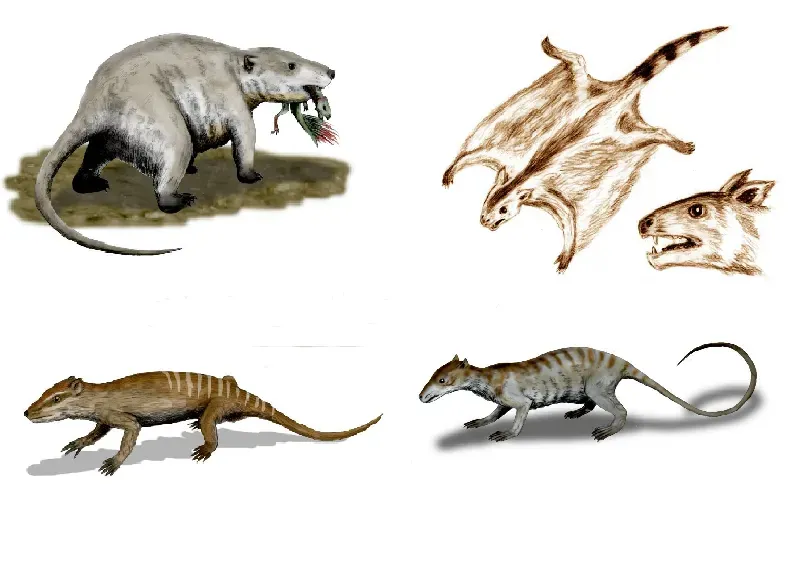
Between 201 million and 66 million years ago, a bounty of pint-sized mammals, none larger than a badger, lived underfoot of the dinosaurs and included scurriers, climbers, diggers, swimmers and gliders. These weren’t primitive critters just barely scraping by. Some, like Repenomamus robustus, actually fed on vertebrates including dinosaurs, with fossilized remains showcasing what was most likely a predation attempt directed at a specimen of the dinosaur Psittacosaurus. Let’s be real: that’s remarkable.
No mammal ever got larger than a badger, as they were held in check by the dinosaurs, but conversely, the smart and furry little mammals kept dinosaurs from the small-bodied niches, so there never was a miniature T. rex or Triceratops as both groups diversified, claiming separate realms as their own.
Surviving the Apocalypse Was No Accident
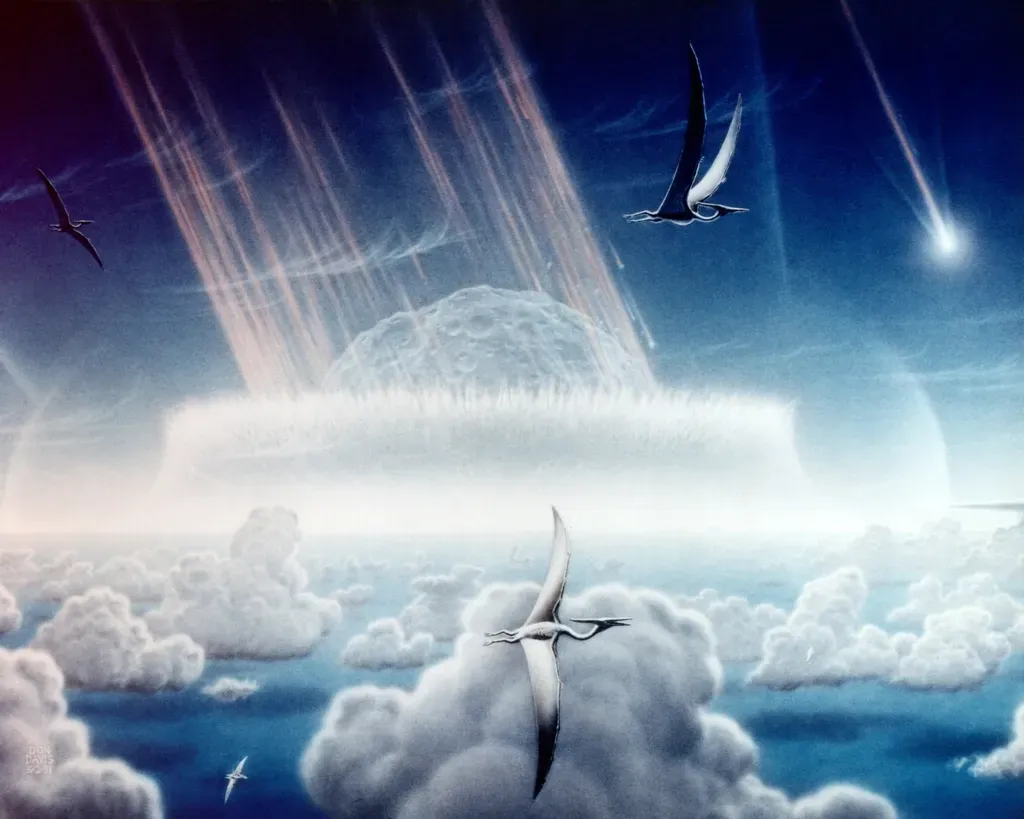
Three out of every four species succumbed to extinction, with dinosaurs being the most famous victims as all the long-necked, horned, duck-billed, dome-headed and sharp-toothed ones died, with only a handful of birds carrying on the dinosaur legacy. New research shows that mammal survival was a close call, and their fate hinged on what happened in the days, decades and millennia after the asteroid impact, making the asteroid both their moment of greatest peril and their big break.
The animals with the best shot at lasting through those initial hours were the ones who could escape to cooler environments, as all the surviving species were plausibly able to take shelter from heat and fire underground or in water. Small bodies helped too. The asteroid impact triggered a heat pulse that ignited forest fires globally while dense clouds of debris and soot were ejected into the atmosphere, cooling the planet and likely blocking sunlight, while acid rain poured down.
Ground Dwellers Had the Upper Hand
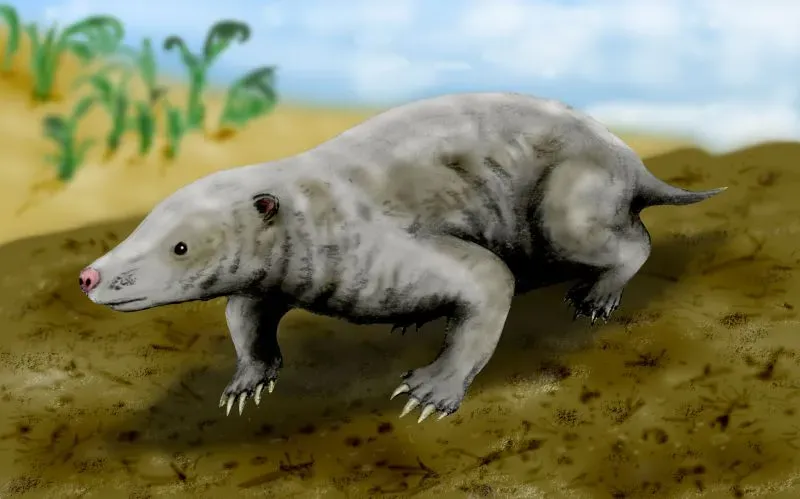
Large-scale devastation of forested environments resulting from the Chicxulub asteroid impact likely influenced the evolutionary trajectories of multiple groups, including terrestrial mammals, with findings consistent with the hypothesis that predominantly non-arboreal mammals preferentially survived this mass extinction. Tree dwellers had nowhere to hide when the forests burned.
Tiny fossils suggest that many small mammals embraced ground-based living long before the arrival of the asteroid, several million years ahead of that cosmic event, challenging the idea that mammals only moved down from the trees to the ground after dinosaurs were out of the picture. They were already positioned perfectly. I find this detail incredible because it shows adaptation happening well before disaster struck.
The Explosion of Mammalian Diversity
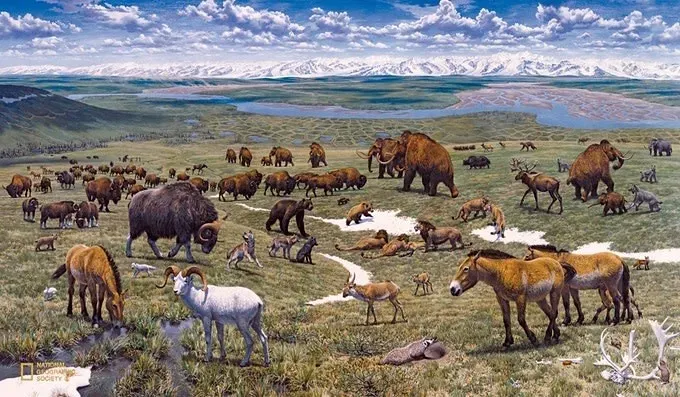
The diversity of mammals on Earth exploded straight after the dinosaur extinction event, with new analysis of the fossil record showing that placental mammals became more varied in anatomy during the Paleocene epoch, the ten million years immediately following the event. This wasn’t gradual. It was explosive.
When dinosaurs went extinct, a lot of competitors and predators of mammals disappeared, meaning that a great deal of the pressure limiting what mammals could do ecologically was removed, and they clearly took advantage of that opportunity, as seen by their rapid increases in body size and ecological diversity. Mammals evolved a greater variety of forms in the first few million years after the dinosaurs went extinct than in the previous 160 million years of mammal evolution under the rule of dinosaurs.
Small Mammals Also Diversified Dramatically
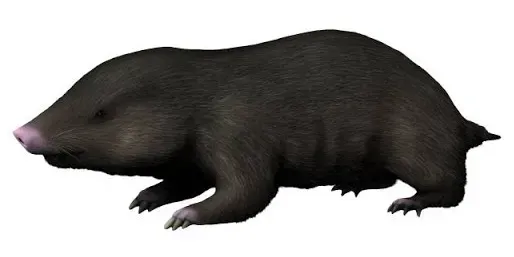
Here’s something that surprised researchers: New sampling of fossilized mammals across North America is demonstrating that the diversification of mammalian species following the extinction of the dinosaurs cannot solely be explained by the evolution of large body sizes alone, as smaller mammal species of less than 100g diversified at a similar magnitude to larger ones. It wasn’t just about getting big.
An asteroid impact is certain to cause ecosystem disruption, opening up new niches that may not have existed before, and this could have been a combination of niche-clearing by extinctions among both dinosaurs and earlier mammal clades alongside the appearance of novel niches in the Cenozoic, allowing faunas to support more species. The whole environment was being restructured from scratch.
Plants and Mammals Co-Evolved Together
The record confirms the devastation wrought by the impact, as for 1000 years afterward just a few furry creatures no bigger than 600-gram rats roamed a ferny world where flowering plants, with their nutritious seeds and fruits, were scarce. It sounds bleak. The initial recovery was slow and harsh.
Over the next 200,000 years, the “palm period” gave way to the “pecan pie” period when walnutlike plants arose as new mammals evolved to take advantage of the nutritious seeds, with mammal diversity increasing threefold and the biggest of the new species reaching 25 kilograms, beaver size. A three-fold increase in maximum mammalian body mass and dietary niche specialization occurred roughly 300,000 years post-impact, concomitant with increased megafloral standing species richness, and the appearance of additional large mammals occurred by roughly 700,000 years post-impact, coincident with the first appearance of Leguminosae, the bean family, with these concurrent plant and mammal originations and body mass shifts coinciding with warming intervals.
From Rat-Sized to Rulers
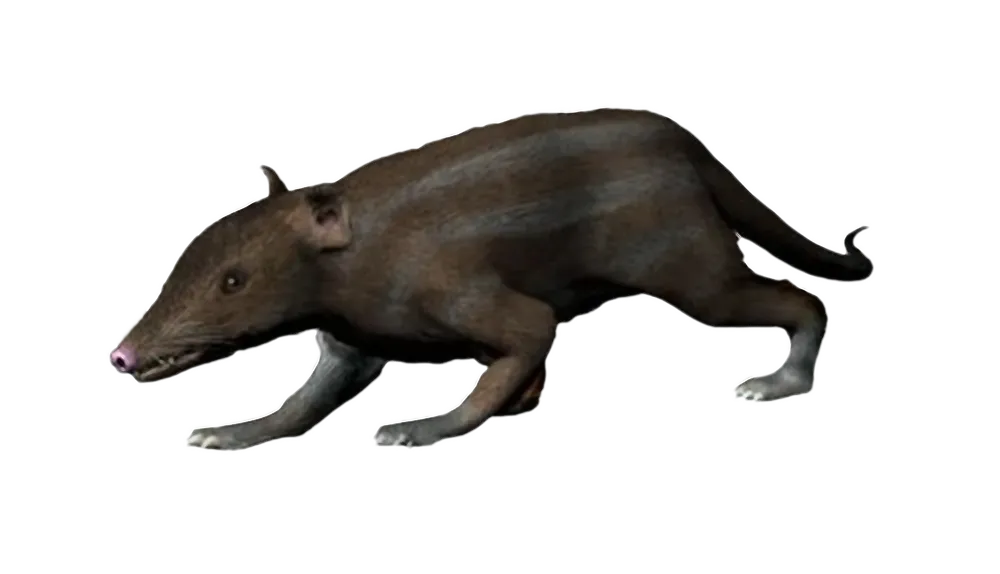
Not only did mammals diversify, but they got much larger as they filled the ecological vacuum left by the dinosaurs, with placentals the size of pigs appearing within a few hundred thousand years of the asteroid, and within a couple of million years, some were as big as cows. Within the mammalian genera, new species were approximately nine percent larger after the K-Pg boundary, and after about 700,000 years, some mammals had reached 50 kilos, a 100-fold increase over the weight of those which survived the extinction.
It was only around 15 million years after the non-bird dinosaurs disappear, during the Oligocene Epoch, that really big mammals started to reappear, when rhino-sized animals start to reappear, as up until that point it’s a world filled with small animals, especially in comparison with the dinosaurs that came before them. Building a new world took time. Patience. Generations upon generations of adaptation.
The asteroid impact sixty-six million years ago wasn’t just a cosmic coincidence. It was the event that rewrote the rules of life on Earth and gave mammals their moment. Without it, we’d probably still be small, nocturnal creatures hiding in the underbrush. Instead, mammals seized the opportunity, diversified into thousands of forms, and eventually gave rise to primates, and ultimately, to us. The asteroid didn’t just kill the dinosaurs. It cleared the stage for an entirely new act in the history of life.
So what do you think? Would mammals have eventually become dominant anyway, or was that cosmic collision truly the turning point? Tell us your thoughts.