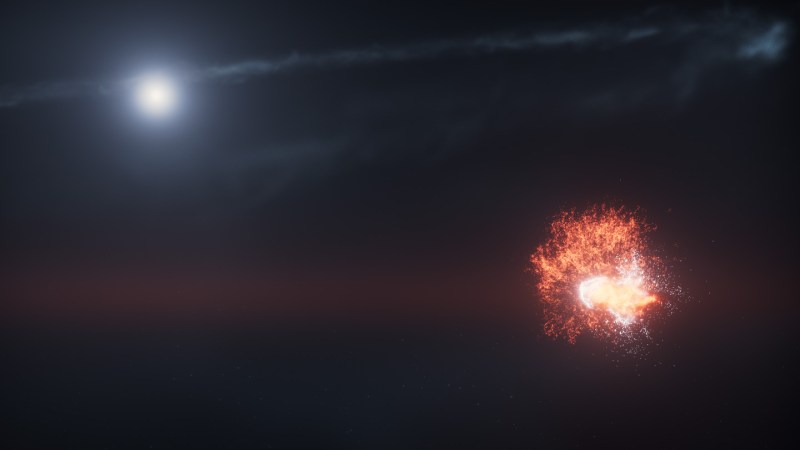
Astronomers have long puzzled over a bright object near a nearby star that seemed to vanish without a trace, but fresh observations from NASA’s Hubble Space Telescope now point to a dramatic explanation rooted in planetary violence.
A Surprising Celestial Impostor
The saga began two decades ago when scientists spotted a glowing point of light orbiting Fomalhaut, a star just 25 light-years from Earth. At first, researchers hailed it as Fomalhaut b, a potential exoplanet that could offer clues about worlds beyond our solar system. Excitement built as the discovery promised insights into how planets form in young stellar systems.
However, follow-up views revealed a twist: the object had dimmed dramatically by 2014, leading some to question its very existence. Skeptics proposed it might never have been a planet at all, but the true nature remained elusive. Recent Hubble images, captured in high resolution, finally provided the missing pieces to this interstellar detective story.
Evidence of a Massive Impact
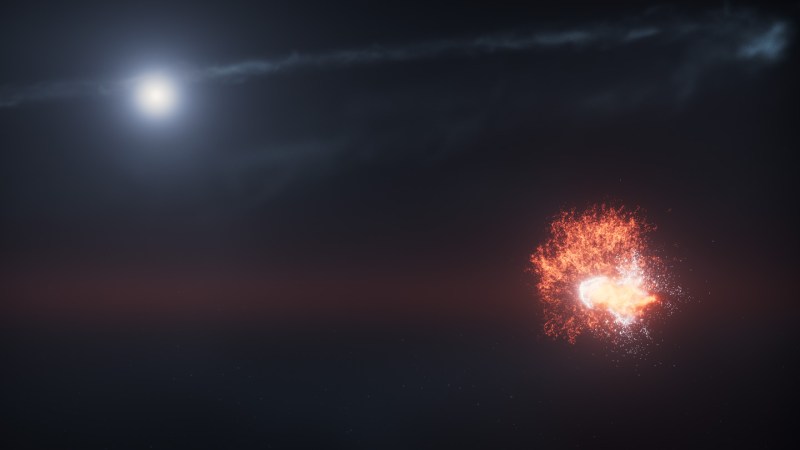
Analysis of the new data shows that the original bright spot resulted from a colossal smash-up between two bodies roughly the size of asteroids. This collision spewed vast clouds of dust and debris into space, creating the illusion of a planetary body from afar. Over time, the dust dispersed or settled, causing the “planet” to fade from view.
Even more remarkably, Hubble detected signs of a second such event nearby. Fresh debris clouds appeared in the star’s disk, suggesting ongoing turmoil in this youthful system. Fomalhaut, at about 440 million years old, remains in the turbulent phase where planets coalesce through such destructive encounters. These findings, detailed in observations released this week, rewrite the narrative of what astronomers thought they saw.
Timeline of the Enigma
The sequence of events unfolded over years of scrutiny. In 2004, the initial detection sparked global interest in exoplanet hunting. By 2008, refined images confirmed the object’s position, fueling speculation about its composition – perhaps a gas giant like Jupiter.
Yet doubts emerged in subsequent years. Ground-based telescopes and later Hubble revisits showed no consistent motion or features expected of a planet. The 2025 images sealed the case, revealing irregular dust patterns consistent with collision aftermath rather than a stable orbit.
To illustrate the progression:
- 2004: Bright object spotted, dubbed Fomalhaut b.
- 2008: Confirmed in Hubble imagery as potential exoplanet.
- 2014: Object fades, mystery deepens.
- 2025: New Hubble data exposes collision debris.
Broader Lessons for Planetary Science
This revelation sheds light on the chaotic birth of planets. Collisions like these sculpt debris disks around young stars, gradually building larger bodies through accretion and destruction. Fomalhaut’s system, with its prominent dust belt, serves as a natural laboratory for these processes.
Astronomers now caution against hasty interpretations of distant lights. What appears as a planet in one snapshot might prove ephemeral in the next. Such events, though rare to witness directly, underscore the dynamic nature of cosmic evolution. Future telescopes like the James Webb Space Telescope could capture even finer details of similar spectacles.
Key Takeaways
- The “disappearing exoplanet” was likely dust from an asteroid-scale collision.
- Hubble’s images reveal two such events in Fomalhaut’s disk within 20 years.
- This offers a rare glimpse into the violent stages of planet formation.
As Hubble continues to peer into the universe’s hidden dramas, discoveries like this remind us how much remains unknown about our cosmic neighborhood. The resolution of Fomalhaut’s mystery not only closes one chapter but opens avenues for deeper exploration. What other illusions might lurk in the stars? Share your thoughts in the comments.