Researchers have confirmed the presence of ceratopsian dinosaurs in Late Cretaceous Europe through meticulous analysis of new fossils from Hungary. These horned herbivores, long absent from the European fossil record, now emerge as key players in ancient island ecosystems. The findings challenge over a century of assumptions and reveal a more diverse prehistoric continent than previously imagined.
Shattering Long-Held Doubts
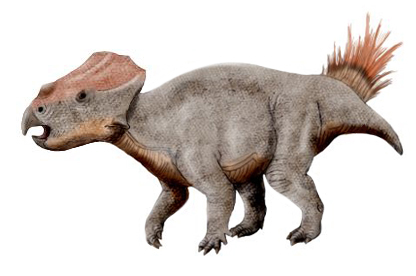
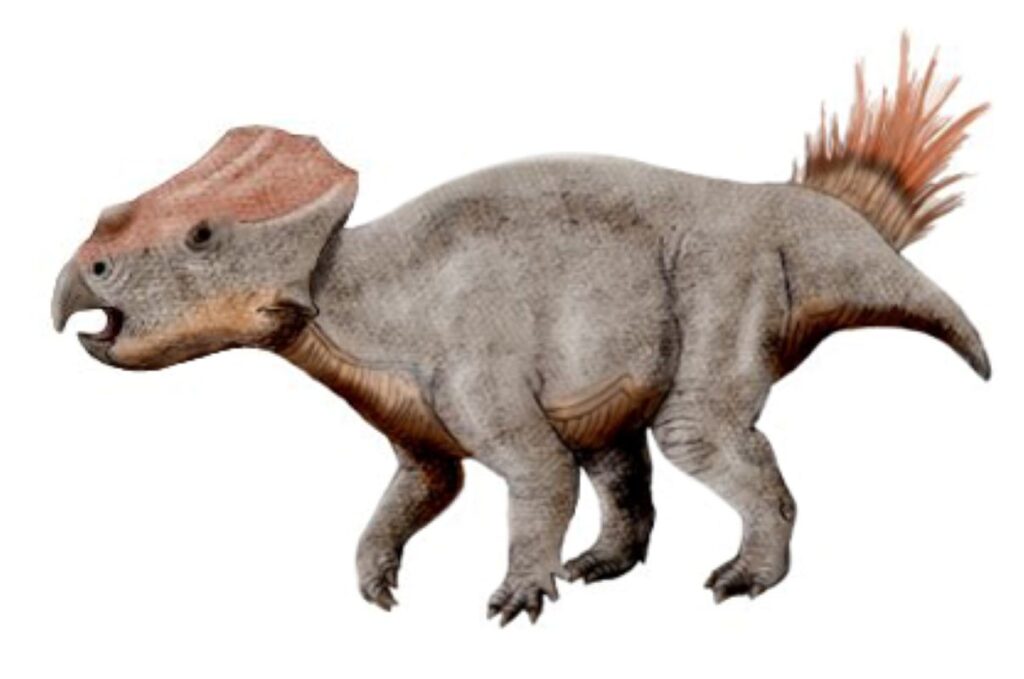
Shattering Long-Held Doubts (Image Credits: Wikimedia)
A species named Ajkaceratops kozmai first appeared in scientific literature in 2010, based on fragmentary remains from Hungary’s Iharkút site. Experts debated its identity: some saw a primitive ceratopsian, while others linked it to iguanodontians like Iguanodon. The scarcity of complete fossils fueled skepticism, as ceratopsians dominated Asia and North America but seemed to skip Europe entirely.
New discoveries changed the narrative. An articulated skull, cataloged as MTM 2025.1.1, provided the clarity needed. Dated to about 84 million years ago during the Santonian stage, this specimen proved decisive. Professor Susannah Maidment of the Natural History Museum in London led the team that resolved the controversy.
Advanced Techniques Seal the Deal
The research team employed CT scanning and digital reconstruction to examine the skull’s details, including the snout, maxilla, and tooth structure. Phylogenetic analyses using software like TNT and MrBayes placed Ajkaceratops firmly within the ceratopsian clade, an early-diverging member akin to Asian relatives. These methods revealed traits shared with protoceratopsids but distinct from iguanodontians.
Professor Richard Butler of the University of Birmingham highlighted the excitement: “What’s so exciting about the new Ajkaceratops fossil is that it allows us to confirm that horned dinosaurs roamed the islands of Cretaceous Europe, but also challenges us to radically rethink our understanding of these ancient ecosystems.” The study, published in Nature on January 7, 2026, integrated data from multiple European sites.
Revealing a Cascade of Reclassifications
The confirmation extended beyond Ajkaceratops. Fossils once labeled as rhabdodontids – Europe-exclusive iguanodontian relatives – proved to be ceratopsians too. Mochlodon vorosi became a junior synonym of Ajkaceratops kozmai. Another taxon, Zalmoxes shqiperorum from Romania, entered a new genus: Ferenceratops shqiperorum.
These shifts exposed similarities in teeth, limbs, and chewing mechanisms between ceratopsians and iguanodontians, explaining past misidentifications. Maidment noted how shared ancestry and lifestyles blurred lines with incomplete bones. The revisions suggest ceratopsians thrived alongside other herbivores on Europe’s archipelago.
- Ajkaceratops kozmai: Confirmed primitive ceratopsian from Hungary.
- Mochlodon vorosi: Synonymized with Ajkaceratops.
- Ferenceratops shqiperorum: New ceratopsian from Romanian fossils.
- Implications: Greater diversity in island faunas.
Reshaping Views of Dinosaur Migration
Late Cretaceous Europe formed a patchwork of islands amid the Tethys Sea, fostering unique evolution like dwarfism. Ceratopsians likely island-hopped from Asia, mirroring Allosaurus crossings to Portugal. Professor Steve Brusatte of the University of Edinburgh remarked: “Horned dinosaurs like Triceratops are some of the most iconic dinosaurs but most of them are from North America, and now we’ve found them in Europe, hiding in plain sight because they’ve been misidentified for decades.”
The paper’s abstract underscores the surprise: “Our results unexpectedly demonstrate that some ‘rhabdodontid’ taxa are not, in fact, iguanodontians but actually ceratopsians.” This co-existence with iguanodontians aligns European assemblages with broader Laurasian patterns.
| Previous Classification | New Classification | Location |
|---|---|---|
| Rhabdodontid (iguanodontian) | Ceratopsian (Ajkaceratops kozmai) | Hungary |
| Zalmoxes shqiperorum | Ferenceratops shqiperorum | Romania |
Key Takeaways
- Ceratopsians filled a major gap in Europe’s dinosaur record.
- New fossils demand reevaluation of herbivore diversity.
- Island ecosystems hosted unexpected travelers from Asia.
These revelations transform our picture of a fragmented continent teeming with horned giants. As museum collections yield more secrets through modern tools, Europe’s prehistoric role grows clearer. What do you think about these island-hopping dinosaurs? Tell us in the comments.