Washington, D.C. – Trailblazing marine biologist Edie Widder embarks on a career-spanning journey through glowing ocean depths in the documentary A Life Illuminated, premiering March 19 at the D.C. Environmental Film Festival.
Pioneering Dives into the Unknown
Pioneering Dives into the Unknown (Image Credits: Imgs.mongabay.com)
Edie Widder transformed perceptions of the deep sea during her half-century career. She conducted hundreds of submersible dives, starting in the 1980s with equipment originally designed for oil and gas operations. Widder trained rigorously, lifting weights for a year to don the heavy suits built for men.
One expedition turned perilous when her submersible began flooding, water rising to her ankles. She surfaced safely, oversaw repairs, and plunged back down within hours. Such resilience defined her path as one of the first women to explore the ocean’s twilight zone.
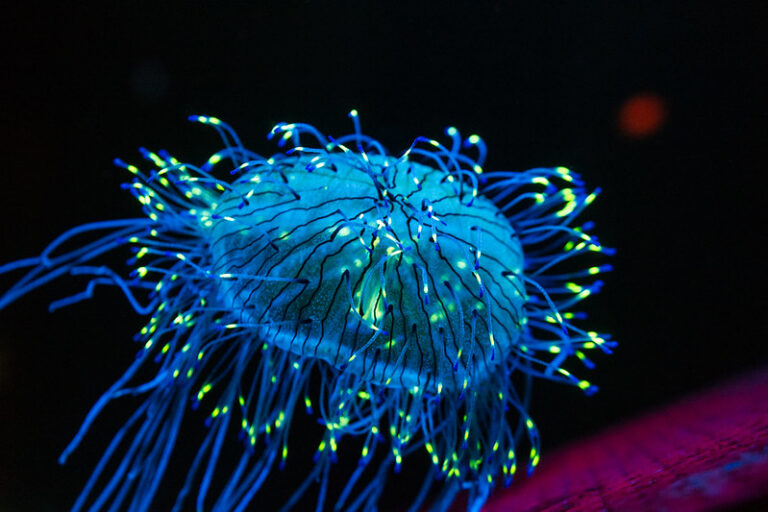
Her undergraduate experience with temporary blindness fueled an obsession with light. That drive led her to study bioluminescence, the chemical light production prevalent among deep-sea life but rare on land beyond fireflies.
Capturing the Elusive ‘Flashback’ Phenomenon
In 2023, Widder joined an OceanX expedition off Portugal’s Azores islands to film “flashback,” a stunning display where myriad organisms ignite in unison against a submersible’s light. Witnesses described the pitch-black void erupting into an ethereal snowstorm of glows.
Previous attempts yielded poor footage. Success came through low-light-sensitive cameras paired with powerful torchlights. “It wasn’t the first video documentation of the flashback but it was definitely the best,” Widder stated.
“To me it’s a very big deal. First of all it’s a testament to the profusion of life in the ocean,” she added. With lights on, the sea appeared empty; yet life filled every cubic meter of those remote depths.
Innovations That Redefined Deep-Sea Observation
Widder shifted research from destructive trawls to in-situ tools. Her SPLAT screen measured bioluminescent output as organisms collided with it. Later, the Eye-in-the-Sea camera used red light invisible to most deep-sea creatures.
Paired with an “electronic jellyfish” mimicking distress signals, it lured a 1.8-meter unknown squid in its debut. An upgraded version, The Medusa, captured the first natural-habitat video of a giant squid off Japan’s Ogasawara Islands in 2012. Widder called it “the holy grail of natural history cinematography.”
- SPLAT screen: Quantified plankton light via collisions.
- Eye-in-the-Sea: Red-light camera for unobtrusive viewing.
- Electronic jellyfish: Lured predators with false signals.
- The Medusa: Filmed giant squid in 2012 and Gulf of Mexico in 2019.
Bioluminescence: Survival in the Dark
Most deep-sea animals produce light for hunting, evasion, or camouflage. Anglerfish dangle glowing lures; counterilluminators match downwelling light to erase silhouettes from below.
Widder hypothesizes flashback stems from bioluminescent bacteria on marine snow – organic detritus raining from surface waters. Light flashes might spark bacterial photosynthesis, producing oxygen and glow, linking to climate regulation and planetary habitability.
Directed by Tasha Van Zandt, A Life Illuminated weaves archival footage with Azores dives, world-premiered at Toronto in September. It underscores the deep sea – below 200 meters – as Earth’s largest habitat, brimming with fragile life.
Key Takeaways
- Widder founded the Ocean Research and Conservation Association to protect marine ecosystems.[3]
- Her work reveals bioluminescence as the deep sea’s “language,” vital for conservation.
- Flashback footage highlights unseen biodiversity, urging deep-ocean protection.
Widder’s legacy illuminates not just the ocean but humanity’s need to safeguard its mysteries. The deep sea’s glow demands our attention amid growing threats. What aspect of her discoveries intrigues you most? Tell us in the comments.