Indonesia – Wildlife researchers have challenged long-held assumptions about the economic role of the country’s legal freshwater turtle trade, finding it sustains only a tiny fraction of collectors amid declining populations.
Ancient Survivors Under Siege
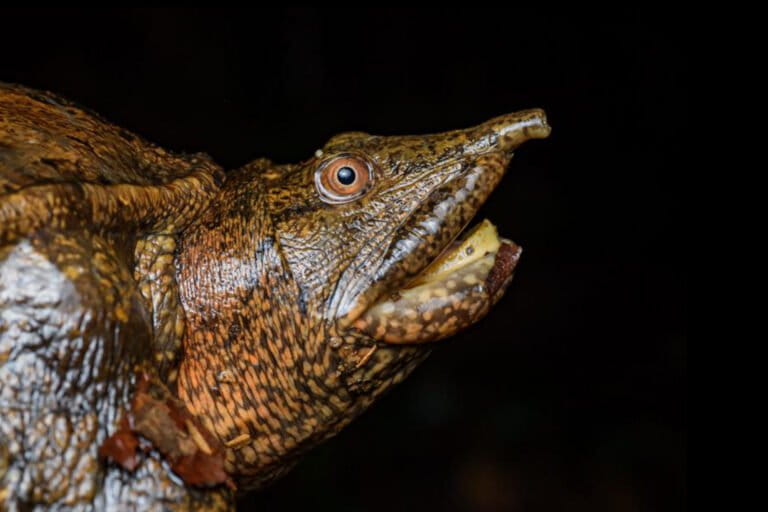
Ancient Survivors Under Siege (Image Credits: Imgs.mongabay.com)
Turtles boast an evolutionary legacy spanning over 200 million years, enduring cataclysmic events that felled dinosaurs. Yet Southeast Asia witnessed a sharp plunge in chelonian numbers early this century, igniting the “Asian turtle crisis” amid surging demand from China’s expanding middle class.
Habitat loss and pollution compounded the pressure, pushing more than half of global tortoise and turtle species toward peril. Indonesia emerged as a key exporter, permitting nearly 50,000 freshwater turtles annually for meat, primarily destined for overseas markets. Four species dominate the quota: the vulnerable Asiatic softshell turtle, endangered Southeast Asian box turtle, Asian leaf turtle, and Malayan softshell turtle. Recent taxonomic revisions elevated Indonesia’s Palu box turtle to critically endangered status, heightening urgency.
Economics of the Trade Exposed
A recent analysis in Discover Animals by Vincent Nijman and colleagues dissected harvester incomes against provincial minimum wages from 2016 to 2022. Market prices ranged from $1.10 to $20 per turtle, yielding estimates that the legal quota could underpin just 241 to 306 full-time collectors at subsistence minimum wage levels.
That figure shrank to 161-204 for a livable wage, roughly 1.5 times the minimum, before accounting for costs like permits and transport. Provinces in Borneo, such as North and East Kalimantan, hosted the most viable opportunities, supporting up to 41 collectors combined. Nijman noted, “We were looking for some support for the idea that, indeed, wildlife trade contributes to livelihoods.”
| Income Threshold | Estimated Collectors Supported |
|---|---|
| Subsistence Minimum Wage | 241-306 |
| Livable Wage (1.5x Minimum) | 161-204 |
| 10% of Annual Income (Occasional) | 2,400-3,000 |
In a nation of 285 million, these numbers represent mere hundreds, or 5-10 per million even with illegality factored in.
Illegal Shadows and Unsustainability
Researchers suspect much of the trade exceeds quotas, with black market activity reaching 90% for certain species. Chris Shepherd, a co-author, argued, “Wild-caught turtle trade is not sustainable, and therefore it doesn’t make sense to promote it as a livelihood issue.”
These slow-reproducing omnivores serve vital ecological roles, scavenging waterways and maintaining balance. Overharvest risks irreversible declines, especially for CITES-regulated species requiring export permits.
- Asiatic softshell turtle (Amyda cartilaginea): Vulnerable, common in quotas.
- Southeast Asian box turtle (Cuora amboinensis): Endangered, recently split into multiple taxa.
- Asian leaf turtle (Cyclemys dentata): Opportunistic scavenger.
- Malayan softshell turtle (Dogania subplana): Targeted despite declines.
Urgent Calls for Reform
Experts advocate stricter quota enforcement, bans on threatened species, and alternative income sources for dependents. Jordan Gray of the Turtle Survival Alliance warned, “With the recognition of the Palu box turtle as a distinct, critically endangered subspecies, this demands a swift action to revise or suspend the harvest quotas.”
Shepherd emphasized sustainable options over exploitative harvests. Policymakers now face pressure to prioritize data-driven conservation, potentially reshaping trade regulations before chelonians vanish from Indonesian waters.
Key Takeaways
- Legal trade bolsters few hundred jobs at best, negligible nationally.
- Illegality likely sustains profitability but accelerates declines.
- Bans, enforcement, and livelihood alternatives offer a viable path forward.
Indonesia stands at a crossroads: cling to outdated justifications or pivot toward protection that truly benefits communities and biodiversity. What steps should authorities take next? Share your thoughts in the comments.