Louisiana – Invasive species now challenge the delicate balance of the state’s rice and crayfish farms, which double agricultural output while serving as key habitats for waterbirds.
Thriving Farms Face Unseen Foes
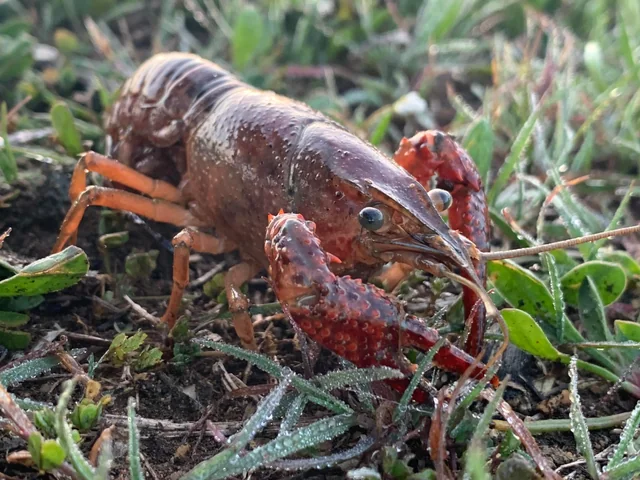
Thriving Farms Face Unseen Foes (Image Credits: Reddit)
Farmers in Louisiana pioneered a system where rice fields flood to support crayfish, effectively turning cropland into productive wetlands. This approach boosted yields significantly and created artificial habitats for species such as rails, American coots, and grebes. The integration supported local economies and wildlife conservation efforts simultaneously.
However, recent expansions of invasive pests have disrupted this harmony. Rice delphacids and apple snails proliferated, forcing growers to adapt quickly. Cultivation became more costly and labor-intensive as harvesting crayfish now required parallel pest control measures.
Apple Snails: Voracious Destroyers of Seedlings
Pomacea maculata, known as the apple snail, targets the tender young shoots of rice plants. These invaders consume seedlings voraciously, reducing stand establishment and overall crop viability. Originating from South America, the snails adapted rapidly to Louisiana’s warm, wet conditions.
Farmers reported heightened difficulties in maintaining field integrity. The snails not only thinned rice populations but also complicated water management in the dual-crop setup. Control efforts demanded shifts in timing between crayfish and rice phases, straining operations further.
Rice Delphacids: Sap-Suckers and Virus Vectors
Tagosodes orizicolus, or rice delphacids, pierce rice stems to extract sap, leaving behind circular dead patches across fields. These planthoppers also spread a debilitating virus that stunts growth or kills plants outright. Infestations accelerated in recent seasons, amplifying damage.
The pests’ mobility worsened the spread, turning manageable issues into widespread threats. Fields once reliable for both rice and crayfish now showed uneven yields. Wildlife depending on these wetlands faced indirect pressures as habitat quality declined.
- Rice plants exhibit dead spots from sap extraction.
- Virus transmission leads to stunted or dead crops.
- Planthoppers proliferate in flooded conditions ideal for crayfish.
- Increased scouting and intervention disrupt farm rhythms.
Balancing Agriculture, Economy, and Ecology
The rice-crayfish model sustained rural communities and bolstered bird populations in a working landscape. Rails navigated the shallow waters, coots foraged abundantly, and grebes nested amid the reeds. Yet pests eroded these benefits, prompting urgent adaptations.
Adam Famoso, director of Louisiana State University’s Rice Research Station, emphasized the complexity. “I think everyone agrees, it’s not going to be a silver bullet approach. Like, oh, we can just breed for it or we could just spray our way out of it,” he told AP News.
Researchers explored integrated pest management, but no quick fixes emerged. Farmers weighed chemical controls against wetland health, prioritizing long-term sustainability.
Key Takeaways
- Invasive apple snails devour rice seedlings, complicating dual harvests.
- Rice delphacids cause sap damage and viral outbreaks in fields.
- Louisiana’s farms support waterbirds like coots and grebes amid economic pressures.
These invasions highlight the vulnerability of multifunctional landscapes to non-native species. Protecting rice-crayfish operations demands coordinated efforts from agriculture and conservation sectors. What steps can safeguard such ecosystems moving forward? Share your thoughts in the comments.