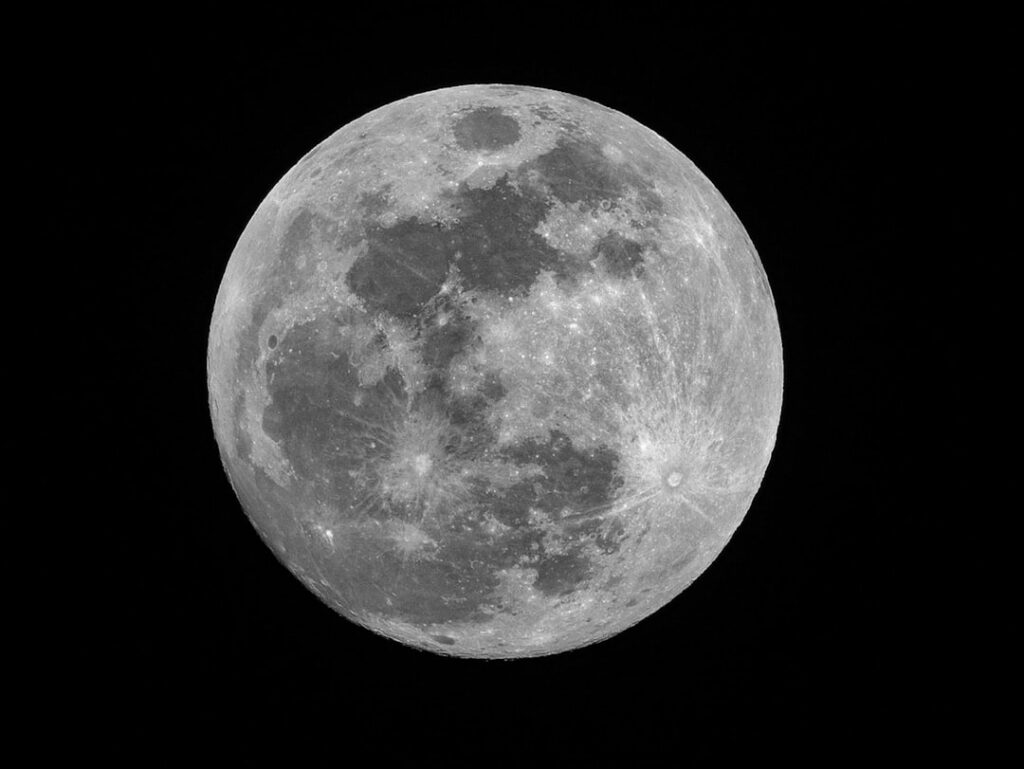
Astronomy fans prepare for a dynamic week from January 23 to 30, highlighted by Pluto’s conjunction with the Sun and the Moon’s passes near Saturn and Neptune in the morning sky.
Pluto Aligns Behind the Sun to Open the Week

Pluto Aligns Behind the Sun to Open the Week (Image Credits: Unsplash)
Pluto reaches conjunction with the Sun at 5 A.M. EST on Friday, January 23, marking a precise alignment where the distant dwarf planet sits directly behind our star from Earth’s viewpoint.
This event renders Pluto invisible to observers, as sunlight overwhelms its faint light. Conjunctions like this occur annually for Pluto due to its elongated orbit, yet they serve as key markers in celestial calendars. Skywatchers note the position for future tracking when Pluto emerges from the Sun’s glare in coming weeks. The alignment underscores the vast scales of our solar system, with Pluto residing billions of kilometers away.
Moon Glides Past Saturn and Neptune
The Moon passes 4° north of Saturn at 8 A.M. EST on January 23 morning, followed by a 4° north pass of Neptune at 11 A.M. EST later that day.
These close approaches create striking views of the Moon alongside these outer planets. Saturn, with its iconic rings, appears brighter and easier to spot than faint Neptune, which often requires binoculars or a telescope. The trio – Moon, Saturn, and Neptune – clusters in the southwestern sky before dawn, offering a compact target for early risers. Such lunar passages highlight the dynamic motion of celestial bodies against the starry backdrop.
Prime Times and Positions for Viewing
Observers target predawn hours on January 23 for the best sights, when the southwestern horizon holds the planetary group.
Clear skies and minimal light pollution enhance visibility, particularly for Neptune’s subtle glow. Saturn shines steadily, while the Moon’s phase adds context to the scene.
| Event | Date and Time (EST) | Sky Location |
|---|---|---|
| Pluto-Sun conjunction | January 23, 5 A.M. | Behind the Sun |
| Moon 4° north of Saturn | January 23, 8 A.M. | Southwest |
| Moon 4° north of Neptune | January 23, 11 A.M. | Southwest |
Essential Tips for Spotting the Trio
Locate Saturn first as your guidepost in the southwest, then scan nearby for the Moon and Neptune.
- Rise 90 minutes before sunrise to allow dark skies.
- Use a star chart app or planisphere for precise positions.
- Employ binoculars for Neptune; a small telescope reveals Saturn’s rings.
- Check weather forecasts for clear mornings.
- Face southwest and avoid city lights if possible.
- Document the view with photos or sketches.
Patience pays off, as atmospheric conditions can sharpen or blur distant objects. These events remind viewers of the solar system’s layered beauty.
Key Takeaways
- Pluto’s conjunction on January 23 signals its annual solar passage, invisible but noteworthy.
- The Moon’s double pass creates a rare trio with Saturn and Neptune in the southwest.
- Predawn viewing maximizes chances for clear sights of these alignments.
These January 23-30 highlights blend subtle and bold sky moments, inviting everyone to connect with the cosmos. For more details, visit Astronomy Magazine. What sky event excites you most this week? Share in the comments.