Jiangxi Province, China – Construction crews stumbled upon a treasure trove of dinosaur bones in early spring 2021, exposing a bonebed from the Late Cretaceous Lianhe Formation. Researchers from local geological institutes quickly secured permits and excavated the site in Shahe, Ganzhou City, revealing remains of at least two duck-billed dinosaurs. This find marked the first formally named hadrosaurid from South China, introducing Gongshuilong fanwei to science in 2026.
A Tail Like No Other Graces the Fossil Record
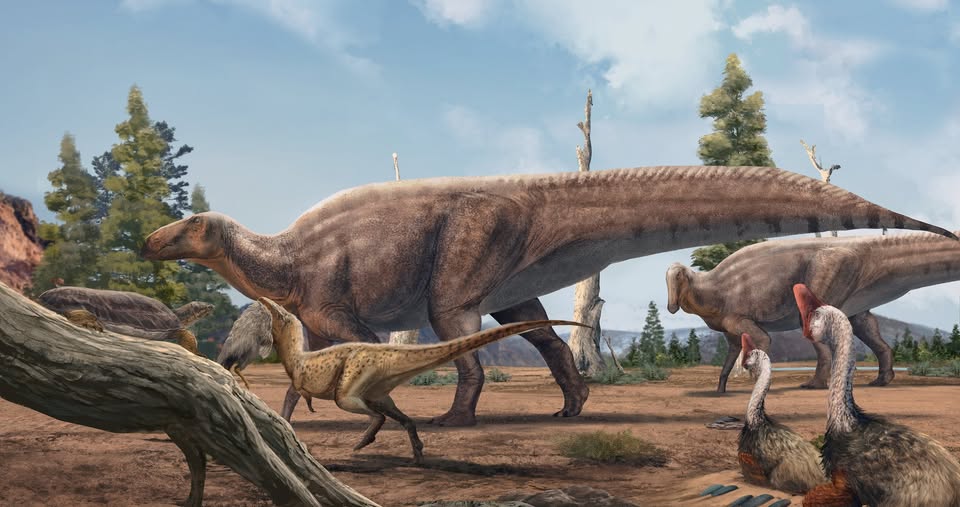
A Tail Like No Other Graces the Fossil Record (Image Credits: Facebook)
Workers could hardly have imagined uncovering a dinosaur with one of the most distinctive tails in hadrosaur history. The posterior caudal vertebrae of Gongshuilong fanwei bore markedly elongate neural spines, some reaching 8.5 times the height of their attached centra. These spines pointed posterodorsally and recurved moderately, likely forming a sail- or fan-like structure at the tail’s end. No other iguanodontian dinosaur displayed such an exaggerated feature.
This sail dominated the preserved tail section, consisting of ten articulated posterior caudal vertebrae. Paleontologists noted the spines’ unique proportions and orientation set Gongshuilong apart from relatives. The structure may have served display or thermoregulatory purposes, though its exact function remains speculative. Such traits underscored the morphological experimentation among Late Cretaceous hadrosaurs in Asia.
Diagnostic Traits Reveal a Distinct Species
Beyond the tail, Gongshuilong fanwei exhibited a suite of cranial and skeletal features that confirmed its status as a new species. The maxilla featured an elevated anterodorsal process slightly longer than the anteroventral one. Dentary tooth crowns showed a median primary ridge flanked by relatively small marginal denticles, while the edentulous region of the dentary proved extremely truncated.
Other hallmarks included an anteroposteriorly wide ventral process on the postorbital and a poorly developed deltoid ridge on the scapula’s lateral surface. These combined traits distinguished it within Saurolophinae. Here are the key diagnostic features:
- Elongate, recurved neural spines on posterior caudal vertebrae.
- Elevated, elongate anterodorsal process of maxilla.
- Truncated edentulous dentary region.
- Median ridge on dentary teeth with small denticles.
- Wide ventral postorbital process.
- Weak deltoid ridge on scapula.
The Bonebed That Captured Multiple Lives
The fossil collection, cataloged as BGS-JX F001, represented disarticulated remains from at least two individuals, determined by size variations in dentaries, scapulae, and tibiae. The holotype comprised a nearly complete right dentary (BGS-JX F001-1). A paratype included a partial skull region with the left jugal and quadrate (BGS-JX F001-2).
Referred specimens enriched the dataset: skull elements like maxilla, nasal, postorbital, and surangulars; four cervical vertebrae; a partial posterior dorsal vertebra; pectoral girdle pieces including scapulae and coracoid; forelimb humeri; and hindlimb bones such as tibiae and femur. Preparation occurred at the Basic Geological Survey Institute of Jiangxi. This assemblage provided a mosaic view of the animal’s anatomy. Estimates placed adults at around 7 meters in length, fitting a medium-sized hadrosaur frame.
Roots in Brachylophosaurini and Asian Origins
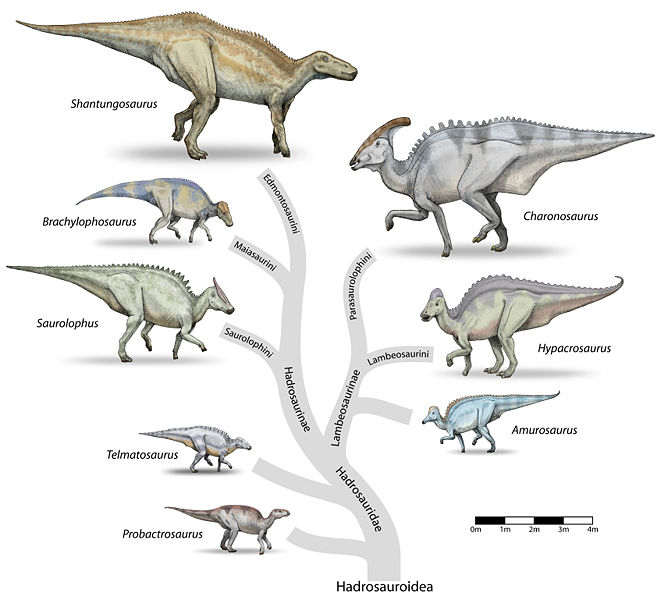
Phylogenetic analysis positioned Gongshuilong firmly within Saurolophinae, specifically the tribe Brachylophosaurini. It joined a polytomy at the tribe’s base alongside Wulagasaurus from northeast China, Acristavus, and the Maiasaura-Probrachylophosaurus-Brachylophosaurus clade – mostly North American taxa. As the second Asian member of this group, it bolstered arguments for an Asian origin of Brachylophosaurini.
Prior hadrosaurid fragments and eggs appeared in Ganzhou, but Gongshuilong became the region’s first named hadrosaurid. The Maastrichtian Lianhe Formation, middle Upper Cretaceous, preserved these fossils amid a diverse Late Cretaceous ecosystem. This discovery highlighted Asia’s underappreciated role in hadrosaur diversification before the end-Cretaceous extinction.
Key Takeaways
- Gongshuilong fanwei boasts the only known fan-like tail among iguanodontians, driven by towering neural spines.
- First named hadrosaurid from South China, supporting Asian roots for its tribe.
- Bonebed yields comprehensive skeletal insights from at least two 7-meter individuals.
Gongshuilong fanwei not only expands the hadrosaur map into South China but also invites fresh scrutiny of Asian dinosaur dispersals. This fan-tailed dynamo reminds us that major discoveries still lurk in everyday construction sites. What do you think this sail-like tail was for – display, balance, or something else? Tell us in the comments.