Australia – Researchers have uncovered evidence that massive prehistoric kangaroos, some weighing more than 250 kilograms, possessed the anatomical adaptations needed to hop. This discovery challenges decades-old assumptions derived from scaling modern species. The findings, drawn from detailed analysis of fossil hindlimbs, suggest these Ice Age giants could execute short bursts of hopping despite their enormous bulk.
Overturning Scaling Assumptions
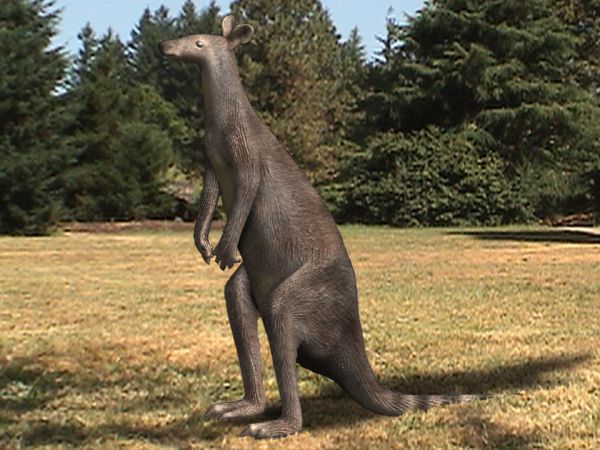
Overturning Scaling Assumptions (Image Credits: Upload.wikimedia.org)
Past studies estimated a strict upper limit for bipedal hopping around 140 to 160 kilograms. Those projections relied on allometric scaling from living kangaroos, like the red kangaroo topping out at about 90 kilograms. Scientists suspected such extrapolations overlooked key anatomical shifts in extinct giants.
A team led by Megan E. Jones examined hindlimb bones from 40 fossil specimens across multiple Pleistocene species. They integrated these with data from 94 modern kangaroo and wallaby samples representing 63 species. This approach revealed no mechanical barriers to hopping in the largest forms.
Robust Bones Built for Impact
The fourth metatarsal, a critical foot bone, emerged as a focal point. In modern hoppers, it faces intense bending forces during landing. Giant fossils displayed shorter, thicker versions with safety factors ranging from 1.5 to 3.5 – far exceeding the minimum threshold of 1 needed to withstand stresses equivalent to three times body weight.
Heel bones, or calcanea, provided further evidence. These structures anchored the gastrocnemius tendon, essential for propulsion. Measurements confirmed ample space for thicker tendons in extinct species, capable of handling hopping loads without failure.
| Feature | Modern Red Kangaroo | Giant Extinct Species |
|---|---|---|
| Metatarsal Safety Factor | ~1.12 (at 58kg) | 1.5–3.5 (up to 250kg) |
| Calcaneal Tuberosity | Accommodates standard tendon | Supports thicker tendons |
| Primary Use | Long-distance efficient hops | Short bursts |
Species Spotlight: From Sthenurines to Protemnodon
Sthenurines, short-faced browsers, featured prominently in the analysis alongside Procoptodon and Protemnodon species. These Pleistocene dwellers, extinct around 40,000 years ago, roamed Australia and New Guinea. Fossils of Sthenurus stirlingi, Simosthenurus occidentalis, and Protemnodon anak showed consistent robustness.
Even giant Macropus titan exceeded prior mass limits yet retained hopping viability. Lead researcher Megan Jones noted, “Our findings show that these animals weren’t just larger versions of today’s kangaroos, they were built differently.” Such adaptations likely enabled survival in diverse habitats.
- Shorter metatarsals reduced leverage for bending forces.
- Broader calcaneal tuberosities housed safety-enhanced tendons.
- Hyperallometric muscle scaling supported greater loads.
- Safety margins persisted across all tested giants.
- Combination gaits possible, blending hops with strides.
Short Bursts, Not Marathons
Thicker tendons offered strength but stored less elastic energy than slender modern equivalents. Dr. Katrina Jones explained, “This likely made giant kangaroos slower and less efficient hoppers, better suited to short bursts of movement.” Such capabilities suited escaping predators like Thylacoleo or navigating rough terrain.
Hopping formed one element in a versatile locomotor toolkit. Evidence points to mixes of bipedal walking, quadrupedal movement, and occasional leaps. Prehistoric Australia hosted grazers akin to today’s kangaroos plus browsers filling vanished niches.
Key Takeaways
- Fossil hindlimbs confirm hopping feasibility up to 250kg.
- Anatomical tweaks like robust metatarsals enabled it.
- Use limited to bursts, enhancing survival odds.
These revelations reshape views of Pleistocene megafauna dynamics. For more details, see the full Scientific Reports study. Understanding these giants’ true capabilities edges closer to unraveling their extinction. What do you think about these bounding behemoths? Tell us in the comments.