Imagine standing at the edge of an ancient sea, roughly 80 million years ago. The water is warm, teeming with life, and somewhere beneath the surface something lurks with jaws powerful enough to split a whale in half. No horror movie could capture it. No modern animal could rival it. The prehistoric world was a place where the rules of nature were written in bone, tooth, and sheer, terrifying force.
When we think about raw, jaw-dropping power in the animal kingdom, we almost always jump to the modern world – saltwater crocodiles, great white sharks, lions. Honestly, that instinct isn’t wrong. Those animals are genuinely frightening. Yet compared to what evolution produced millions of years before us, they’re little more than opening acts. What follows is a deep dive into the greatest biting machines that ever existed on this planet, and you might be surprised by just how strange, extreme, and awe-inspiring the full list turns out to be. Let’s dive in.
Megalodon: The Undisputed King of Crushing
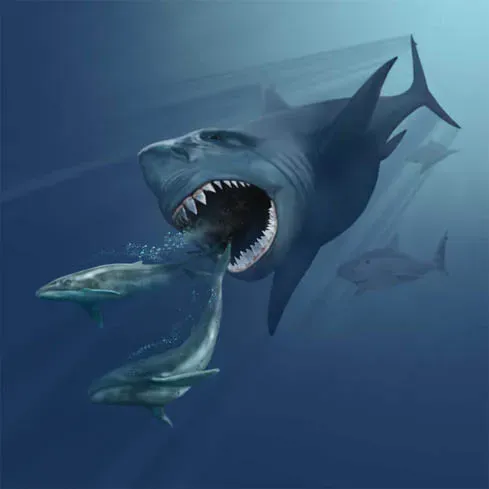
If you want to talk about the most powerful bite ever recorded on Earth, you start – and arguably end – with Megalodon. The most powerful bite of all time belongs to the prehistoric giant shark Megalodon. Scientifically known as Carcharocles megalodon, this enormous prehistoric shark is estimated to have grown between 50 to 60 feet in length, weighing as much as 70 tons. That’s not a fish. That’s a living submarine with serrated knives for teeth.
Their powerful jaws possessed the strongest bite of any known creature, with an estimated force of 24,000 to 40,000 pounds, enabling them to take down massive prey. Megalodon thrived during the Miocene and Pliocene epochs, roughly between 23 million and 2.6 million years ago. Megalodon probably went after much larger prey than its great white descendants – whales. Several bones from fossil whales are studded with tooth marks that match the giant gnashers of Megalodon, and the wounds tend to be concentrated around the flipper bones and tail vertebrae, suggesting the giant shark hunted by first crippling its prey.
Tyrannosaurus Rex: The Land-Based Bone Crusher
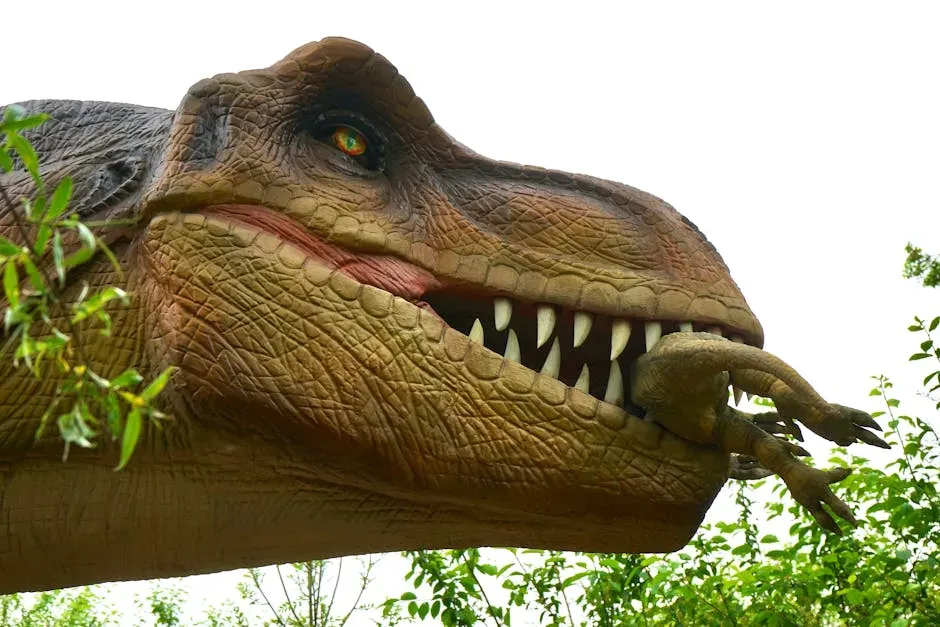
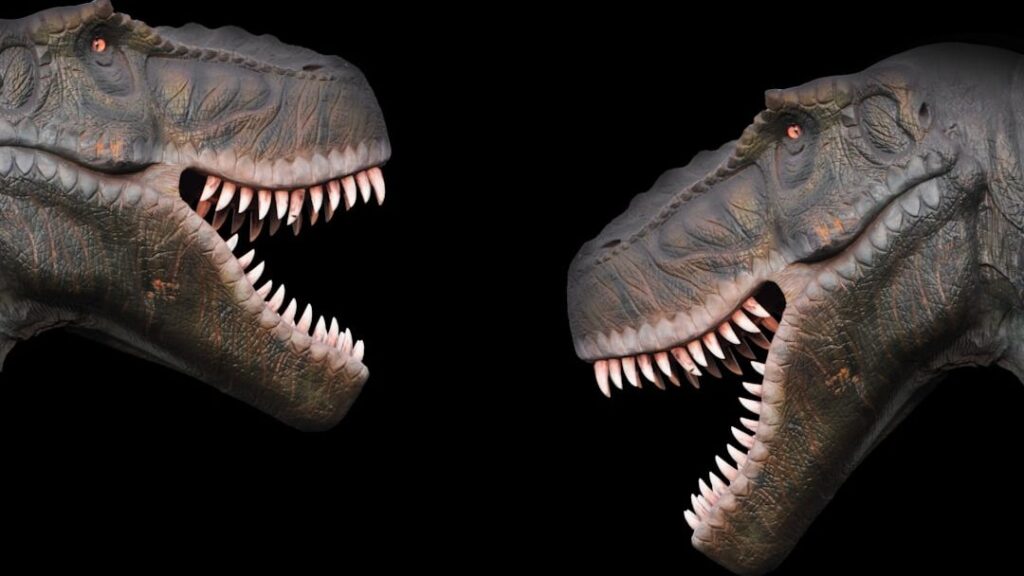
You knew T. rex was going to show up here, and rightly so. Although some other theropods might have rivaled or exceeded Tyrannosaurus in size, it is still among the largest known land predators, with its estimated bite force being the largest among all terrestrial animals. When computer models were used to simulate T. rex’s bite, researchers found a maximum bite force of almost 12,800 pounds – about the equivalent of an adult T. rex’s body weight – slamming down on its prey, which would make T. rex the hardest-biting terrestrial animal ever known.
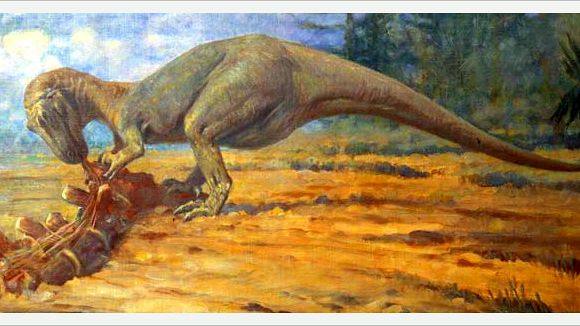
While Tyrannosaurus rex evolved a skull optimized for delivering powerful, bone-crushing bites, other large theropods such as Allosaurus and Giganotosaurus used weaker bites suited for tearing flesh, according to a study published in Current Biology. Think of T. rex as the bulldozer of the dinosaur world, while Allosaurus was more of a surgeon – sharp and precise, but nowhere near as overwhelming. T. rex’s head alone had bone-crushing power, and it also had serrated knife-like teeth to finish the job.
Deinosuchus: The Terror Crocodile That Hunted Dinosaurs
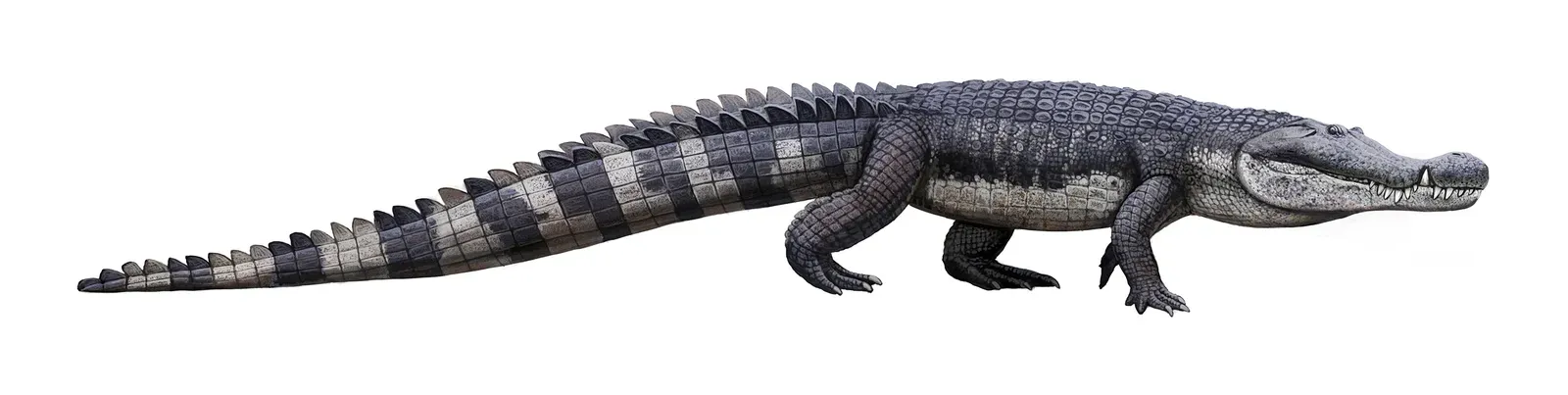
Here’s where things get truly wild. The Deinosuchus, also known as the “terror crocodile,” was a massive prehistoric crocodilian that roamed North America around 75 million years ago during the Late Cretaceous period, and could grow up to 35 feet in length, with a powerful jaw filled with sharp teeth designed to crush the bones of its prey. Let that sink in – this was a crocodile that shared its world with T. rex and could back it down.
Biomechanical studies suggest Deinosuchus could generate bite forces exceeding 23,000 pounds at its posterior teeth, dramatically surpassing even T. rex. The creature’s enormous size and specialized jaw structure allowed it to ambush and capture large dinosaurs that came to the water’s edge, and fossil evidence, including distinct bite marks on dinosaur bones, confirms that Deinosuchus was capable of attacking and consuming large dinosaurs. I think that last detail deserves a moment of silence. A crocodile. Hunting dinosaurs. For breakfast.
Purussaurus: South America’s Miocene Monster
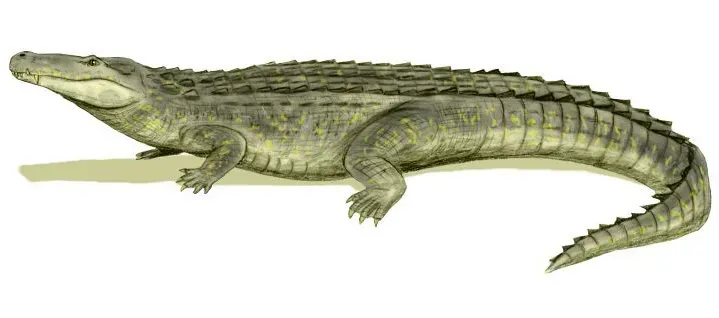
Purussaurus was a massive crocodilian that lived during the Miocene epoch, approximately 5 to 16 million years ago. It was a truly fearsome predator, with a head measuring 5 feet long and a body that could reach up to 12.5 meters in length, and is thought to have weighed as much as 8.5 metric tons, making it one of the largest crocodilians to have ever existed. Picture the biggest bus you’ve ever seen – then give it teeth. That’s roughly the idea.
Purussaurus had a bite force of about seven metric tons, twice as much as a T. rex’s bite. This means Purussaurus could easily crush the bones of its prey, which included giant turtles, horses, and even other crocodilians. Its extinction was caused by tectonic shifts in the region that led to the rise of the Andes Mountains. As the mountains rose, the swamplands changed radically, and the area lost the large animals that once thrived in it, including the Purussaurus. Even the mightiest jaw is no match for geology.
Dunkleosteus: The Armored Guillotine of the Devonian
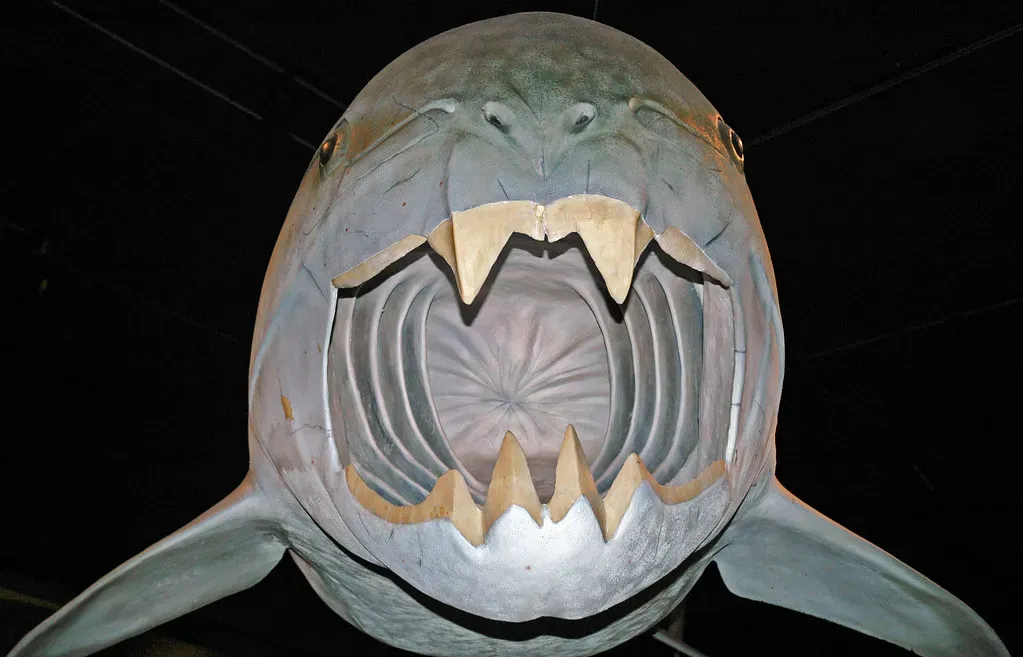
Dunkleosteus thrived during the Devonian Period, also known as the “Age of Fishes,” millions of years before the first dinosaur. This fearsome fish weighing over a ton was among the largest and most formidable animals of its time, earning its place as one of Earth’s first apex predators. It wasn’t pretty. Dunkleosteus lacked proper teeth; instead it had two pairs of long, bony blades that protruded from its upper and lower jaws, creating a cutting apparatus that crudely resembled a guillotine.
The force of its bite was remarkably powerful at 11,000 pounds, and the bladed dentition of this 400-million-year-old extinct fish focused the bite force into a small area – the fang tip – at an incredible force of 80,000 pounds per square inch. This is the strongest bite force of any fish ever, and rivals the bite of large alligators and T. rex. Researchers have estimated that Dunkleosteus was capable of opening its jaws in just 20 milliseconds, thanks to specially designed joints working in tandem with several powerful muscles – fast enough to create a small vacuum just in front of its mouth. No escape. Literally none.
Livyatan Melvillei: The Whale With the Jaws of Doom
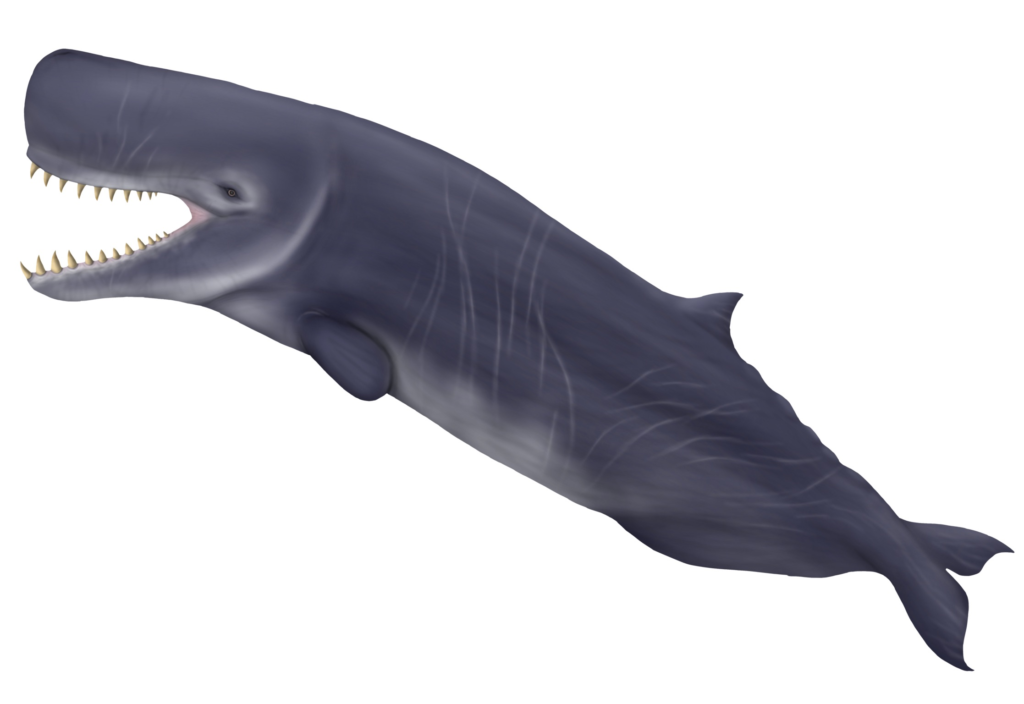
Livyatan melvillei lived approximately 12 to 13 million years ago and was a formidable apex predator in the ancient oceans. Named after the biblical sea monster Leviathan, this prehistoric sperm whale was the kind of thing ancient sailors’ nightmares were made of. Its formidable bite was made possible by its large, robust skull and incredibly powerful jaw muscles. Its teeth, some of which could reach up to 36 centimeters in length, were specially designed for gripping and tearing prey. Thirty-six centimeters. That’s longer than a standard ruler.
Livyatan melvillei, a prehistoric sperm whale, was among the other titanic aquatic animals that lived alongside the Megalodon. While the exact bite force of the ancient whale remains speculative, its formidable mandible suggests a potent force. Scientists have theorized that the Livyatan went extinct for the same reason as the Megalodon: large-scale climate change likely disrupted its food supply. Two of history’s most monstrous predators, wiped out by the same shifting planet they once dominated. Nature is relentlessly humbling like that.
Mosasaurus: The Sea Lizard That Terrified the Cretaceous Oceans
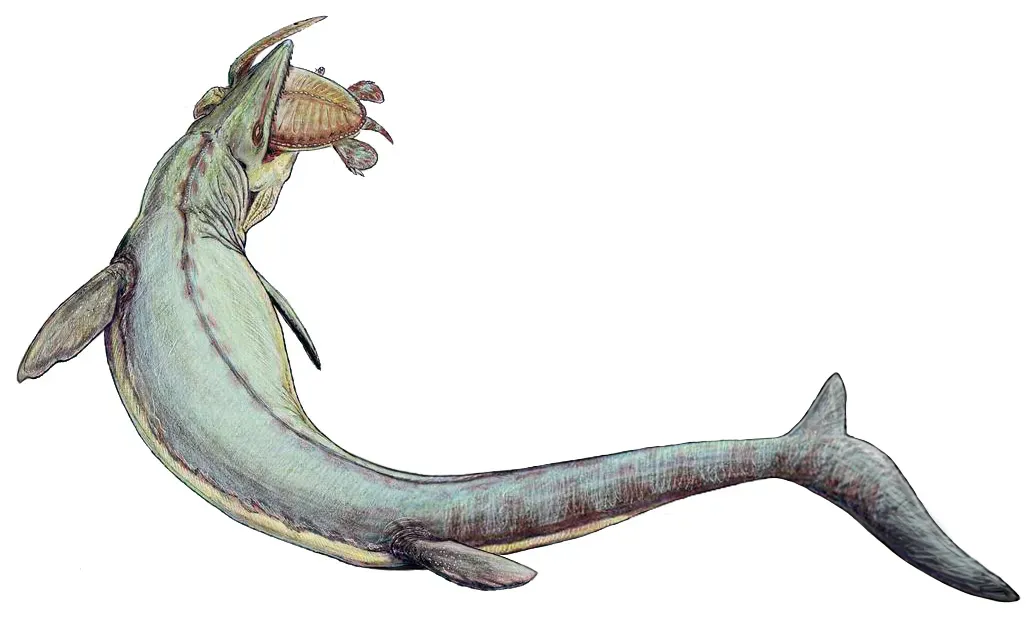
One of the most well-known prehistoric marine reptiles is Mosasaurus hoffmannii, which is estimated to have had a bite force ranging from 13,000 to 16,000 PSI. With its streamlined body and powerful jaws, these reptiles were potent predators. Beyond that, mosasaurs also boast a fascinating evolutionary history. If you’ve seen the Jurassic World films, you’ve already met a slightly dramatized version of this beast – and honestly, the real animal was terrifying enough without Hollywood’s embellishments.
Mosasaurs are believed to have evolved from a group of land-dwelling reptiles known as varanids, which includes modern-day monitor lizards. Over time, they adapted to life in the water, developing features such as flippers and a tail fluke for propulsion. Mosasaurus didn’t often delve too deep when looking for food. Instead, these creatures took to shallow waters for their prey, attacking smaller fish, turtles, and mollusks with ruthless and relentless precision. A land lizard that became one of the ocean’s deadliest hunters – that’s one of the most extraordinary evolutionary transformations in natural history.
Didelphodon Vorax: The Tiny Mammal With an Incredible Punch
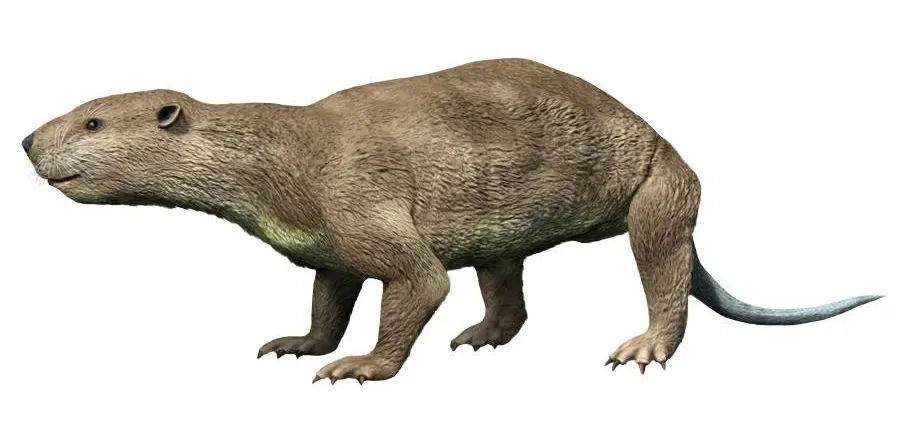
Let’s be real – you probably didn’t see this one coming. A study by Burke Museum and University of Washington paleontologists describes an early marsupial relative called Didelphodon vorax that lived alongside ferocious dinosaurs and had, pound-for-pound, the strongest bite force of any mammal ever recorded. It was badger-sized. A badger. Living among dinosaurs. Researchers say it was likely a scavenger-predator whose teeth could crush through the bone of prey, including small dinosaurs, and it had, pound for pound, the strongest bite of any mammal – prehistoric or otherwise.
Scientists examined “microwear” patterns, or tiny pits and scratches on the specimens’ teeth, to indicate what the animals were eating, and found Didelphodon was an omnivore that likely consumed a range of vertebrates, plants, and hard-shelled invertebrates like molluscs and crayfish. Instead of a shrew-like mammal meekly scurrying into the shadows of dinosaurs, this badger-sized mammal would have been a fearsome predator on the Late Cretaceous landscape – even for some dinosaurs. It turns out that in prehistory, size wasn’t always the deciding factor. Sometimes attitude and jaw design were enough.
How Scientists Actually Measure a Prehistoric Bite
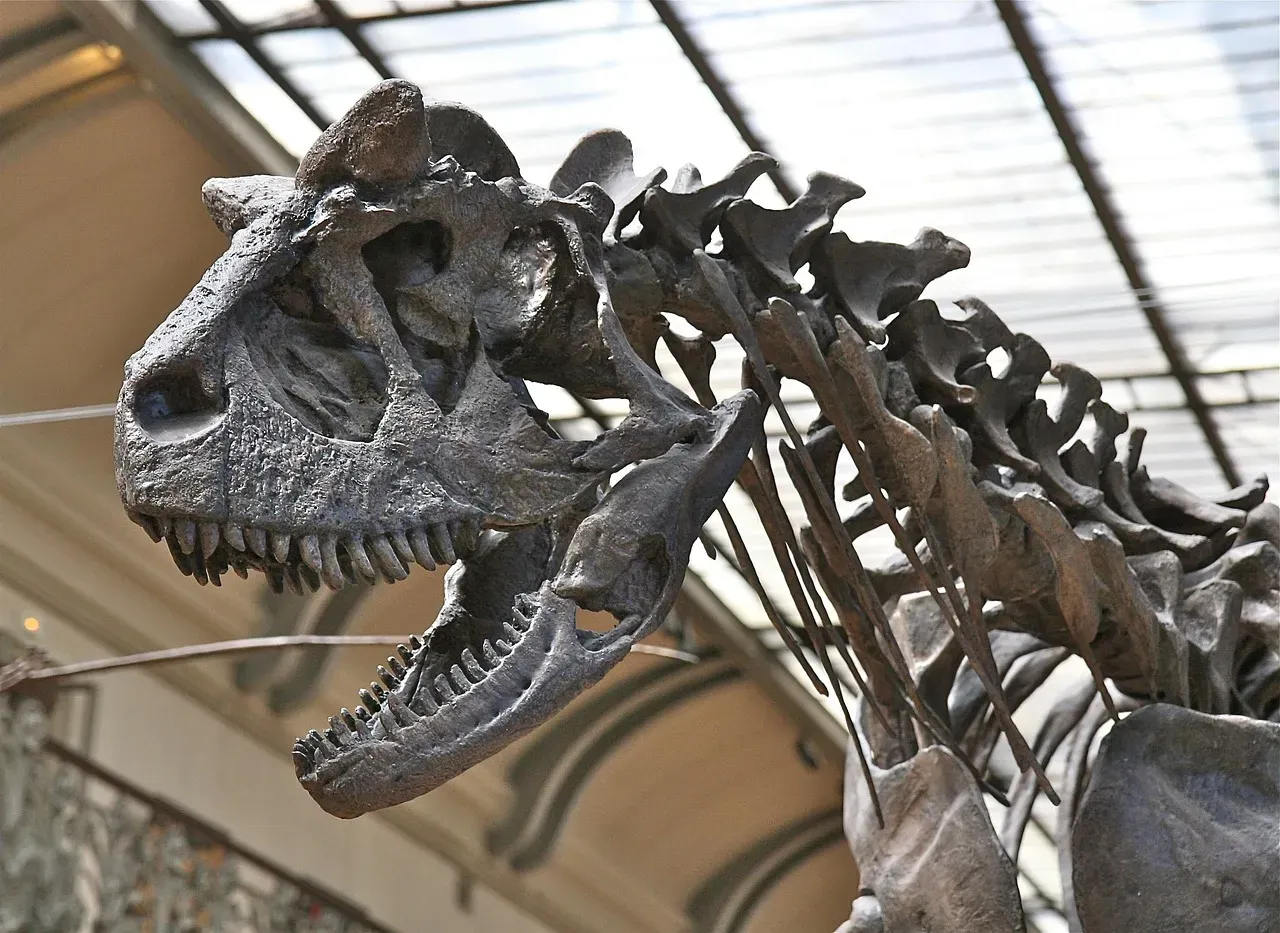
You might be wondering – how do you even measure the bite force of something that’s been extinct for millions of years? It’s a fair question, and the answer involves some genuinely impressive detective work. Extinct animals are trickier to study since only the jaw bones remain in a skull, which is why researchers use computer simulations to recreate jaw muscles that have long since decomposed. Think of it like digital forensics for ancient predators.
Computer modeling, particularly finite element analysis, allows researchers to digitally reconstruct dinosaur skulls and simulate the mechanical stresses they could withstand. Comparative anatomy provides another valuable avenue, as scientists can extrapolate from the bite forces of living relatives like birds and crocodilians, adjusting for differences in size and skull architecture. Fossil evidence also offers direct clues through tooth marks preserved in bones, fossilized feces, and patterns of dental wear that indicate feeding behaviors and jaw strength. It’s hard to say for sure how accurate every estimate is, but scientists are getting better at this every year, and it’s one of the more fascinating corners of modern paleontology.
What Made a Prehistoric Bite So Devastating?
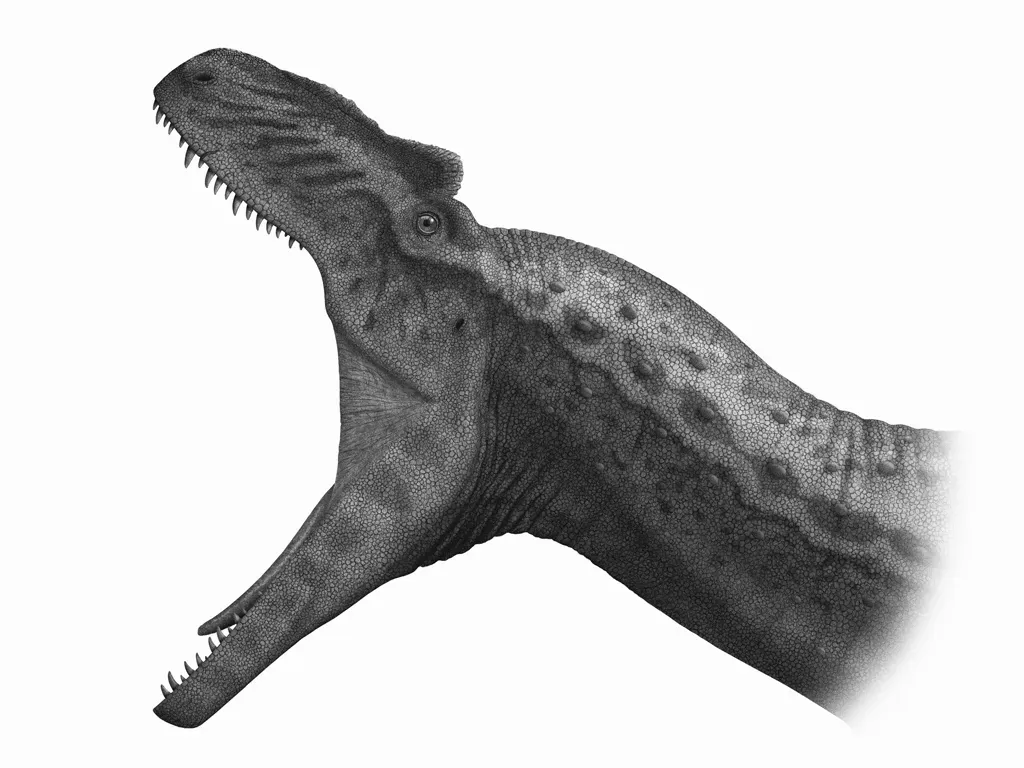
Raw force was only part of the story. Several factors come into play: muscle structure plays a crucial role – the larger and better-developed jaw muscles allow animals to generate immense pressure when they snap down on prey. Additionally, the shape and robustness of skulls contribute significantly; broader skulls withstand greater forces while delivering bone-crushing bites effectively, as seen with T. rex’s thick cranium designed specifically for hunting large game. It’s like engineering, really – bone, muscle, and geometry working together as a single devastating machine.
The ability to inflict killer damage was also most likely due to the exquisite design of the teeth themselves. Megalodon’s teeth were very sharp and serrated, meaning they didn’t need that much force to puncture and tear out flesh. The sharks also had a conveyor belt of these teeth, continually growing rows and rows of replacements before the old ones went blunt. Researchers also found that bite strength didn’t always scale with size. Some smaller theropods produced greater skull stress due to more muscle volume and bite force than larger species, indicating that large carnivorous dinosaurs coexisted with different ecological roles, reducing competition and allowing for specialization. Nature, it seems, was always experimenting – always finding new and more creative ways to make something bite harder.
Conclusion: Jaws That Changed the World
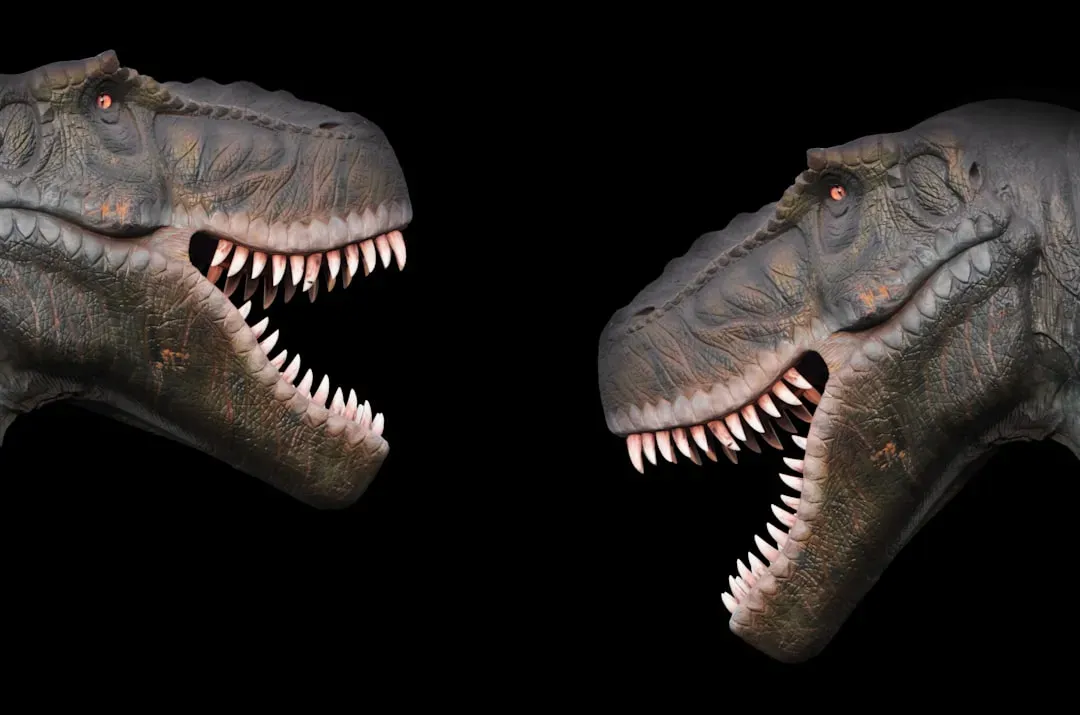
Looking back across hundreds of millions of years of evolutionary history, the jaw is arguably one of nature’s most ingenious inventions. From Megalodon’s ocean-splitting chomp to the tiny but ferocious Didelphodon holding its own among giants, the breadth of biting power in the prehistoric world is nothing short of staggering. Every creature on this list found its own path to dominance – some through sheer size, others through jaw geometry, tooth design, or pure muscular engineering.
What’s perhaps most humbling is how little of this history we can see in today’s world. The animals alive right now, impressive as they are, are pale echoes of what once roamed and swam this planet. The fossil record keeps offering up new surprises, and scientists in 2026 are still revising their estimates with each new discovery. We are, in many ways, still piecing together the full story of life’s most powerful weapons.
The prehistoric world didn’t just produce big creatures – it produced jaw-dropping, bone-crushing, nightmare-inducing masterpieces of evolutionary design. And somewhere buried in a cliff face or ocean sediment, there may be one more giant waiting to be found that rewrites every list we’ve made so far. What do you think – could there be a prehistoric biter out there we haven’t discovered yet? Share your thoughts in the comments below.