Orange, California — Renowned paleontologist Jack Horner, celebrated for his technical advisory role on the Jurassic Park film series, has separated from Chapman University following the release of emails linking him to Jeffrey Epstein’s New Mexico ranch.
A Paleontology Legend’s Hollywood Connection
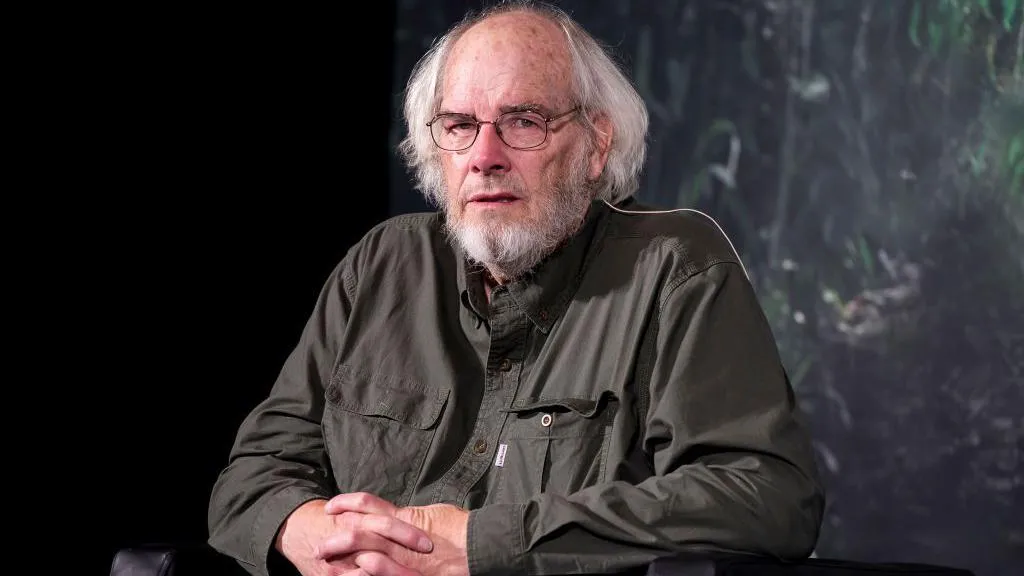
A Paleontology Legend’s Hollywood Connection (Image Credits: Getty Images)
Jack Horner built a distinguished career over decades in the field of dinosaur research. He served as a technical consultant on the first five Jurassic Park films, ensuring scientific accuracy in depictions of prehistoric creatures. Author Michael Crichton drew inspiration from Horner for the character Alan Grant in the original novel.
Horner spent 33 years at Montana State University as a regents professor and curator at the Museum of the Rockies before retiring in 2016. That year, he joined Chapman University as a lecturer and presidential fellow. There, he founded the Dinosaur Lab in 2022 and led student research trips to Montana fossil sites. He taught honors courses on Darwin’s evolutionary theory and dinosaurs in science and media.
Emails Surface from 2012 Epstein Correspondence
The U.S. Department of Justice recently disclosed a batch of Epstein files that included exchanges between Horner and Epstein’s assistant, Lesley Groff. Dated August and September 2012, the emails detailed Horner’s visit to Epstein’s Zorro Ranch near Santa Fe for fossil hunting. Horner wrote, “I wanted to thank you for all your help in getting me to Jeffrey’s ranch, it was a lot of fun. Jeffrey and the girls were very gracious hosts.”
During the trip, Horner sought funding for his “DinoChicken” project, aimed at reverse-engineering chicken embryos to express dinosaur-like traits. He submitted proposals estimating costs at $15,000, later reduced to $8,650. Epstein approved a $10,000 check to the Museum of the Rockies. Horner visited the ranch again in 2016 with a graduate student on a geology tour; Epstein was absent.
Present at the 2012 visit were Epstein, a chef, his secretary, and four women introduced as college students, two of whom discussed genetics. Horner later clarified that the term “girls” referred to these women.
Chapman University Responds Decisively
Chapman confirmed Horner’s departure in late February 2026, shortly after the student newspaper The Panther reported it. Spokesperson Robert Hitchcock stated, “Jack Horner is no longer with the university,” adding that the institution could provide no further details due to employment practices.
The university canceled Horner’s classes, removed his staff page and references to the Dinosaur Lab from its website, and conducted an internal review. Officials took the matter seriously, as Hitchcock noted earlier: “We take these emails very seriously and are looking into the matter.”
Horner Reflects on ‘Poor Judgment’
Horner addressed the revelations in public statements. He described pursuing Epstein as a donor as “extremely poor judgment” and regretted not vetting him beyond knowledge of a 2008 prostitution solicitation charge. “No amount of money in the world would have lured me to meet with a known sexual predator,” he said. Horner insisted he observed “nothing weird, inappropriate, or out of the ordinary” during the visits and only learned the full scope of Epstein’s crimes in 2019.
“In retrospect, I regret that I did not investigate Epstein’s background,” Horner added.
Key Takeaways
- Horner consulted on Jurassic Park films and inspired Alan Grant but now faces scrutiny over Epstein ties.
- Emails show 2012 ranch visit and $10,000 funding for DinoChicken project; no misconduct alleged against Horner.
- Chapman ended affiliation swiftly, removing online traces and canceling courses.
This episode underscores the lasting repercussions of Epstein associations in academia, even years later. Horner’s departure leaves a void in Chapman’s paleontology program, prompting reflection on donor due diligence. What do you think about the handling of such revelations? Tell us in the comments.