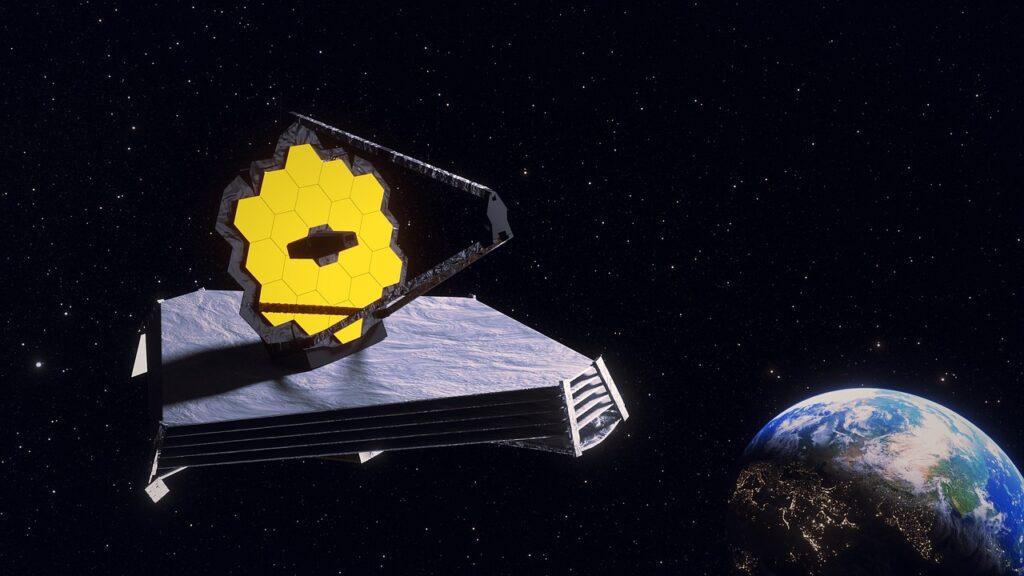
Astronomers have produced the clearest picture yet of the cosmic web, the vast network of galaxies and gas that forms the universe’s underlying structure. Using data from NASA’s James Webb Space Telescope, researchers traced this hidden architecture across more than 13 billion years of cosmic history. The new map reaches back to a time when the universe was only about one billion years old, an era previously difficult to observe in detail.
A Leap in Depth and Reach
The project relied on the COSMOS-Web survey, the largest observing program carried out with JWST to date. This wide and deep campaign captured light from hundreds of thousands of galaxies, revealing how they cluster along filaments and gather in dense regions. Earlier maps from other telescopes showed the broad outlines of the cosmic web, yet they lacked the sensitivity to resolve fine details at such great distances.
With JWST’s infrared capabilities, the team could peer through dust and capture fainter objects than before. The resulting view shows both the dense knots where galaxies congregate and the thinner strands that connect them across vast empty spaces. This level of resolution allows scientists to study how the web evolved from its earliest detectable stages to the present day.
What the Map Reveals About Galaxy Formation
Galaxies do not form in isolation. They grow within the filaments of the cosmic web, drawing in gas that fuels star formation. The new observations show these processes operating when the universe was still young, offering clues about the conditions that shaped the first generations of stars and galaxies.
Researchers can now compare the distribution of galaxies in the early web with predictions from computer simulations. Early results suggest that the web’s basic pattern was already in place surprisingly soon after the Big Bang, though the exact timing and strength of that structure remain under study. Continued analysis of the same dataset is expected to refine these timelines.
Key Advances and Remaining Questions
The survey marks a clear step forward in several areas:
- Greater sensitivity to faint, distant galaxies than previous efforts
- Ability to map both dense clusters and sparse filaments in the same field
- Coverage spanning from roughly one billion years after the Big Bang to the nearby universe
- Publicly available data that other teams can use for follow-up studies
Even with these gains, some uncertainties persist. The precise role of dark matter in shaping the web’s thinnest strands is still being tested, and the contribution of very faint galaxies below current detection limits remains unknown. Future observations with JWST and other facilities will help close these gaps.
Looking Ahead
The COSMOS-Web map provides a new reference point for understanding how the universe’s largest structures grew over time. As astronomers continue to mine the dataset, they expect to uncover additional details about the interplay between galaxies and the web that surrounds them. This work underscores how each new generation of telescopes steadily improves our view of cosmic evolution.