Kenya – Lions in the Maasai Mara conservancies increasingly avoided patches of rangeland grazed by Maasai cattle, even when no livestock remained present, according to researchers who analyzed nearly a decade of field data.
Lions’ Lingering Caution
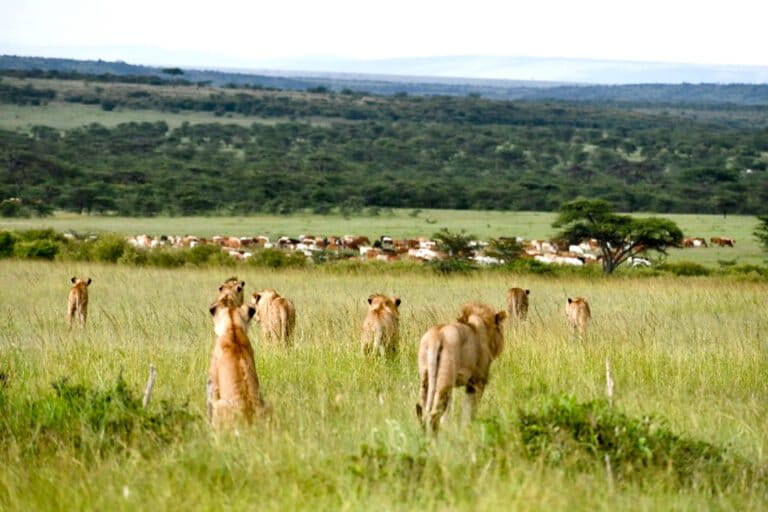
Lions’ Lingering Caution (Image Credits: Imgs.mongabay.com)
Africa’s apex predators typically instill terror in prey across the savanna. Researchers uncovered a reversal in Kenya’s southwestern conservancies, where lions retreated from zones marked by recent cattle activity. Niels Mogensen, lead author and biologist with the Mara Predator Conservation Program, described this as the study’s most striking outcome: lions shunned areas with histories of heavy grazing, perceiving ongoing risk despite empty grasslands.
The team surveyed seven community conservancies from 2015 to 2023, traversing almost 69,000 kilometers while noting lion sightings alongside livestock and wild herbivores. Bayesian spatial models revealed cattle density as the top factor suppressing lion presence. Sheep, goats, and nearby human settlements compounded the effect. Even on cattle-free days, prior grazing histories predicted avoidance, pointing to ingrained behavioral shifts rather than mere temporary hiding.
Shared Spaces Under Strain
Nearly 70 percent of Kenya’s wildlife roamed beyond national parks, sharing pastoral rangelands with Maasai herders and their herds. Community conservancies bridged this divide, leasing land for tourism while permitting rotational grazing across vast areas. Lions, zebras, and elephants drew safari visitors, fueling local economies through lodge revenues and jobs.
Government aerial surveys painted a shifting picture since the late 1970s. Large wild herbivores, excluding elephants, plummeted 70 percent. Cattle numbers dipped 13 percent, while sheep and goats surged 269 percent. Rotational systems aimed to ease competition, with wild prey often trailing cropped grass left by cattle. Yet herders and conservancy leaders reported spotting lions pursuing antelope on the same day as grazing, challenging claims of prolonged absence.
Unpacking the Study’s Insights
Field teams divided landscapes into one-kilometer grid cells, logging every lion, herder, and animal group during drives. Models accounted for survey effort, spatial patterns, and seasonal variations. Sensitivity tests on livestock-free periods confirmed enduring avoidance.
- Cattle abundance most strongly curbed lion probability, outpacing other variables.
- Proximity to settlements and small stock like goats further deterred prides.
- Avoidance hinted at “landscapes of fear,” squeezing lions into riskier, crowded zones.
- Potential fallout included heightened pride conflicts, reduced breeding success, and ventures near villages.
These patterns emerged without routine lion killings in conservancies, underscoring indirect human impacts.
Navigating Coexistence Challenges
Mogensen urged collaborative fixes over strict bans, given livestock’s role in Maasai culture and security. Spatial zoning could shield riverine refuges and bushy hides – prime lion rest spots – while preserving grazing elsewhere. Seasonal rotations and enforced boundaries promised relief without resentment.
Transparent revenue sharing from tourism would tie conservation to herder benefits. Conservancy heads like Daniel Sopia emphasized monitoring to adapt practices. Experts such as Nakedi Maputla warned of human rights pitfalls if locals felt sidelined, stressing inclusive planning.
Key Takeaways
- Lions treat cattle-grazed areas as risky long-term, reshaping their ranges.
- Targeted zoning and rotations can safeguard predators without curbing livelihoods.
- Ongoing data use ensures tourism and wildlife sustain communities.
As Maasai Mara conservancies evolve amid growing herds and tourism demands, evidence-based management offers a lifeline for lions and herders alike. Balancing these worlds demands innovation today to preserve Kenya’s iconic predators tomorrow. What strategies would you prioritize for human-wildlife harmony? Tell us in the comments.