Hawaii Island – Kīlauea volcano delivered a dramatic display on March 10, 2026, as Episode 43 of its ongoing summit eruption propelled lava fountains over 1,000 feet into the sky, scattering volcanic debris that necessitated swift closures.
Spectacular Heights Mark Intense Activity
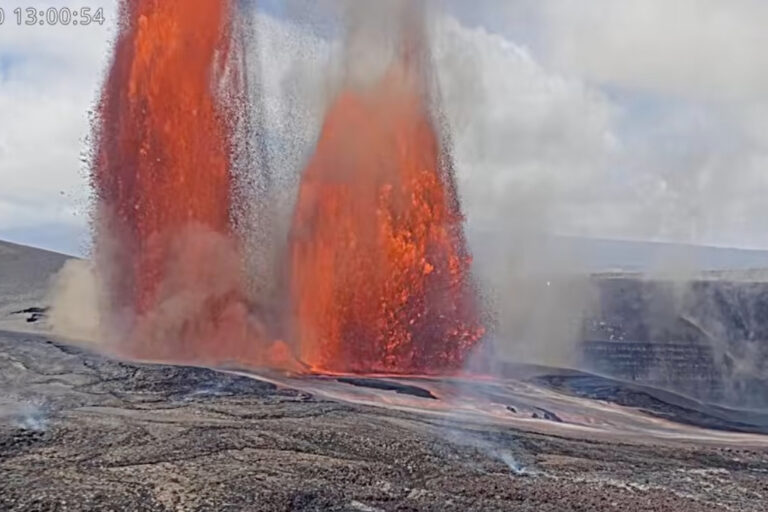
Spectacular Heights Mark Intense Activity (Image Credits: Imgs.mongabay.com)
Lava fountaining ignited at 9:17 a.m. HST within Halemaʻumaʻu crater, where north and south vents burst forth with molten rock. Precursory activity had begun an hour earlier, signaling the buildup. Fountain heights quickly surpassed 330 feet and climbed to 1,000 feet by mid-morning, peaking at least at 1,300 feet shortly after 11 a.m.
The south vent consistently outpaced its northern counterpart, reaching 30 percent higher at times. Effusion rates hit 1,000 cubic yards per second around 10:30 a.m., fueling a plume that soared beyond 30,000 feet. The episode lasted nearly nine hours before both vents ceased abruptly at 6:21 p.m. HST. This outpouring covered about half of the crater floor with roughly 16 million cubic yards of fresh lava. Observers noted the bright-red streams against plumes of smoke via official livestreams.
Hazards Prompt Immediate Response
Falling tephra – glassy fragments, pumice, scoria, and ash – posed the primary risk, blanketing areas with accumulations up to seven inches thick at overlooks.[1] Pieces as large as six inches landed at the Volcano Golf Course, while fine ash and Pele’s hair drifted as far as Hilo, over 30 miles away. Light winds carried the material northeast, affecting communities like Volcano Village and Mountain View.
- Tephra irritates eyes, skin, and lungs.
- Vog from volcanic gases creates respiratory concerns downwind.
- Crater walls risk instability, rockfalls, and slumps exposing hot interiors.
- Ashfall warnings issued by the National Weather Service.
Officials elevated the alert to RED/WARNING by late morning, reflecting aviation and community risks. Lava remained confined to the caldera, sparing structures.
Closures Disrupt Access and Daily Life
Hawaiʻi Volcanoes National Park shut western overlooks around 11:20 a.m. HST and evacuated visitors promptly. The entire summit area followed suit. Highway 11, a vital route encircling the island, closed partially near the park at 11:10 a.m., stranding some travelers.
County officials opened a shelter at a local gymnasium, though spokesperson Tom Callis reported no immediate users. “There were no people using the shelter soon after it opened,” Callis stated. Past episodes required civil defense aid for ash cleanup on homes. Tephra also threatened water catchment systems prevalent on the island.
Ongoing Eruption Enters Pause
Kīlauea’s activity traces back to December 23, 2024, marking over a year of intermittent fountaining episodes – this the 43rd. Total volume nears 325 million cubic yards. As of March 11, the eruption paused, with alert levels at WATCH/ORANGE.
Deflation at monitoring stations accompanied the event, hinting at subsurface dynamics. Scientists continue surveillance for potential restarts.
Key Takeaways
- Episode 43 ejected vast lava volumes but stayed park-contained.
- Tephra fallout reached communities, underscoring monitoring needs.
- No injuries reported; preparedness mitigated impacts.
Kīlauea reminds us of nature’s raw power, balanced by vigilant response that protected lives amid the spectacle. What are your thoughts on living near such active wonders? Share in the comments.