Goa – Venomous king cobras have begun appearing in coastal towns and urban edges far from their forested strongholds, with researchers pointing to India’s extensive railway system as a key factor in their unexpected travels.
A Startling Rescue Sparks Investigation
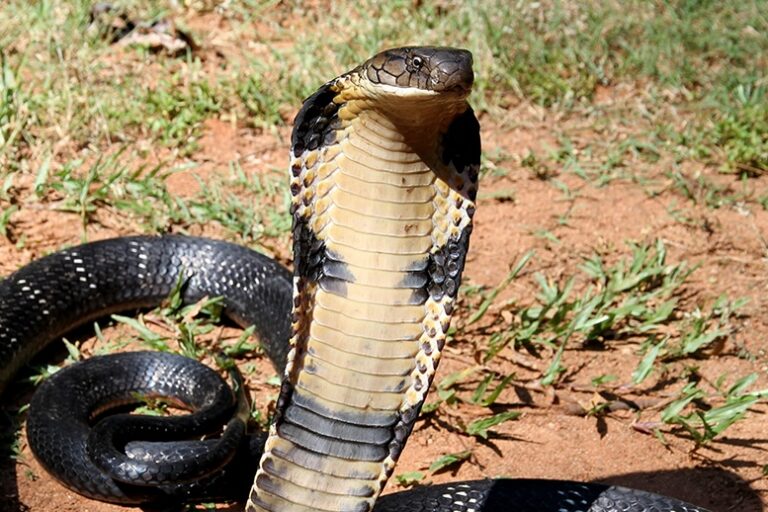
A Startling Rescue Sparks Investigation (Image Credits: Imgs.mongabay.com)
In July 2023, laborers at Chandor railway station in South Goa spotted a king cobra emerging from beneath a stack of stored tracks. The snake, a Western Ghats king cobra scientifically known as Ophiophagus kaalinga, had ventured into an area deemed unsuitable for its survival. Rescuers from a local animal squad safely relocated it to a forested release site managed by the forest department.
This incident was not isolated. Between 2002 and 2024, teams documented 47 georeferenced king cobra rescues across Goa, with 18 in the north and 29 in the south. Five of these stood out as anomalies, all clustered near busy railway lines or stations.
Mapping Habitats Reveals Railway Links
Researchers led by Dikansh S. Parmar of Germany’s Leibniz Institute for the Analysis of Biodiversity Change modeled the species’ potential range using climate, vegetation, and human footprint data. Suitable habitats emerged in mid-elevation moist forests along Goa’s eastern border with the Western Ghats. Coastal lowlands and urban zones scored low on suitability.
Yet the five outlier rescues aligned precisely with railway corridors. One occurred in Vasco da Gama in September 2021, just 200 meters from the station. Others took place near Loliem, Patnem Cancona, and Palolem, at distances of 220 to 330 meters from tracks. These sites showed the lowest predicted habitability in the model.
- Chandor Village: Beneath railway tracks at the station (July 2023).
- Vasco da Gama: Residential area near port (September 2021).
- Loliem: 270 meters from tracks.
- Patnem Cancona: 220 meters from tracks.
- Palolem: 330 meters from tracks.
How Do Snakes Board Trains?
Trains often halt for extended periods at stations like Castle Rock in neighboring Karnataka, a lush area ideal for king cobras hunting rodents or other prey. Snakes may climb aboard freight cars seeking shelter or to digest meals during these stops. Goods trains then carry them westward into Goa’s drier coastal plains, up to 120 kilometers away.
Parmar noted similar patterns with other species, including an Indian cobra he rescued in 2017 coiled around a train’s window bars. Reports from Uttarakhand and Gujarat describe snakes wrapped around coaches or inside passenger cars. While direct proof remains elusive, the pattern suggests railways serve as inadvertent dispersal highways.
Risks for Snakes and Humans Alike
These journeys place king cobras in unfamiliar terrain where they struggle to survive. The species favors cool, moist montane forests for egg incubation. Dry lowlands offer little refuge, and encounters with residents heighten dangers.
King cobra bites can prove fatal within 15 minutes, yet India lacks specific antivenom for the species. Provoked snakes defend themselves swiftly, though they typically avoid humans. Displaced cobras risk death from vehicles, predators, or retaliation, while locals face unknown threats in tourist-heavy areas like Palolem.
Parmar emphasized the urgency: “The conservation of the species requires attention given the disturbing pattern documented in the study and human pressures including urbanisation and proximity to tourist hotspots.”
Key Takeaways
- Railways connect suitable Western Ghats forests to unsuitable coastal Goa zones.
- Five of 47 rescues link directly to train infrastructure.
- Human-snake conflicts could rise without targeted interventions.
Rail networks, vital for India’s economy, now emerge as double-edged forces in wildlife dynamics. Protecting king cobras demands vigilance at stations and habitat safeguards. What steps should railways take to curb these risky rides? Share your thoughts in the comments.