South Africa’s semidesert Klein Karoo witnessed a pivotal shift as United Nations recognition elevated spekboom thicket restoration efforts to global prominence.
Decades of Overgrazing Give Way to Thicket Revival
Decades of Overgrazing Give Way to Thicket Revival (Image Credits: Imgs.mongabay.com)
Nearly two centuries of intensive livestock farming eroded about 80% of the subtropical thicket biome in the Karoo region. Goats stripped the landscape bare, allowing rains to scour away topsoil and leave barren expanses. Climate change compounded the damage with prolonged droughts and erratic rainfall patterns.
The South African government launched the Subtropical Thicket Restoration Programme in 2004 with $8 million in initial funding. Early experiments in 2009 tested spekboom planting across 331 small plots spanning 7.5 million hectares. Researchers determined that thicker stems boosted survival rates, though watering offered little benefit. Today, government initiatives cover roughly 30,000 hectares, up from 2,000 hectares three years prior.
UNEP Recognition Signals Credibility Boost
The United Nations Environment Programme designated South Africa’s thicket restoration as a World Restoration Flagship under the UN Decade on Ecosystem Restoration. This accolade highlighted the initiative’s uniqueness and vast potential across 800,000 hectares led by over 60 organizations. Salman Hussain, UNEP coordinator, praised the high biodiversity gains and momentum already in place.
“One of the things was just how special it is, how unique it is … the potential also for restoration activities to go forward and the impetus that’s already behind it,” Hussain stated. The status should draw more carbon market investment, as investors favor UN-backed projects. Private sector funding reached $75 million, supplemented by tens of millions from government sources.
Nat Carbon Plants Seeds of Large-Scale Change
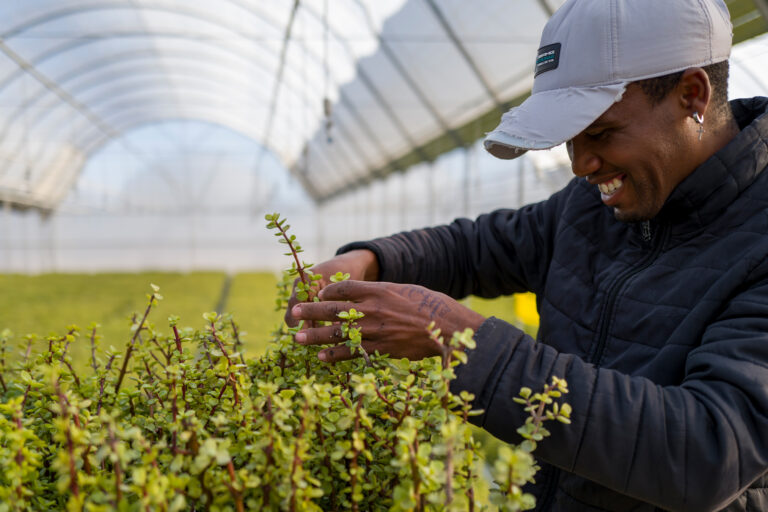
Nat Carbon spearheaded restoration by planting 10,000 hectares of spekboom in the Klein Karoo over the past two years. This marked phase one of a 100,000-hectare plan on five farms near Jansenville in the Eastern Cape. Launched in 2024, the project employed advanced tools like drones and GIS for site selection and monitoring.
Field ecologist Rae Attridge observed the transformation firsthand. “Spekboom is everywhere, it’s all anyone talks about … what used to be an Angora goat farming town is now a spekboom town,” she said. The firm hired up to 1,500 workers seasonally through local contractors, paying at least the minimum wage of 30.23 rand per hour – higher than government public works rates.
Green Jobs Emerge Amid Biodiversity Safeguards
Restoration generated thousands of jobs in high-unemployment areas, where rates hit 80% after mohair wool markets collapsed. Workers earned one-and-a-half to double herder wages through planting incentives. Companies like EcoPlanet Bamboo employed 300 people and funded community ventures such as bakeries and sewing projects. One former harvester now leads his own planting team.
Spekboom, a succulent dynamo, sequesters carbon in leaves, roots, and soil while fostering biodiversity. Experts cautioned against overplanting beyond 70-80% coverage to avoid shading native plants. Projects adhered to Verra’s Climate, Community & Biodiversity Standards. Challenges persisted, including animal browsing and poor coordination among developers.
- Enhances soil health and water retention in drought-prone lands.
- Supports recovery of endemic species in degraded thickets.
- Provides stable income via carbon credits and land rentals ($10-20 per hectare annually).
- Shifts economies from failing goat farms to sustainable restoration.
- Builds community resilience through training and long-term commitments.
Key Takeaways
- Over 55,000 hectares restored by government and private efforts combined.
- UN flagship status poised to accelerate funding and coordination.
- Spekboom projects create better-paying jobs than traditional herding.
As spekboom thickets rebound, the Karoo edges toward a greener future, blending environmental recovery with economic renewal. What role can similar initiatives play in your region? Share your thoughts in the comments.