Songliao Basin, Northeast China – Researchers announced the discovery of the first maniraptoran egg fossil from the Cretaceous rocks of this vast inland sea basin, offering fresh insights into the diverse life forms of the mid-Cretaceous period. Unearthed in the Upper Cretaceous Quantou Formation, the specimen dates to the Cenomanian stage around 100 million years ago. Named Jilinoolithus lamellotestus, this partial egg confirms the presence of small, bird-like dinosaurs in an ecosystem previously known for other vertebrate groups.
A Breakthrough in an Ancient Lakeside Setting
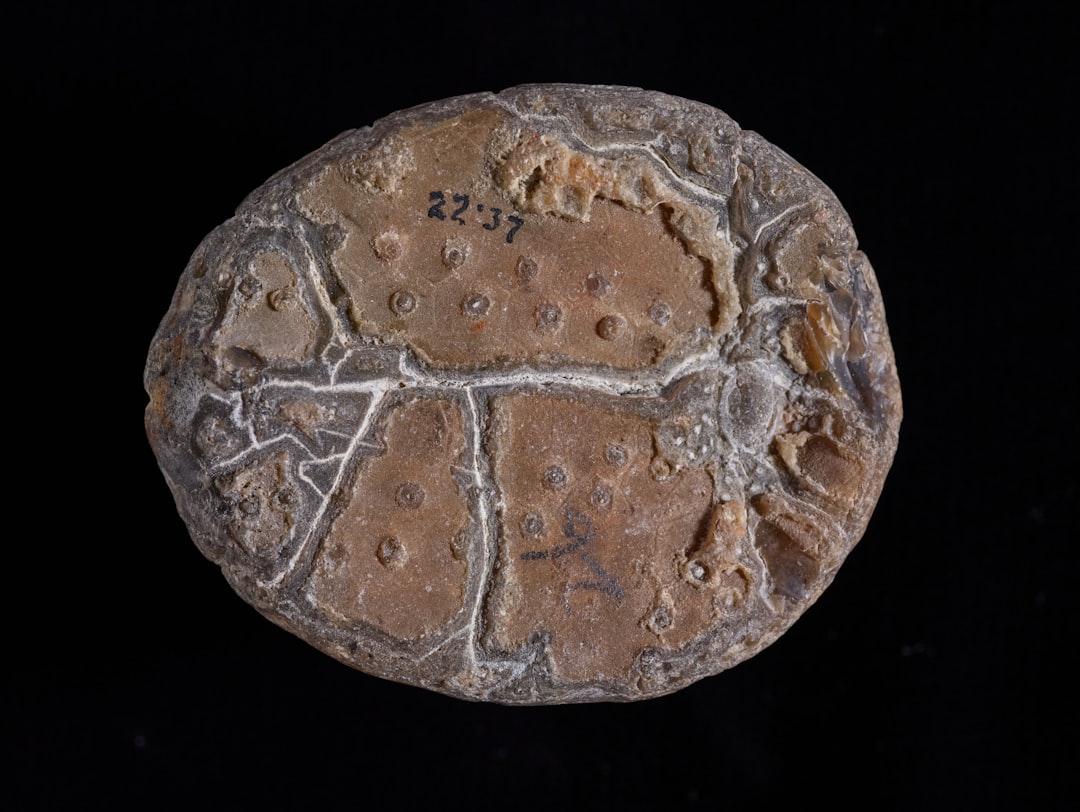
A Breakthrough in an Ancient Lakeside Setting (Image Credits: Unsplash)
The fossil surfaced in Liufangzi Town, Gongzhuling County, near Changchun City in Jilin Province, at coordinates 43.58°N, 124.91°E. Paleontologists from the Dinosaur Evolution Research Center at Jilin University identified the specimen as DERC BD-0201. A team led by Longhan Wang, along with Jun Chen, Xiaobo Li, Wenhao Wu, and Robert Reisz, detailed the find in a study published online on March 25, 2026, in Cretaceous Research.
This marked the initial documentation of a maniraptoran egg in the Songliao Basin’s Cretaceous layers. The Quantou Formation represents fluvial and lacustrine deposits from a time when the basin hosted a rich array of dinosaurs and other animals. Earlier excavations in the area yielded bones and other egg types, but none linked to maniraptorans until now.
Distinct Features of the Tiny Egg
Jilinoolithus lamellotestus stands out for its pear-shaped form and exceptionally small size, suggesting a diminutive parent. The eggshell features a thin structure divided into three layers: the mammillary layer, squamatic zone, and external zone, with a thickness ratio of 1:1.9:0.5. Non-branching pore canals run through the shell, and its surface appears smooth.
These traits set it apart from eggs of sauropods or ornithischians, which lack the squamatic ultrastructure. Researchers used CT scans to analyze the microstructure, with data shared publicly for further study. The following list highlights the key characteristics:
- Pear-shaped and small overall dimensions
- Thin shell with three distinct layers
- Squamatic zone indicative of maniraptoran affinities
- Smooth exterior without pronounced ornamentation
- Straight, non-branching pores for gas exchange
Understanding Maniraptorans and Their Eggs
Maniraptorans form a clade of advanced theropod dinosaurs closely related to birds, encompassing groups like dromaeosaurids, troodontids, and oviraptorosaurs. Their eggs often share avian-like qualities, such as asymmetry and thin shells adapted for brooding. This new ootaxon, or egg taxon, aligns with those patterns, potentially hinting at early avian traits despite its non-avian classification.
Mid-Cretaceous maniraptoran eggs remain scarce globally, with prior records from sites in Argentina, Brazil, China, Japan, South Korea, Mongolia, and North America. The Songliao Basin example fills a gap in East Asian records from this interval. Its discovery underscores how such fossils reveal reproductive strategies in feathered dinosaurs navigating ancient floodplains.
Integrating into the Changchunsaurus Fauna
The Quantou Formation belongs to the Changchunsaurus Fauna, named after the basal ornithopod Changchunsaurus. This assemblage included neornithischians, neoceratopsians, other theropods, sauropods, crocodylians, and early mammals. Previous egg finds, such as Dictyoolithus gongzhulingensis, pointed to ornithischian or sauropod origins, but maniraptorans evaded detection until this specimen.
The small egg bolsters evidence for diverse theropod presence, including agile, feathered forms alongside larger herbivores. It suggests a balanced ecosystem where small predators or omnivores thrived amid lakes and rivers. This addition refines reconstructions of Cenomanian terrestrial life in northeast China.
Implications for Cretaceous Paleoecology
By confirming small maniraptorans, the fossil expands the known diversity of the Changchunsaurus Fauna and illuminates Late Cretaceous theropod distribution. It provides crucial material for examining how these dinosaurs adapted to mid-Cretaceous environments. The Songliao Basin’s sediments preserve a snapshot of evolving vertebrate communities before the late dinosaur radiation.
Future analyses of the CT data could reveal more about shell strength or incubation methods. Such finds continue to bridge gaps between non-avian dinosaurs and their avian descendants.
Key Takeaways
- First maniraptoran egg from Songliao Basin Cretaceous strata, named Jilinoolithus lamellotestus.
- Thin, three-layered shell with squamatic structure confirms bird-like dinosaur affinities.
- Enhances understanding of the Changchunsaurus Fauna’s diversity and mid-Cretaceous ecosystems.
This discovery reminds us how fragile fossils can reshape our view of ancient worlds. What do you think this egg tells us about dinosaur evolution? Share your thoughts in the comments.