Gujarat’s Gir forest – Tourists on a Sasan Gir safari witnessed a remarkable display when a young lion cub scaled a tree under the close supervision of its mother.
The Unexpected Safari Highlight
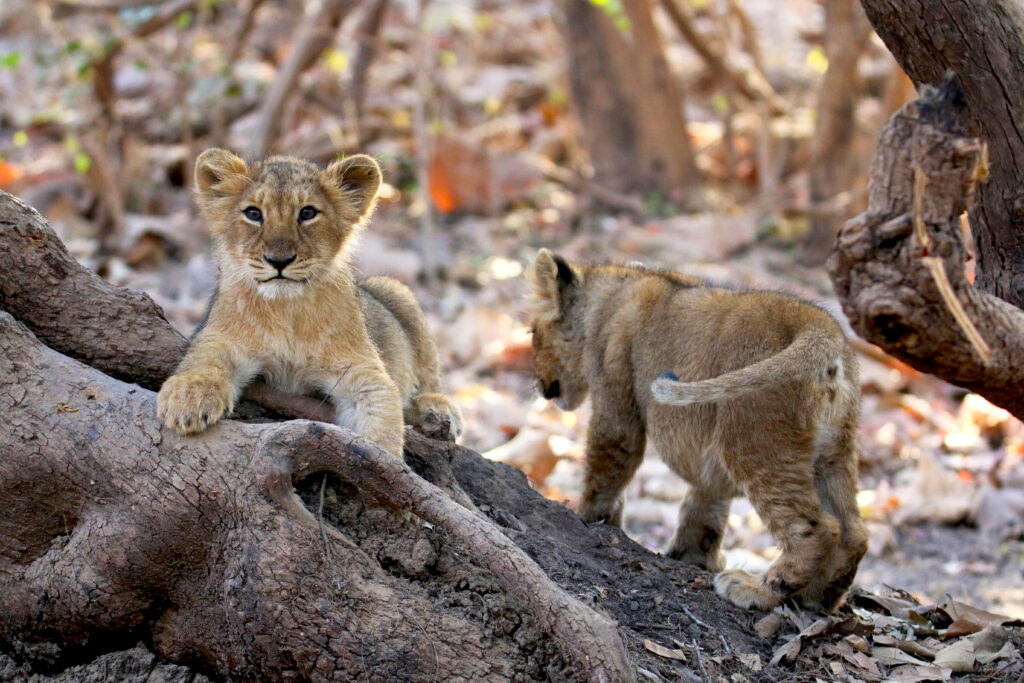
The Unexpected Safari Highlight (Image Credits: Wikimedia)
A video captured during the outing quickly spread across social media platforms. Lion cubs played energetically below two watchful lionesses. Suddenly, one cub approached a nearby tree and began to climb with surprising agility.
The mother lioness kept a vigilant eye on the adventure. She ensured the cub did not venture too high or risk injury. The tourist who filmed the sequence expressed astonishment at the sight. The safari guide remarked that such behavior proved extremely rare.
This moment unfolded in Junagarh’s Gir forest, the last stronghold for Asiatic lions in the wild.
Why Tree-Climbing Stands Out for Lions
Lions typically do not climb trees like leopards, which use branches for hunting and rest. Adult lions occasionally rub against trunks to sharpen claws, a vital skill for gripping prey. Yet a very young cub attempting a full ascent marked an uncommon occurrence.
Experts attribute this to innate learning instincts kicking in early. The cub’s actions suggested practice for future survival needs. Observers noted the lioness’s protective stance reinforced family bonds in the pride.
Spotlight on Asiatic Lion Behavior
Gir National Park serves as a critical habitat where these behaviors play out naturally. Cubs engage in play that hones motor skills and coordination. Such interactions strengthen social structures within prides.
The viral footage highlighted the cubs’ curiosity and boldness. It also drew attention to the mothers’ nurturing roles. These glimpses into daily life underscore the forest’s thriving ecosystem.
Gir’s Role in Lion Conservation
Conservation efforts in Gir have bolstered the Asiatic lion population significantly. Numbers rose from 674 in 2020 to 891 as of early 2026, signaling robust recovery.
Forest staff and safaris promote awareness while minimizing human impact. Healthy cubs like this one indicate successful breeding and habitat management. The park’s protected zones allow prides to roam freely.
- Monitored safaris ensure wildlife disturbance remains low.
- Anti-poaching patrols safeguard vulnerable young.
- Habitat restoration supports prey populations for lions.
- Community involvement aids long-term sustainability.
- Research tracks behavior patterns for better protection.
Key Takeaways
- Rare cub climbing reveals early skill development in lions.
- Gir forest exemplifies effective conservation triumphs.
- Viral videos boost public support for wildlife preservation.
This enchanting episode reminds us of nature’s wonders thriving under careful stewardship. Healthy lion families signal hope for the species’ future. What do you think about this rare sighting? Tell us in the comments.