Oman – A beetle notorious for destroying mango orchards has claimed its first known victims among adult baobab trees, prompting urgent warnings for conservation efforts across Africa.
First Insect to Fell Mature Baobabs
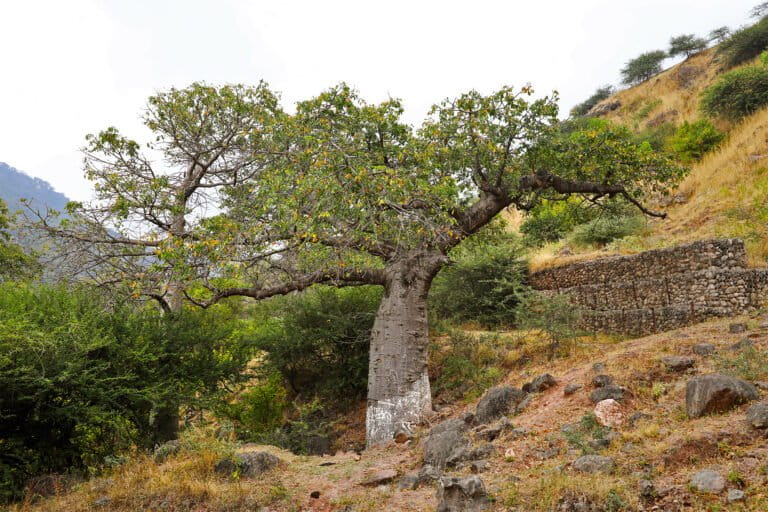
First Insect to Fell Mature Baobabs (Image Credits: Imgs.mongabay.com)
Researchers documented the unprecedented deaths during a survey of 91 baobab trees in Wadi Hinna, a remote semiarid valley in Oman’s Dhofar Mountains. Six trees had succumbed to the infestation, while larvae plagued 12 others. This marked the initial recorded instance of an insect killing fully grown Adansonia digitata specimens, long celebrated for their resilience.
The isolated population of roughly 100 baobabs traces its origins to traders who introduced the trees from Africa over 1,500 years ago. Observations began after one adult tree collapsed in 2021, with further losses noted by 2025. Sarah Venter, a baobab ecologist at the University of the Witwatersrand, collaborated with Omani environmental scientists Ali Salem Musallm Akaak and Mohammed Mubarak Suhail Akaak on the investigation. Their findings appeared in Global Ecology and Conservation.
Biology of the Destructive Invader
Batocera rufomaculata, known as the mango stem-borer, originated in southeast Asia and has long ravaged fruit trees like mangoes, jackfruits, mulberries, and figs. Adults live two to three months, feeding on shoots and bark before females slice slits into trunks to deposit up to 200 eggs each. Larvae then burrow zigzag tunnels through vital tissues for nearly a year, hollowing out the core while the exterior bark remains intact.
Baobabs’ water-storing trunks and nutrient-rich interiors provide ideal conditions for the grubs, which emerge as adults capable of flying 14 kilometers nightly. The pest reached the Middle East decades ago, decimating frankincense and wild fig trees in Oman during the 1990s. No similar damage appeared in baobab habitats until now.
Oman’s Response and Lessons Learned
Local authorities mounted an emergency campaign, deploying systemic pesticides, light traps to capture adults, and manual extraction of larvae using wire hooks. They also coated trunks with lime and fungicide. These measures curbed the outbreak in the small valley but proved labor-intensive.
- Pesticide applications targeted infested tissues.
- Nighttime lights attracted and trapped flying beetles.
- Community teams physically removed grubs from trunks.
- Lime coatings deterred further egg-laying.
Such tactics suit isolated groves but falter across vast landscapes. Venter noted the beetle produces hundreds of larvae per tree, overwhelming hosts until they topple under their own weight.
Impending Danger for African Ecosystems
Mainland Africa remains free of the beetle, though it exists on nearby islands like Madagascar, Réunion, and Mauritius. Baobabs anchor savannas, supporting wildlife and providing over 300 human uses from food to fiber. Venter stressed enhanced biosecurity at ports to block live plants and wood imports.
“Travelers must never bring live ornamental and agricultural plants from elsewhere without proper quarantine,” she said. Ethnobotanist Patrick Maundu speculated Oman’s baobabs might suffer added stress outside their native range, aiding the pest. Biological controls, drawing on Asian parasites like mites and nematodes, offer promise for prevention.
Key Takeaways
- First insect documented killing adult baobabs: 6 dead, 12 infested in Oman survey.
- Beetle spreads via trade; Africa must bolster port inspections.
- Biological controls prioritized over chemical methods for scalability.
Baobabs have endured millennia, shrugging off past alarms like climate-driven collapses. Yet this beetle exposes a novel weakness, underscoring the need for vigilance in a globalized world. Proactive measures now could safeguard these irreplaceable giants for generations. What steps should African nations take next? Tell us in the comments.