Western Australia – Martu elders’ longstanding observations have exposed a steeper drop in northern quoll numbers across remote desert lands than Western science had detected.
Iconic Marsupial Faces Uncertain Future
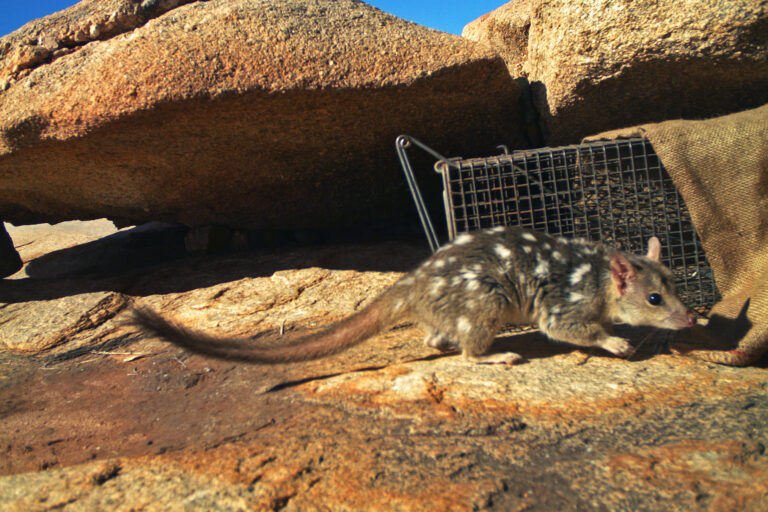
Iconic Marsupial Faces Uncertain Future (Image Credits: Imgs.mongabay.com)
Australia recorded the world’s highest rate of mammalian extinctions after European settlement, with at least 40 terrestrial mammal species vanishing.
The northern quoll, or Dasyurus hallucatus, stands among the survivors under severe pressure. Once common in northern regions, this carnivorous marsupial now clings to fragmented populations. Classified as endangered nationally, it endures in rocky refuges amid broader declines.
Martu lands in the Pilbara and Western Desert emerged as the species’ last major mainland stronghold free from cane toads. Elders described recent sightings as rare and emotional events, underscoring the quoll’s cultural value as “juri kuwiyi,” or good meat.
Bridging Generations Through Shared Knowledge
Martu Traditional Owners led a study published in January 2026 that wove their cultural insights with scientific methods. During on-country “ninti” sessions – knowledge-sharing gatherings – elders mapped historical ranges on butcher paper and recounted oral histories.
Participants, including elder Muuki Taylor, recalled quolls thriving “everywhere” in sandy dunes, spinifex plains, and rocky outcrops until the mid-20th century. Taylor noted, “They were all over [Martu country], wiminyji used to be everywhere.”
Such accounts extended the known range eastward to areas like Percival Lakes, over 270 kilometers from modern records. This baseline revealed declines within two to three generations, roughly the 1940s to 1970s.
Pinpointing the Drivers of Decline
Elders linked the downturn to invasive predators like cats, foxes, and dingoes, alongside shifts in fire practices after colonial disruptions displaced communities. Traditional mosaic burning once sustained habitats; its absence allowed intense “wrong-way” wildfires to ravage shelter and prey.
Cane toads posed an acute poison risk elsewhere, though absent here. Feral cats amplified post-fire predation, while habitat changes isolated survivors in rocky zones.
- Invasive predators decimated numbers post-1940s.
- Altered fire regimes destroyed food sources and cover.
- Cane toads triggered local extinctions in invaded areas.
- Grazing and weeds further degraded landscapes.
- Population fragmentation heightened extinction risks.
Rangers Lead Collaborative Efforts
Kanyirninpa Jukurrpa (KJ) Martu rangers spearheaded fieldwork, deploying camera traps and habitat surveys alongside Department of Biodiversity, Conservation and Attractions staff. These efforts confirmed elders’ reports and spurred more sightings.
Similar initiatives thrived elsewhere. In Arnhem Land, Warddeken rangers blended traditional knowledge with monitoring to safeguard quolls. Kimberley groups tracked populations amid toad threats.
Experts praised the model. Dr. Harry Moore called it a “wake-up call” for conservation amid mining pressures, stressing protocols like Indigenous-language summaries.
Charting a Resilient Path Ahead
Researchers urged restoring traditional winter burns with protective patches, alongside feral cat control. Empowering over 125 Indigenous ranger teams promised scalable impact on vast, hard-to-reach lands.
Key Takeaways
- Indigenous knowledge establishes vital historical baselines for undocumented declines.
- Targeted fire management and predator control can rebuild quoll habitats.
- Ranger-led programs merge culture and science for effective stewardship.
Blending Martu wisdom with modern tools offers a blueprint for reversal. As northern quolls teeter, such partnerships hold the key to endurance. What steps should expand next? Share your thoughts in the comments.