Picture the Australian outback, but wilder, more dangerous, and ruled by a creature so terrifying it would make even a saltwater crocodile think twice. Long before kangaroos and koalas became the face of the continent, something far more formidable claimed the land as its own. A lizard. Not just any lizard, but the largest terrestrial lizard ever to walk this earth.
You might already know about the Komodo dragon, the fearsome Indonesian reptile that seems like it belongs in a different era. Now imagine something related to it, but dramatically bigger, older, and possibly even more lethal. That is the story of Megalania, and it is one that paleontologists, naturalists, and prehistoric-life enthusiasts cannot stop talking about. Get ready, because this story gets wild.
Who Was Megalania? An Introduction to the “Ancient Great Roamer”
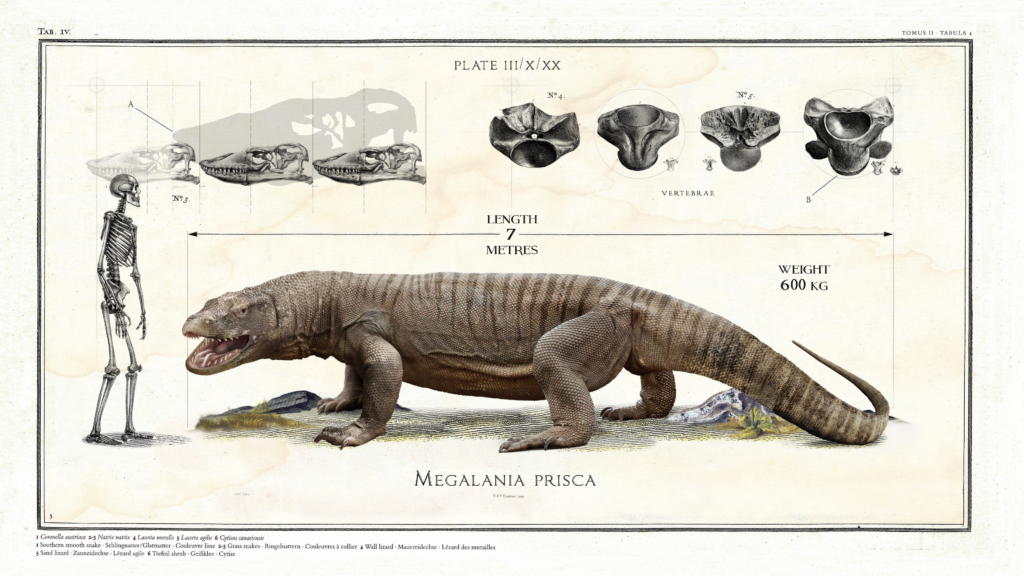
If you have never heard the name Megalania before, you are about to be stunned. Megalania, known scientifically as Varanus priscus, is an extinct species of giant monitor lizard, part of the megafaunal assemblage that inhabited Australia during the Pleistocene. Think of it as a scaled-up version of the goannas you might see in the Australian bush today, except the scale-up is almost incomprehensible in size.
Sir Richard Owen described the first known remains of Megalania in 1859, from three vertebrae among a collection of primarily marsupial bones purchased by the British Museum, collected from the bed of a tributary of the Condamine River in eastern Australia, and he coined the name “Megalania prisca” to mean “ancient great roamer.” Interestingly, the close similarity to the Latin word “lania,” the feminine form of “butcher,” has resulted in numerous popular descriptions mistranslating the name as “ancient giant butcher.” Ancient great roamer or ancient giant butcher? Honestly, both feel fitting for this creature.
Staggering Size: Just How Big Was This Beast?
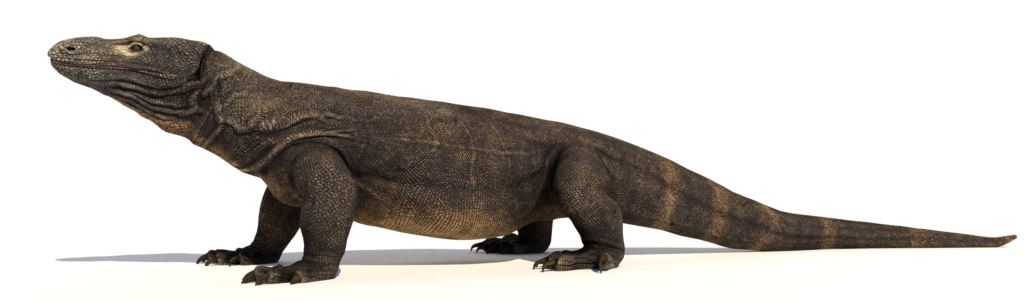
Here is where things get genuinely jaw-dropping, and also a little complicated. Megalania is the largest terrestrial lizard known to have existed, but the fragmentary nature of known remains makes estimates highly uncertain. Scientists have been debating the exact measurements for decades, and the range is astonishing.
Early estimates placed the length of the largest individuals at roughly 7 meters, with a maximum weight of approximately 600 to 620 kilograms. In 2002, Stephen Wroe considerably downsized Megalania, suggesting a maximum total length of 4.5 meters, but in 2009 Wroe joined other researchers in raising the estimate back up to at least 5.5 meters and around 575 kilograms. So you could say the science on its size has been on quite a roller coaster. Either way, even the more conservative estimates make it the biggest land lizard ever known, with the largest individuals likely reaching lengths of 5 meters or more and weighing hundreds of kilograms.
Physical Features: Built Like a Living Weapon
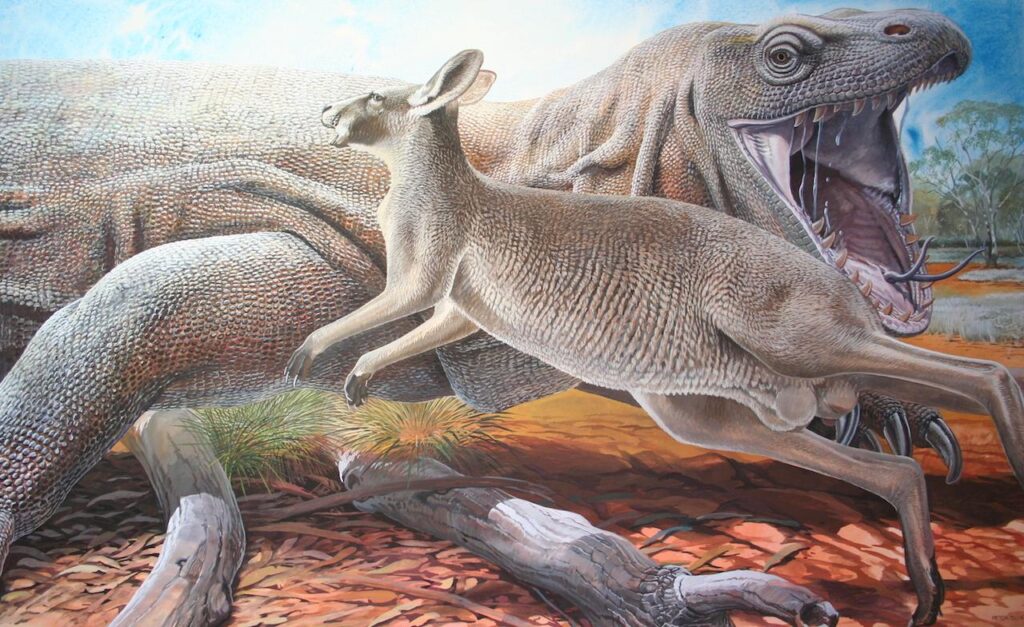
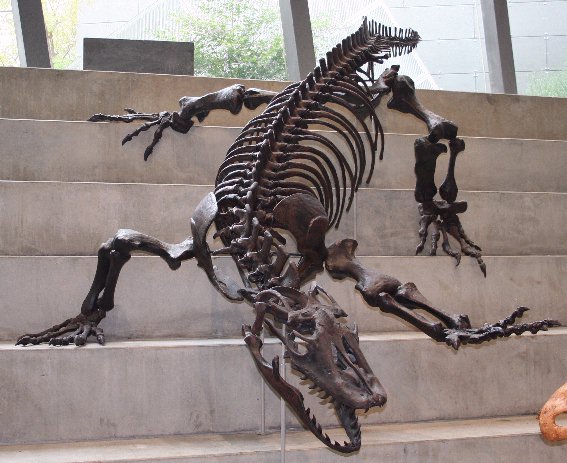
Let’s be real, Megalania was not just big. It was built for one purpose. It had heavily built limbs and a powerful body, a large skull complete with a small crest between the eyes, and a jaw full of serrated, blade-like teeth. That crest between the eyes is a fascinating detail, and it actually connects this ancient giant to some of its living Australian relatives. Megalania prisca had an unusual crest on its snout, and a smaller but similar crest is also seen in the perentie and other Australian species.
The teeth of Megalania were sharp and recurved with wrinkled, infolded enamel, which would have made them incredibly effective at gripping and tearing prey. Its powerful tail could be swung from side to side with force, making it capable of taking down larger animals if needed. And if all that still was not enough to intimidate you, the scales of Megalania would possibly have been similar to those of its extant relatives, possessing a honeycomb microstructure and being both durable and resilient to water evaporation. Nature really went all out with this one.
A Deadly Hunter: Diet, Prey, and Venomous Secrets
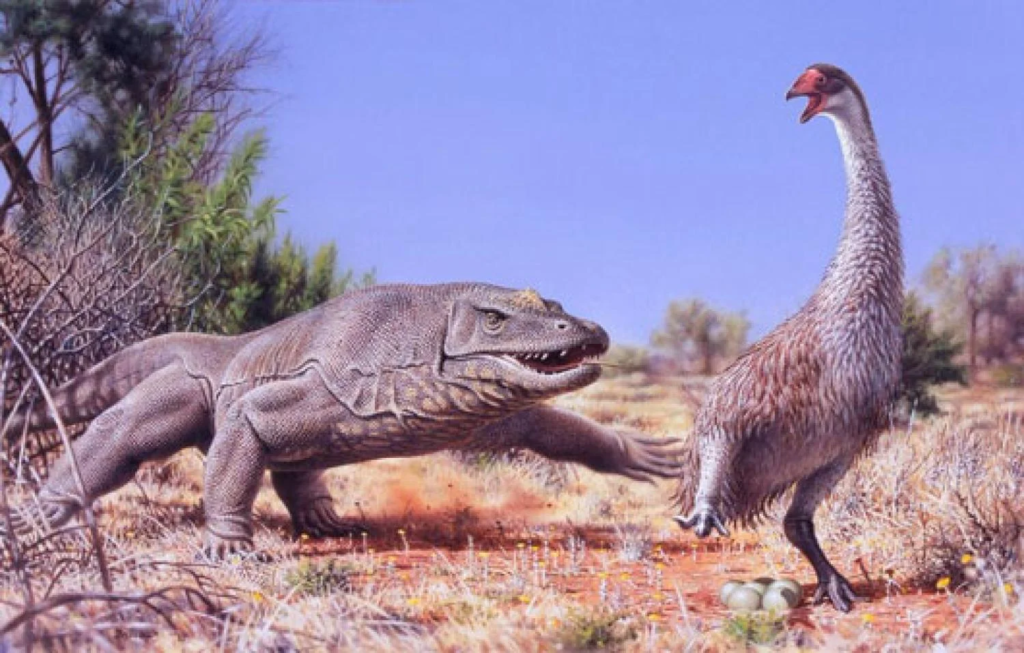
Judging from its size, Megalania would have fed mostly upon medium to large-sized animals, including giant marsupials such as Diprotodon, along with other reptiles and small mammals, as well as birds and their eggs and chicks. You can think of it a bit like a lion of the lizard world, except the lion does not also possibly carry venom. Like other varanids, Megalania may have been an ambush predator and scavenger whose toxic saliva would have caused infection and death in its victims.
The venom question is genuinely one of the most exciting debates in paleontology right now. Closely related varanids use a potent venom found in glands inside the jaw, and this venom has been shown to act as a haemotoxin, functioning as an anticoagulant that greatly increases bleeding from wounds and would rapidly decrease prey blood pressure, leading to systemic shock. Being a member of Anguimorpha, Megalania may have been venomous and if so, would be the largest venomous vertebrate known. The largest venomous animal in the history of life on Earth. I know it sounds crazy, but that could genuinely be true.
The Prehistoric World It Called Home
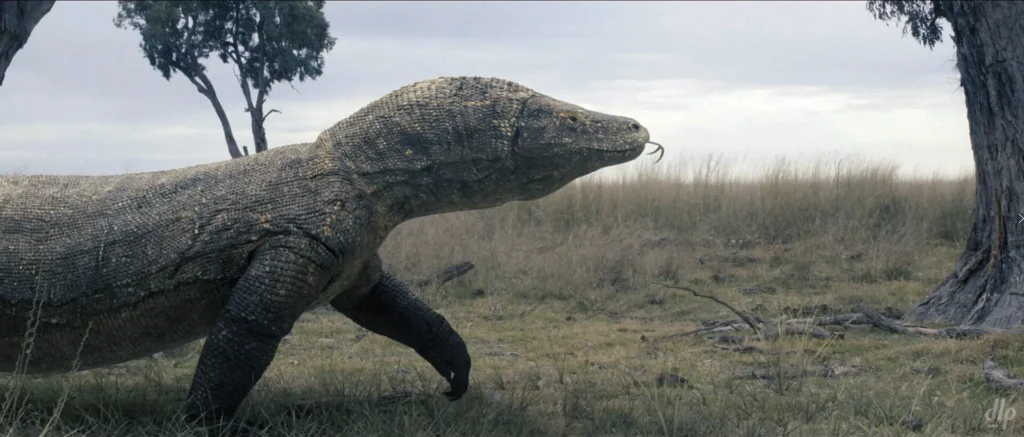
You might picture Megalania ruling an empty landscape, but ancient Australia was actually teeming with extraordinary creatures. Megalania, as a huge varanid lizard, was part of a suite of large Australian Pleistocene reptiles that included giant horned turtles, crocodiles like Pallimnarchus, and large snakes like Wonambi naracoortensis. Imagine walking through a forest shared by all of those animals. Megalania lived in a variety of eastern Australian Pleistocene habitats, including open forests, woodlands, and perhaps grasslands.
It is hard to say for sure, but Megalania was far from the only apex predator on the block. Some scientists regard with skepticism the idea that Megalania was the only, or even principal, predator of the Australian Pleistocene megafauna, noting that the marsupial lion, Thylacoleo carnifex, has been implicated with the butchery of very large Pleistocene mammals. In spite of its large size, Megalania would have needed much less to eat than a mammalian predator of comparable size, which is one advantage of being a cold-blooded reptile. Less food, more patience, and a devastating ambush when the moment arrived.
Extinction: What Really Wiped Out the Giant?
This is where the story takes a genuinely sobering turn. The youngest fossil remains of giant monitor lizards in Australia date to around 50,000 years ago. That timing is not a coincidence. Around the same time that Megalania and many other large Australian megafauna disappeared, the first Aboriginal people arrived in Australia, and this timing has led scientists to consider whether the arrival of humans played a role in the extinction of these giant animals.
One theory of how Megalania became extinct is that after Diprotodon and Procoptodon died off, there was not enough food to sustain such a large reptile, and slowly the population died to extinction. There is also the combined theory that early humans burned the once plentiful forested areas to protect themselves from this mighty reptile, and doing so not only helped directly kill off Megalania, but also indirectly, since it ran out of places to hide in ambush and the prey animals it once fed on had no more food. A study examined the musculature of the limbs, posture, and possible muscular composition of the animal and found that it would most likely have been inefficient when attempting to outrun the early human settlers who colonised Australia. The giant lizard, for all its fearsome power, may simply have been no match for an organized and determined group of early humans.
Conclusion: A Giant Gone, But Never Forgotten
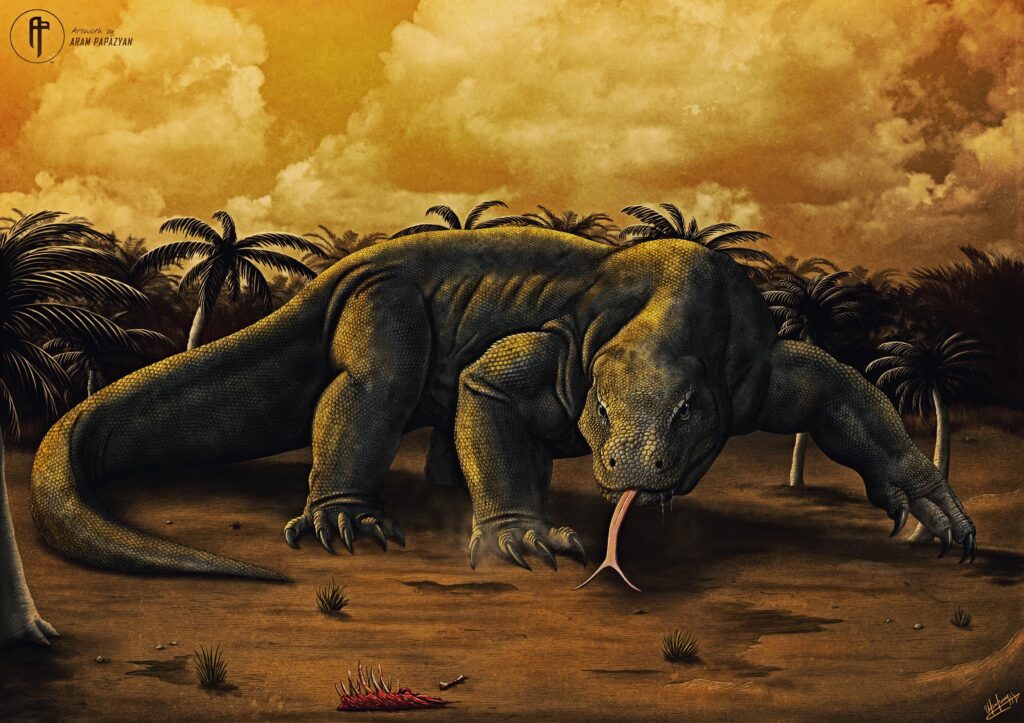
Megalania’s story is one of those rare chapters in natural history that feels almost too dramatic to be real. A lizard the size of a school bus, armed with blade-like teeth, a potentially lethal venom, and a body built for ambush, roaming an ancient continent packed with giant marsupials and strange reptiles. It sounds like something out of a fantasy novel, yet every detail is carved into the fossil record of real Australian earth.
What makes Megalania so compelling is not just its sheer size or its fearsome biology. It is the fact that real human beings, the ancestors of today’s Aboriginal Australians, may have actually looked this creature in the eye. They may have hunted it, feared it, or lost members of their communities to it. That overlap between deep prehistoric time and human history is, honestly, breathtaking.
Megalania reminds us that the natural world has produced wonders far stranger and more spectacular than anything we tend to imagine. The next time you see a goanna sunning itself on a rock in the Australian bush, spare a thought for its ancient relative. That little lizard carries the genetic echo of a true giant. What would you have done if you had come face to face with the real thing?