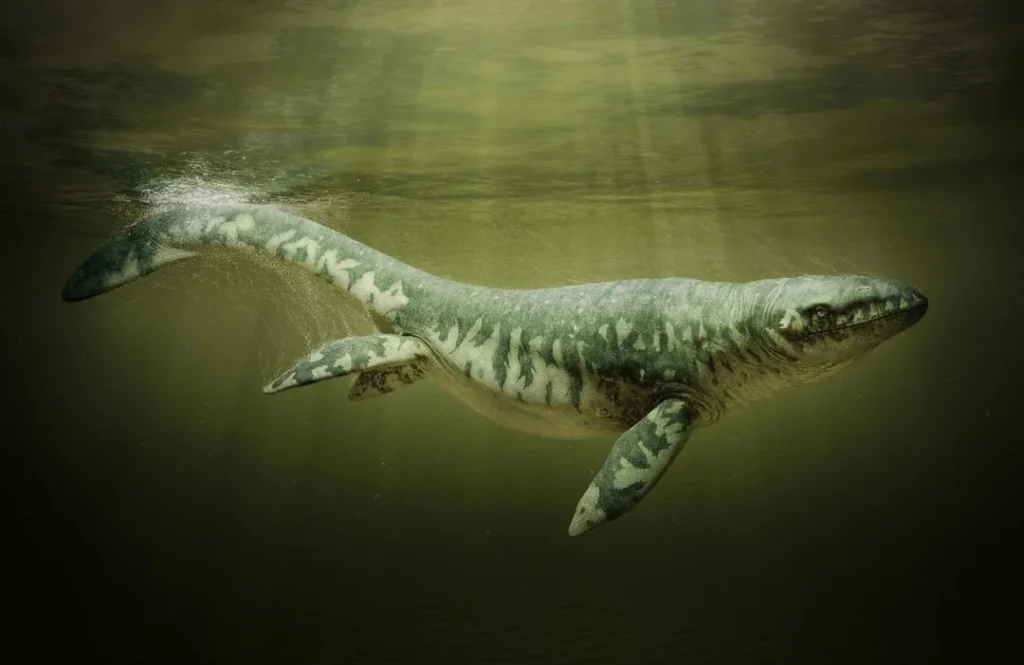
Nuevo León, Mexico – Paleontologists identified a formidable ancient marine reptile after more than two decades of study on a fossil skull unearthed in 2001. The creature, named Prognathodon cipactli, patrolled the warm, shallow seas covering what is now northeastern Mexico around 70 million years ago. This mosasaur stood as the region’s unchallenged apex predator, its robust build tailored for dominating the food chain in the Late Cretaceous.
A Skull’s Long Journey to Recognition
A Skull’s Long Journey to Recognition (Image Credits: Reddit)
Workers discovered the nearly complete skull in the Méndez Formation near Linares in Nuevo León during 2001. The fossil came from the Las Barretas ranch, a site rich in Late Cretaceous remains. Researchers initially classified it as an indeterminate mosasaur in 2007, but advanced analyses revealed its unique traits.
A team led by Héctor E. Rivera-Sylva of Mexico’s Desert Museum in Saltillo, along with colleagues from the University of Bath in England, published their findings in 2026. The study appeared in the journal Neues Jahrbuch für Geologie und Paläontologie. This identification expanded knowledge of mosasaur diversity in Mexico’s prehistoric waters.
Built for Battle: Features of a Top Hunter
Prognathodon cipactli measured roughly 6 meters long, comparable to a city bus. Its short snout and deep jaws set it apart from relatives with slender, elongated skulls. Conical teeth, thick and robust, equipped it to crush tough prey.
These adaptations marked it as an active predator, much like a modern orca patrolling open oceans. Rivera-Sylva noted, “It was a mosasaur with short jaws, with conical and very robust teeth, allowing it to attack large prey.” The design suited assaults on sizable targets in coastal and deeper waters.
Dominating the Food Chain
In its era, Prognathodon cipactli claimed the top spot among marine hunters. It targeted large fish, fellow reptiles such as plesiosaurs, and even armored shelled creatures. No larger or more lethal rival occupied that niche in northeastern Mexico’s ancient seascape.
The Méndez Formation preserved evidence of a vibrant ecosystem, with swamps, beaches, and tropical flora nearby. Tectonic shifts later exposed these fossils, dozens of kilometers from today’s Gulf of Mexico. Mosasaurs like this one, related to snakes and monitor lizards rather than dinosaurs, thrived until the mass extinction 66 million years ago.
- Short, powerful jaws for gripping.
- Robust conical teeth for piercing and crushing.
- Body length of 5-6 meters for speed and strength.
- Habitat spanning open seas and coastal zones.
- Apex status with no known superiors locally.
Mythic Name for a Mythic Beast
Scientists drew from Aztec lore for the species name. Cipactli represented a primordial sea monster, part reptile and part fish, which gods dismembered to form earth and sky. The full name, Prognathodon cipactli, translates roughly to “forejaw tooth of Cipactli.”
This choice honored Mexico’s cultural heritage while highlighting the creature’s fearsome reputation. Rivera-Sylva emphasized its role: “At that time and in this region, it was the top predator; that was its place in the food chain. There was none bigger or more dangerous than it.” Such finds inspire young explorers visiting the Desert Museum.
Key Takeaways
- Prognathodon cipactli redefined mosasaur evolution as an early adapter for big-game hunting.
- The 2001 skull from Mexico’s Méndez Formation unlocked insights into Late Cretaceous marine life.
- Its extinction marked the end of an era, mirroring the dinosaurs’ fate.
This discovery underscores Mexico’s pivotal role in prehistoric paleontology, revealing a predator that ruled with unmatched ferocity. As Rivera-Sylva reflected, such fossils bridge ancient mysteries with modern wonder, drawing children to explore their own backyard’s giants. What do you think about this ancient ruler of the seas? Tell us in the comments.