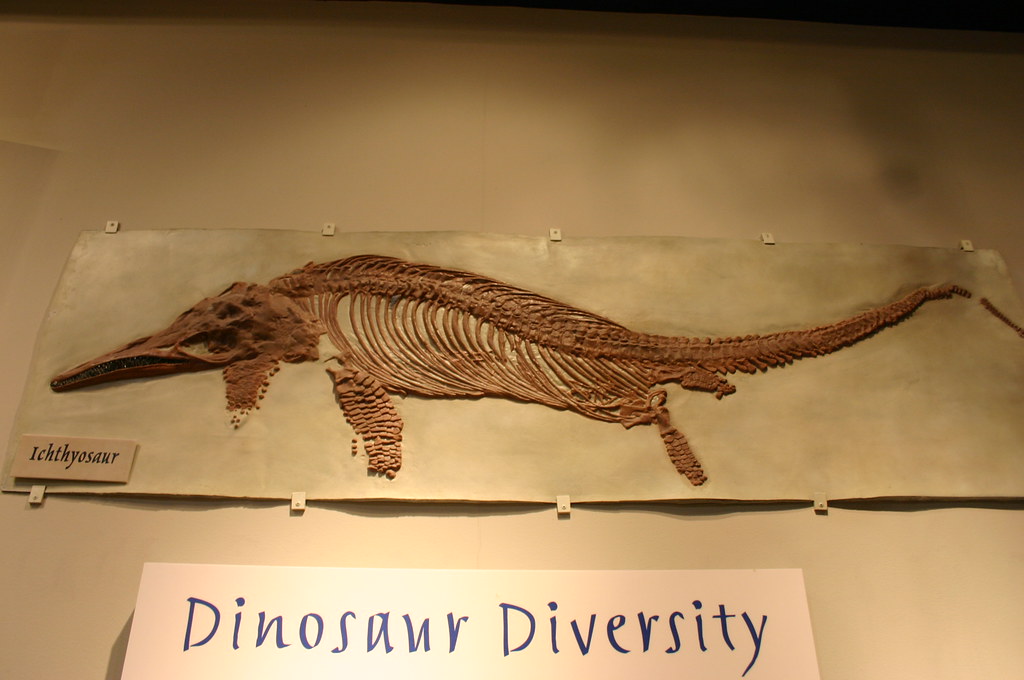
Germany’s Posidonia Shale – Researchers at Curtin University unraveled a paleontological enigma surrounding the exceptional three-dimensional fossils of ichthyosaurs from this Jurassic site. A 183-million-year-old specimen, encased in a carbonate concretion, showcased bones filled with minerals that hinted at complex processes beyond simple oxygen deprivation. The discovery highlighted the role of microscopic life in transforming decay into durable preservation.
Challenging Assumptions About Fossil Formation
Challenging Assumptions About Fossil Formation (Image Credits: Flickr)
Scientists long attributed the pristine state of these fossils to anoxic seafloors that halted decay by excluding oxygen-dependent scavengers and bacteria. Yet evidence emerged of oxidation signatures within the bones, a phenomenon typically linked to oxygen-rich environments. This contradiction puzzled experts, as sites like the Posidonia Shale yielded specimens with unusual mineral compositions distinct from surrounding sediments.
Lead researcher Andrew Jian, a PhD candidate at Curtin University’s Western Australian Organic and Isotope Geochemistry Centre, spearheaded the investigation in collaboration with Kiel University. The team analyzed a partial ichthyosaur skeleton, likely from Stenopterygius or Hauffiopteryx, featuring vertebrae and ribs preserved in remarkable detail. Their work demonstrated that local chemical dynamics, not just broad environmental conditions, dictated the outcome.
The Ichthyosaur’s Descent into Darkness
The creature met its end around 183 million years ago during the Early Jurassic Toarcian Oceanic Anoxic Event. It sank to the sulfidic, oxygen-free bottom of a stratified sea in what is now southwest Germany. There, soft tissues began to break down amid euxinic conditions marked by high hydrogen sulfide levels and green sulfur bacteria activity.
Anaerobic microbes quickly colonized the carcass, creating distinct zones: the surrounding shale, the forming concretion, and the bones themselves. These compartments exhibited varying redox states, with the sediment dominated by sulfate-reducing bacteria that generated bicarbonate for calcite precipitation. Inside the bones, however, conditions shifted dramatically.
Microbial Builders and Mineral Magic
A consortium of sulfur-cycling microbes – sulfate-reducers, sulfur-oxidizers, and sulfur-disproportionators – decomposed fatty tissues and organic matter. This activity produced acidic microenvironments and oxidized sulfides without free oxygen, leading to barite (barium sulfate) crystals filling marrow cavities. Calcium carbonate simultaneously cemented around the exterior, forming a protective concretion that shielded the skeleton from compressing sediments.
Jian noted the irony in this process. “These microbes acted like tiny builders even as they consumed the ichthyosaur’s fats and tissues. They filled the bones with minerals before the skeleton could collapse,” he explained. Geochemical analyses confirmed heavy sulfur isotopes in bone barite and depleted carbon in the concretion, aligning with microbial sulfur oxidation and reduction.
Key Processes in Fossil Preservation
The taphonomic sequence unfolded rapidly after burial:
- Carcass settled in sulfidic shale, triggering sulfate-reducing bacteria to produce hydrogen sulfide and bicarbonate.
- Soft tissues decayed, generating acidity that phosphatized collagen into fluorapatite.
- Sulfur-oxidizing bacteria created oxidative niches, precipitating barite within bone interiors.
- Concretion nucleated around vertebrae, growing radially to encase and reinforce the structure.
- Pyrite formed in some areas, while overall mineralization prevented deformation.
Senior author Kliti Grice, John Curtin Distinguished Professor, emphasized the nuance. “It’s not just the regional environment around the organism that matters, but what happens at the level of microbes and chemistry inside the decaying material.”
| Compartment | Key Features | Redox Signature |
|---|---|---|
| Host Shale | High TOC (9.6%), pyrite, green sulfur bacteria biomarkers | Euxinic |
| Concretion Matrix | Depleted δ¹³C carbonate, lower TOC | Sulfate reduction |
| Bones | Barite infill, heavy δ³⁴S sulfate, phosphatized collagen | Oxidative microniches |
Broader Impacts on Paleontology
The findings reshape views on Konservat-Lagerstätten like the Posidonia Shale, renowned for soft-tissue impressions and biomolecules. They explain persistent barite observations in these fossils and underscore syntrophic microbial roles in taphonomy. Beyond Earth, similar processes could inform astrobiology searches in ancient rocks or extraterrestrial samples.
Grice highlighted the potential. “These same processes may help guide how we look for signs of life in ancient rocks and even on other planets.” The study appeared in Communications Earth & Environment.
- Anaerobic microbes created oxygen-free oxidation zones for mineral infilling.
- Barite and carbonate concretion ensured 3D structural integrity.
- Microscale chemistry trumps regional anoxia in preservation quality.
This breakthrough reminds us that life’s tiniest agents often script the grandest records of the past. What do you think about these microbial marvels? Tell us in the comments.