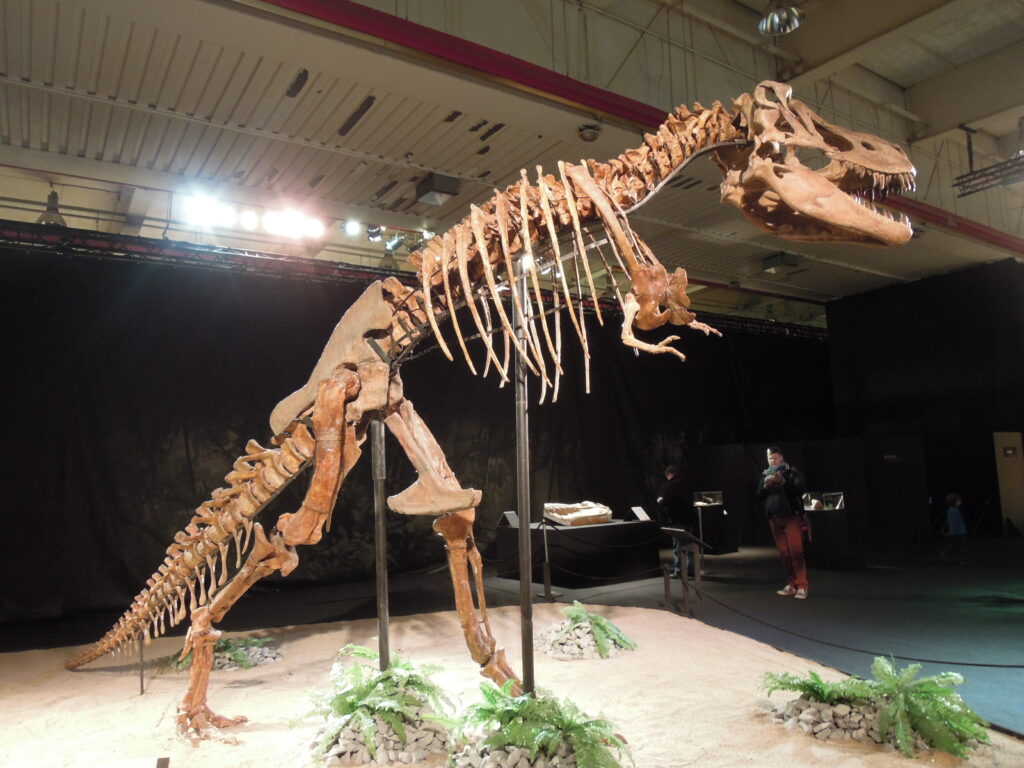
Paris – French authorities handed over a rare 70-million-year-old Tarbosaurus bataar skeleton to Mongolia during a ceremony on December 8, 2025, marking the end of a prolonged fight against fossil smuggling. The specimen, looted from the Gobi Desert nearly a decade earlier, returned alongside roughly 30 other paleontological treasures, including dinosaur eggs. This repatriation underscores growing international efforts to protect cultural heritage from illicit trade.
A Monumental Handover in the Heart of Paris
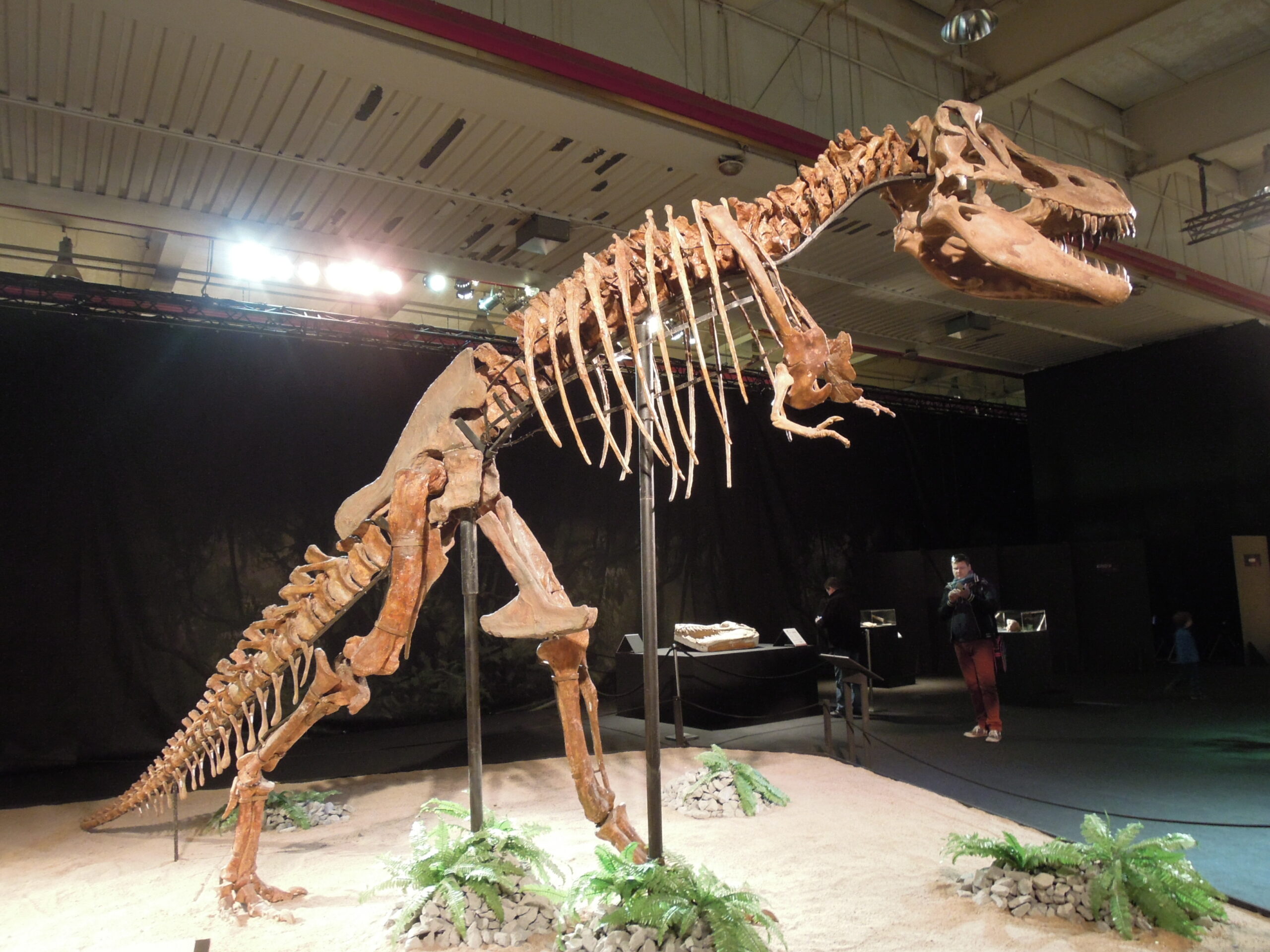
A Monumental Handover in the Heart of Paris (Image Credits: Upload.wikimedia.org)
Amélie de Montchalin, France’s Minister for Public Action and Accounts, presented the fossils to Undram Chinbat, Mongolia’s Minister of Culture, Sports, Tourism, and Youth. De Montchalin described the moment as the return of “a piece of the Gobi Desert” to its homeland, the result of meticulous investigations.
Chinbat emphasized the significance for Mongolia, stating it was vital for the nation to recover such dinosaur fossils. French customs official Sophie Hocquerelle highlighted the skeleton’s exceptional nature during the event. UNESCO representatives, including Krista Pikkat, attended to affirm the role of global conventions in such returns.
The Fierce Predator of the Late Cretaceous
Tarbosaurus bataar roamed Asia during the late Cretaceous period, about 70 million years ago, as an apex predator in what is now the Gobi Desert’s Nemegt Formation. This carnivorous theropod closely resembled Tyrannosaurus rex, featuring a massive skull, powerful jaws, and notably small forelimbs.
Specimens like this one are extraordinarily rare, found only in Mongolia and neighboring regions. The returned skeleton, nearly complete, offers invaluable insights into prehistoric life in humid floodplains dotted with rivers, forests, and deserts. Its hollow skull bones and robust build made it a dominant hunter before its extinction around 65 million years ago.
Unraveling a Global Smuggling Network
French customs seized the skeleton in 2015 in Gannat, central France, after it traveled from the Gobi Desert through South Korea. Authorities linked it to a European trafficking ring involving French, Belgian, and German nationals. Valued at approximately €700,000 upon seizure, its worth has since surged two- to threefold amid booming demand for dinosaur fossils.
Investigations confirmed the fossils’ Mongolian origin, leading to judicial orders for repatriation under the 1970 UNESCO Convention. The cache included not just the Tarbosaurus but also eggs and other fragments from theropods and oviraptorosaurs.
- Tarbosaurus bataar skeleton: Primary specimen, fully articulated.
- Dinosaur eggs: Multiple nests preserved.
- Additional fossils: Bone fragments and partial remains from various species.
- Total items: Around 30 paleontological finds.
Mongolia’s Ongoing War Against Fossil Looters
The Gobi has long attracted smugglers, a problem intensified since early 20th-century expeditions like Roy Chapman Andrews’ discoveries of dinosaur eggs. Mongolian law strictly prohibits fossil exports without permission, prompting repeated repatriations from abroad.
Prior cases include U.S. returns of Tarbosaurus specimens and a skull once owned by actor Nicolas Cage. France’s action aligns with this trend, bolstering bilateral ties and international standards against illicit trade. Recent market surges, with fossils fetching millions at auctions, heighten the stakes.
A New Chapter for Scientific Legacy
Mongolian officials plan to restore and study the artifacts before displaying them in a national museum. This will enable public engagement, education, and research into the region’s paleontological riches.
The return signals stronger global cooperation in heritage protection, as noted by UNESCO.
Key Takeaways
- A complete Tarbosaurus bataar skeleton highlights Mongolia’s unique fossil heritage.
- Seizure in 2015 ended a smuggling route spanning continents.
- Repatriation boosts scientific study and cultural pride.
This event not only reunites treasures with their origin but also deters future looting. What steps should nations take next to safeguard such irreplaceable finds? Share your thoughts in the comments.