Mongolia – Deep in the Gobi Desert’s ancient rock layers, paleontologists uncovered clues to one of prehistory’s greatest success stories. Fossils long overlooked in museum collections revealed Khankhuuluu mongoliensis, a mid-sized predator that roamed about 86 million years ago. This “dragon prince” bridges early tyrannosaurs and the colossal giants like Tarbosaurus and Tyrannosaurus rex, reshaping understanding of their Asian origins.
Fossils Emerge from Oblivion
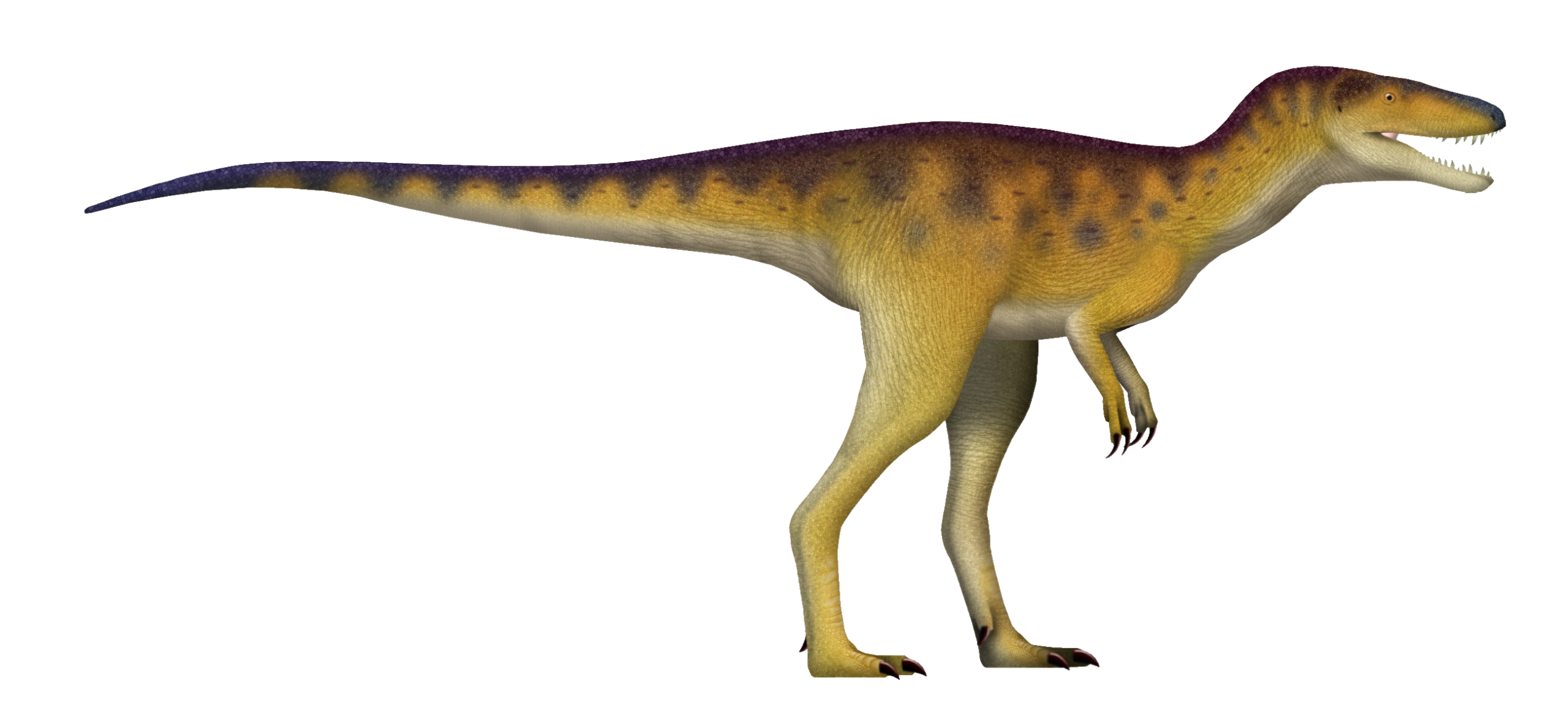
Fossils Emerge from Oblivion (Image Credits: Upload.wikimedia.org)
Two partial skeletons sat unidentified for over 50 years after their discovery in the early 1970s. Mongolian paleontologist Altangerel Perle unearthed them in the Bayanshiree Formation at Baishin-Tsav, a site rich in Late Cretaceous remains. Initially linked to the Chinese dinosaur Alectrosaurus olseni, the bones gathered dust until University of Calgary researchers revisited them in 2023.
Jared Voris led the reexamination, spotting unique traits like a hollow air chamber in the nasal bone. The team published their findings in 2025, naming the species Khankhuuluu mongoliensis – from Mongolian words for “prince” and “dragon.” These specimens, housed at the Mongolian Academy of Sciences, include skull fragments, vertebrae, limb bones, and pelvic elements from mature individuals.
A Sleek Hunter Takes Shape
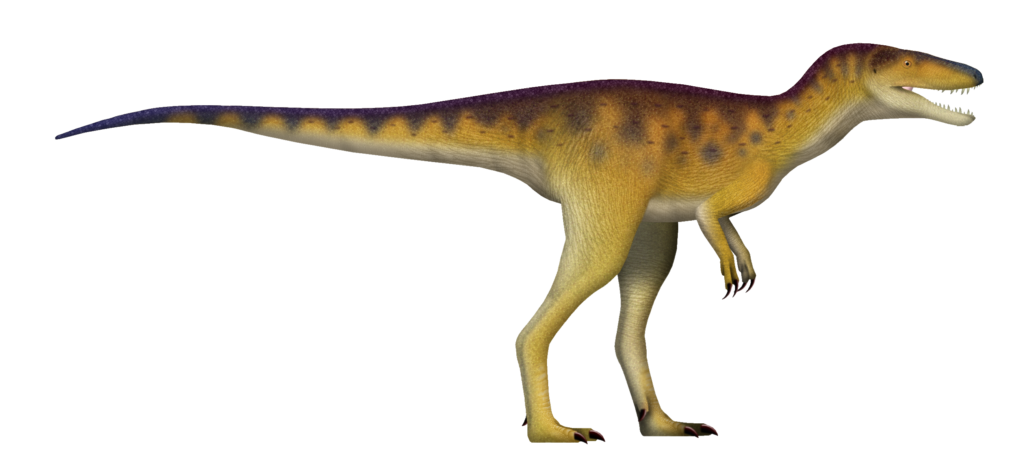
Khankhuuluu measured around 4 meters long, stood 2 meters at the hip, and weighed roughly 750 kilograms – slender compared to later behemoths. Its skull, estimated at 60 to 70 centimeters, featured a shallow profile, round eye sockets, and blade-like teeth suited for slicing swift prey rather than crushing bone. Rugose nasals bore small bosses, while the lacrimal formed a laterally directed horn, blending primitive and advanced features.
Long, gracile limbs suggest agility, with a tibia likely exceeding the femur in length. The holotype preserved 17 tail vertebrae, a furcula, and a scapulocoracoid, painting a picture of a nimble stalker. Unlike the deep-skulled tyrants to come, this prince relied on speed over raw power.
- Shallow skull with reduced ornamentation
- Narrow, denticle-free premaxillary teeth
- Posteriorly tapering ilium
- Prominent ischial tubercle
- High neural spines on dorsal vertebrae
Reshaping the Tyrannosaur Lineage
Phylogenetic analyses positioned Khankhuuluu as a basal tyrannosauroid, just outside Eutyrannosauria and sister to Alectrosaurus. It represents the last major divergence before the rise of massive tyrannosaurids like Tarbosaurus and T. rex. This placement fills a critical gap, showing how early Asian forms mixed traits from smaller ancestors and future giants.
Darla Zelenitsky, a study co-author, noted that Khankhuuluu “gives us the origin story of tyrannosaurs.” Its anatomy hints at the ancestral blueprint: slender builds evolving into armored skulls and thunderous bites. Voris highlighted a unique quadrate feature shared across specimens, solidifying its distinct status.
| Dinosaur | Length | Weight | Era |
|---|---|---|---|
| Khankhuuluu mongoliensis | 4 m | 750 kg | 86 Ma |
| Tarbosaurus | 12 m | 5 tons | 70 Ma |
| T. rex | 12 m | 7 tons | 68 Ma |
Migrations That Forged Giants
Asia served as a cradle for tyrannosaur evolution, with Khankhuuluu exemplifying mid-Cretaceous diversity. Slender forms like this one dispersed to North America via Beringian land bridges around 86 million years ago. Later waves returned to Asia, sparking a second radiation: one slender-horned branch and another of bone-crushers ancestral to Tarbosaurus.
These journeys explain T. rex’s deep-jawed lineage, which looped back to North America. Cassius Morrison emphasized how such back-and-forth shaped the group’s success. Khankhuuluu’s story underscores Asia’s pivotal role before the end-Cretaceous finale.
Key Takeaways
- Khankhuuluu fills a 10-million-year evolutionary void in tyrannosaur origins.
- Its slender form previews the giants’ power-packed adaptations.
- Asian fossils reveal continent-spanning migrations that defined apex predators.
The Dragon Prince reminds us that evolution favors the adaptable, turning nimble hunters into earth-shaking lords. As new digs unearth more links, the tyrannosaur saga grows richer. What secrets might the Gobi still hold? Share your thoughts in the comments.