The Dawn of a New Era in Exoplanet Observation (Image Credits: Cdn.mos.cms.futurecdn.net)
Vandenberg Space Force Base, California – Space enthusiasts and scientists alike anticipate the liftoff of a Falcon 9 rocket carrying NASA’s innovative Pandora satellite, marking a significant step in the quest to understand distant worlds.
The Dawn of a New Era in Exoplanet Observation
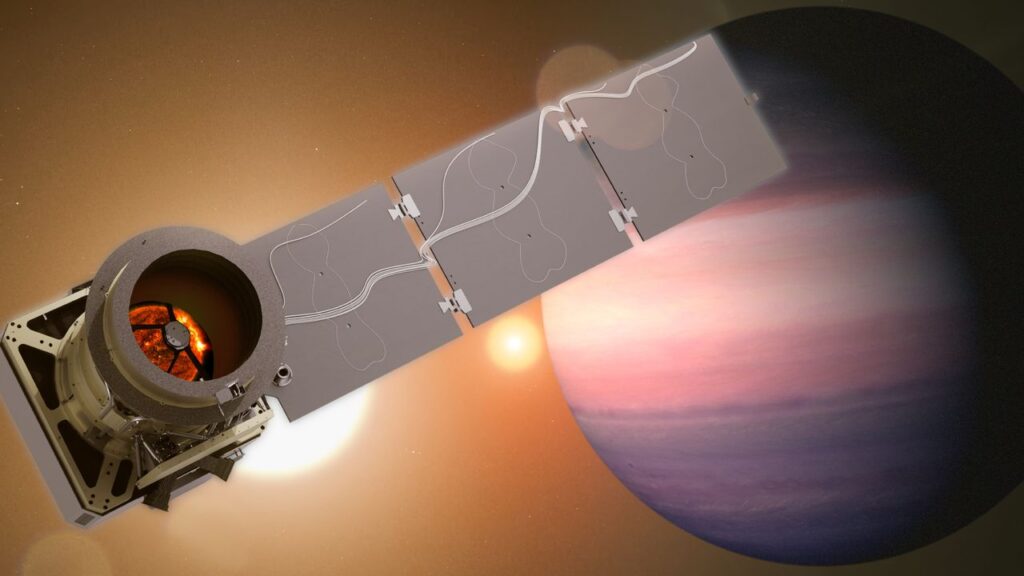
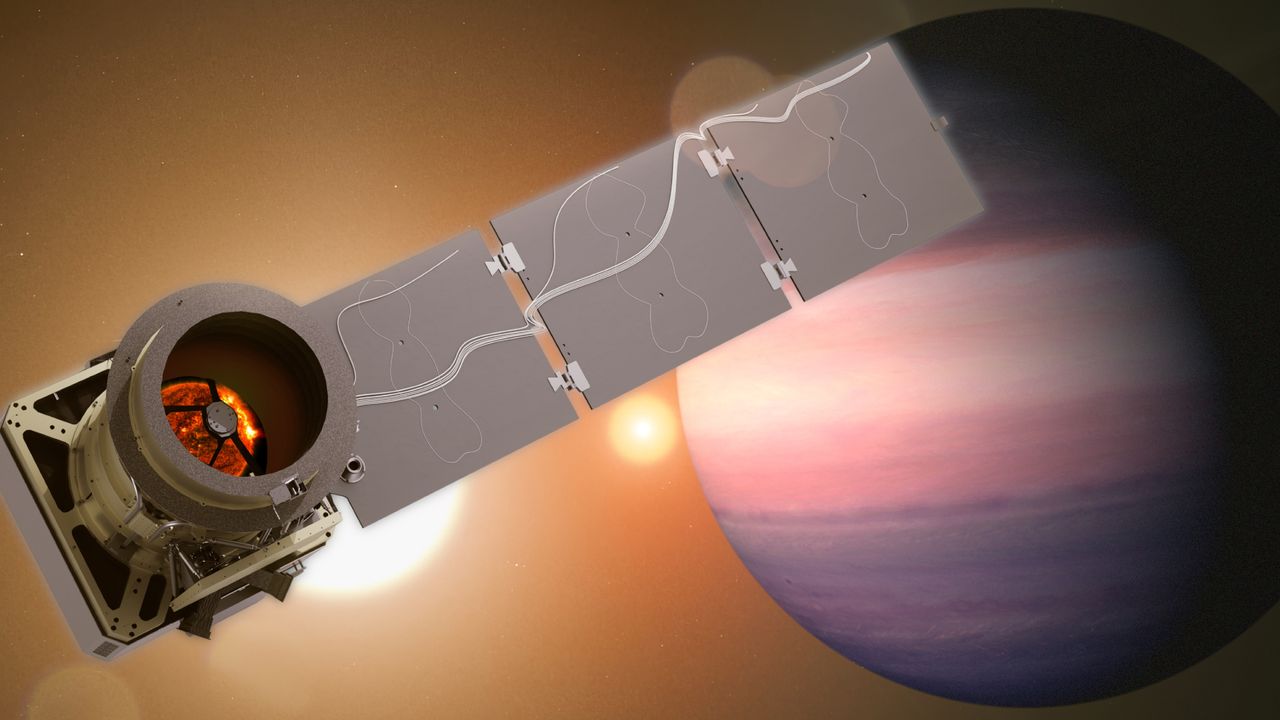
A compact powerhouse no larger than a refrigerator, Pandora represents NASA’s latest effort to peer deeper into the cosmos. Scheduled for launch on January 11 at 8:19 a.m. ET, the satellite will embark on a mission to scrutinize the atmospheres of at least 20 exoplanets over its one-year operational lifespan. Engineers at the University of Arizona, who led the development, recently completed the final integration of the spacecraft into its SpaceX payload fairing, ensuring readiness for the journey ahead.
This endeavor addresses a longstanding challenge in astronomy: distinguishing planetary atmospheres from the interference of their host stars. By deploying in a Sun-synchronous low Earth orbit, Pandora will capture precise measurements during planetary transits, when a fraction of starlight filters through the exoplanet’s atmosphere. Such data could reveal the presence of hazes, clouds, and even water vapor, key indicators of potential habitability. The mission’s unique aluminum telescope enhances its ability to analyze these subtle signals without contamination from stellar activity.
SpaceX’s Role in Fueling Cosmic Discovery
SpaceX’s Falcon 9 rocket will serve as the reliable workhorse for this launch, part of the company’s Twilight rideshare mission that bundles multiple payloads for efficiency. This approach not only reduces costs but also accelerates the deployment of small satellites like Pandora into space. The rocket’s proven track record, with dozens of successful missions in recent years, instills confidence in the operation’s outcome.
From the coastal launch site at Vandenberg, the Falcon 9 will ascend into the clear skies, targeting a precise orbit that allows Pandora uninterrupted views of the stars. Teams at NASA’s Kennedy Space Center have coordinated extensively with SpaceX to prepare for this event, highlighting the collaborative spirit driving modern space exploration. Once in orbit, Pandora will join a growing fleet of observatories hunting for signs of life beyond Earth.
Unraveling the Mysteries of Alien Worlds
Exoplanets, planets orbiting stars outside our solar system, number over 6,000 confirmed discoveries to date, yet their atmospheres remain largely enigmatic. Pandora’s instruments will focus on transiting exoplanets, measuring how starlight changes as it passes through these gaseous layers. This technique promises to clarify how stellar features like sunspots can mimic or obscure atmospheric signatures, refining data for future missions.
Scientists expect Pandora to provide insights into a diverse array of worlds, from scorching hot Jupiters to potentially temperate zones. By studying host stars alongside the planets, the mission will improve models for interpreting observations from telescopes like the James Webb Space Telescope. Early results could prioritize targets for deeper investigations, accelerating the search for habitable environments.
Key Technologies Powering Pandora’s Mission
The satellite’s design emphasizes compactness and precision, fitting within the constraints of a rideshare launch. Its onboard systems include advanced spectrometers capable of detecting faint atmospheric traces across multiple wavelengths. Ground teams have rigorously tested these components to withstand the rigors of space, from launch vibrations to the vacuum of orbit.
One standout feature is the mission’s ability to observe multiple targets efficiently, maximizing scientific return within a limited timeframe. Here are some core elements of Pandora’s toolkit:
- Aluminum-based telescope for high-resolution imaging without thermal distortions.
- Spectrograph to analyze light spectra for chemical compositions like water and methane.
- Star characterization tools to account for stellar variability during observations.
- Autonomous pointing system for tracking transiting events in real time.
- Data transmission capabilities for rapid downlink to Earth-based receivers.
Key Takeaways
- Pandora will target at least 20 exoplanets, focusing on atmospheric hazes and water content.
- The mission launches via SpaceX Falcon 9 on January 11, 2026, from Vandenberg.
- Results will enhance future exoplanet studies by isolating planetary signals from stellar noise.
As Pandora hurtles toward its orbital destiny, it embodies humanity’s enduring curiosity about the universe’s hidden realms. This mission not only expands our knowledge of exoplanets but also paves the way for groundbreaking discoveries in the search for extraterrestrial life. What aspects of this launch excite you most? Share your thoughts in the comments below.