National Panda Day, observed annually on March 16, spotlights the giant panda’s charm and vulnerabilities. These iconic bears draw global affection through their distinctive black-and-white markings and clumsy antics. The recent celebration on March 16, 2026, offered a perfect occasion to explore lesser-known aspects of their biology and behavior, as highlighted by wildlife experts.
Pandas’ Evolutionary “Thumb” for Bamboo Mastery
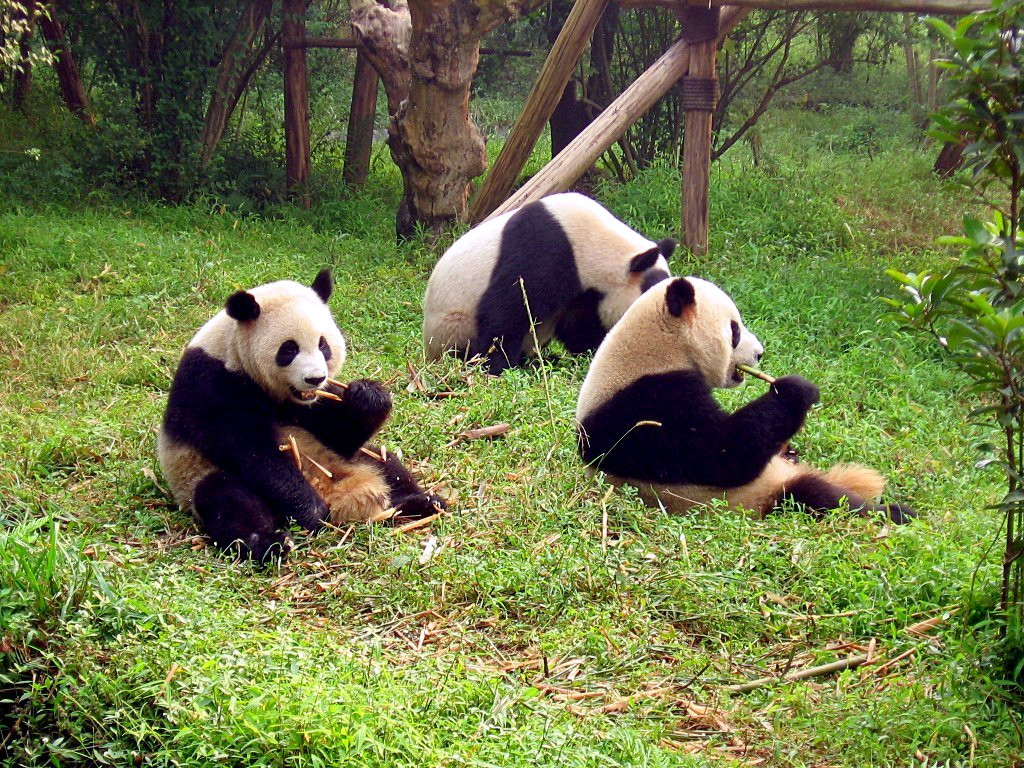
Pandas’ Evolutionary “Thumb” for Bamboo Mastery (Image Credits: Upload.wikimedia.org)
Giant pandas possess a remarkable anatomical feature that sets them apart from other bears. A protruding wrist bone functions as an opposable “thumb,” enabling precise grip on bamboo stalks.
This adaptation proves essential for their survival. Pandas rely heavily on bamboo, and the pseudo-thumb allows them to strip leaves and hold stems securely while feeding. Researchers note this trait as a key evolutionary response to their specialized diet.
The Enormous Daily Bamboo Consumption
Pandas dedicate nearly their entire day to eating due to bamboo’s poor nutritional content. They consume between 10 to 20 kilograms – roughly 20 to 40 pounds – of bamboo each day.
This habit occupies up to 16 hours of their time. The low energy yield from bamboo necessitates constant foraging to meet caloric needs. Such voracious eating underscores the challenges of their herbivorous lifestyle in the wild.
Startling Sounds Resembling Farm Animals
The giant panda’s vocal repertoire defies expectations for a bear. Their most frequent call resembles the bleating of a goat or sheep.
Pandas produce a range of other noises as well. These include honks, huffs, barks, squeaks, and growls, each serving communication purposes in social or territorial contexts. This variety reveals a communicative complexity beyond their gentle image.
Here are some of the key panda vocalizations:
- Bleating: Similar to goats or sheep, used commonly.
- Honks and huffs: For alerts or interactions.
- Barks, squeaks, and growls: Varied expressions of emotion or warning.
Head-Assisted Tree Climbing Techniques
Young pandas demonstrate ingenuity when scaling trees. Observations at China’s Chengdu Research Base of Giant Panda Breeding revealed that cubs often press their heads against trunks for better grip.
This method helps them “hug” the tree while climbing upward. The technique enhances stability during ascents, showcasing adaptive problem-solving in juveniles. Such behaviors contribute to their arboreal skills essential for evasion or play.
Acrobatic Urine Marking by Males
Male giant pandas employ dramatic poses to assert territory. They sometimes perform handstands to deposit urine high on tree trunks.
Pandas also use scent glands on their rumps, rubbing them against trees, rocks, and ground. Urine marking reaches elevated spots through these upright maneuvers, effectively broadcasting presence to rivals. This quirky ritual highlights their sophisticated territorial strategies.
Key Takeaways
- Giant pandas’ pseudo-thumbs enable bamboo handling despite their bear physiology.
- Daily bamboo intake exceeds 20 pounds, dominating their routine.
- Unusual sounds and climbing tactics reveal hidden behavioral depths.
Giant pandas blend adorability with survival ingenuity, traits that fuel ongoing conservation zeal. These facts remind us of the delicate balance supporting their existence amid habitat pressures. What surprises you most about these bamboo-loving bears? Share your thoughts in the comments.