New Mexico – Deep within the arid landscapes of the San Juan Basin, paleontologists unearthed fossils that reshaped understanding of ceratopsian evolution. Navajoceratops sullivani emerged as a pivotal species among the horned dinosaurs of the late Cretaceous. Discovered in the Hunter Wash Member of the Kirtland Formation, this ceratopsid offers a rare glimpse into transitional forms that bridged earlier and later relatives.
A Transitional Skull Redefines Ceratopsian Lineages
A Transitional Skull Redefines Ceratopsian Lineages (Image Credits: Upload.wikimedia.org)
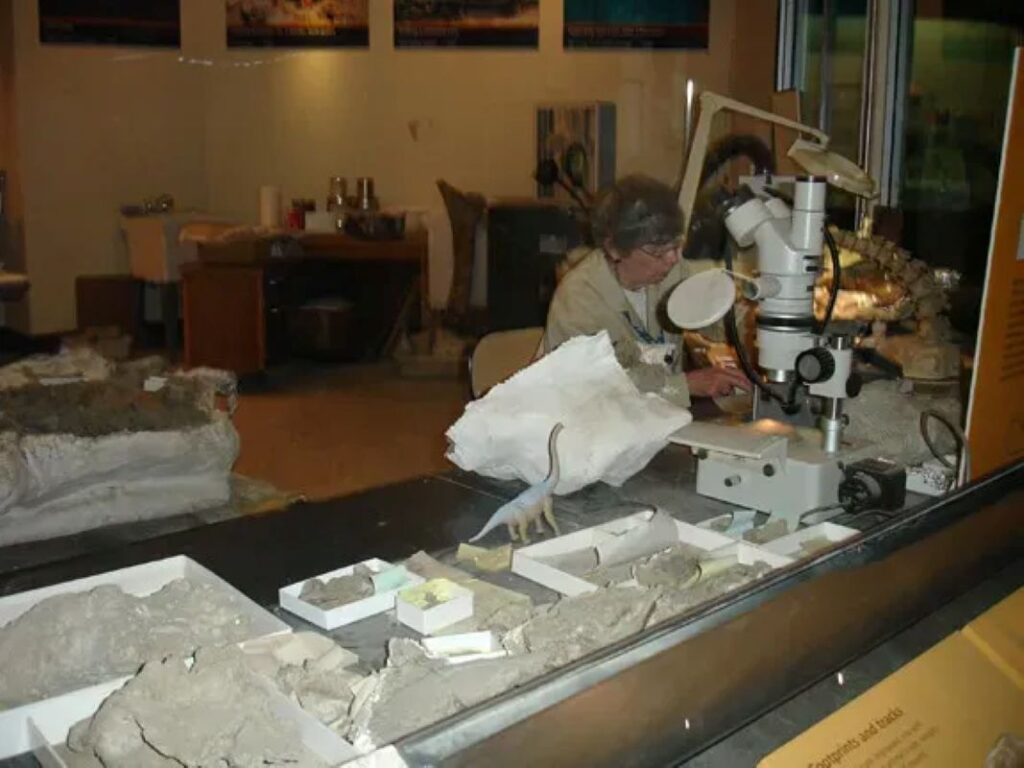
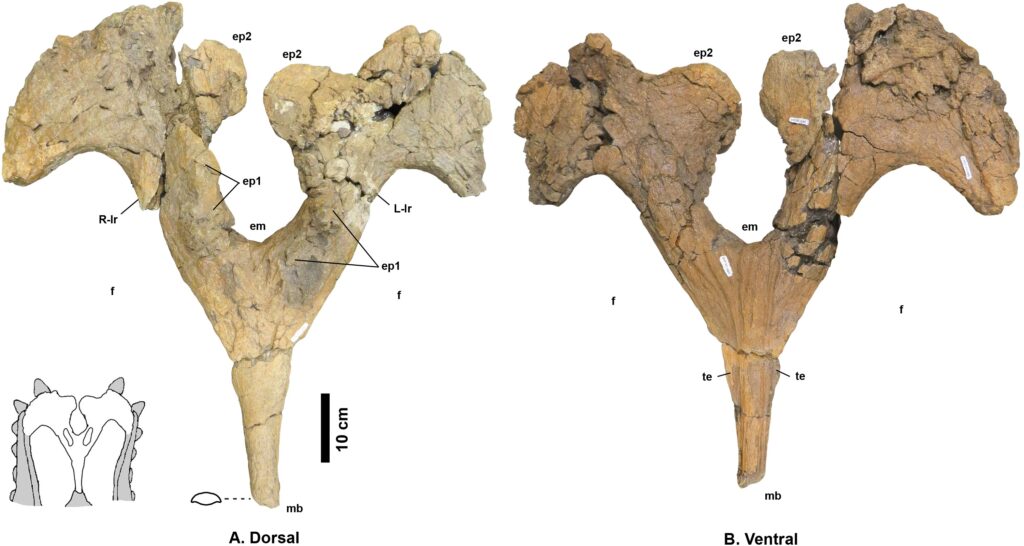
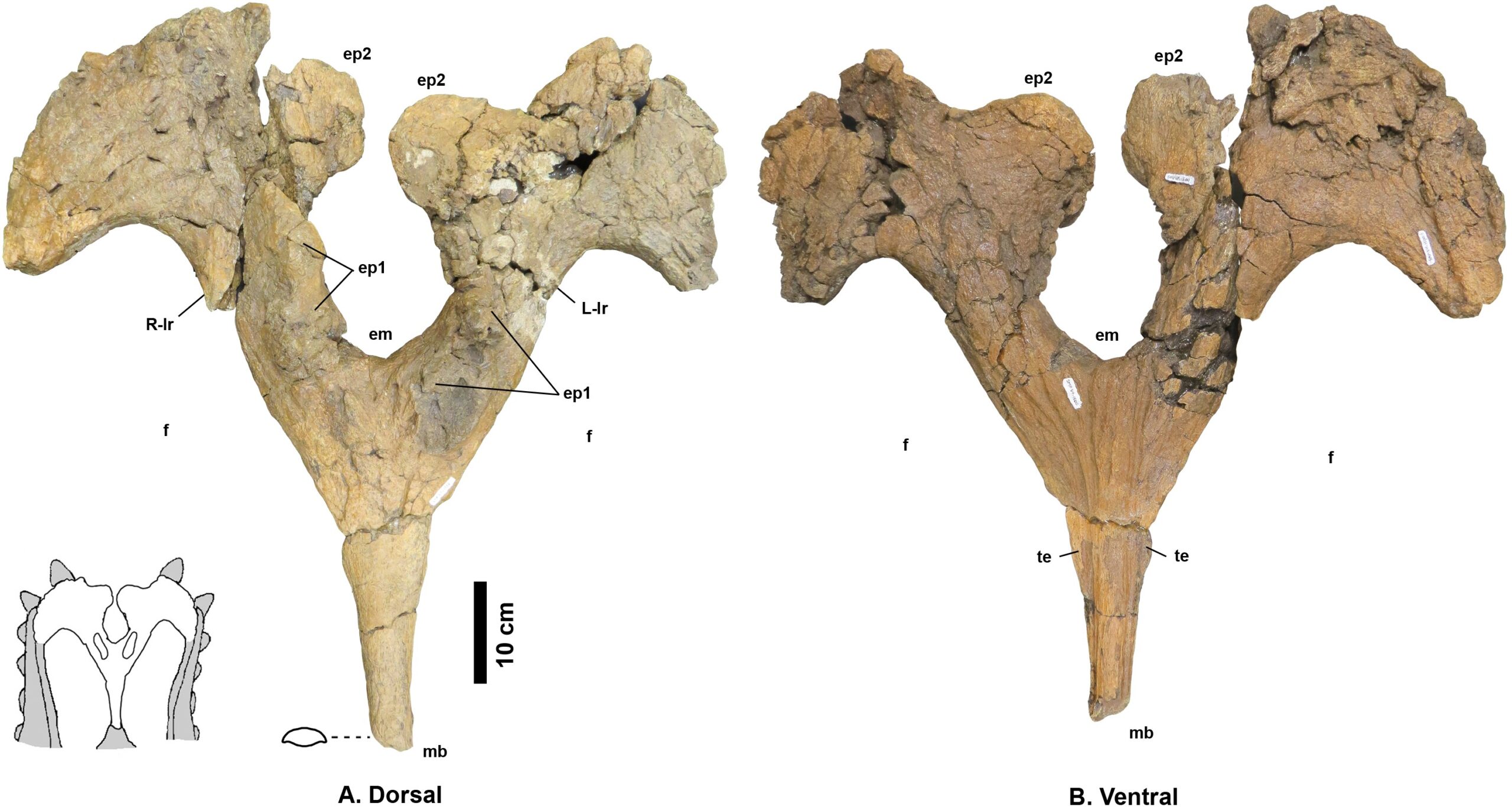
The holotype specimen of Navajoceratops, cataloged as SMP VP-1500, consisted of key skull elements including parietals and fragments of the squamosal and jugal. Collected in 2002 during expeditions led by Robert M. Sullivan, these bones revealed a dinosaur with a frill bearing a distinctive deep notch, or embayment, along its posterior margin. This feature positioned Navajoceratops as an intermediate between Pentaceratops and later forms like Anchiceratops.
Researchers noted the parietal’s lateral rami met at an acute angle of about 60 degrees, differing from relatives. The median embayment extended far forward, overlapping with the parietal fenestrae. Such details highlighted gradual morphological shifts over millions of years. Stored at the State Museum of Pennsylvania in Harrisburg, the specimen underscored the value of targeted fieldwork in fossil-rich layers.
Distinctive Features of the Navajo Horned Face
Navajoceratops earned its name, meaning “Navajo horned face,” in honor of the indigenous Navajo people of the region and Sullivan, whose teams recovered the fossils. The species epithet sullivani paid direct tribute to his contributions. As a chasmosaurine ceratopsid, it shared the family’s signature bony frill and beak-like mouth adapted for cropping tough vegetation.
Estimates placed adults at around 20 to 25 feet in length, standing 5 to 6 feet at the shoulder with an additional 3 to 4 feet from the upright frill, and weighing roughly 5 tons. The frill featured outwardly turned spikes at its center and a pronounced posterior notch deeper than in Pentaceratops. These traits set it apart while linking it to a lineage of long-frilled ceratopsians.
- Deep median embayment in the parietal posterior bar.
- Acute angle (60 degrees) where lateral rami meet.
- Overlapping fenestrae and embayment for enhanced structural support.
- Flattened, plate-like elements transitioning toward later species.
- Paired central spikes on the frill, possibly for display.
Filling Evolutionary Gaps in Chasmosaurines
Published in 2020 by Denver W. Fowler and Elizabeth A. Freedman Fowler in PeerJ, the description of Navajoceratops arrived alongside Terminocavus sealeyi, another transitional form from the same formation. Together, they spanned a roughly 5-million-year window from about 75.9 to 71.5 million years ago. This sequence connected Utahceratops through Pentaceratops to Anchiceratops, demonstrating anagenesis—gradual evolution within a lineage.
The fossils dated to the Campanian stage, approximately 75 to 73.4 million years ago, in strata that preserved a diverse ecosystem. Navajoceratops supported a close phylogenetic tie between Pentaceratops and Anchiceratops, challenging ideas of extreme faunal separation in the Western Interior Seaway region. Its position weakened notions of abrupt provincialism, instead favoring steady adaptation amid shifting seaways.
| Dinosaur | Age (Ma) | Key Frill Feature |
|---|---|---|
| Utahceratops | ~76 | Shallow embayment |
| Navajoceratops | ~74-75 | Deep notch |
| Pentaceratops | ~74.7 | Progressive deepening |
| Anchiceratops | ~71-72 | Nearly closed |
Habitat and Daily Life Among Cretaceous Giants
The Kirtland Formation captured a floodplain environment teeming with herbivores and predators. Navajoceratops likely browsed low vegetation like ferns and cycads using its shearing beak. Herds may have roamed these lands, using frills for display, species recognition, or defense against theropods. The San Juan Basin’s layers revealed contemporaries such as hadrosaurs and tyrannosaurids.
High sea levels during the Campanian isolated populations, driving localized evolution. Vicariance from the Western Interior Seaway fostered divergence into clades like Chasmosaurus and Pentaceratops lines. Navajoceratops embodied this dynamic, adapting frill shapes possibly for thermoregulation or intra-species signaling.
Key Takeaways
- Navajoceratops fills a 5-million-year evolutionary gap in chasmosaurines.
- Its frill notch shows gradual enclosure toward Anchiceratops morphology.
- Discovered in New Mexico’s Kirtland Formation, honoring local Navajo heritage.
Navajoceratops stands as a testament to the incremental nature of evolution, piecing together the ceratopsian family tree one fossil at a time. These finds remind us how fragmented records can still illuminate ancient worlds. What role do you think frill variations played in dinosaur survival? Share your thoughts in the comments.