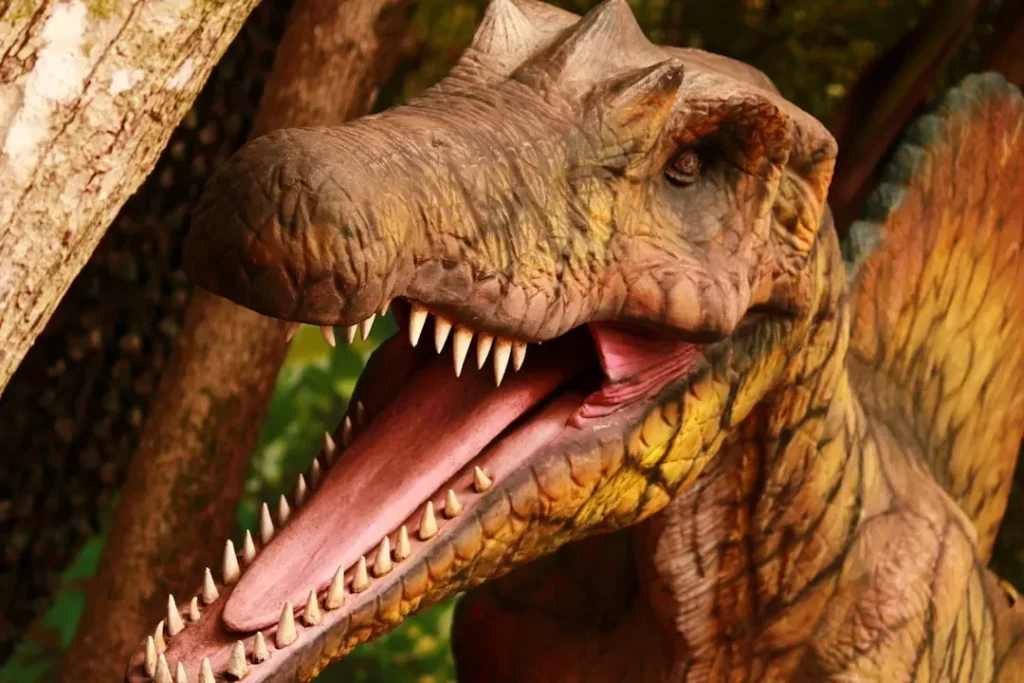
For most of human history, we pictured dinosaurs as little more than instinct-driven monsters, crashing through prehistoric forests, roaring into the void, completely oblivious to the world around them. Then science started catching up. And honestly, what researchers have uncovered over the past several decades is nothing short of jaw-dropping. These weren’t just big, lumbering killing machines. They were social, complex, and in many ways, far more sophisticated than the movies ever dared to show you.
From voice boxes buried in ancient stone to the iridescent shimmer of fossilized feathers, the evidence is mounting fast. Dinosaurs didn’t just exist. They communicated, coordinated, signaled, and even danced. The picture we’re building of prehistoric life keeps getting richer, more nuanced, and in some cases, more surprising than anyone expected. So if you’re ready to completely rethink everything you thought you knew about the Jurassic world, let’s dive in.
The Science of Listening to the Deep Past
Though we may never know exactly how they sounded or signaled to one another, researchers use clues from modern animals, fossil structures, and educated guesses to paint a possible picture of dinosaur communication. It sounds like detective work, and honestly, that’s exactly what it is. Paleoacoustics, the study of ancient sound, has become one of the most exciting frontiers in modern paleontology.
Clues from the fossil record and related, living animals, such as birds and crocodiles, hint at the ways the ancient creatures may have communicated. Think of it like reverse-engineering a symphony from a single instrument’s blueprint. In recent years, technology has advanced significantly, allowing scientists greater insight through computer modeling techniques based on anatomical studies alongside comparisons with existing animal behaviors today, providing further clarity around this fascinating topic.
Forget the Roar: The Truth About Dinosaur Vocalizations
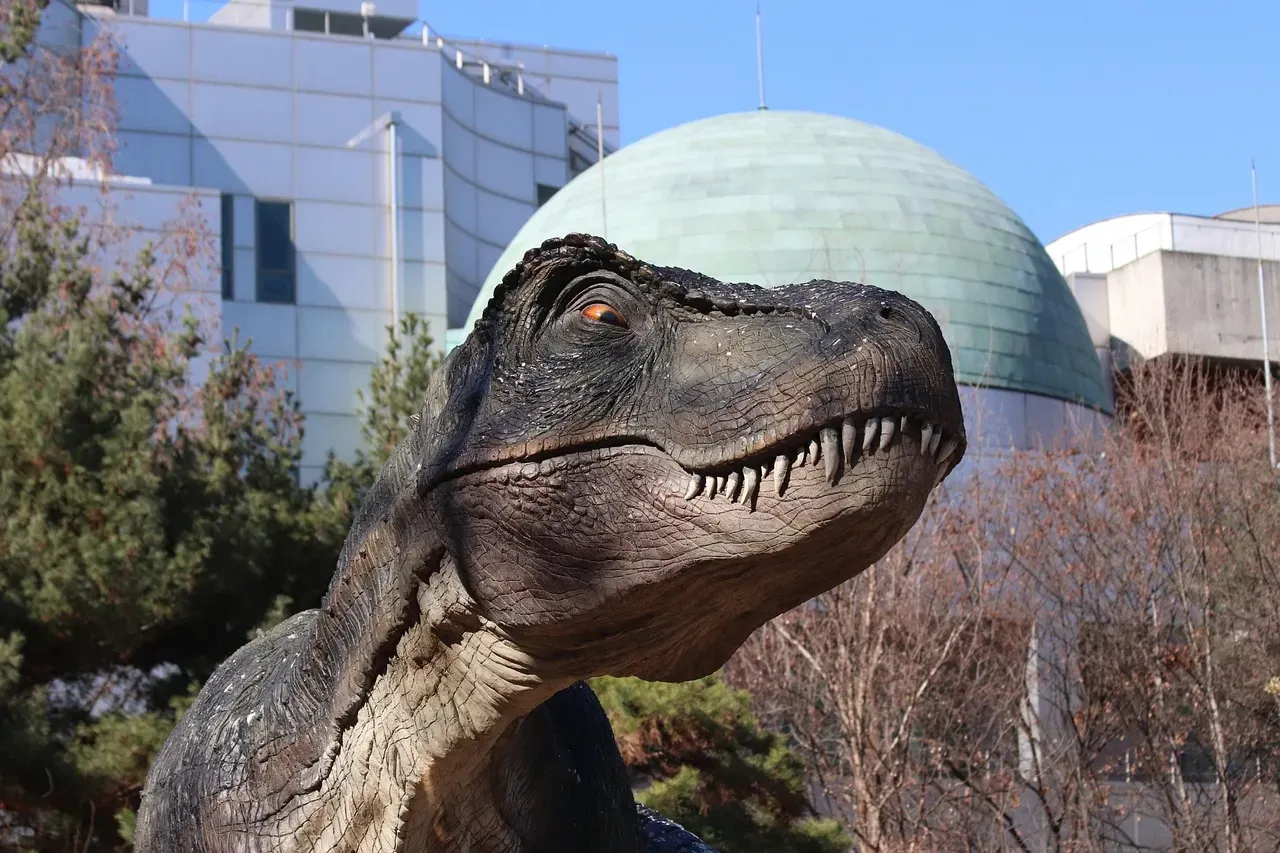
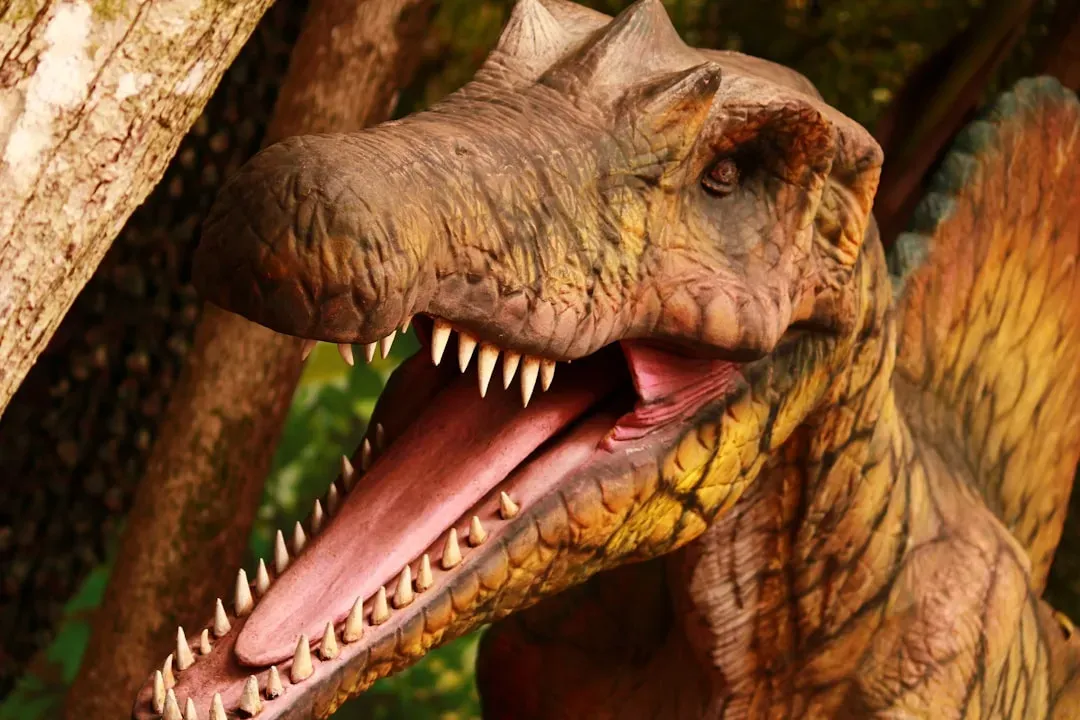
Here’s the thing that’s going to sting a little for every Jurassic Park fan out there. Evidence suggests that dinosaur vocalizations were not likely to have sounded like roars at all. Not even close. The exciting, blood-curdling roars in the Jurassic Park franchise are not scientifically accurate. Current evidence supports that Tyrannosaurus rex made closed-mouth vocalizations, but in the films, the Tyrannosaurus opens its mouth every time it roars.
Think of closed-mouth vocalizations as being lower and more percussive, as opposed to bird calls, which are more varied in pitch and almost melodic. Modern examples of closed-mouth vocalizations include crocodilian growls and ostrich booms. As a result, scientists reasoned that many dinosaurs did not perform open-mouth vocalizations, but could have generated closed-mouth vocalizations instead. So picture something deeper, more vibrating, more felt in the chest than heard with the ears. Quite different from the cinematic scream, isn’t it?
A Fossil Voice Box Changes Everything
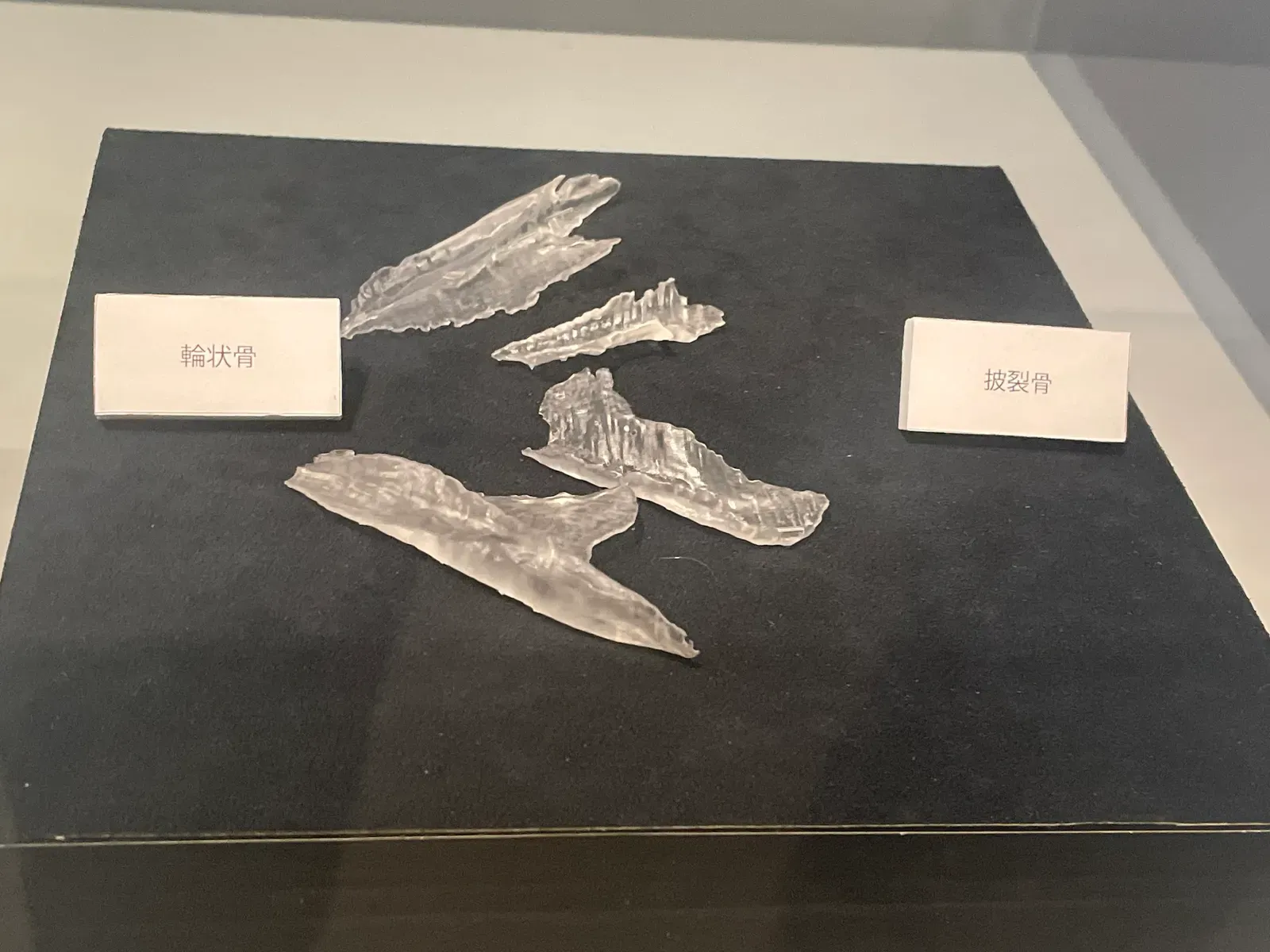
Possibly the most thrilling discovery in recent dinosaur communication research involves something remarkably small. The “extremely rare” discovery of an 80-million-year-old fossilized voice box that belonged to an armored dinosaur reveals that the ancient beast may have sounded more birdlike than experts previously thought. Pinacosaurus grangeri, a squat, armor-plated and club-tailed ankylosaur unearthed in Mongolia in 2005, was discovered with the first fossilized voice box (larynx) found in a non-avian dinosaur.
To assess the range of sounds Pinacosaurus grangeri might have made, the researchers studied two parts of the fossilized larynx that would have worked with muscles to elongate the airway and alter its shape, comparing them with structures in the voice boxes of living birds and reptiles. They found that it had a very large cricoid and two long bones that were used to adjust its size, turning the voice box into a vocal modifier. This anatomical setup likely meant that the ancient herbivore was capable of making a large array of sounds, including rumbles, grunts, roars, and possibly even chirps, while also bellowing them out across vast distances. That’s not primitive noise-making. That’s something far closer to language than you’d ever expect.
The Parasaurolophus and Its Built-In Sound System
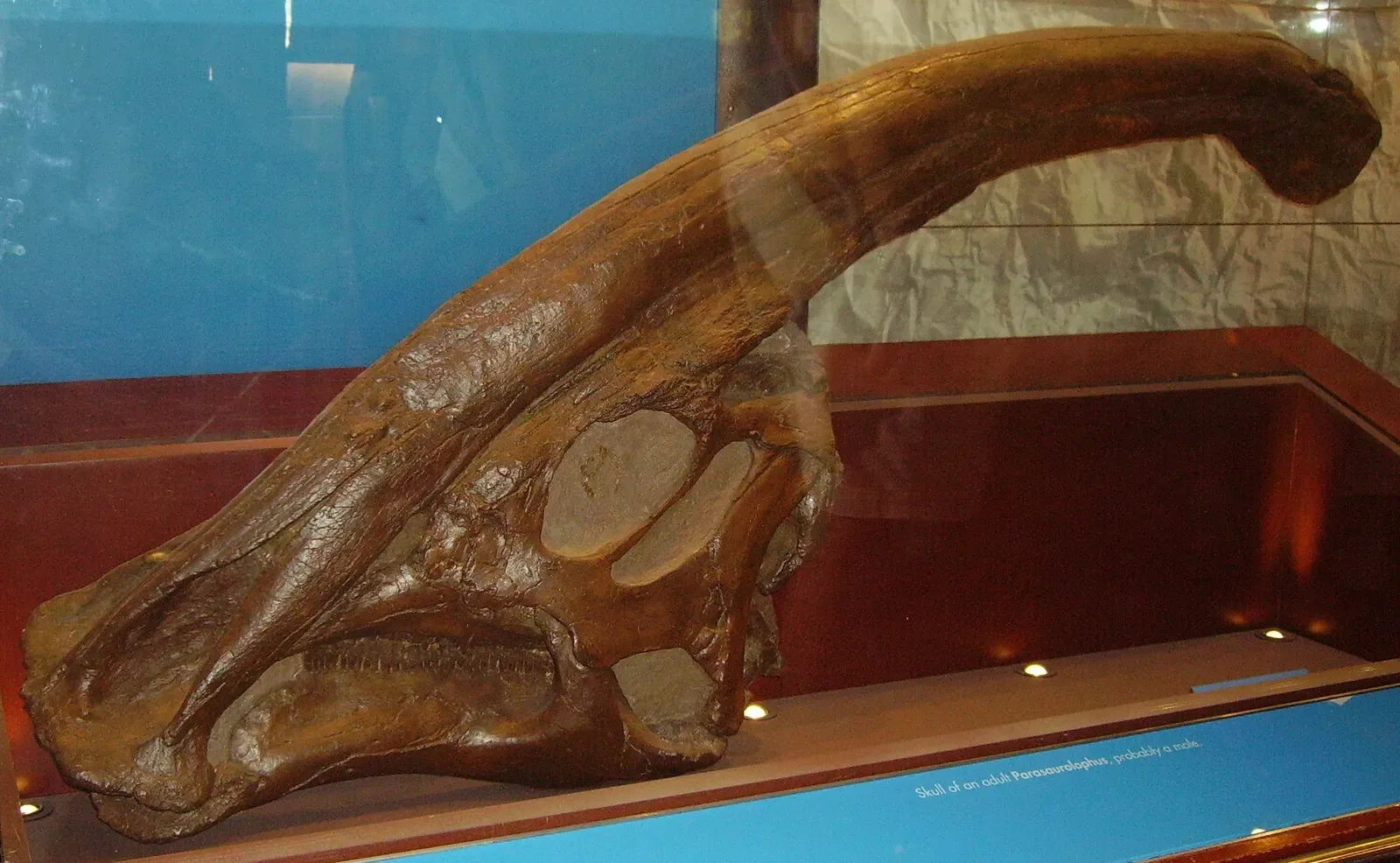
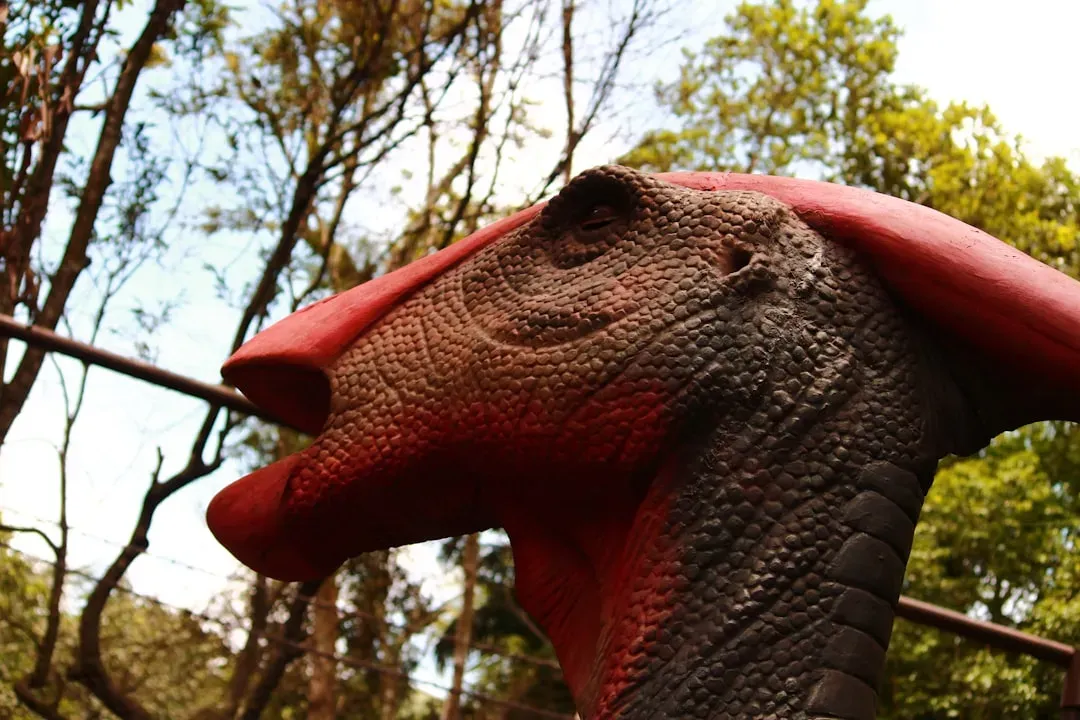
Some hadrosaurs, like the Parasaurolophus, had huge, tube-shaped crests on their heads, and scientists believe these worked like built-in sound systems. Air could travel through the crest, creating eerie, resonant calls that may have carried over great distances. Think of it as nature’s own brass instrument, wired directly into the skull. I find this genuinely breathtaking.
Many scientists have believed the crest, containing a labyrinth of air cavities and shaped something like a trombone, might have been used to produce distinctive sounds. Based on the structure of the crest, the dinosaur apparently emitted a resonating low-frequency rumbling sound that can change in pitch. Each Parasaurolophus probably had a voice that was distinctive enough to not only distinguish it from other dinosaurs, but from other Parasaurolophuses. It’s hard not to feel a chill thinking about that. Individual voices. Personal calls. Millions of years before us.
Feathers as a Visual Language
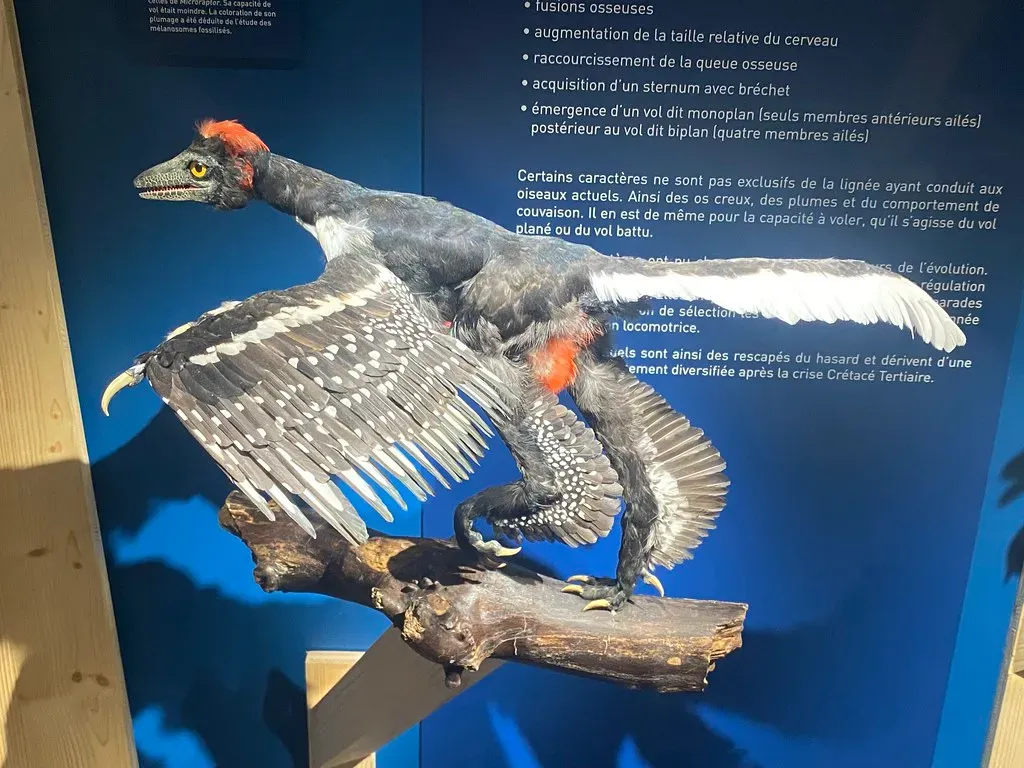
Researchers postulate that these ancient reptiles had a highly developed ability to discern color. Their hypothesis: the evolution of feathers made dinosaurs more colorful, which in turn had a profoundly positive impact on communication, the selection of mates, and on dinosaurs’ procreation. You might think of feathers as merely aerodynamic tools, but for dinosaurs, they may have been something altogether different.
A complicated pattern of reddish brown, black, gray, and white feathers covered the fossilized dinosaur Anchiornis, leading to speculation that perhaps this coloration was used for attracting mates or some form of visual communication, as is often the case in living birds. Iridescence is widespread in modern birds and is frequently used in displays. Evidence that Microraptor was largely iridescent thus suggests that feathers were important for display even relatively early in their evolution. Imagine a dazzling feathered display rippling in the sunlight of a Cretaceous dawn. That wasn’t just beauty. That was a message.
Infrasound, Ground Vibrations, and Signals You Couldn’t Hear

Some dinosaurs, especially the larger species like sauropods, may have used deep, low-frequency sounds to communicate across long distances. These rumbling noises would have been too low for humans to hear, more like vibrations you’d feel in your chest than actual sound. This is something that still blows my mind every time I come back to it.
This method is still seen today in elephants and crocodiles. The idea is that these sounds could travel through the ground or dense forests, allowing herds to stay in touch without needing to see each other. Scientists are still working out exactly how these ancient giants produced them, but fossil evidence suggests they had the anatomy to make it happen. You could be standing in the middle of a dinosaur herd and hear absolutely nothing, yet information would be passing all around you. That’s honestly one of the more eerie things science has revealed about these creatures.
Fossilized Footprints and the Secret Lives of Dinosaur Herds
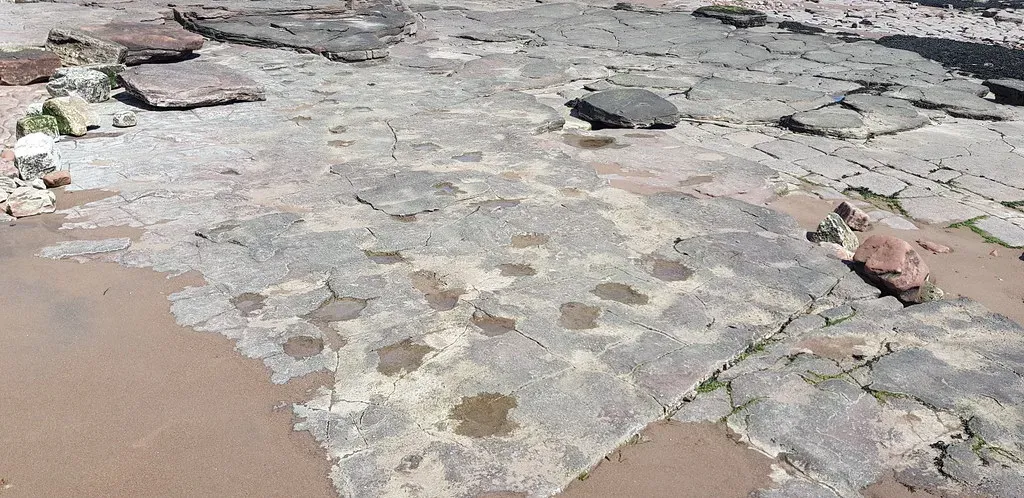
A discovery made during an international field course in July 2024 includes footprints from multiple dinosaur species walking alongside each other, providing the first evidence of mixed-species herding behavior in dinosaurs, similar to how modern wildebeest and zebra travel together on the African plains. This is frontier science, and it’s rewriting how you understand these animals.
There is strong evidence that many dinosaurs moved in groups, from theropods to massive herbivores. Coordinating that movement, especially across tough terrain or while migrating, would have required some level of communication, even if it wasn’t vocal. Rhythmic movements, tail sways, or subtle sounds may have helped maintain group cohesion. Fossilised trackways show organised formations, suggesting some dinosaurs followed a leader or synced their pace with others. A civilization-like structure, built not on words, but on movement and vibration and color.
The Brain Behind the Message: Neural Evidence for Complex Communication
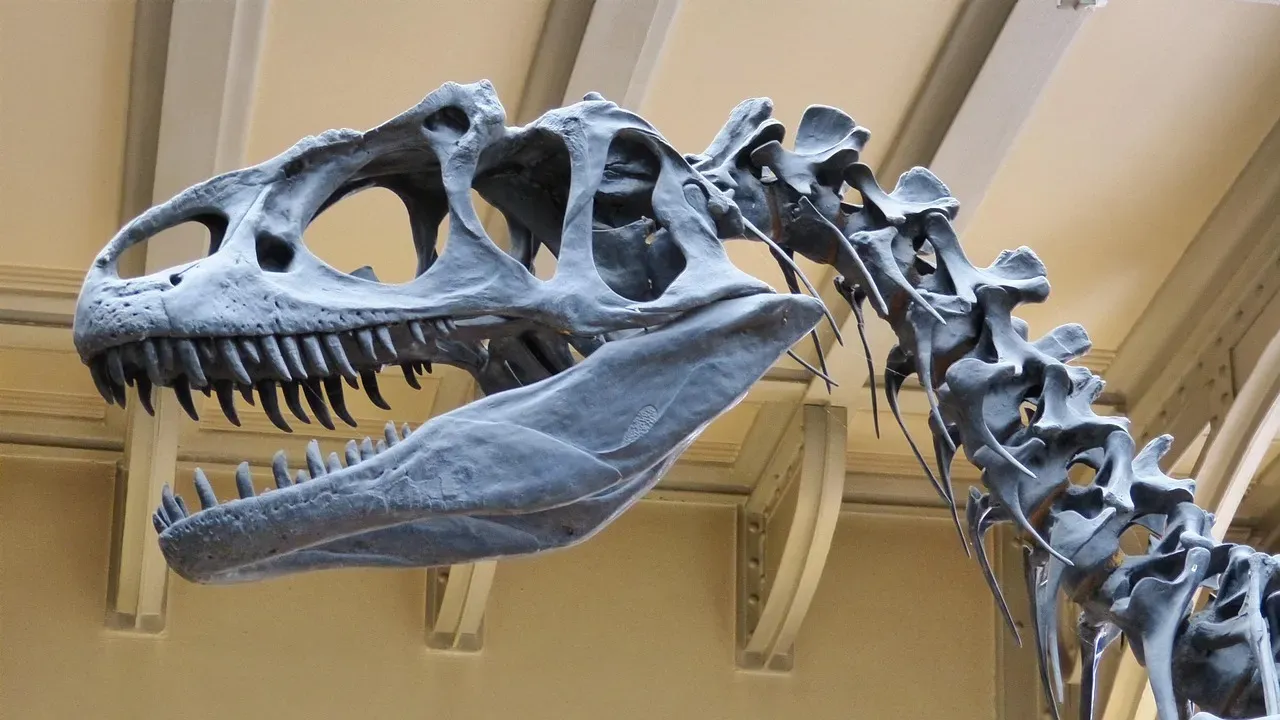
Dinosaur brains may have possessed the capacity for complex vocal communication, a new study hints. Because brains are soft and break down quickly, dinosaurs left behind few clues about their brainpower. That finding suggests that dinosaurs such as T. rex were capable of processing complex stimuli, such as sounds made by other dinosaurs. It’s worth pausing on that. The architecture for advanced communication may have been present all along.
Recent CT scans of the insides of dinosaur skulls show that the parts of the brain that control sight, flight, and high-level memory functions were every bit as expanded in theropods as they are in living birds. Evaluating such aspects of dinosaurs as their herding behavior, nest building, vocal communication, and sensory capabilities offers a picture of how this ancient group of reptiles led their lives. The more scientists look inside these ancient skulls, the more they find a creature built for a rich social life, not just for survival.
Conclusion
What you’re left with, after taking all of this in, is a portrait of an animal kingdom that was never as primitive as popular culture suggested. Dinosaurs didn’t just roar into the dark. They called to each other with resonating crests, flashed iridescent signals from their feathers, rumbled the ground beneath your feet, and moved in coordinated, multi-species herds. They had individual voices. They had social structures. They had, in every meaningful sense, something worth calling communication.
The deeper researchers dig, the more that picture sharpens. New fossils, new CT scans, new discoveries in places like Alberta and Patagonia and Inner Mongolia, all of them are telling the same story. These creatures were far more than the thunder lizards of old textbooks. Every new piece of the puzzle makes them more real, more complex, and more remarkable than ever before. So here’s a question worth sitting with: if dinosaurs were this sophisticated about how they connected with one another, what else are we still getting wrong?