If you’ve ever watched a robin hover nervously over her nest or a penguin huddle over a single precious egg in freezing winds, you’ve witnessed something ancient. Something far older than you might think. The idea that parental devotion is a uniquely modern, warm-blooded trait is quickly becoming one of paleontology’s most outdated assumptions. Fossils dug from the red sands of the Gobi Desert, the badlands of Montana, and the rocks of China are painting a picture of dinosaur family life that is nothing short of remarkable.
We used to imagine dinosaurs as cold, mechanical beasts that laid eggs and walked away. Turns out, that picture may be wrong for many of them. The evidence pouring in from nesting sites, bone studies, and experimental reconstructions points to something far more touching. Let’s dive in.
Maiasaura: The “Good Mother Lizard” That Changed Everything
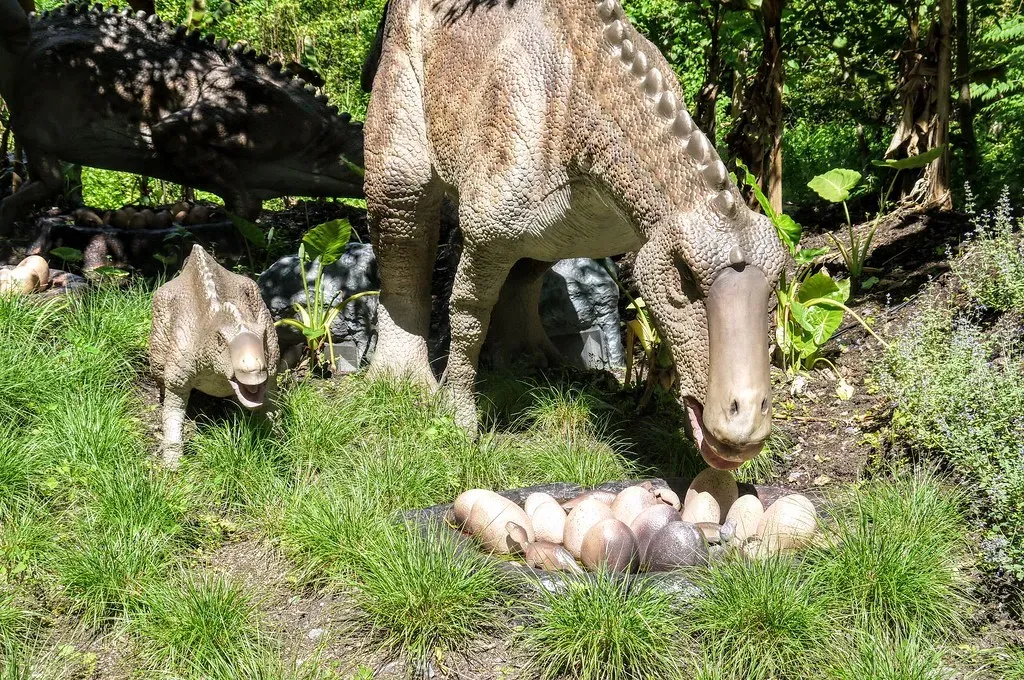
When paleontologist Jack Horner and his team discovered a nesting site in Montana in 1978, it sent shockwaves through the scientific community. Horner’s team uncovered a nesting site that contained thousands of Maiasaura eggs along with the remains of hatchlings and juveniles, providing the first clear evidence that dinosaur parental care looked remarkably similar to that of modern birds. Before this discovery, most scientists assumed dinosaurs laid their eggs, abandoned them, and let the hatchlings fend for themselves.
The bones of the embryos were not fully ossified, which means the young could not have walked immediately upon hatching and would have required some degree of parental care. Think of it like a human newborn who can’t walk out of the hospital. Hatchlings emerged altricial, with limited mobility and an inability to forage independently, relying on adults for sustenance and protection, with fossil evidence from nests suggesting dependence lasting one to two years, during which parents likely provided regurgitated plant matter as food.
Colonial Nesting: Dinosaur Neighborhoods Were Real
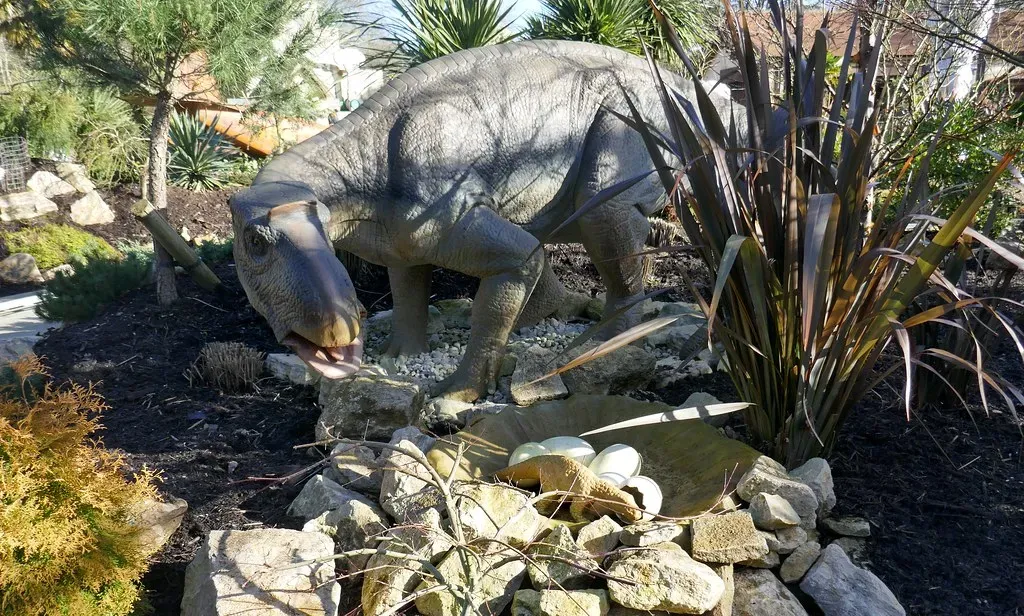
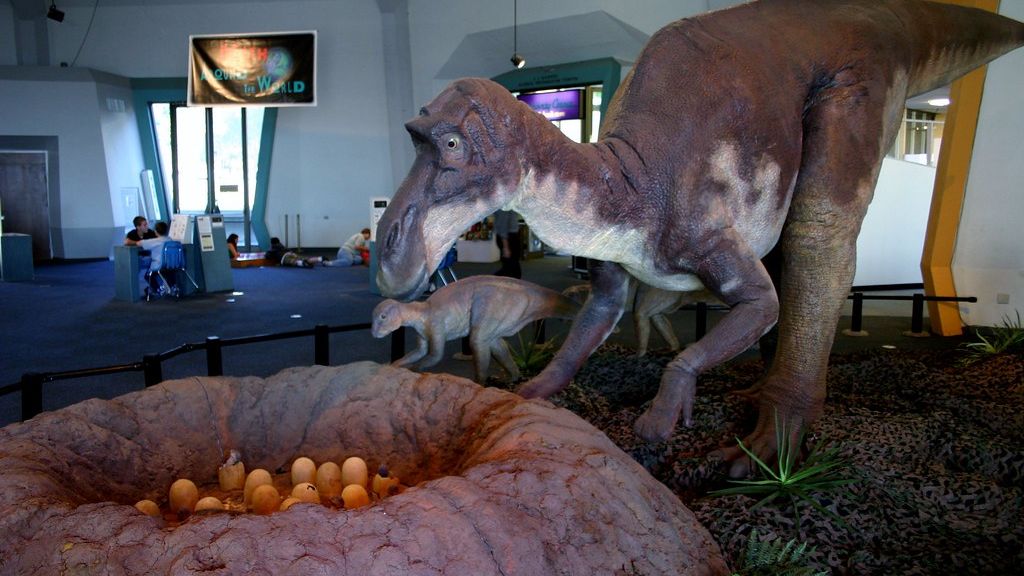
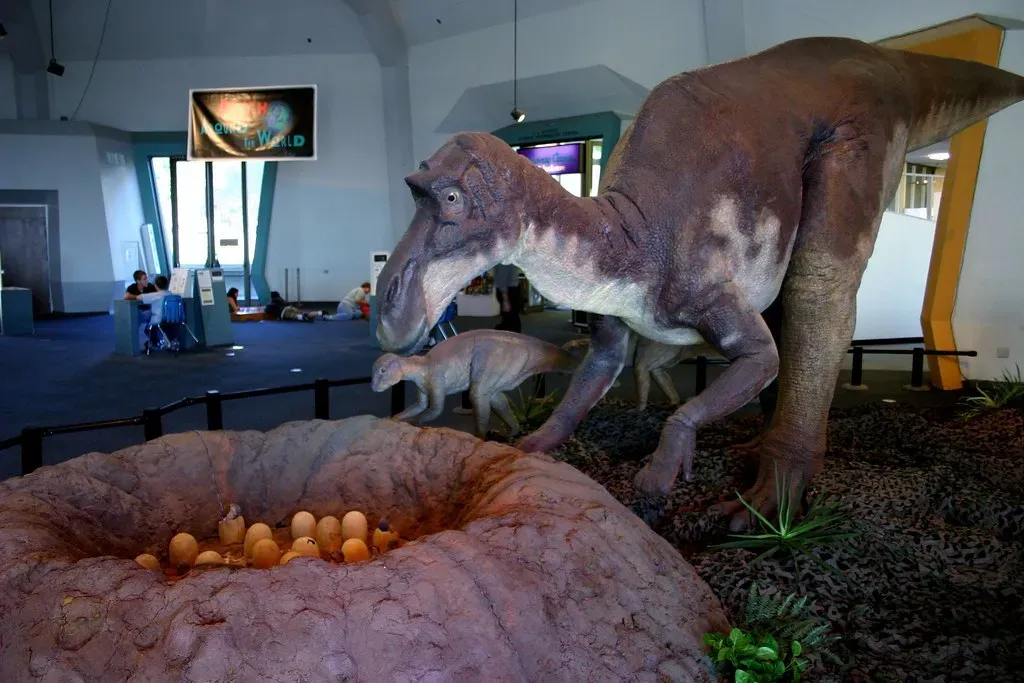
Maiasaura lived in herds and raised its young in nesting colonies, with nests packed closely together like those of modern seabirds, with the gap between the nests being around seven metres, less than the length of the adult animal. Honestly, this is extraordinary. Picture a stretch of Montana countryside during the Late Cretaceous, packed with nests side by side like a sea of apartment complexes, each parent tending to its own brood.
Maiasaura nests were constructed with earth and contained thirty to forty eggs laid in a circular or spiral pattern, and the eggs were incubated by rotting vegetation placed into the nest by the parents rather than an adult sitting on them. This is essentially the same heat-from-decomposition strategy used by some modern megapode birds today. The nests were closely grouped, about six to twelve meters apart, suggesting that the animals used a central egg-laying location, like socially-breeding birds.
Oviraptor: The Unfair Reputation of a Devoted Parent
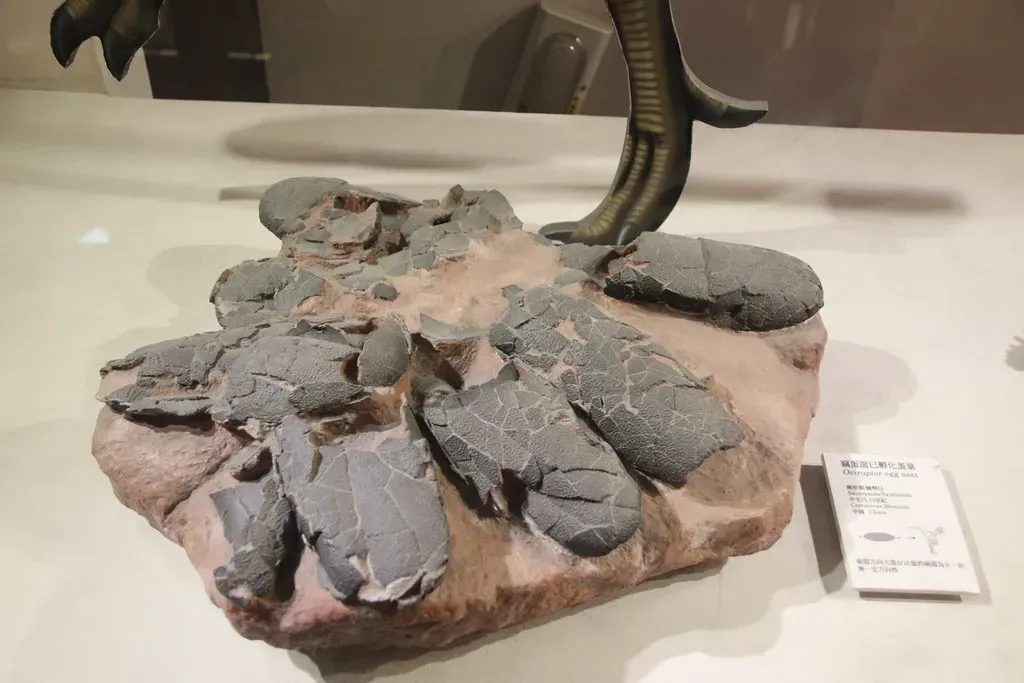
Few stories in paleontology are as dramatic as that of the Oviraptor. In 1923, George Olsen of the American Museum of Natural History discovered the first Oviraptor fossilized skeleton on top of a dinosaur egg nest in the Gobi Desert, Mongolia, and when Henry Fairfield Osborn published on the discovery, he assumed that the Oviraptor had died attempting to steal the eggs. The name “Oviraptor” literally means “egg thief,” and for decades that damaging reputation stuck.
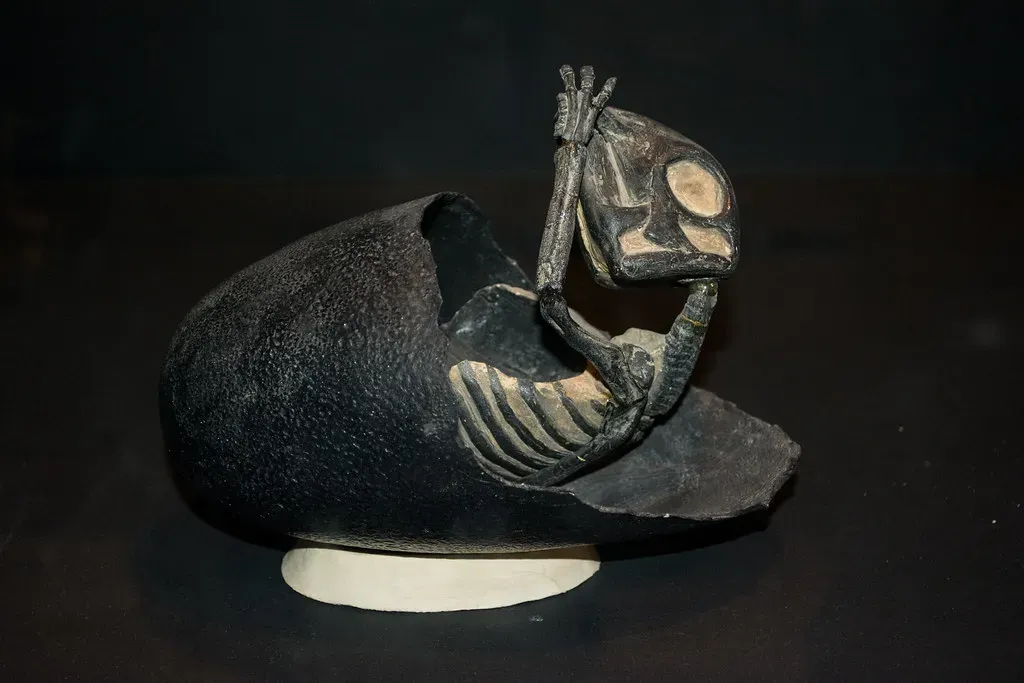
Since the initial discovery, more Oviraptor adults, eggs, and a well-preserved embryo fossil have confirmed that Oviraptors were parents who sat on their nests, a behavior called brooding common among birds. The original fossil was not a criminal caught in the act. It was a parent that died protecting its own young. The discovery of Oviraptor has been hailed as one of the most significant in the history of paleontological study, as it provides proof that some species of dinosaur displayed advanced parental care that more strongly mimics that of modern-day birds than modern-day reptiles.
Brooding Behavior: Sitting on Eggs Like a Bird
The Citipati oviraptorid specimen was found on top of egg clutches, with its hindlimbs crouched symmetrically on each side of the nest and the forelimbs covering the nest perimeter, and this brooding posture is found today only in modern avian dinosaurs, supporting a behavioral link between the latter group and non-avian dinosaurs. Let that sink in for a moment. A posture so distinctly avian it could have come straight from a chicken coop, frozen in stone for seventy-five million years.
The babies inside one remarkable oviraptorid fossil were almost ready to hatch, which tells us beyond a doubt that this oviraptorid had tended its nest for quite a long time, and oxygen isotope analyses indicate that the eggs were incubated at high, bird-like temperatures, adding further support to the hypothesis that the adult perished in the act of brooding its nest. The wings and tail of oviraptorids would have granted protection for the eggs and hatchlings against climate factors like sunlight, wind, and rainfall. This is parental sacrifice in its most literal, fossilized form.
Bone Science Tells the Story: Altricial Hatchlings Needed Parents
Here’s where things get genuinely fascinating for science enthusiasts. Researchers have gone beyond looking at who was sitting next to whom and started examining the actual bones of hatchlings to understand whether they could survive alone. Researchers used a combined morphological, chemical, and biomechanical approach to compare early embryonic and hatchling bones of the Early Jurassic sauropodomorph Lufengosaurus with those of extant avian taxa with known levels of parental care.
Hatchling Lufengosaurus would obtain additional needed phosphorus for building bone strength from the food provided by its parents, as the hatchlings would lack the bone strength to do so for themselves, providing evidence that Lufengosaurus hatchlings were likely altricial, and parental feeding may have been required. In other words, these ancient hatchlings were as helpless as a baby dove fresh from the egg. Evidence for parental care in Maiasaura has also been seen in close examination of leg bones, showing that they were not fully formed when the animals hatched, similar to hatchling modern birds, and as a result, the hatchlings were most likely confined to their nest for upwards of a few weeks.
The Psittacosaurus Discovery: Proof of Post-Hatching Care
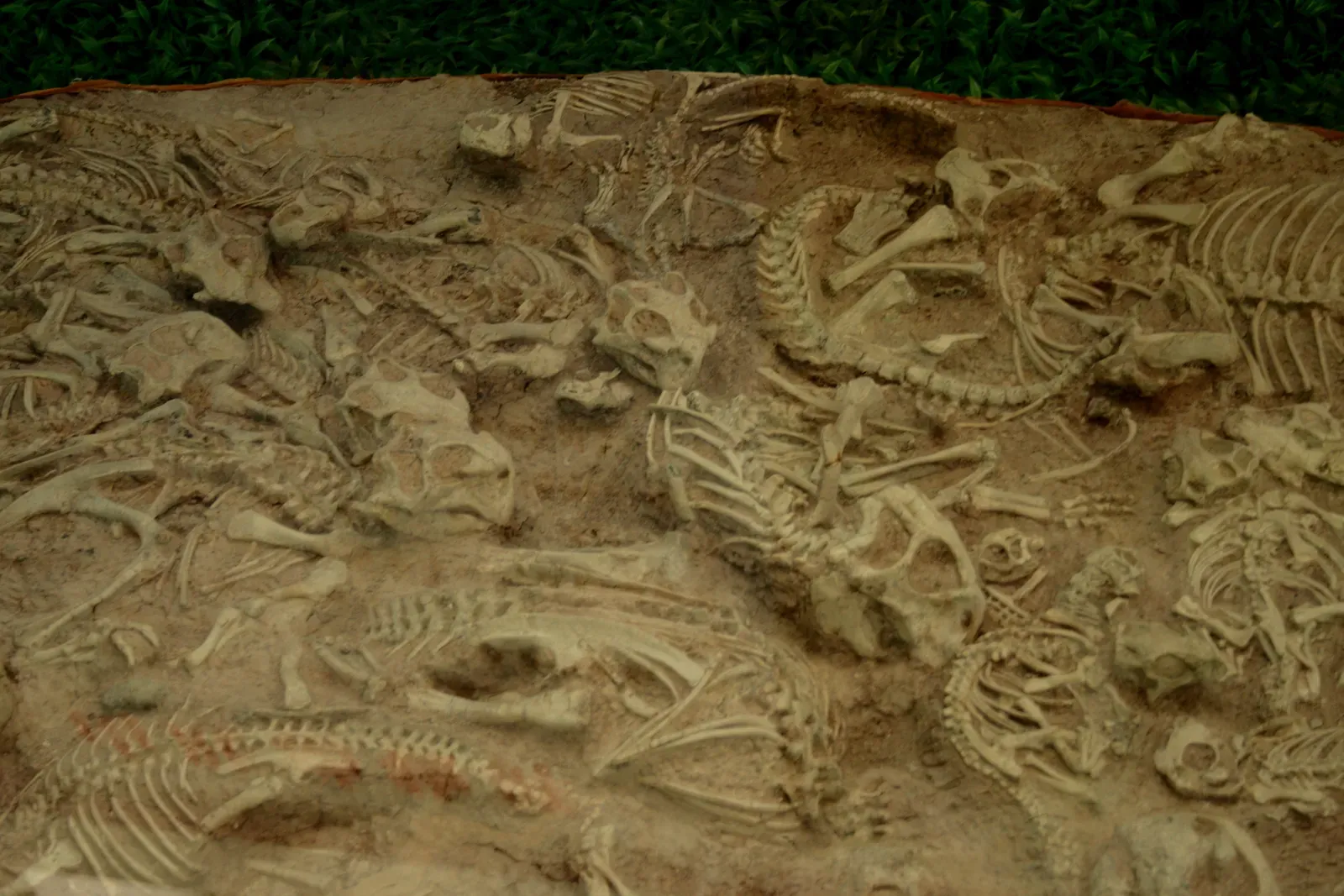
One of the most emotionally resonant fossils ever found comes from Liaoning, China. A dramatic specimen of the small ornithischian dinosaur Psittacosaurus from Liaoning in China reveals a single adult clustered with 34 juveniles within an area of half a square metre, providing strong evidence for post-hatching parental care in Dinosauria. Thirty-four youngsters, clustered together under the watch of a single adult. It is hard not to feel something when you picture that scene.
Whether it was toxic gases or a flooded burrow, a group of fossils shows that an adult dinosaur died together with 34 hatchlings, and the find offers new evidence about how dinosaurs may have looked after their young. There is growing evidence for parental care in some dinosaurs as well, which carried over into birds, so for both groups, the behavior goes back tens, if not hundreds of millions of years. That is an evolutionary thread stitching us all the way from the Mesozoic to the robin’s nest in your backyard.
New Experiments Recreate Ancient Nests to Unlock Incubation Secrets
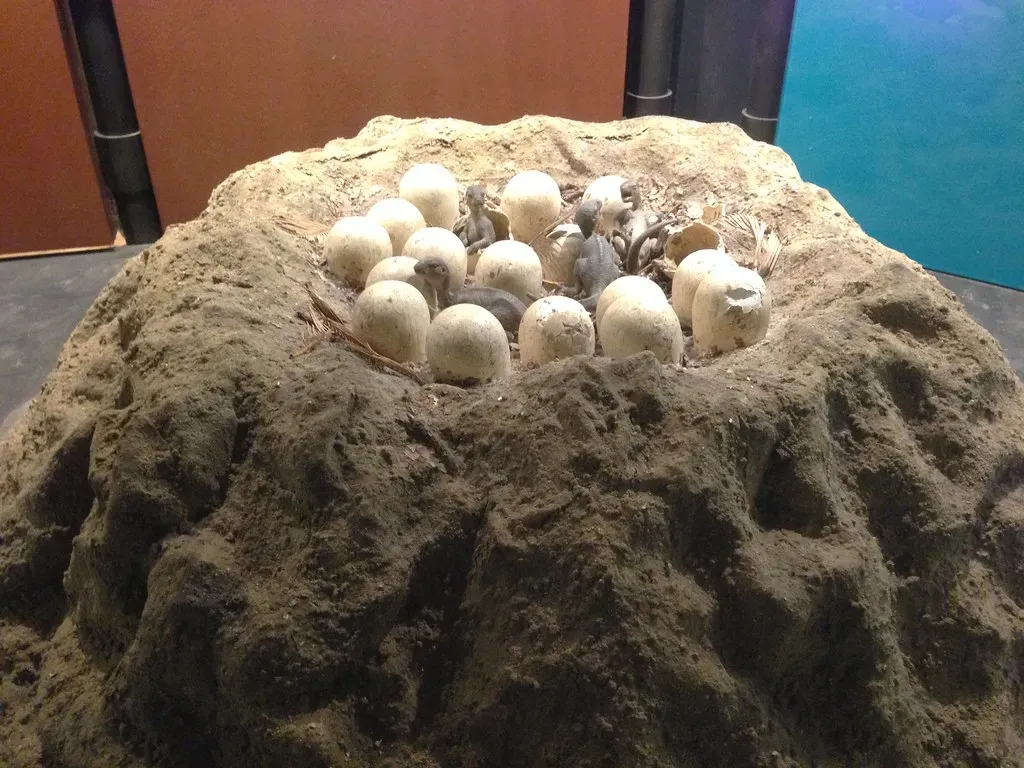
In a remarkable 2026 development, researchers took an approach nobody had tried before. Scientists recreated a life-size oviraptor nest to understand how these dinosaurs hatched their eggs, with experiments showing the parent likely could not heat all the eggs directly, meaning sunlight played a key role, and that this uneven heating could cause eggs in the same nest to hatch at different times. It is the kind of experiment that sounds almost playful, but carries serious scientific weight.
Most modern birds rely on thermoregulatory contact incubation, where adults sit directly on their eggs and provide heat, but for this to work, the adult must touch all the eggs, act as the main heat source, and keep temperatures consistent, and oviraptors likely could not meet these conditions, as their ring-shaped egg arrangement meant the adult could not maintain contact with every egg at once. Oviraptors likely had longer incubation periods than modern birds, yet even with these limitations, the study provides new insight into how oviraptors may have cared for their eggs. It was a different method, not a lesser one.
Conclusion: Ancient Instincts, Modern Echoes
The old image of the dinosaur as a cold, indifferent parent is crumbling under the weight of evidence. From Montana to Mongolia, from bone histology labs to experimental nest reconstructions, science is telling a new and deeply moving story. Parental care of babies for at least several weeks is present in both modern crocodilians and modern birds, implying that this trait was present in archosaurs ancestrally. That makes the behavior older than any of us imagined.
What strikes me most, honestly, is how modern it all feels. A parent dying over its eggs in a sandstorm. Hatchlings too weak to walk, waiting for food. Nesting colonies buzzing with protective adults. Once these associations become a regular feature of a species’ biology, there is opportunity for further elaboration of care, including the evolution of parental protection of offspring and parental provisioning. Every time a bird feeds its chick today, it is carrying forward an instinct carved into deep evolutionary time. The dinosaurs started it.
So next time you watch a bird tend its nest with that fierce, focused devotion, remember you are watching something that began roughly eighty million years ago. Does it change how you see the birds around you? It probably should.