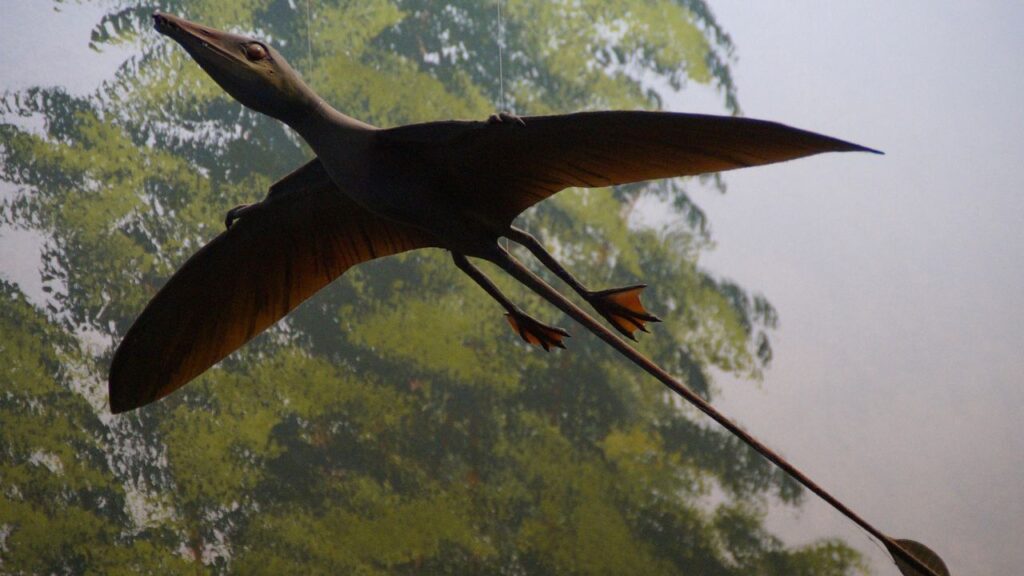
Imagine a creature the size of a small airplane, built entirely from hollow bones, stretching a wing of leathery skin across a single absurdly elongated finger, and hurling itself into a prehistoric sky over 200 million years ago. Pterosaurs were not some clumsy evolutionary experiment. They were, honestly, one of nature’s most audacious achievements. For decades, scientists pieced together fragmented bones and flat, compressed fossils trying to reconstruct how these animals actually flew. The picture they had was incomplete at best, misleading at worst.
In recent years, a wave of remarkable fossil finds combined with cutting-edge imaging technology has completely overturned old assumptions about pterosaur flight. From Bavarian limestone to the desert sands of Jordan, the evidence coming out of the ground is stunning. So buckle up, because what scientists are now discovering will surprise you even if you thought you already knew the story.
The First Flyers: How Pterosaurs Took to the Sky Earlier Than Anyone Thought
Here’s something that should genuinely stop you in your tracks. Ancient pterosaurs may have taken to the skies far earlier and more explosively than birds, evolving flight at their very origin despite having relatively small brains. That idea runs completely against the old assumption that flight requires a long, gradual buildup of neurological complexity. Think of it like learning to drive, not through months of lessons, but waking up one day and simply knowing how.
A research team led by evolutionary biologist and Johns Hopkins Medicine assistant professor Matteo Fabbri suggests that a group of giant reptiles alive up to 220 million years ago may have acquired the ability to fly when the animal first appeared, in contrast to prehistoric ancestors of modern birds that developed flight more gradually and with a bigger brain. That is a jaw-dropping contrast. Birds inherited a brain already adapted from their non-flying dinosaur ancestors, while pterosaurs evolved their flight-ready brains at the same time they developed their wings.
Skiphosoura Bavarica: A Missing Link That Changes Everything

A newly discovered pterosaur fossil is shedding light on the evolutionary journey of these ancient flying reptiles. This complete specimen, named Skiphosoura bavarica, provides crucial insights into how pterosaurs transitioned from early, smaller forms to the later, gigantic species. Let’s be real, finding a truly complete pterosaur specimen is extraordinarily rare. Most fossils are crushed flat, leaving scientists squinting at fragmentary bones and guessing at the rest.
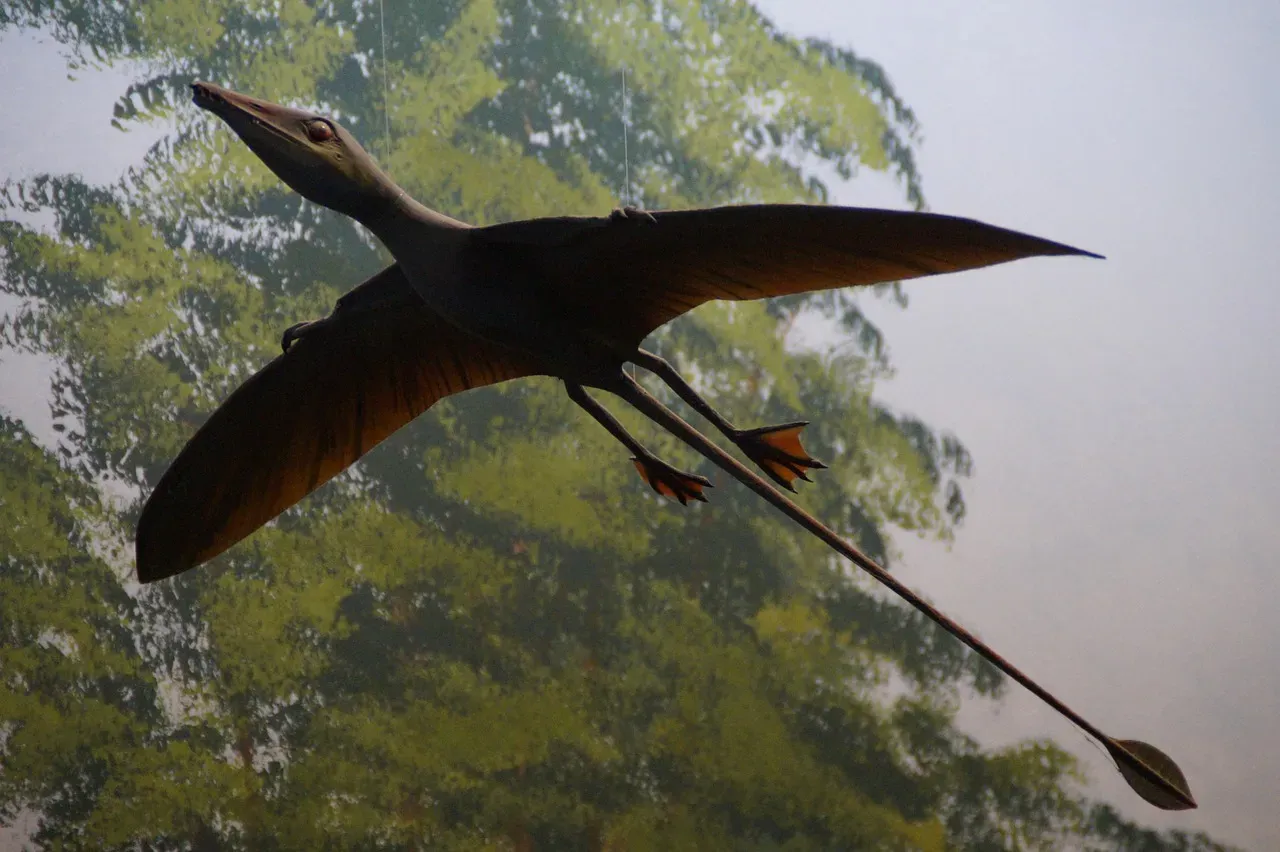
For two centuries, scientists divided pterosaurs into two major groups: early non-pterodactyloids, characterised by short heads, long tails, and specific wing and toe structures, and the later pterodactyloids, which had larger heads, shorter tails, and other adaptations for efficient flight. Intermediate species, like the Darwinopterus discovered in the 2010s, showed how the head and neck evolved first. Skiphosoura represents a critical step beyond the Darwinopterus. Its head and neck resemble the more advanced pterodactyloids, while its wrist, tail, and foot show transitional features. It’s like finding the chapter of a book that everyone assumed was missing forever.
Flappers Versus Soarers: Not All Pterosaurs Flew the Same Way
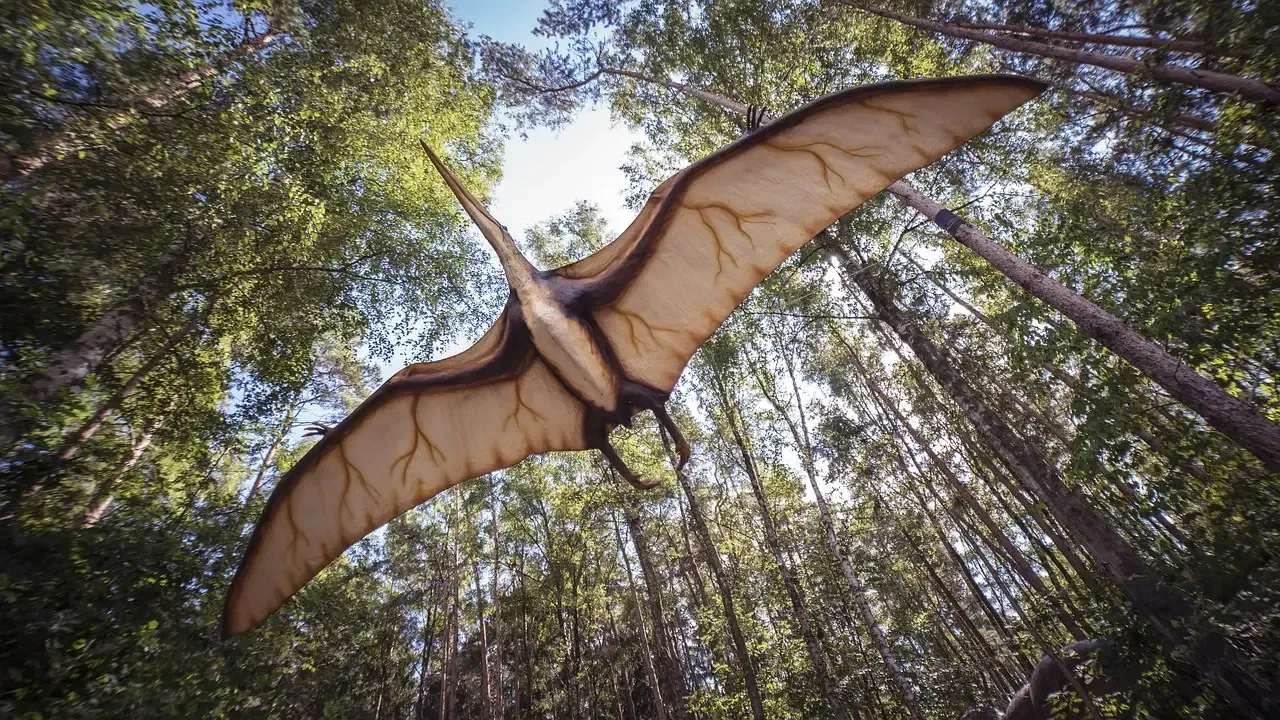
Some species of pterosaurs flew by flapping their wings while others soared like vultures, demonstrates a new study. Honestly, this should have been obvious. Modern birds do it. Albatrosses glide for days. Sparrows flap constantly. Yet for years, scientists treated pterosaurs as if they were all flying with the same technique. The new fossil evidence out of Jordan has forced a serious rethink.
One fossil represents the known species Arambourgiania philadelphiae, which boasted a wingspan of 10 meters. The second is a newly identified species, Inabtanin alarabia, with a wingspan of 5 meters. High-resolution micro-computed tomography (CT) scans were used to analyze the internal structure of their flight bones, revealing distinct adaptations linked to their flight styles. The interior of the flight bones were crisscrossed by an arrangement with struts that match those found in the wing bones of modern flapping birds. This indicates it was adapted to resist bending loads associated with flapping flight. The difference in bone structure between the two species is stark and conclusive.
The Brain That Built a Flyer: Neuroscience Meets Paleontology
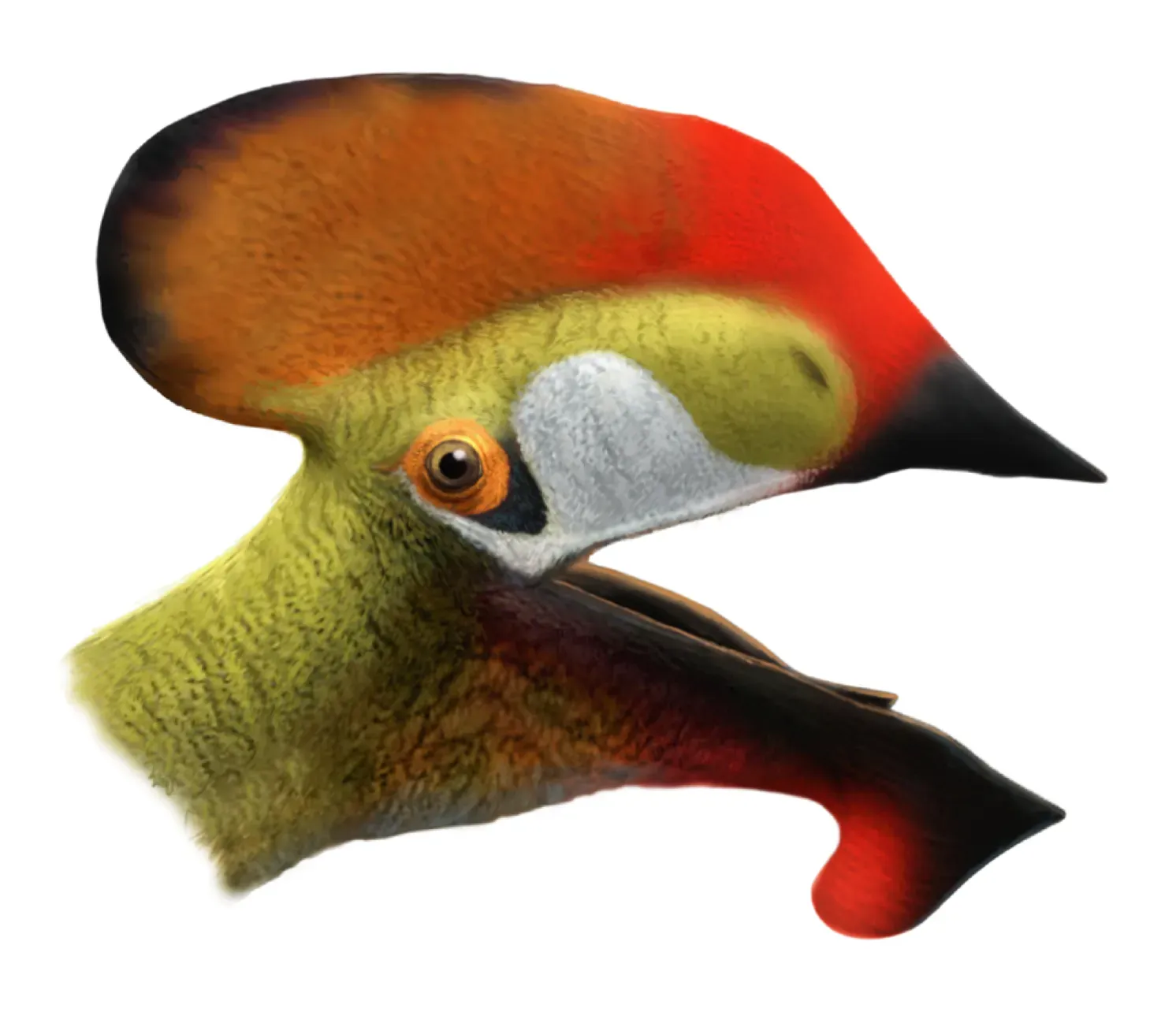
An international team of researchers used high-resolution 3D imaging techniques, including microCT scanning, to reconstruct brain shapes from more than three dozen species. These included pterosaurs, their close relatives, early dinosaurs and bird precursors, modern crocodiles and birds, and a wide range of Triassic archosaurs. The scale of this brain study is impressive. It’s like creating a detailed family portrait across hundreds of millions of years of evolution.
A larger optic lobe was also present in pterosaurs. However, there were otherwise very few similarities in the shape and size of pterosaur brains and that of the flying reptile’s closest relative, the lagerpetid. “The few similarities suggest that flying pterosaurs, which appeared very soon after the lagerpetid, likely acquired flight in a burst at their origin,” Fabbri says. A key takeaway from the study is that “it apparently doesn’t take a large brain to get into the air, and the later brain expansion in both birds and pterosaurs was likely more about enhancing cognition than about flying itself.”
Wings Far More Complex Than Anyone Imagined
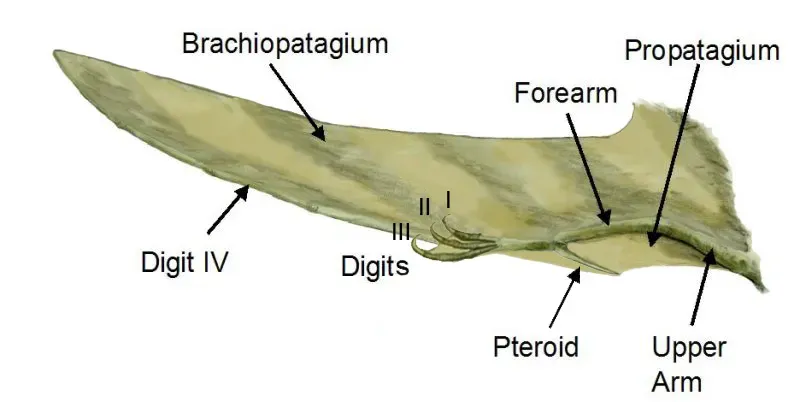
derivative work: Dinoguy2 (talk) 18:45, 12 March 2009 (UTC), CC BY 3.0)
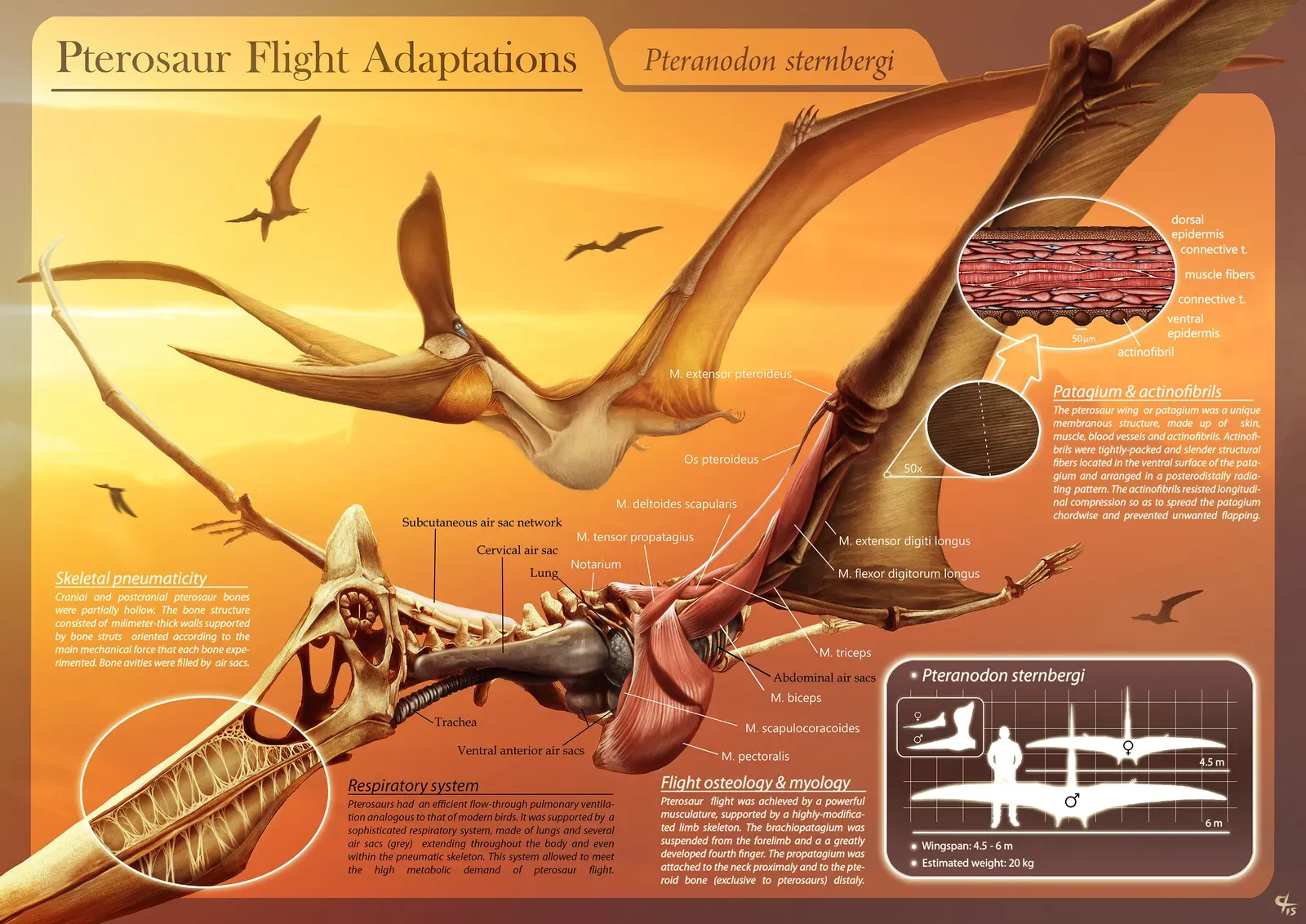
The old image of a pterosaur wing as a simple flap of leathery skin is completely dead. While historically thought of as simple leathery structures composed of skin, research has since shown that the wing membranes of pterosaurs were highly complex dynamic structures suited to an active style of flight. The outer wings were strengthened by closely spaced fibers called actinofibrils. The actinofibrils themselves consisted of three distinct layers in the wing, forming a crisscross pattern when superimposed on one another. This is engineering, not accident.
Using laser-stimulated fluorescence, researchers observed direct soft tissue evidence of a wing root fairing in a pterosaur, a feature that smooths out the wing-body junction, reducing associated drag, as in modern aircraft and flying animals. Unlike bats and birds, the pterosaur wing root fairing was unique in being primarily made of muscle rather than fur or feathers. As a muscular feature, pterosaurs appear to have used their fairing to access further flight performance benefits through sophisticated control of their wing root and contributions to wing elevation. Think of it as a built-in aerodynamic spoiler, made entirely of living muscle. That is genuinely extraordinary.
Giants of the Jurassic: New Fossils Reveal Surprising Size
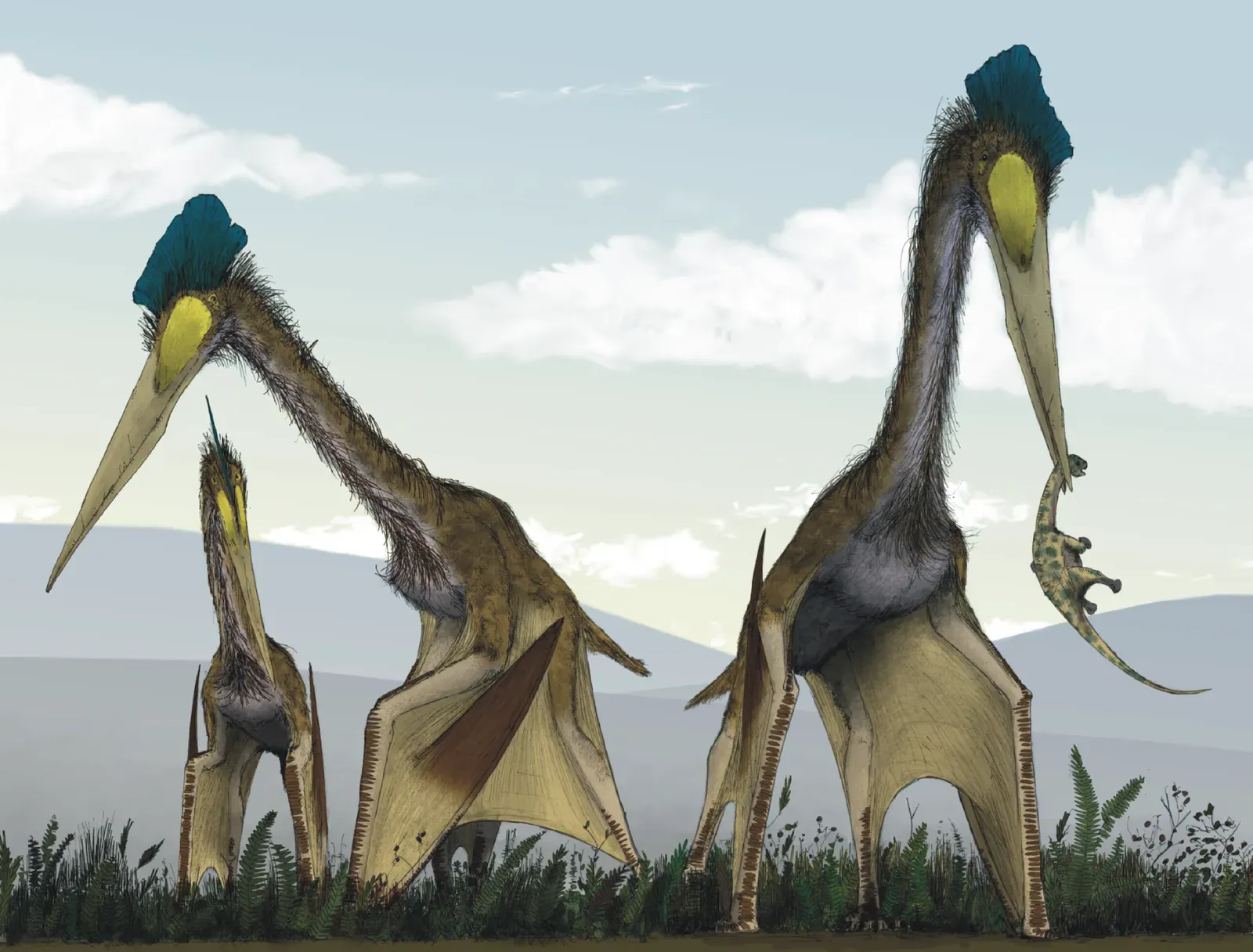
A team of palaeontologists has discovered a fossil of a gigantic flying reptile from the Jurassic period with an estimated wingspan of more than three metres, making it one of the largest pterosaurs ever found from that era. Size matters enormously when it comes to understanding how these animals flew. A larger creature faces fundamentally different aerodynamic challenges, almost like comparing a paper airplane to a commercial jet.
Pterosaurs from the Triassic and Jurassic periods typically had wingspans between one and a half and two metres, so were generally smaller than their later relatives from the Cretaceous period, which could have wingspans of up to 10 metres. However, this new discovery suggests that some Jurassic pterosaurs could grow much larger. These creatures ranged in size from small, bird-like species to massive giants like Quetzalcoatlus, which had wingspans rivaling modern aircraft. The range is almost absurd when you think about it.
How Pterosaurs Actually Got Off the Ground
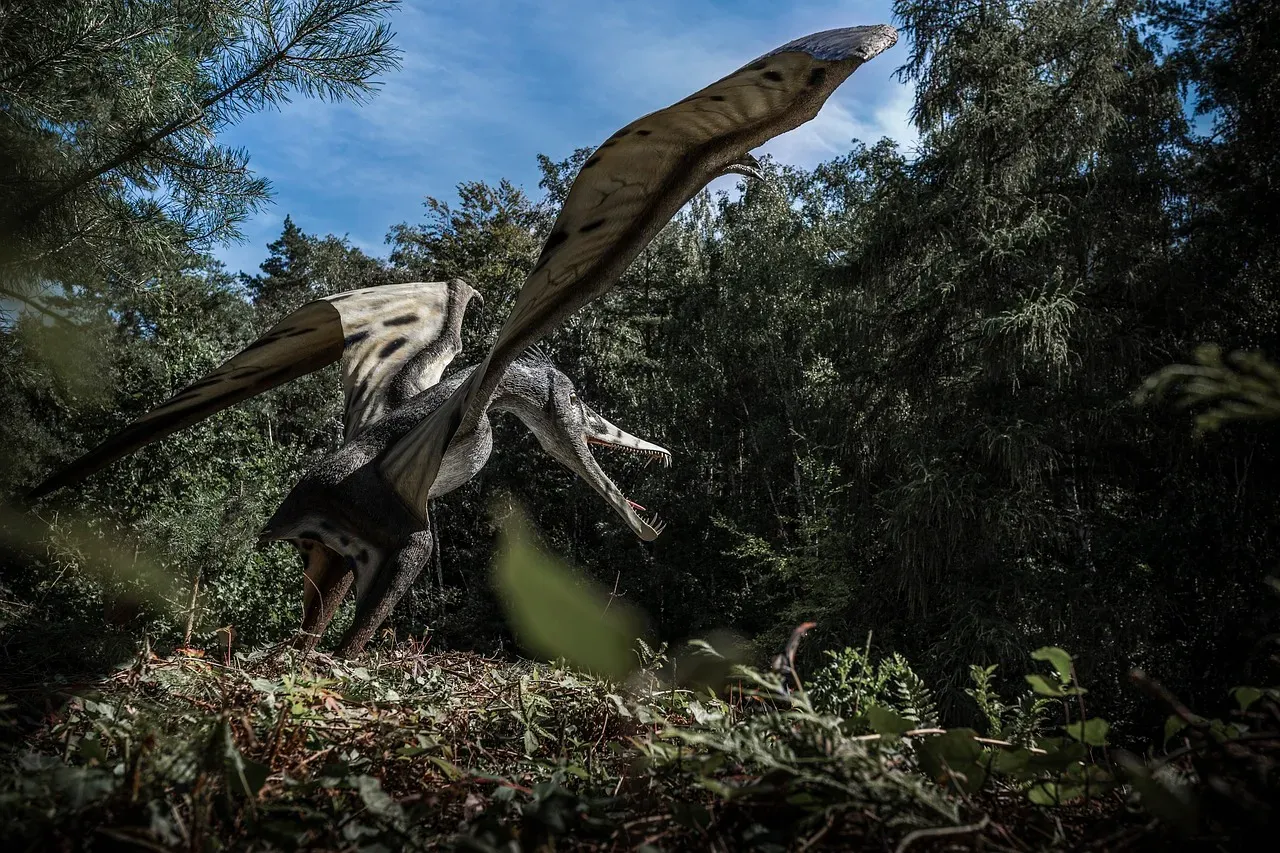
Taking off might actually be the most physically demanding moment in any flying animal’s life. You can have the world’s most elegant wings, but if you can’t launch, none of it matters. Researchers developed the first computer model to analyze how pterosaurs took off, testing three different methods: a vertical burst jump using just the legs, a less vertical jump using only the legs, and a four-limbed jump using its wings. Researchers found that the pterosaur likely used all four limbs to propel itself in the air, as seen in bats today.
Since the bones of pterosaurs were thin-walled and consequently very susceptible to impact damage, the low-speed landing capability would have made an important contribution to avoiding injury, and so helped to enable pterosaurs to attain much larger sizes than extant birds. The maximum lift capability of a pterosaur wing was substantially higher than in birds, enabling slow flight and mitigating the allometric constraint on size. Future research will likely build on these findings, exploring how variations in bone structure correlate with other aspects of pterosaur biology, such as muscle attachment, wing membrane dynamics, and energy efficiency. Such studies could also inform bio-inspired designs in modern aeronautics, drawing parallels between ancient flight mechanics and contemporary engineering challenges.
Conclusion
Pterosaurs spent over 160 million years mastering the sky before disappearing entirely at the end of the Cretaceous. For much of the time since, scientists have been trying to piece together how they actually did it. The fossil discoveries emerging now, bolstered by CT scanning, laser-stimulated fluorescence, and computational modeling, are finally providing real answers. Every new specimen pulled from the ground, whether from Jordan, Bavaria, Scotland, or Queensland, adds another chapter to one of nature’s most extraordinary stories.
What makes this moment in paleontology so thrilling is that the story keeps changing. Not because scientists were careless before, but because the fossils themselves are just that rare and that revealing. Pterosaurs were not slow, lumbering reptiles awkwardly taking to the air. They were aerodynamic marvels that evolved flight explosively, engineered complex wing structures that modern aircraft designers would admire, and conquered skies across every continent. The more we look, the more remarkable they become.
It’s hard not to wonder: what else are we still getting wrong about the ancient world? What do you think the next major pterosaur discovery will reveal? Drop your thoughts in the comments below.