Picture the classic movie dinosaur. Scaly. Reptilian. Menacing. Now imagine being told that image is, scientifically speaking, dramatically incomplete. What if a growing mountain of fossil evidence suggests that feathers were not the exclusive privilege of birds, but were in fact deeply woven into the fabric of dinosaur life itself, stretching far back across the vast sweep of the Mesozoic Era?
That is exactly what modern paleontology is telling us. From tiny insectivores in Chinese rock beds to enormous tyrannosaurs stalking cooler Cretaceous forests, feathered dinosaurs were not outliers. They were, by all current evidence, extraordinarily common. The story of how we came to understand this is one of the most thrilling rewriting-of-the-textbook moments in scientific history. Let’s dive in.
The Moment Everything Changed: Sinosauropteryx and the 1996 Revolution
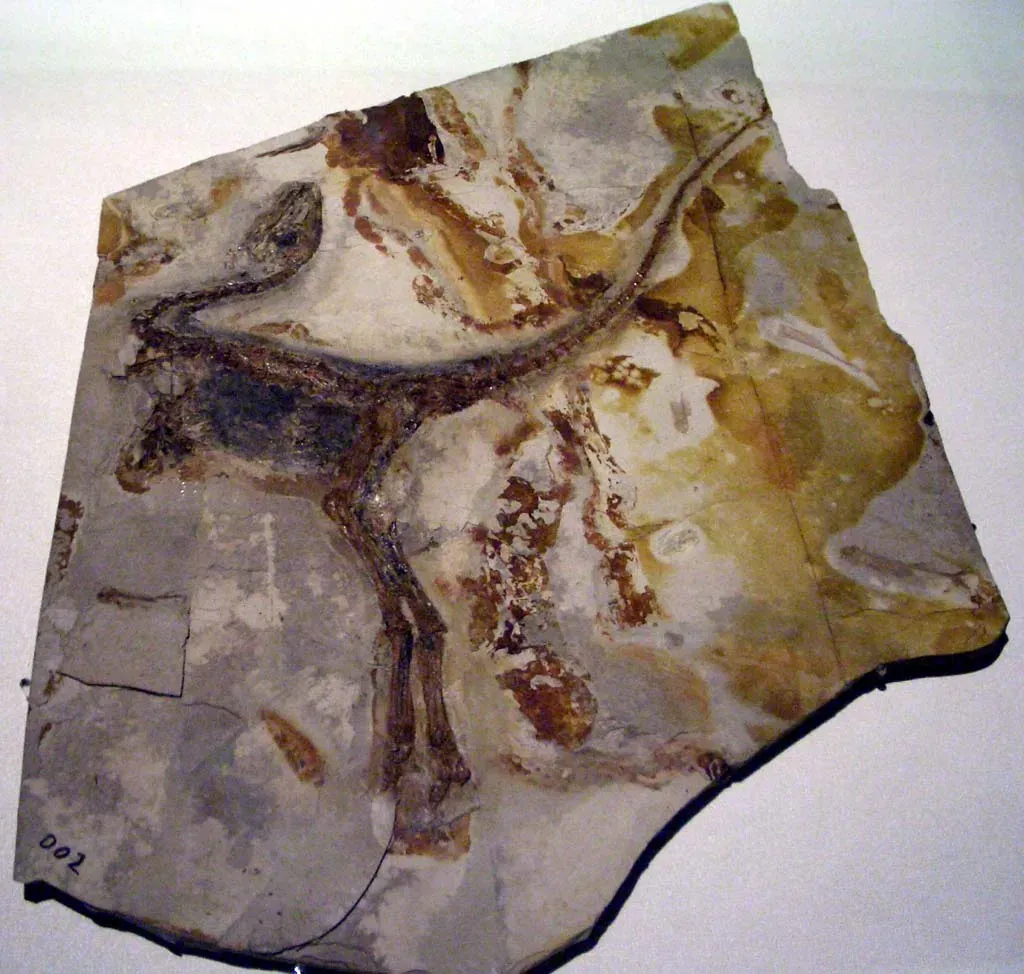
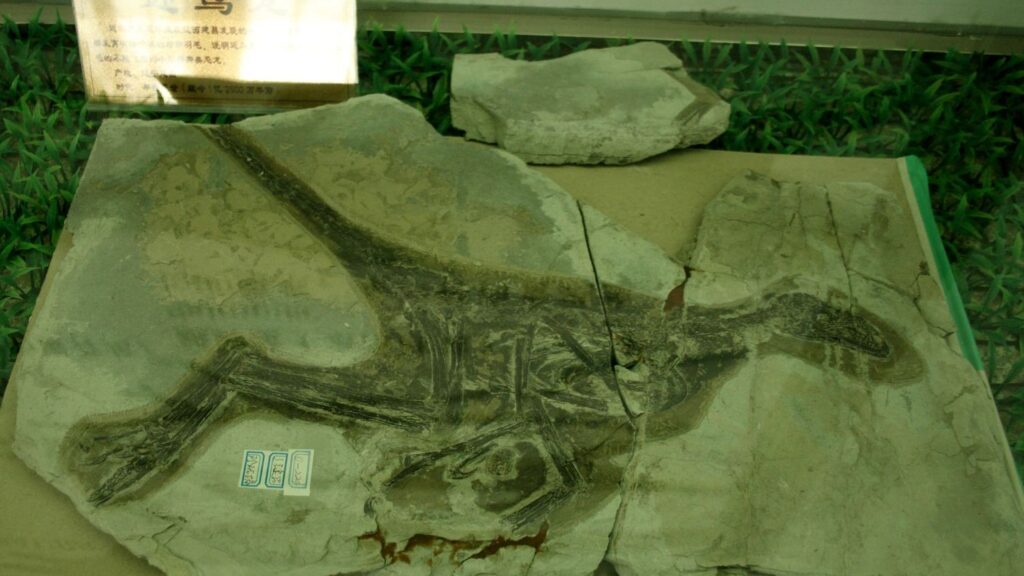
For most of the twentieth century, you would have struggled to find a serious scientist willing to claim dinosaurs were feathered creatures. That all changed in 1996, when a remarkable fossil from Liaoning Province, China, arrived and flipped the scientific world upside down. The discovery of Sinosauropteryx prima in 1996 was one of the most important fossil finds of the century. It was the first non-avian dinosaur found with feather-like structures, providing further evidence for the link between dinosaurs and birds.
Sinosauropteryx fulfilled what paleontologists had been looking for – fossilized feathers along the neck, back, and tail of the dinosaur left no doubt that birds had evolved from feathery dinosaur ancestors. Sinosauropteryx was not a bird. The 124-million-year-old dinosaur belonged to a group of small carnivores called compsognathids, and its feathers were more of a wispy fuzz. Think of it like discovering that your distant cousin you always assumed was nothing like you actually shares your most distinctive trait. The implications were seismic.
Experts had previously missed the feather fossils because plumage was thought to have been too delicate to be preserved in the same sandstone wrapped around the dinosaur’s bones. After the discovery of Sinosauropteryx, however, paleontologists started looking for evidence of fossil feathers that previously might have been overlooked or even destroyed as fossils were freed from their encasing rock. Countless specimens suddenly needed a second look.
How Far Back Did Feathers Really Go? Tracing Plumage Deep Into the Mesozoic
Here’s the thing that will genuinely surprise you. Feathers don’t appear to be a late evolutionary invention at all. One of the earliest discoveries of possible feather impressions by non-avian dinosaurs is a trace fossil of the 195 to 199 million year old Portland Formation in the northeastern United States. Some researchers interpreted traces between two footprints in this fossil as feather impressions from the belly of a squatting dilophosaurid. If correct, that early Jurassic fossil is the oldest known evidence of feathers, almost 30 million years older than the next-oldest-known evidence.
Around 175 million years ago, a lineage of feathered dinosaurs called Pennaraptora emerged – the distant ancestors of modern birds and the only lineage of dinosaurs to survive the mass extinction that marked the end of the Mesozoic era 66 million years ago. That is a staggering timeframe. For context, 175 million years ago, the continents we know today barely resembled their current shapes. Feathers were already evolving alongside some of the most ancient dinosaur dynasties on Earth.
Most of the 14 Archaeopteryx fossils include impressions of feathers. Because these feathers are of an advanced form, these fossils are evidence that the evolution of feathers began before the Late Jurassic. In other words, by the time Archaeopteryx became famous as a transitional fossil, feathers had already been evolving for tens of millions of years.
Feathers Beyond the Birdlike: Unexpected Species Join the Club
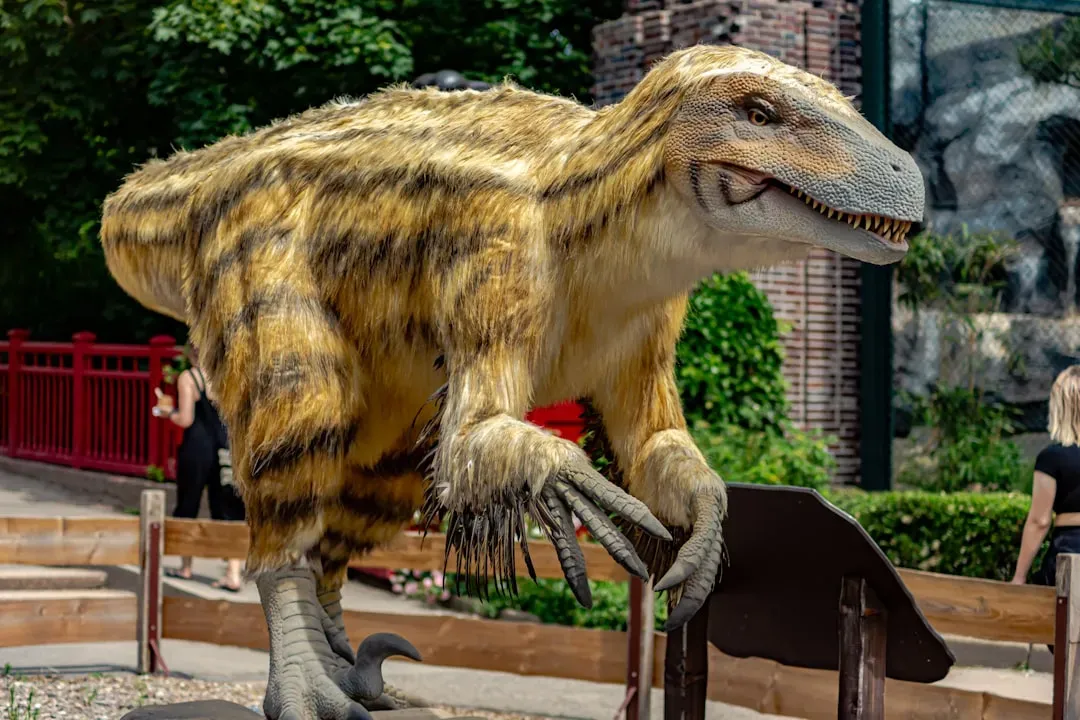
If you assumed feathers were confined to the bird-like, lightly built theropods, science has a surprise waiting. Among non-avian dinosaurs, feathers or feather-like integument have been discovered in dozens of genera via direct and indirect fossil evidence. Although the vast majority of feather discoveries have been in coelurosaurian theropods, feather-like integument has also been discovered in at least three ornithischians, suggesting that feathers may have been present on the last common ancestor of a major dinosaur group including both theropods and ornithischians.
Paleontologists did not anticipate that feathery body coverings would be found among dinosaurs with no close relationship to birds at all. In 2002, experts announced that long, bristle-like structures had been found along the tail of an exceptional fossil of the small horned dinosaur Psittacosaurus. The dinosaur’s bristles are similar in structure to other protofeathers, and they only covered a portion of the dinosaur’s tail. How the bristles related to the dinosaur’s behavior is still a puzzle, but the fact that they are only present on part of the dinosaur’s body and are extravagantly long suggest they evolved to help Psittacosaurus identify and communicate with each other.
Almost three decades have passed since the scientific debut of the first non-avian dinosaur with feathers, Sinosauropteryx, and in that time experts have discovered dozens more. Bird-like raptors, tyrannosaurs, and even horned dinosaurs have been found with feathers and feather-like body coverings, revealing that fluff and fuzz were widespread among dinosaurs. Honestly, the more you look, the more feathered animals you find.
Yutyrannus: When Even Giants Wore Feathers
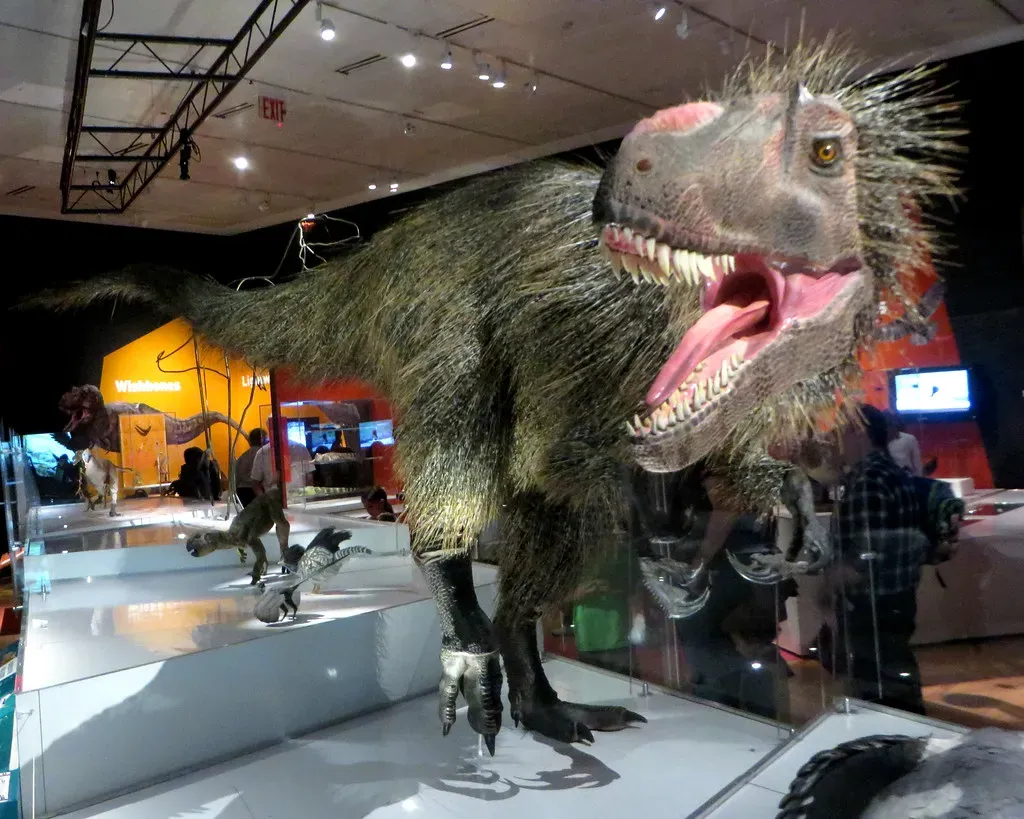
I know it sounds crazy, but the notion of a massive, feathered tyrannosaur stalking through a cold Cretaceous landscape is no longer science fiction. Three fossils of Yutyrannus huali – all found in the rock beds of Liaoning Province – are the largest-known dinosaur specimens that preserve direct evidence of feathers. This is not some small, sparrow-sized rarity. This animal was enormous by any standard.
Most significantly, Yutyrannus huali bears long filamentous feathers, thus providing direct evidence for the presence of extensively feathered gigantic dinosaurs and offering new insights into early feather evolution. The discovery adds implications for early feather evolution in the largest feathered creature known, living or extinct. Think of it like discovering that woolly mammoths weren’t the only “fuzzy giants” ancient Earth produced. Yutyrannus was a woolly tyrannosaur, and that changes everything.
Based on the distribution of the feathers, they may have covered the whole body and served in regulating temperature, given the rather cold climate of the Yixian with an average annual temperature of around 10 degrees Celsius. The presence of feathers on a large basal tyrannosauroid suggests the possibility that later tyrannosaurids were also feathered, even when adult, despite their size. The debate over whether the famous T. rex itself might have been fuzzy has never quite gone away since.
Feathers Were Not Just for Flying: The Surprising Functions of Mesozoic Plumage
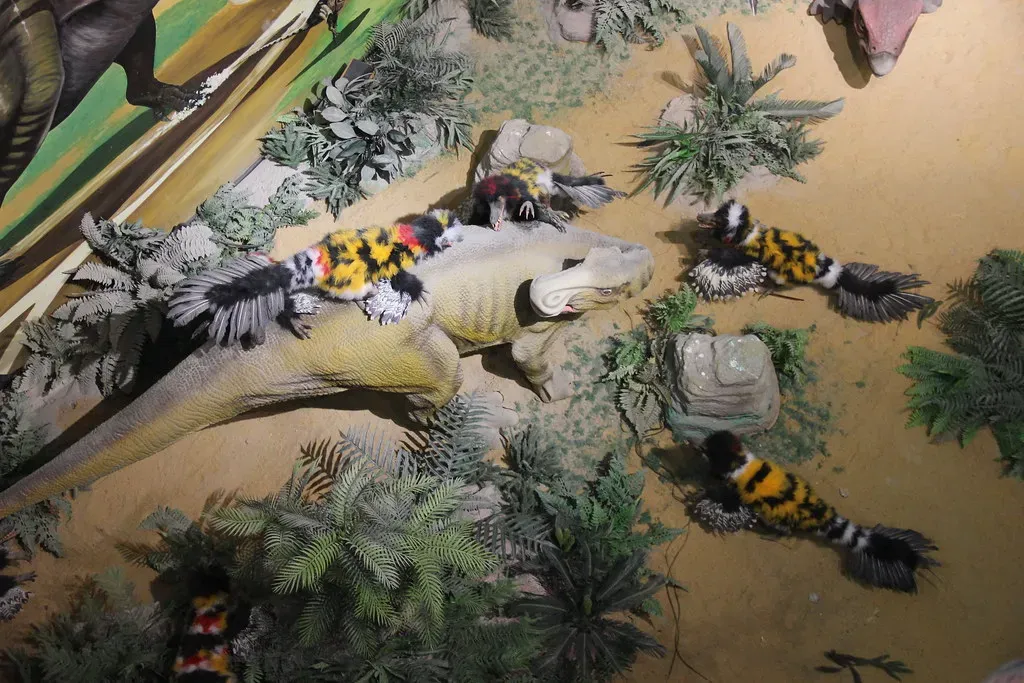
Let’s be real – most people assume feathers exist to enable flight. The fossil record demolishes that assumption completely. The functions of feathers in non-avian dinosaurs were diverse and not primarily related to flight. A widely accepted function is insulation, providing thermoregulation for warm-blooded dinosaurs, much like down feathers in modern birds. Feathers also served as a means of display, potentially for sexual selection, species recognition, or intimidation, with some dinosaurs exhibiting elaborate plumes. Additionally, feathers may have offered camouflage, aided in brooding eggs, or even provided an aerodynamic advantage for quick movements, such as fleeing predators.
There is an increasing body of evidence that supports the display hypothesis, which states that early feathers were colored and increased reproductive success. Coloration could have provided the original adaptation of feathers, implying that all later functions of feathers, such as thermoregulation and flight, were co-opted. This hypothesis has been supported by the discovery of pigmented feathers in multiple species. Supporting the display hypothesis is the fact that fossil feathers have been observed in a ground-dwelling herbivorous dinosaur clade, making it unlikely that feathers functioned as predatory tools or as a means of flight.
Paleontologists at University College Cork in Ireland discovered that some feathered dinosaurs had scaly skin like reptiles today, shedding new light on the evolutionary transition from scales to feathers. The researchers studied a new specimen of the feathered dinosaur Psittacosaurus from the early Cretaceous, a time when dinosaurs were evolving into birds. The study shows, for the first time, that Psittacosaurus had reptile-like skin in areas where it didn’t have feathers. Feathers didn’t arrive all at once. They spread slowly, zone by zone, across the bodies of ancient animals.
Reading Color from Ancient Feathers: A Scientific Marvel
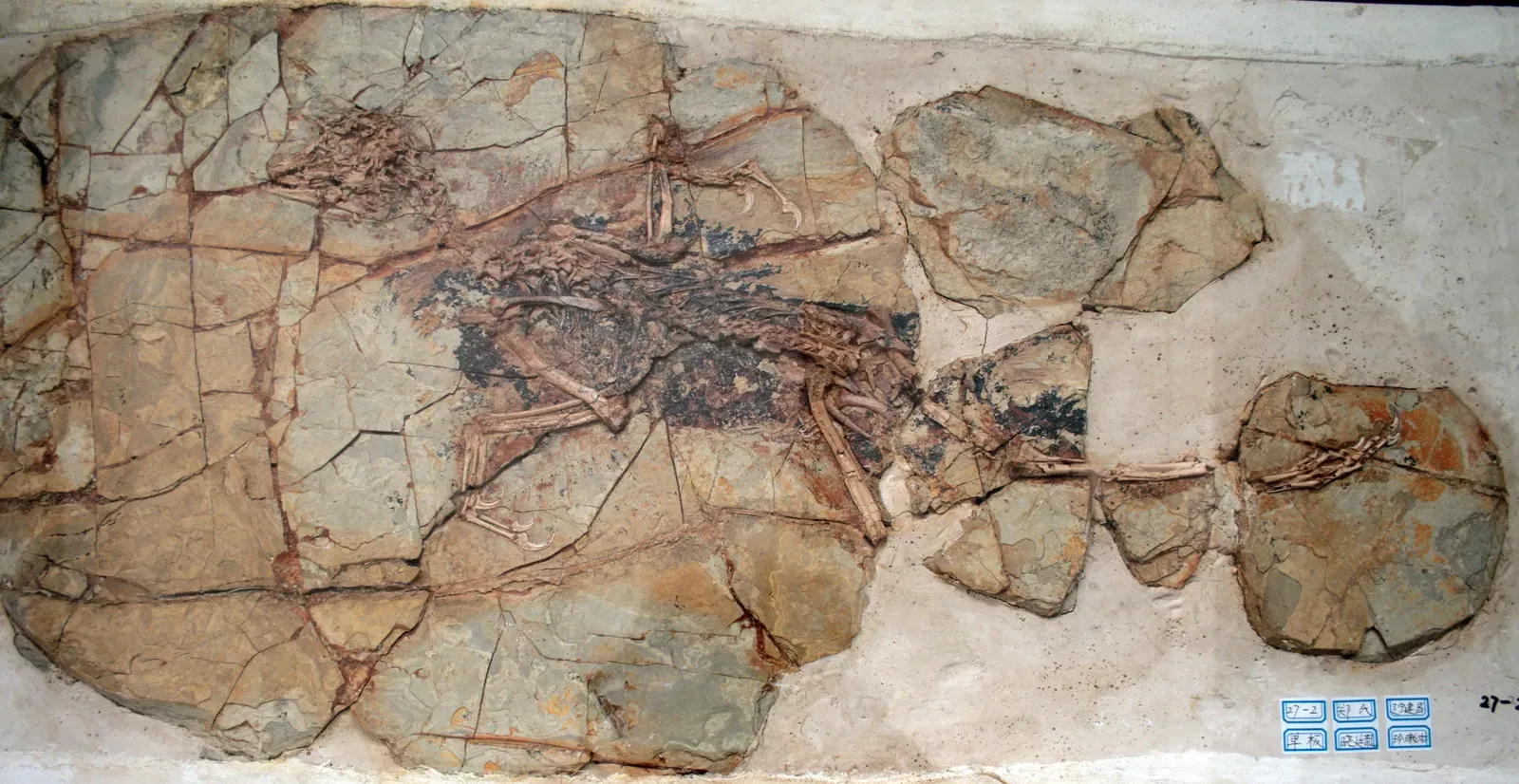
Uploaded by FunkMonk, CC BY-SA 2.0)
You might expect that color would be the first thing lost over 100 million years of fossilization. Remarkably, science has found a way around that. Studies of feathered dinosaurs and skin impressions have shown the colour of some species can be inferred through the analysis of colour-determining organelles known as melanosomes that are preserved in fossilized skin and feathers. Melanosomes are essentially tiny color factories preserved in stone, and they still work as a record of ancient hues.
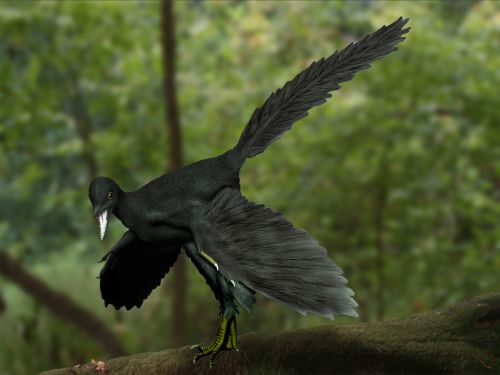
In 2010, paleontologists studied a well-preserved skeleton of Anchiornis, an averaptoran from China, and found melanosomes within its fossilized feathers. As different shaped melanosomes determine different colours, analysis of the melanosomes allowed the paleontologists to infer that Anchiornis had black, white, and grey feathers all over its body and a crest of dark red or ochre feathers on its head. That is a level of biological detail nobody thought possible from a 160-million-year-old fossil.
A team of American and Chinese researchers revealed the detailed feather pattern and color of Microraptor, a pigeon-sized, four-winged dinosaur that lived about 120 million years ago. A new specimen shows the dinosaur had a glossy iridescent sheen and that its tail was narrow and adorned with a pair of streamer feathers, suggesting the importance of display in the early evolution of feathers. Microraptor, in short, was a glittering little show-off, probably using its iridescent black plumage the same way a modern peacock uses its tail.
The New Feathered Discoveries of 2025 and What They Mean for Our Understanding
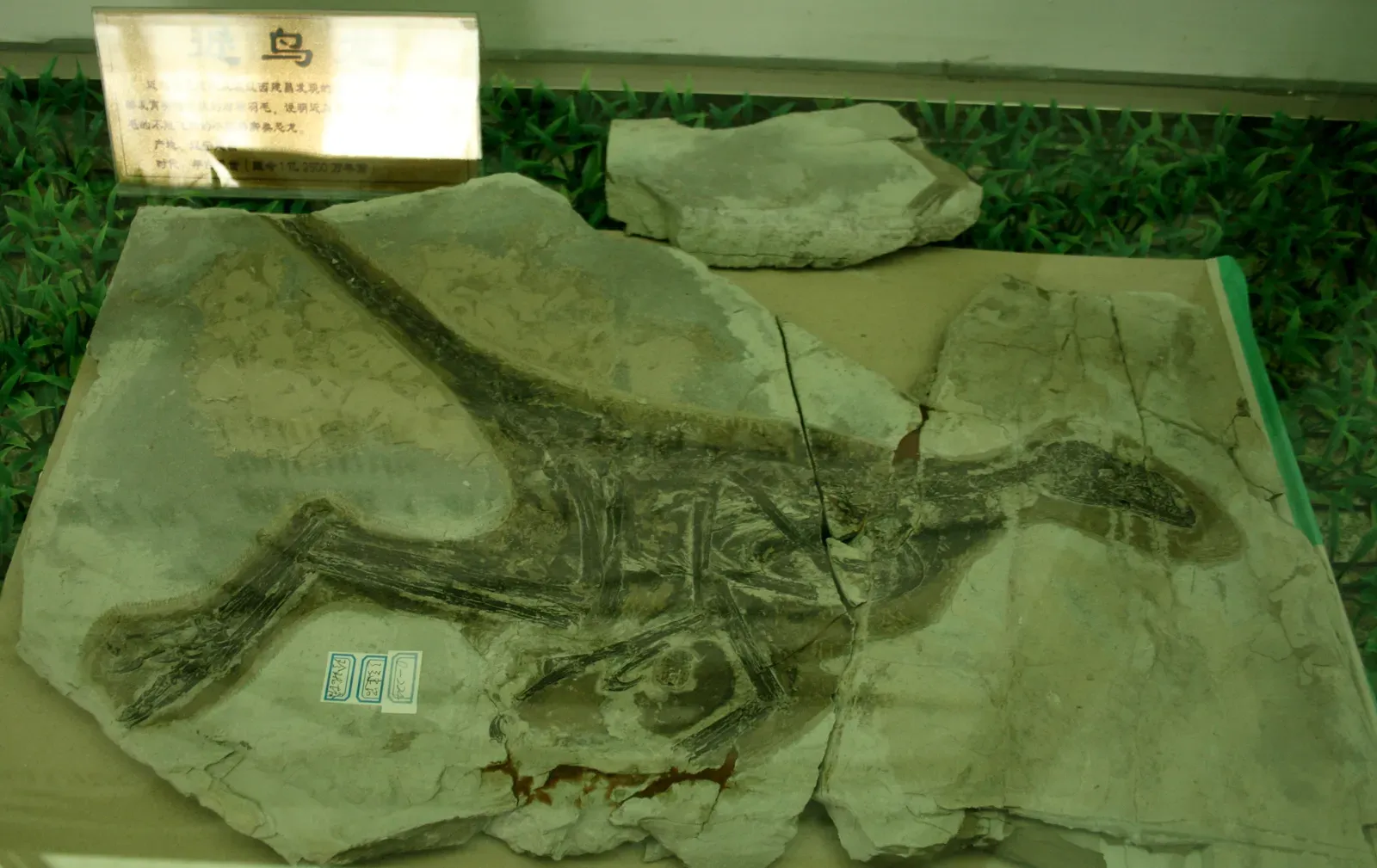
Uploaded by FunkMonk, CC BY-SA 2.0)
The pace of discovery shows absolutely no sign of slowing. Two new species from the group of earliest feathered dinosaurs that lived about 125 million years ago in what is now China were formally named in 2025: one that was originally identified as a primitive bird, Sinosauropteryx lingyuanensis, and the other, Huadanosaurus sinensis, which was found with two mammal skeletons in its abdomen – the remains of its last meal. That kind of preservation, stomach contents and all, is extraordinarily rare and immensely valuable.
In a major 2025 study, researchers examined nine specimens of a feathered pennaraptoran dinosaur species called Anchiornis huxleyi. A rare paleontological finding, these fossils and several hundred similar ones were preserved with their feathers intact, thanks to special conditions prevailing in the region during fossilization. The nine fossils examined were chosen because they had retained the color of the wing feathers – white with a black spot at the tip. It is almost surreal how much biological information survives the deep time of the fossil record.
The more paleontologists dig, the more feathered dinosaurs they find. Almost three decades have passed since the scientific debut of the first non-avian dinosaur with feathers, Sinosauropteryx, and in that time experts have discovered dozens more. With every season that paleontologists return to the world’s Mesozoic rocks, the menagerie of feathery dinosaurs is only set to grow. The map of feathered life in the Mesozoic is still being drawn, and its borders keep expanding.
Conclusion: The Mesozoic Was Always a Feathered World
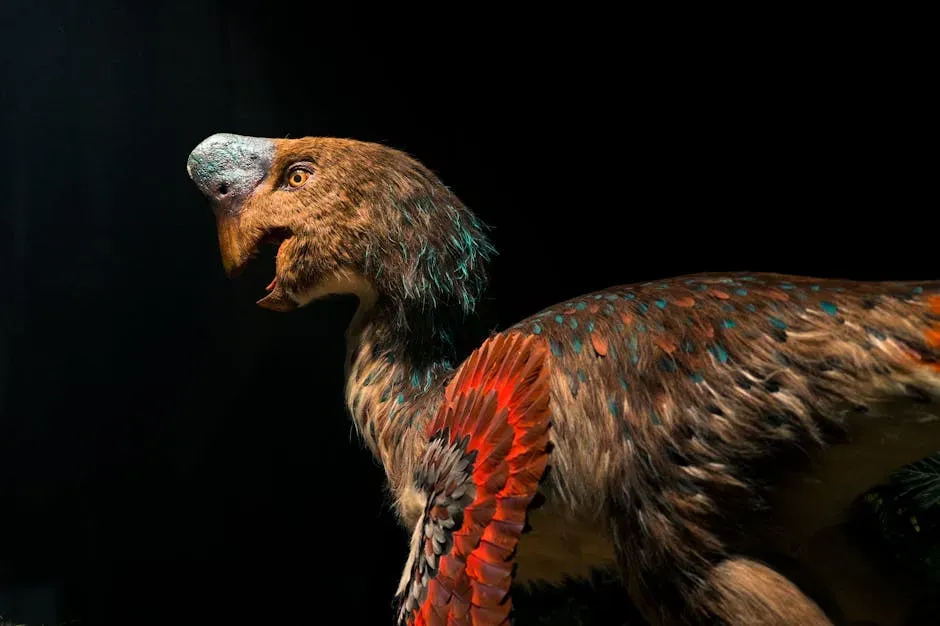
The evidence, taken together, tells a story that is humbling in its scope. Feathers were not a last-minute evolutionary trick reserved for the ancestors of birds. They appear across vast stretches of the Mesozoic timeline, on creatures both enormous and tiny, predatory and herbivorous, gliding and entirely earthbound. The fossil record shows that birds are feathered dinosaurs, having evolved from earlier theropods during the Late Jurassic epoch, and are the only dinosaur lineage known to have survived the Cretaceous-Paleogene extinction event approximately 66 million years ago.
Every time science unearths a new feathered specimen, it reinforces the same message. The scaly, cold-blooded monster of Hollywood mythology was always a partial truth at best. The discovery of feathered dinosaurs has reshaped our understanding of dinosaur biology and evolution. It has solidified the evolutionary link between dinosaurs and birds, confirming that birds are living dinosaurs. This new perspective has transformed scientific research, driving investigations into feather development, dinosaur physiology, and the origins of flight.
The next time you watch a bird land on your windowsill, consider that you are looking at a living, breathing feathered dinosaur that somehow outlasted everything the Mesozoic world threw at it. Every feather on that tiny body is a testament to hundreds of millions of years of evolutionary history. Still think dinosaurs are extinct? What do you think about that? Share your thoughts in the comments below.