Pterosaurs were not the clumsy, passive gliders that older textbooks often suggested. They were active, warm-blooded, and extraordinarily diverse, spanning from crow-sized insect hunters to animals with wingspans that rivaled light aircraft. For a long time, the evolutionary gap between those early small forms and the later giants felt frustratingly wide, filled mostly with speculation.
Recent fossil discoveries, published in leading scientific journals over the past couple of years, have begun closing that gap in ways that genuinely surprise even specialists. You’re looking at a field that has moved faster in the early part of this century than in all of the two preceding centuries combined, and the momentum hasn’t slowed.
A Missing Link Finally Surfaces in Bavaria
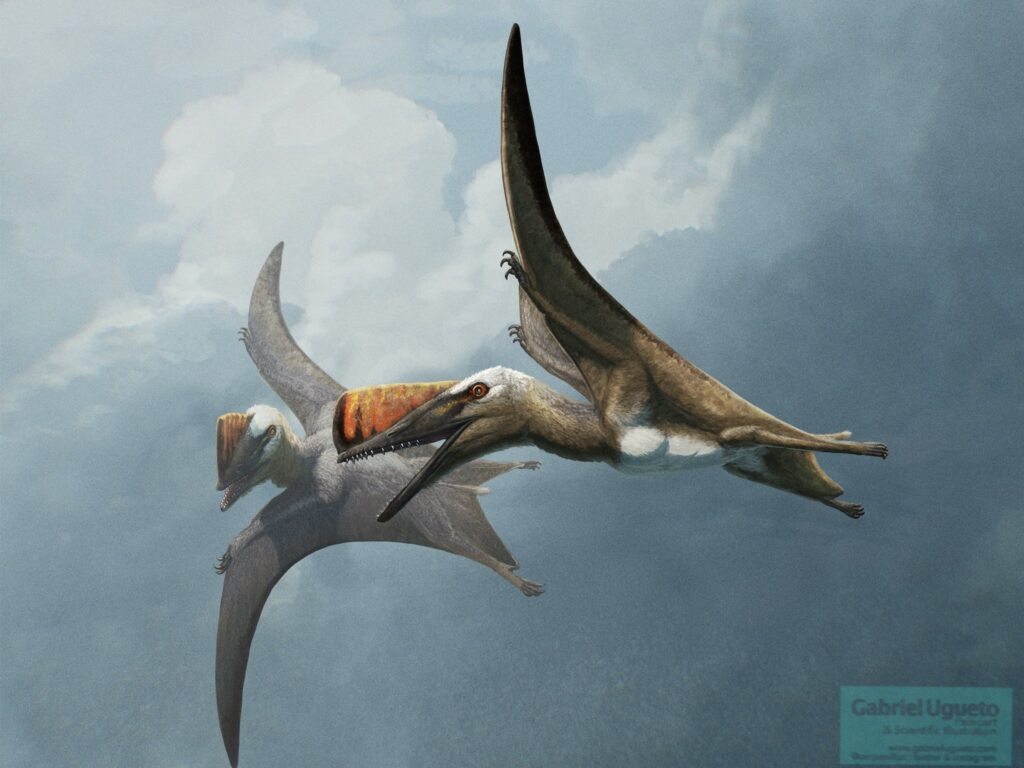
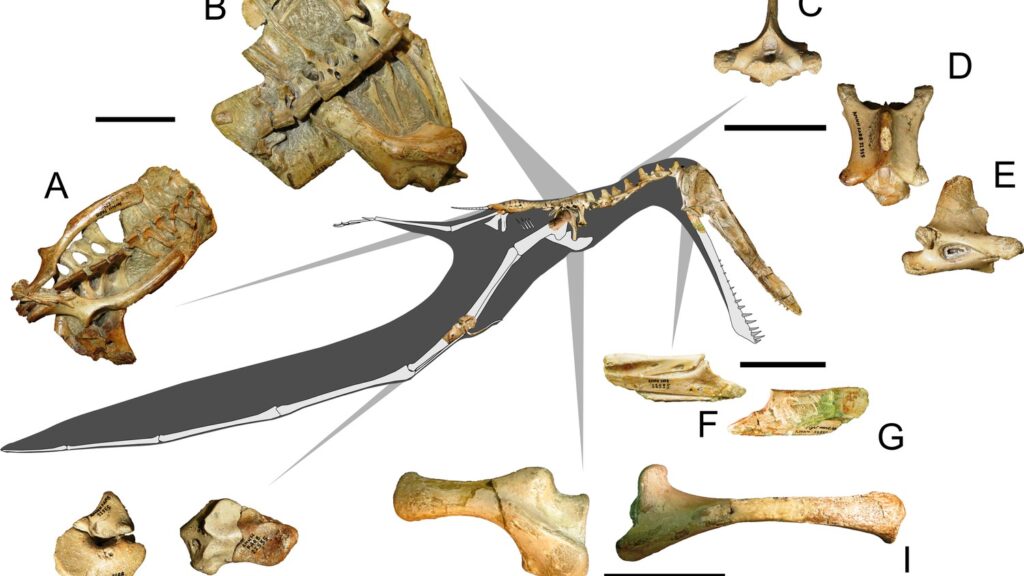
A newly discovered pterosaur fossil is shedding light on the evolutionary journey of these ancient flying reptiles. The complete specimen, named Skiphosoura bavarica, provides crucial insights into how pterosaurs transitioned from early, smaller forms to the later, gigantic species. The significance here is hard to overstate. Paleontologists had long known that two distinct pterosaur groups existed, but the anatomical steps connecting them remained elusive.
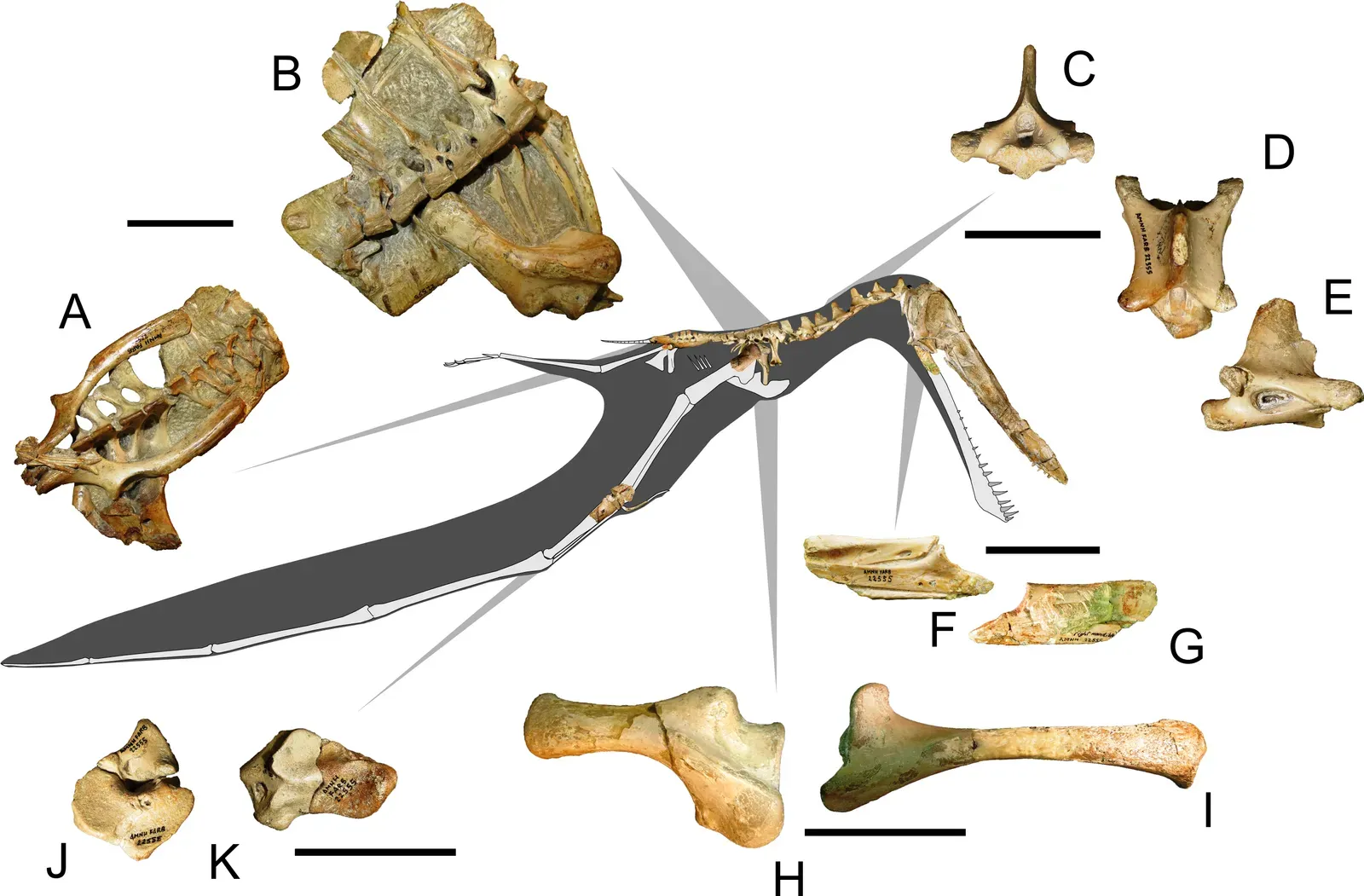
Scientists named the animal Skiphosoura bavarica, meaning “sword tail from Bavaria,” because it comes from southern Germany and has a very unusual short but stiff and pointed tail. The specimen is complete with nearly every single bone preserved and, unusually, it is preserved in three dimensions, where most pterosaurs tend to be crushed flat. That three-dimensional preservation alone makes it one of the most scientifically useful pterosaur specimens ever found.
Two Groups, Two Centuries of Mystery
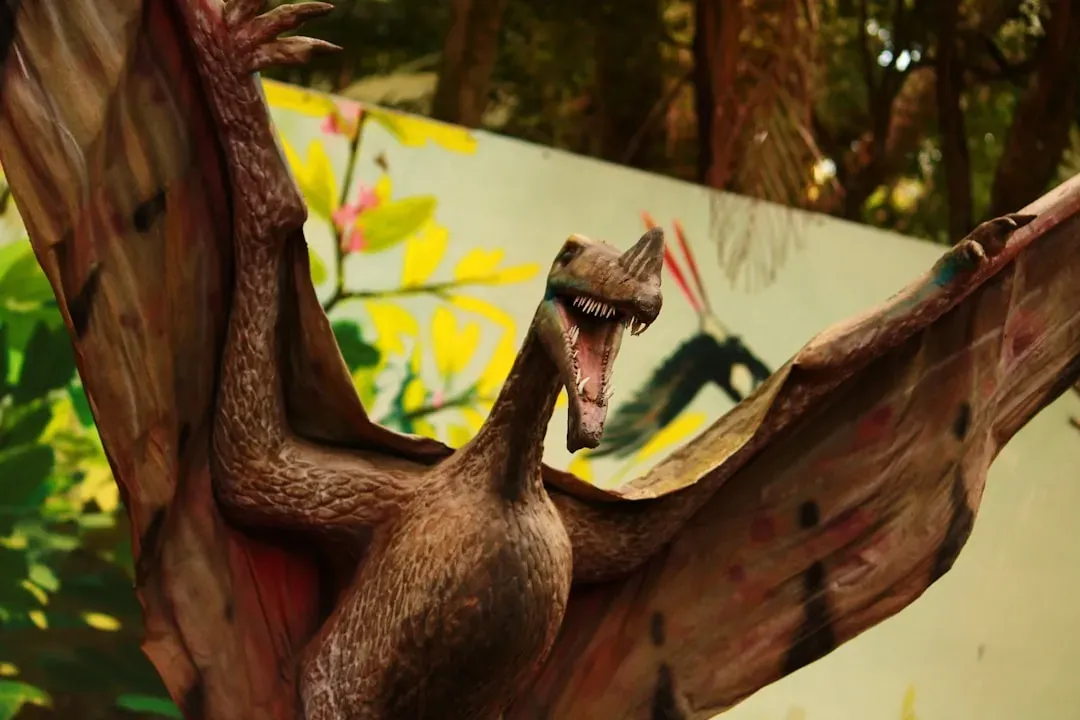
For two hundred years, paleontologists split the pterosaurs into two major groups: the early non-pterodactyloids and the later, much larger pterodactyloids. The early pterosaurs had short heads on short necks, a short bone in the wrist of the wing, a long fifth toe on the foot, and long tails. The pterodactyloids had the opposite: large heads on long necks, a long wrist, short fifth toe, and short tail. Which parts of their body changed first between these groups was simply not known.
In the 2010s, a series of intermediate species called darwinopterans were found that revealed that the head and neck had changed first before the rest of the body. It was a great example of an intermediate that bridged an evolutionary gap. But it also meant scientists did not really know what was going on before or after those changes. Skiphosoura now fills the chapter that came after the darwinopterans, making the sequence far more readable.
Reading the Evolutionary Sequence Step by Step
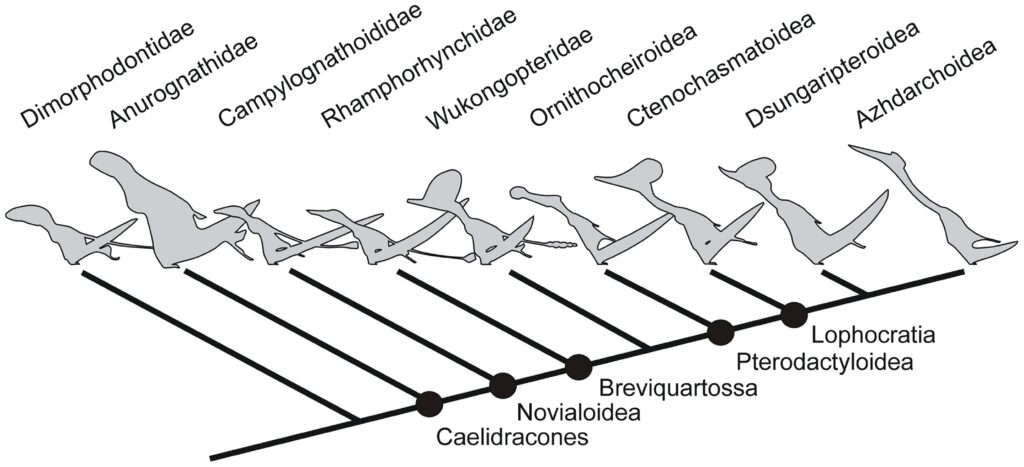
On the pterosaur timeline, Skiphosoura existed between the darwinopterans and the giant pterodactyloids, toward the end of the Jurassic Period. It had a wingspan of about six feet and, like the earlier darwinopterans, showcased a pterodactyloid-like head and neck. It also had a longer wrist and shorter toe and tail than its predecessors, evidence of the evolution toward pterodactyloids.
With the study also came a new reconstruction of the evolutionary family tree for pterosaurs. In addition to showing the intermediate position of Skiphosoura, it also showed that a Scottish pterosaur, Dearc, fits in the mirror position between the early pterosaurs and the first darwinopterans. Scientists now have a complete sequence of evolution from early pterosaurs to Dearc, to the first darwinopterans, to Skiphosoura, to the pterodactyloids. While not every specimen is complete, the increase in head and neck size, the elongating wrist, the shrinking toe and tail, and other features can now be traced step by step across multiple groups.
North America’s Oldest Known Pterosaur Emerges from Arizona
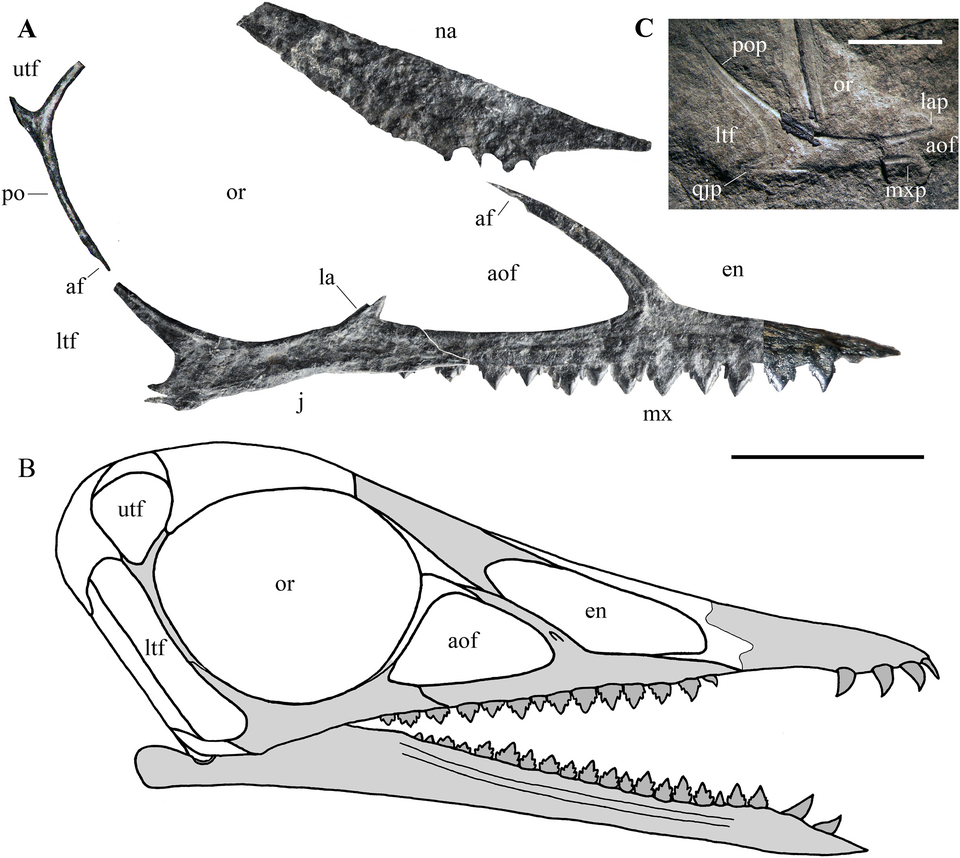
A newly identified species of pterosaur discovered in Arizona has pushed back the timeline for such creatures in North America by millions of years. The fossil, believed to be around 209 million years old, marks the earliest evidence of a flying reptile ever found on the continent. The partial jawbone was originally uncovered in 2011 at Petrified Forest National Park.
The team’s discovery, published in the Proceedings of the National Academy of Sciences, challenges long-held assumptions about where these ancient flying reptiles once roamed and fills a twelve-million-year gap in the fossil record. The finding also redefines what is known about the global distribution of early pterosaurs, showing they lived far beyond Europe in non-marine environments. Examination of the reptile’s teeth offered clues about its diet. The worn tips suggest it likely fed on armored fish, which were common in the rivers of that era. These fish were covered in hard, bony scales, which may have contributed to the wear found on the pterosaur’s teeth.
Flight Evolved Faster Than Anyone Expected
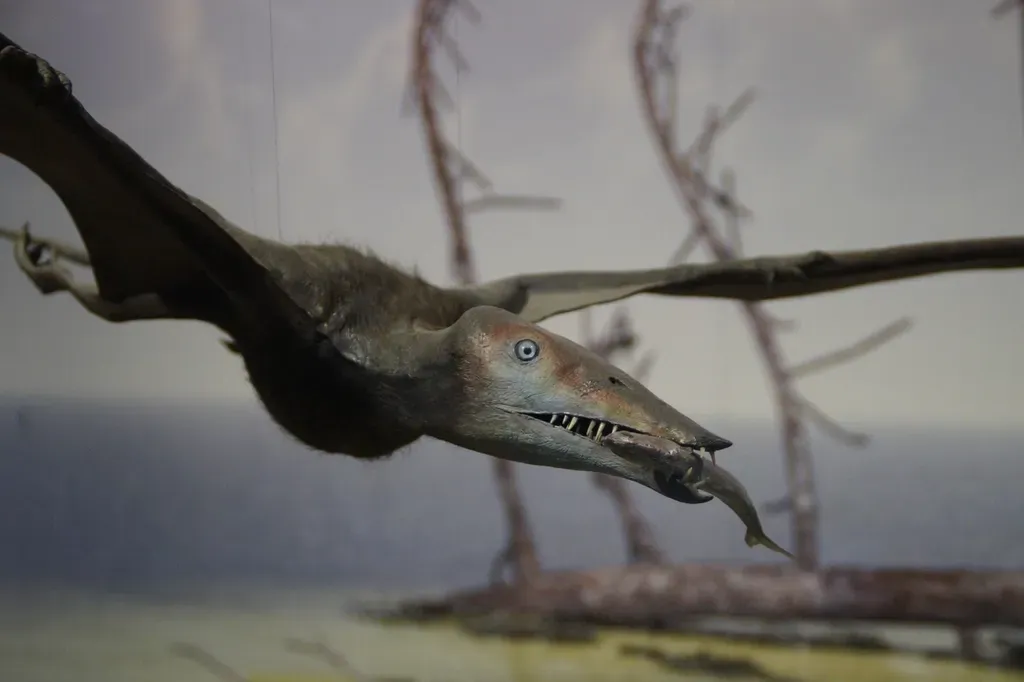
A research team led by evolutionary biologist and Johns Hopkins Medicine assistant professor Matteo Fabbri suggests that a group of giant reptiles alive up to 220 million years ago may have acquired the ability to fly when the animal first appeared, in contrast to prehistoric ancestors of modern birds that developed flight more gradually and with a bigger brain. A report on the study, which used advanced imaging tools to examine the brain cavities of pterosaur fossils, was published in Current Biology.
To learn whether pterosaurs acquired flight differently than birds and bats, scientists studied the reptile’s evolutionary tree to pinpoint the evolution of pterosaur brain shape and size. They focused particularly on the area involved in vision, the optic lobe, the growth of which is thought to be associated with flying abilities. Using CT scans and imaging software, the researchers honed in on the pterosaur’s closest relative: the flightless, tree-dwelling lagerpetid that originated during the Triassic period 242 to 212 million years ago. The contrast with birds, which appear to have developed flight through a far more gradual process, is striking.
Giants of the Cretaceous Skies and How They Flew
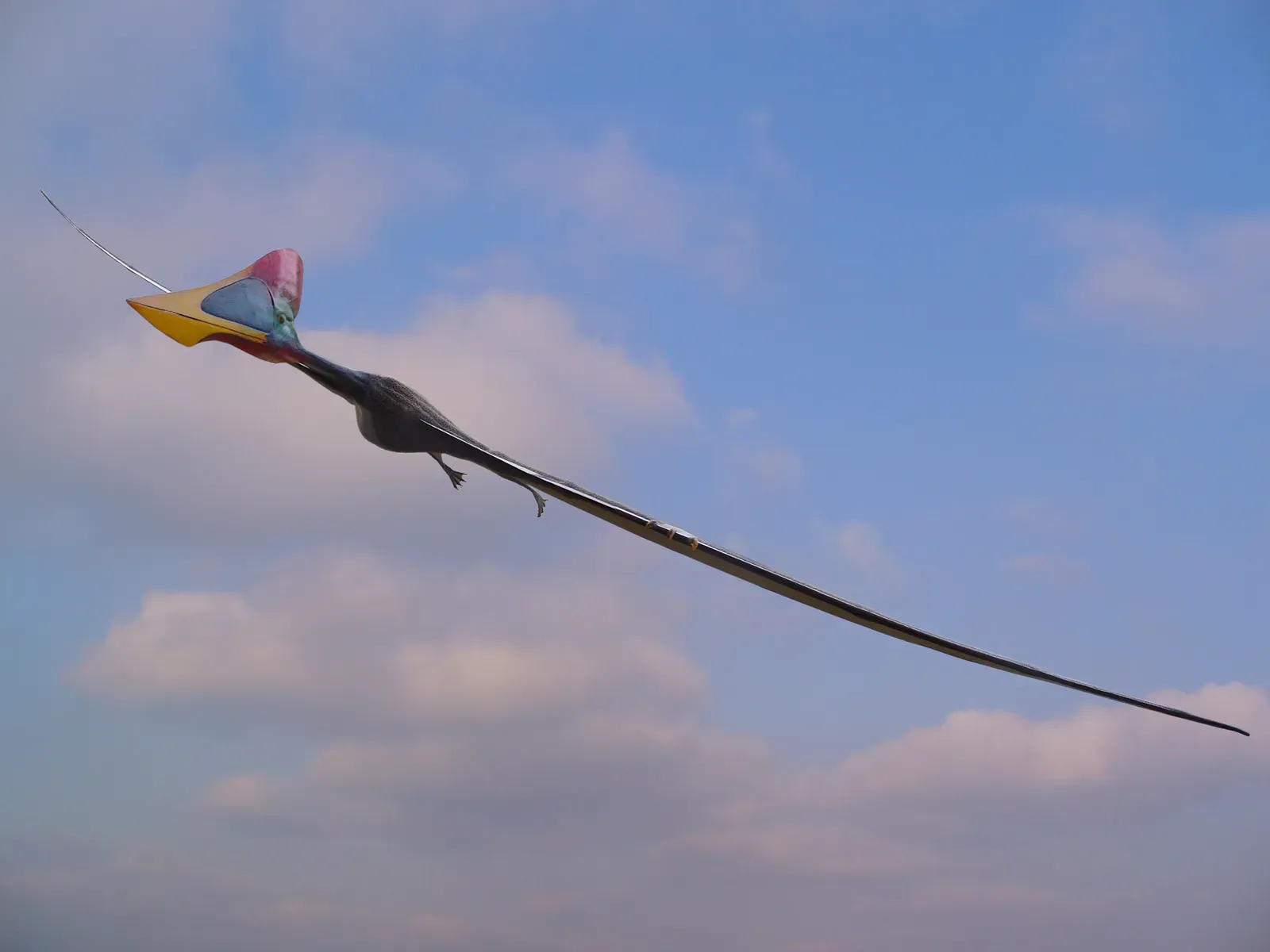
The pterosaurs, close relatives of dinosaurs, were the first vertebrates to achieve powered flight. While early species typically had wingspans of about two metres, later pterosaurs evolved into enormous forms with wingspans reaching ten metres. The largest of these was Quetzalcoatlus, one of the largest flying creatures that ever lived, known from a single set of fossils representing six individuals, first found in the Javelina Formation of Big Bend National Park in Texas in the early 1970s and first described in 1975.
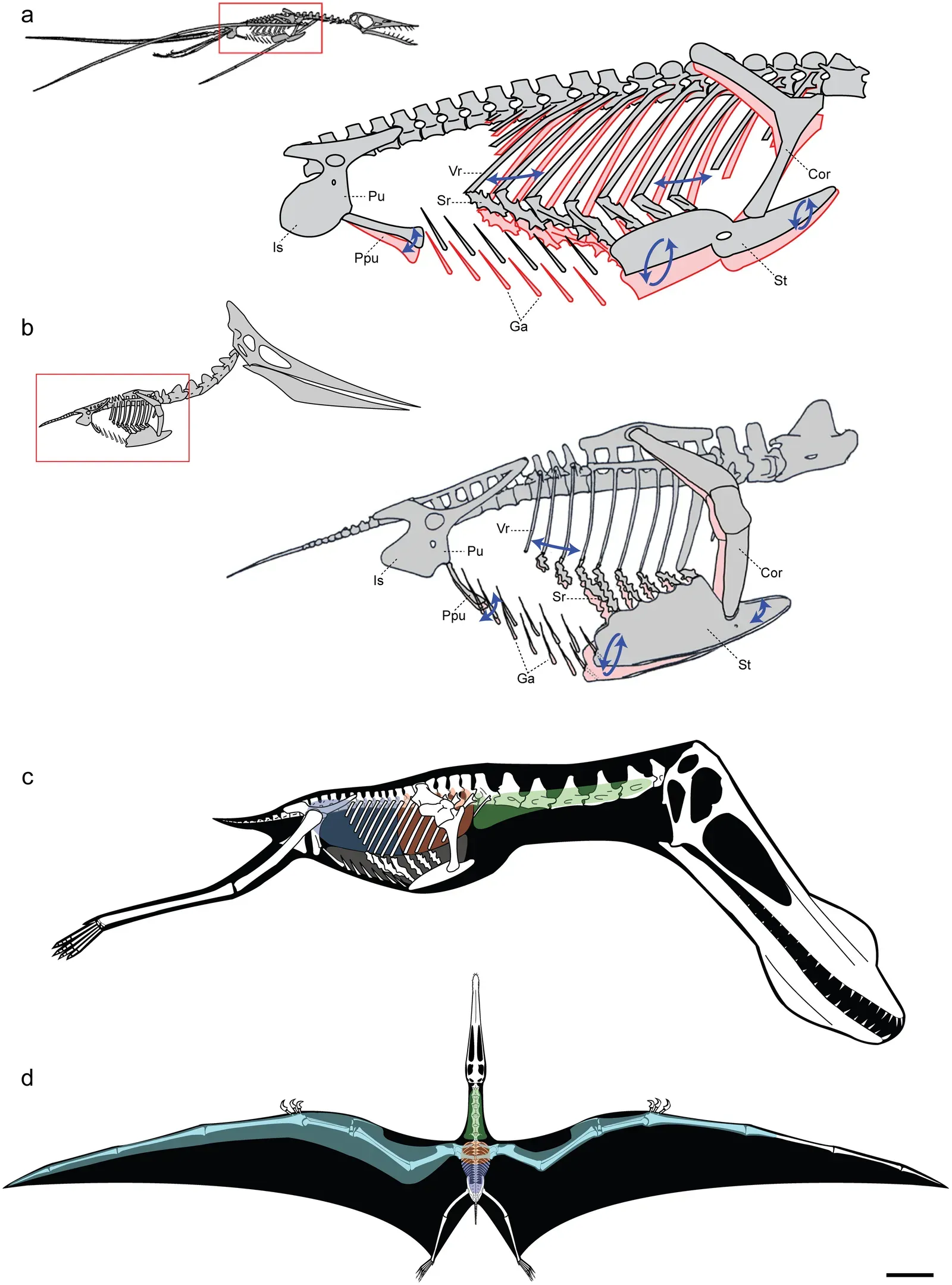
It has long been debated whether the largest pterosaurs could fly at all. However, remarkable and rare three-dimensional fossils of two different large-bodied azhdarchoid pterosaur species have enabled scientists to hypothesize that not only could the largest pterosaurs take to the air, but their flight styles could differ too. The aspect ratio of azhdarchid wings is similar to that of storks and birds of prey that engage in static soaring, meaning they were reliant on thermals, updrafts, and other air currents to gain altitude and remain aloft.
New Tools Are Reshaping What Fossils Can Tell You
Details of the investigation into pterosaur brain evolution relied on advanced imaging methods to examine the internal brain cavities of pterosaur fossils. Techniques like CT scanning and UV-induced fluorescence photography are now standard tools in pterosaur research, pulling details out of rock that would have remained invisible just a generation ago.
Bruce and René Lauer of the Lauer Foundation underscored the importance of modern techniques such as UV photography in uncovering fine details of the specimen. In other cases, the remains consist of a partial skeleton of a single individual, including parts of the shoulders, wings, legs, and backbone, with many of the bones remaining completely embedded in rock and studied only through CT scanning. You can think of it this way: the fossils haven’t changed, but the ability to read them has improved enormously, and that alone is driving a wave of reinterpretation across the field.
Conclusion
What you’re watching unfold in pterosaur research is genuinely unusual in paleontology: a coherent, nearly gap-free evolutionary narrative being assembled in real time. Pterosaur paleontology continues to progress into the 21st century, and according to David Hone, the early part of this century has seen more progress in pterosaur paleontology than in the preceding two centuries combined.
Each new specimen, whether it’s a jawbone from an Arizona riverbed or a three-dimensional skeleton from Bavaria, adds a sentence to a story that once felt unreadable. The picture that emerges is of an animal group that conquered the skies early, evolved with remarkable speed, and scaled to sizes that still challenge our understanding of what biology can support. The rock hasn’t given up all of its secrets yet, and that’s perhaps the most exciting part of all.