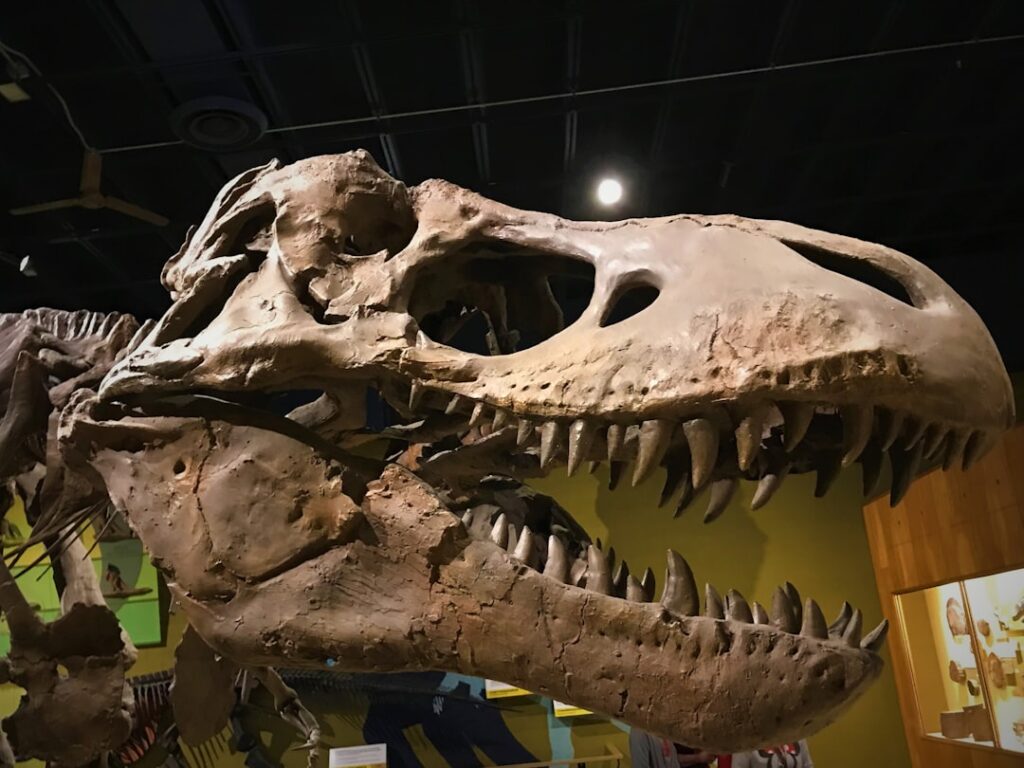
New Mexico – A massive shinbone pulled from the desert decades ago points to a gigantic tyrannosaur that roamed the region 74 million years ago, offering fresh clues to the roots of Tyrannosaurus rex.
A Forgotten Fossil Resurfaces
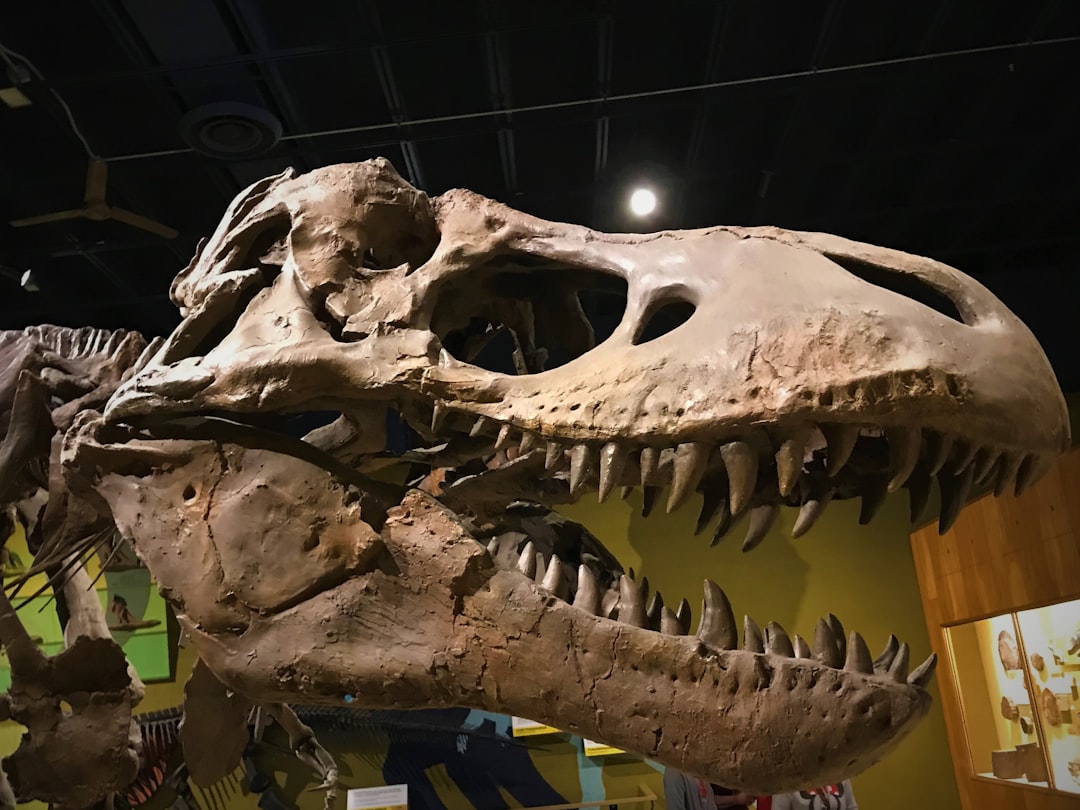
A Forgotten Fossil Resurfaces (Image Credits: Unsplash)
University of New Mexico students unearthed the tibia in the 1970s within the Bisti-De-na-zin Wilderness in San Juan County. The bone sat in storage at the New Mexico Museum of Natural History & Science until paleontologists took a closer look.
Lead researcher Nick Longrich from the University of Bath analyzed its features alongside co-authors Anthony Fiorillo and Spencer Lucas from the New Mexico museum. They dated the fossil to the Late Campanian stage of the Cretaceous Period using volcanic ash layers and magnetic analysis. This specimen, dubbed the Hunter Wash tyrannosaur after its rock formation, emerged from Hunter Wash Member of the Kirtland Formation.
The find stood out immediately for its scale. Researchers estimated the full dinosaur reached about 35 feet long and weighed roughly 4.7 metric tons – twice the mass of contemporaries like Daspletosaurus.
Dimensions That Dwarf Contemporaries
The left tibia measures 96 centimeters long and 13 centimeters wide, boasting a straight shaft and a broad, triangular lower end. These traits set it apart from smaller local tyrannosaurs like Bistahieversor sealeyi.
Comparisons reveal its stature:
| Bone Specimen | Length (cm) | Width (cm) | Estimated Mass (tons) |
|---|---|---|---|
| Hunter Wash Tyrannosaur | 96 | 13 | 4.7 |
| Sue (T. rex) | ~120 | ~17 | 9 |
| Bistahieversor | Smaller | Narrower | <2.5 |
Key identifying features include:
- Straight, robust shaft unlike curved ones in northern relatives.
- Triangular distal end matching Tyrannosaurus proportions.
- Overall size 84 percent of Sue’s tibia length and 78 percent of its width.
- Distinct fibular crest and condyles confirming tyrannosaurid status.
Fiorillo noted, “This tibia, or shin bone, matches very, very well with the shin bone of Tyrannosaurus.”
Rewriting the Tyrannosaur Timeline
The fossil predates most T. rex remains by millions of years, suggesting giant tyrannosaurs appeared earlier than thought. Longrich explained, “T. rex’s enormous size is a specialization that emerges relatively late in tyrannosaur evolution.”
It bolsters the idea that Tyrannosaurus evolved in southern Laramidia – the ancient western North America – rather than Asia. Lucas added, “This large, geologically old tyrannosaur is most consistent with a North American origin, and one possibly in the southern part of the continent.”
At the time, the beast prowled coastal floodplains amid horned, armored, and duckbilled dinosaurs under a subtropical sky. The single bone limits precise classification, but it hints at an early Tyrannosaurini member.
Plans for More Revelations
Researchers plan expanded searches in the Kirtland Formation. Fiorillo stated, “We are developing our plans to expand to search for more material.” A complete skull or skeleton could confirm if this beast directly ancestral to T. rex or a close cousin.
Details appear in a new Scientific Reports study.
Key Takeaways
- The Hunter Wash tyrannosaur weighed 4.7 tons, the biggest of its 74-million-year-old epoch.
- Its bone closely mirrors T. rex features, supporting a southwestern U.S. origin for giants.
- More digs could unlock the full family tree of these apex predators.
This discovery underscores how reexamining old finds can shift our grasp of prehistoric giants. What do you think this means for T. rex’s story? Tell us in the comments.