Picture yourself standing in the middle of Kansas. Now imagine that instead of wheat fields stretching to the horizon, you’re gazing out over a vast, shallow ocean teeming with prehistoric monsters. Hard to wrap your head around, right? Yet this was the reality for millions of years during the Cretaceous period. While dinosaurs thundered across the continents, a completely different world existed beneath the waves of North America’s inland seas.
These ancient waterways were more than just geographic curiosities. They fundamentally shaped the evolution of life on the continent, created some of the most bizarre ecosystems ever to exist on Earth, and left behind a fossil record so rich that scientists are still uncovering its secrets today.
When Oceans Carved Through Continents
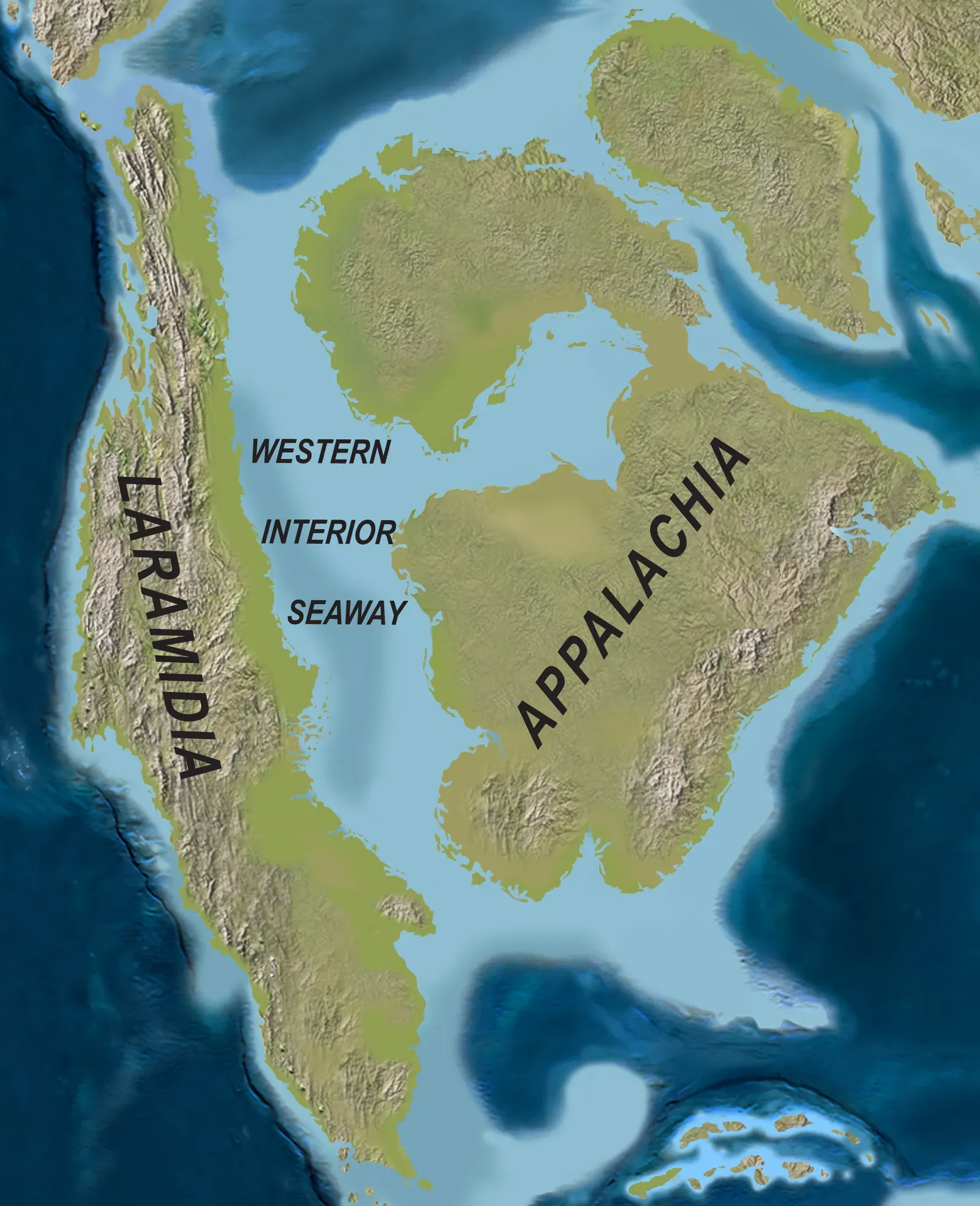
The Western Interior Seaway split North America into two landmasses, Laramidia to the west and Appalachia to the east, existing for roughly 34 million years from the early Late Cretaceous to the earliest Paleocene. Think about that timeframe for a moment. This wasn’t a brief geological hiccup. It was an era longer than the entire existence of our human species.
At its peak, the seaway stretched over 2,000 miles long, reached 600 miles wide, and plunged to depths of 2,500 feet. The seaway began when an arm of the Arctic Ocean moved south over western North America forming the Mowry Sea, which eventually merged with a southern embayment from the Gulf of Mexico to create a completed seaway. The formation wasn’t instantaneous. Tectonic forces gradually warped the land, and water flowed in to fill the depression created between the rising Rocky Mountains and the ancient continental interior.
A Tropical Paradise Unlike Any Modern Ocean
Widespread carbonate deposition suggests that the seaway was warm and tropical, with abundant calcareous planktonic algae. You could describe it as a bathtub compared to today’s oceans. The seaway’s maximum depth of around 2,500 feet was positively shallow compared to the average depth of modern oceans, roughly 12,100 feet.
Roughly 75 million years ago, the area of southern Alberta to northern Montana had a mean annual temperature of about 16 to 20 degrees Celsius, contrasting starkly with the current range of about 5 to 7 degrees Celsius. Let’s be real here, that’s a massive difference. The shores of this ancient sea would have been lush, humid, and quite frankly, sweltering by modern standards. The Sun’s life-giving rays touched a significant portion of the water column, and so, the ocean teemed with all sorts of marine creatures.
Marine Reptiles Ruled With Terrifying Efficiency
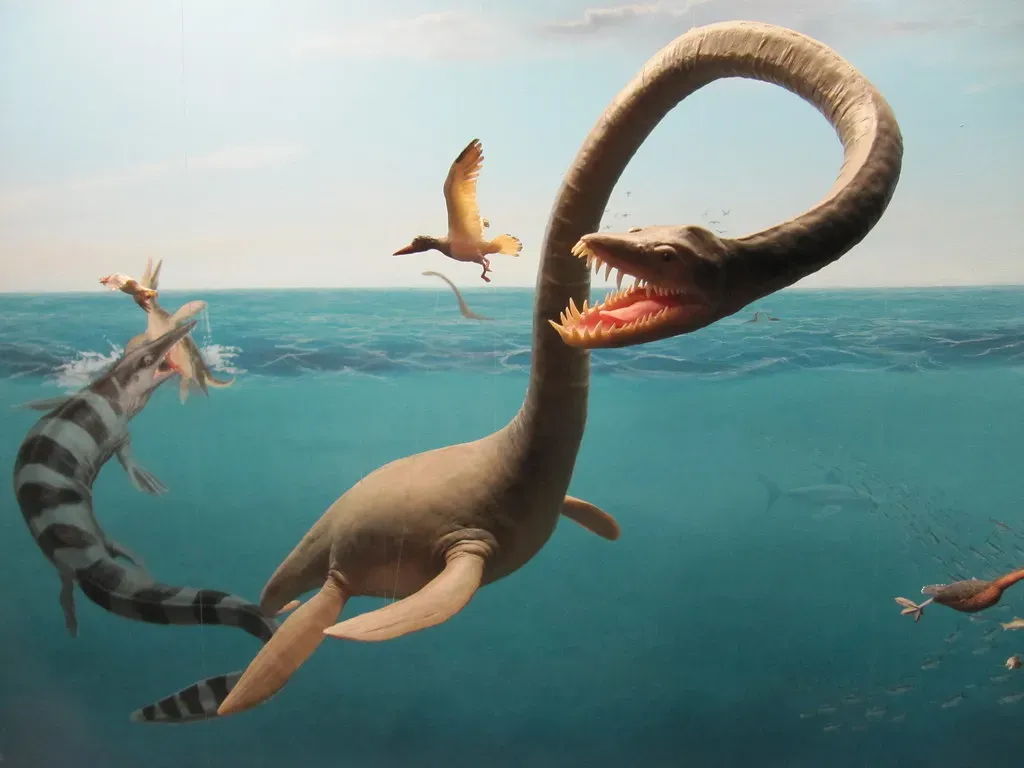
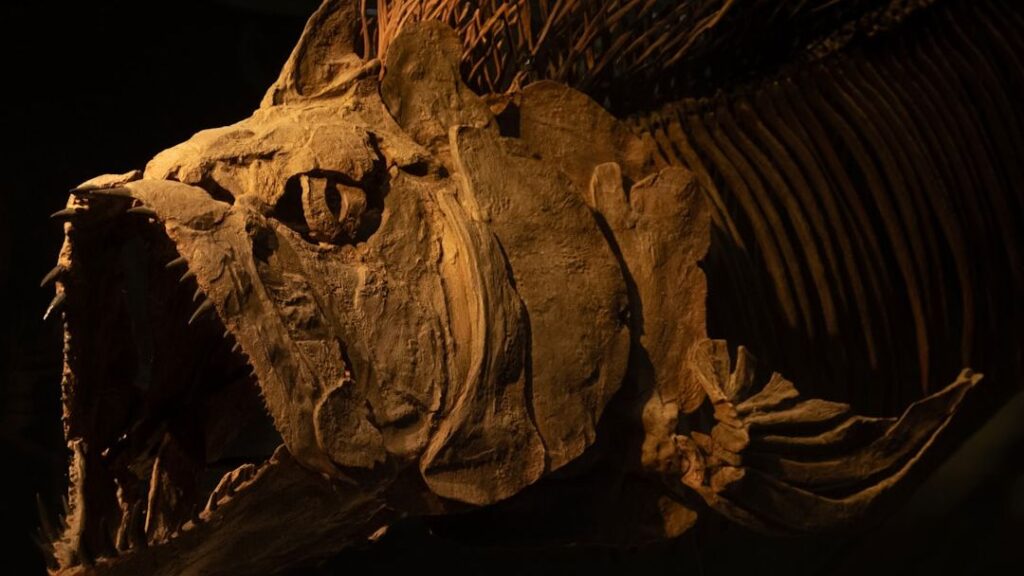
Interior seaway denizens included predatory marine reptiles such as plesiosaurs and mosasaurs, along with sharks like Squalicorax and Cretoxyrhina, and massive bony fish including the 4-to-5-metre long Xiphactinus. If you thought modern ocean predators were intimidating, the Western Interior Seaway would have been your absolute nightmare. Mosasaurs growing up to 18 meters long patrolled these waters.
Eventually, the Western Interior Seaway, like all other oceans and seas across the world during the Late Cretaceous, ended up being dominated by the mosasaurs, a group of massive predatory marine lizards. These weren’t your average reptiles. They were streamlined killing machines with powerful tails and jaws bristling with sharp teeth. Honestly, it’s hard to say for sure, but swimming in these waters would have been suicidal for anything smaller than a school bus.
Flying Reptiles and Early Birds Dominated The Skies
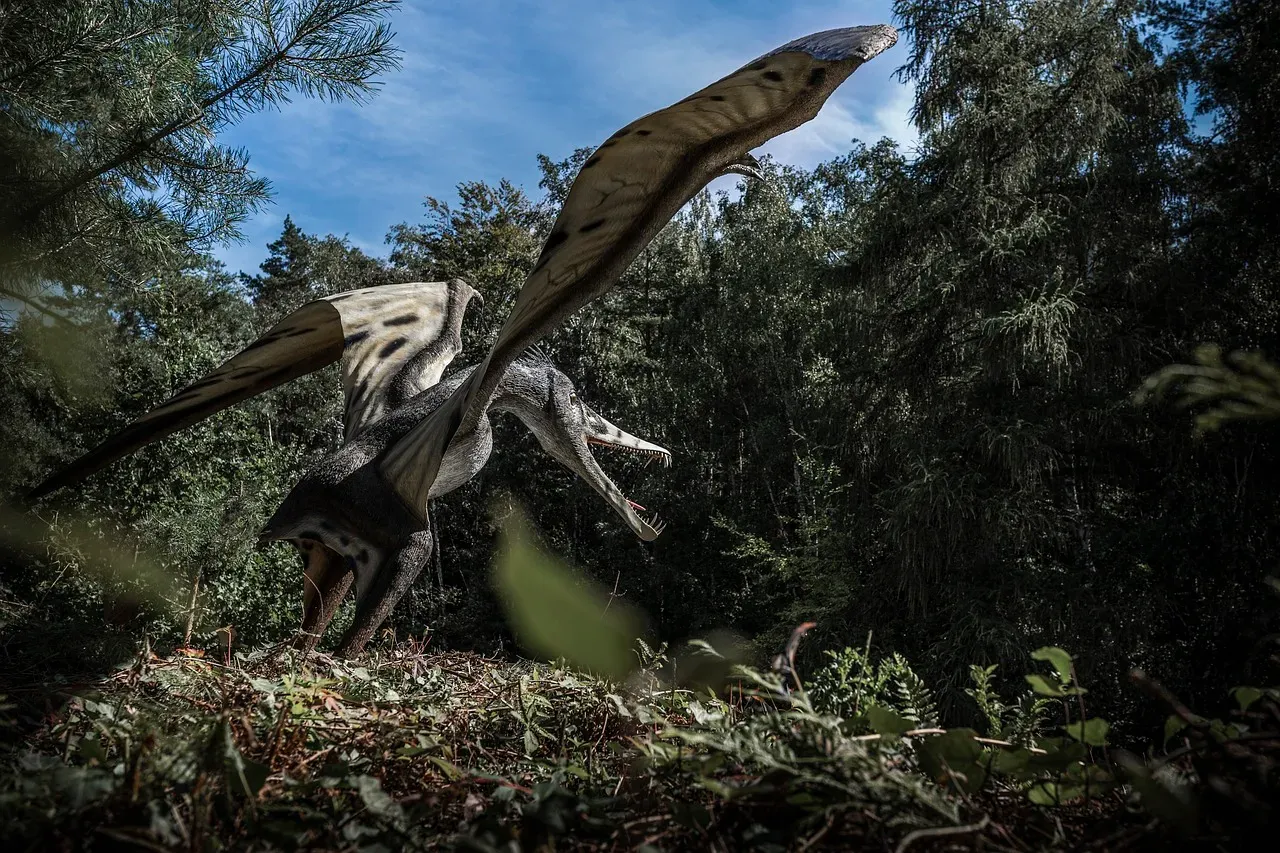
The seaway was home to the flightless Hesperornis that had stout legs for swimming and tiny wings for marine steering, and the tern-like Ichthyornis with a toothy beak, which shared the sky with large pterosaurs such as Nyctosaurus and Pteranodon. Picture a bird that couldn’t fly but was perfectly adapted for diving and chasing fish underwater. That was Hesperornis, essentially a prehistoric penguin with teeth.
Pteranodon fossils are very common and it was probably a major participant in the surface ecosystem, though found only in the southern reaches of the seaway. These massive flying reptiles would have soared overhead, their wingspans casting shadows across the water as they hunted for fish. The skies above the seaway were as crowded and competitive as the waters below, creating a three-dimensional ecosystem of staggering complexity.
Bizarre Bottom Dwellers Thrived In Low Oxygen Conditions
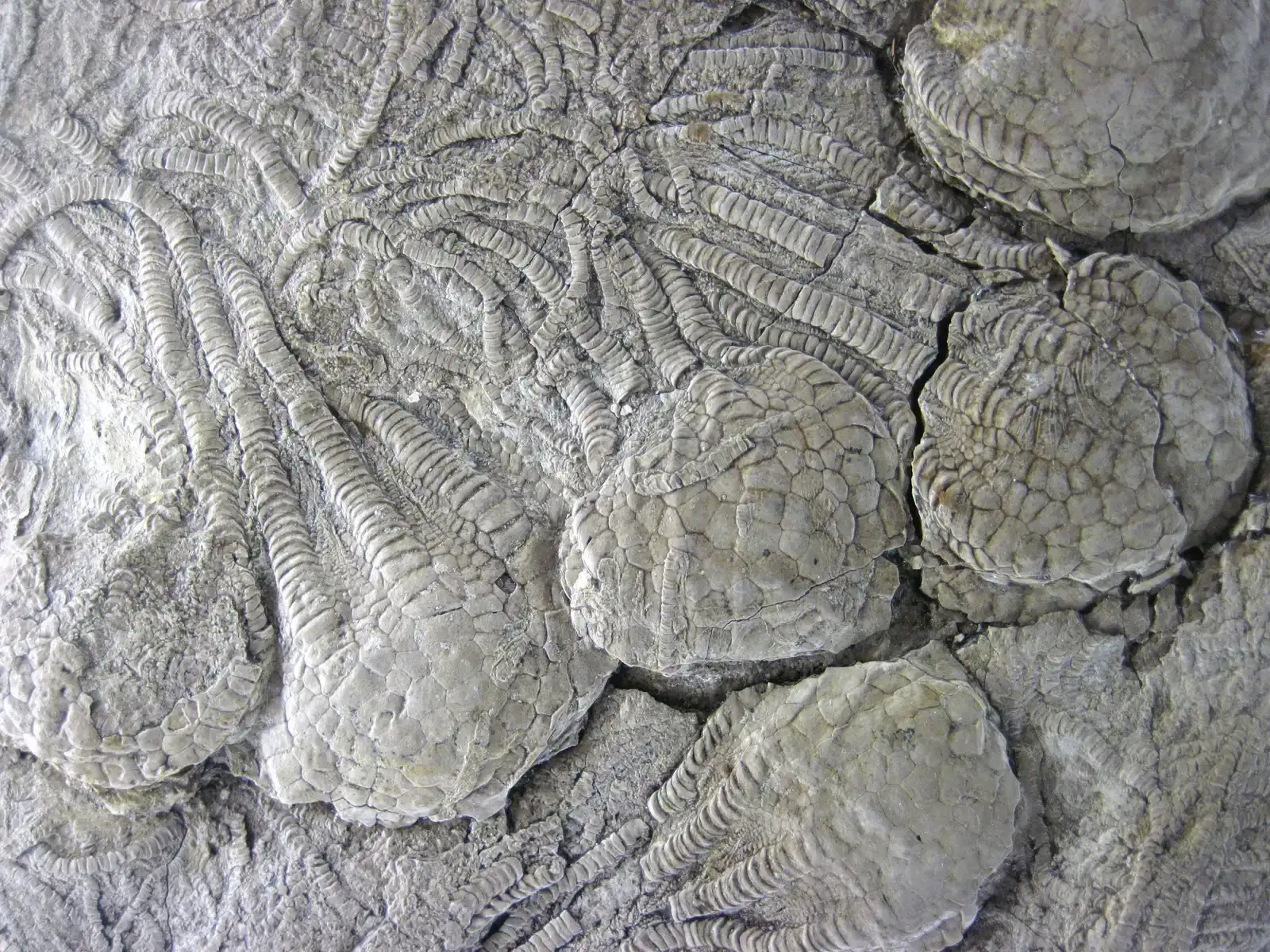
Inoceramids, oyster-like bivalve molluscs, were well-adapted to life in the oxygen-poor bottom mud of the seaway and left abundant fossils in various formations. Here’s the thing about the seaway’s ocean floor: it was periodically anoxic, meaning the water had little to no oxygen. Conditions on the ocean floor were periodically anoxic, which meant dead animals decomposed slowly, favoring their preservation as fossils.
This created a strange paradox. While the surface waters teemed with life, the bottom was a graveyard where organisms needed special adaptations to survive. Other sea life included mollusks, ammonites, squid-like belemnites, and plankton including coccolithophores that secreted the chalky platelets giving the Cretaceous its name. The tiny coccolithophores were so abundant that their skeletal remains accumulated in massive quantities, eventually forming the chalk deposits we see today in places like Kansas.
Continental Divide Created Evolutionary Laboratories
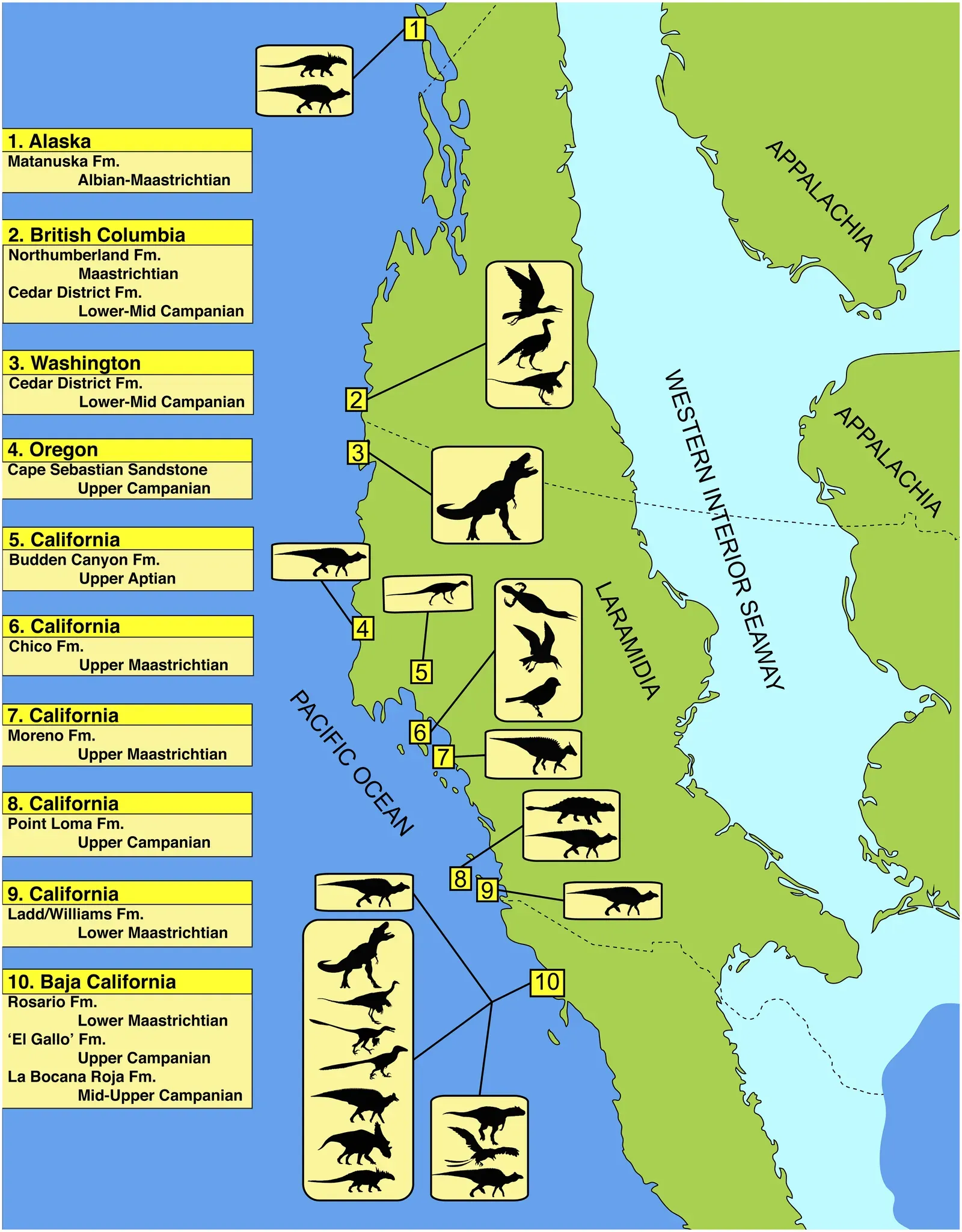
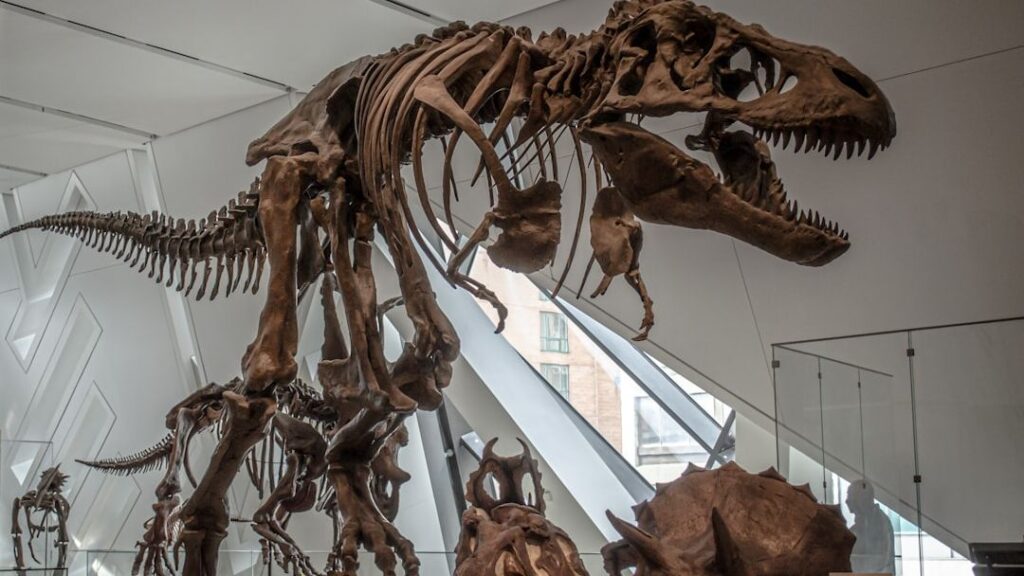
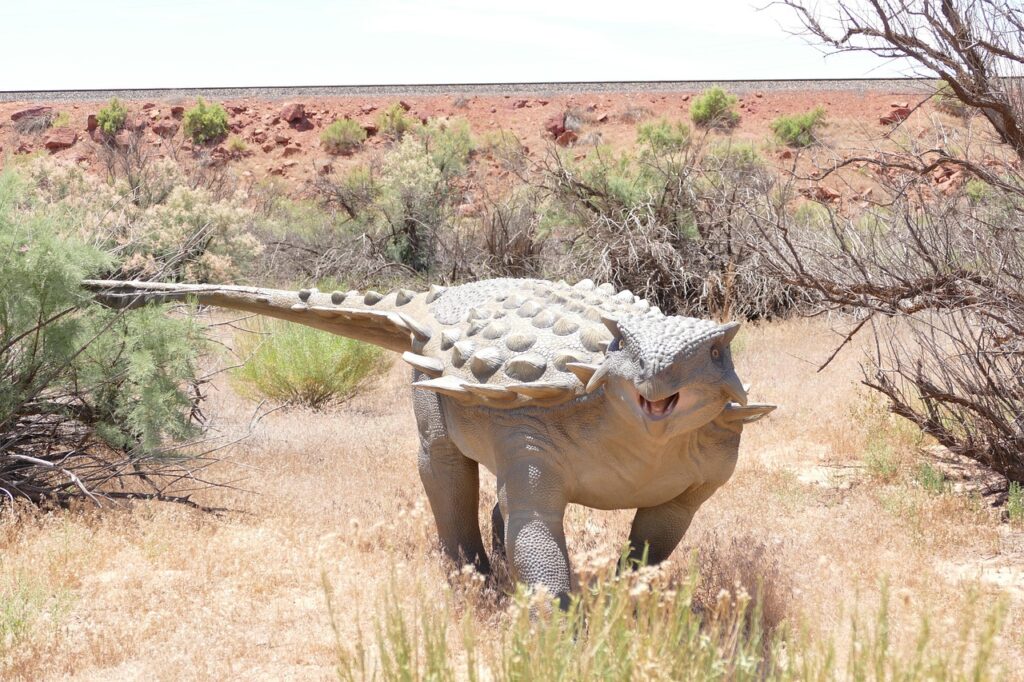
With the splitting of North America, species and entire ecosystems on both sides were isolated, allowing them to diversify into forms and populations distinct from one another. Three dinosaur clades found in Laramidia, including troodontids, therizinosaurids and oviraptorosaurs, are absent from Appalachia from the Coniacian through the Maastrichtian. This separation created what scientists call allopatric speciation, where isolated populations evolve independently.
Relative sea levels fell multiple times, as a margin of land temporarily rose above the water, each time rejoining the separated populations and allowing a temporary mixing of newer species before again separating them. Imagine it like a biological experiment conducted over millions of years. Species would diverge, then occasionally meet and mix when sea levels dropped, then separate again. This process turbocharged evolution on both sides of the seaway, creating an explosion of diversity that scientists are still cataloging today.
The Seaway’s Disappearance Changed Everything
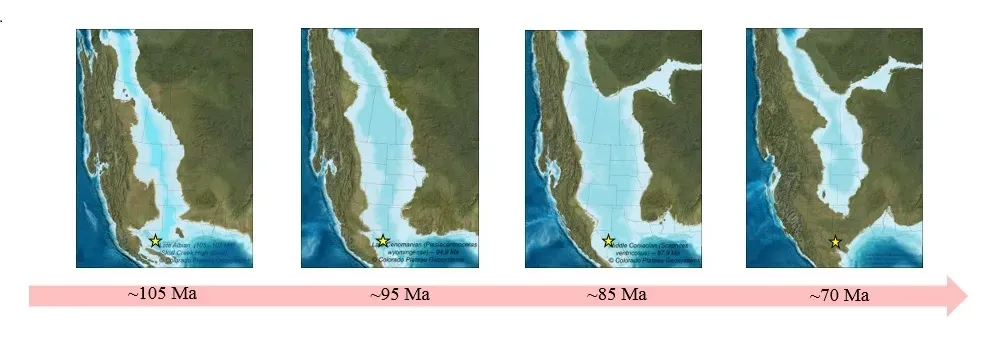
The seaway closed off at the end of the Cretaceous and gradually disappeared due to regional uplift and mountain-building on the western side of North America. The Western Interior Seaway divided across the Dakotas and retreated south towards the Gulf of Mexico, with this shrunken final phase sometimes called the Pierre Seaway. The same tectonic forces that created the seaway eventually destroyed it.
The inland sea advanced, retreated, and re-advanced many times during the Cretaceous Period until the most extensive interior seaway ever recorded drowned much of western North America. Traces of the Western Interior Seaway can still be found in marine deposits throughout the United States ranging from New Mexico to North Dakota, including famous ones such as the Pierre Shale and the Austin Chalk. Today, if you visit Monument Rocks in Kansas, you’re standing in what was once the bottom of this ancient ocean, surrounded by towering chalk formations that tell the story of millions of years of accumulated microscopic life.
The Western Interior Seaway stands as one of Earth’s most fascinating geological chapters. It reminds us that our planet’s surface is constantly in flux, that continents rise and fall, and that what seems permanent today may be utterly transformed tomorrow. The rich fossil beds left behind continue to reveal secrets about how life adapts, evolves, and thrives even in the most unusual circumstances. What other secrets might still be buried beneath the plains of North America, waiting for someone to dig them up?