North Carolina – Homeowners gazed up at their roof one February day and spotted a troubling sight: the head of an opossum wedged in a narrow hole. The marsupial had slipped into the attic seeking shelter but met disaster when she tried to exit through the too-small opening. Her neck caught tight, leaving her immobile and in distress. A prompt call to wildlife experts transformed the crisis into a story of compassion and discovery.
A Perilous Plight Comes to Light
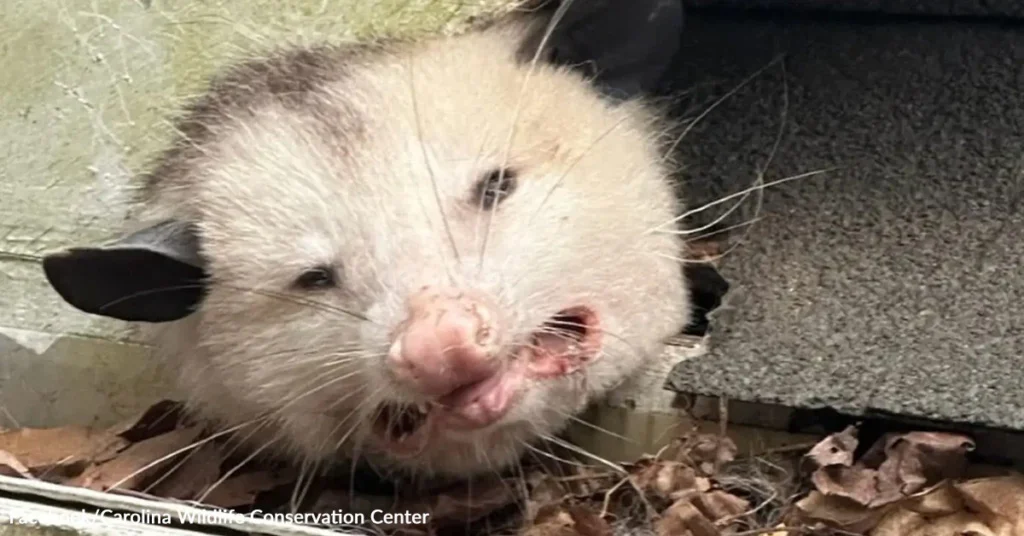
A Perilous Plight Comes to Light (Image Credits: Facebook)
The incident unfolded on February 19, when the Carolina Wildlife Conservation Center fielded the urgent report amid a hectic schedule of rescues. The opossum’s head protruded helplessly, her body pinned behind the roof’s edge. She breathed steadily but could not budge, a situation that demanded immediate action to prevent dehydration or injury.
Homeowners refrained from risky interventions themselves, wisely reaching out to professionals. This decision proved crucial, as amateur attempts might have worsened the entrapment. The center dispatched help without delay, underscoring the value of public vigilance in wildlife encounters.
Expert Hands Free the Trapped Mother
Sonia, a transporter for the center, arrived with her father to assess the scene. They approached with care, evaluating the tight space around the opossum’s neck. With gentle precision, they loosened the hold and eased her free, minimizing any risk to her spine or airways.
The team transported the opossum straight to headquarters for after-hours evaluation. Staff noted swelling from the pressure but confirmed she remained stable. This phase highlighted the coordination between volunteers and dedicated caregivers in time-sensitive operations.
Unexpected Joeys Reveal a Bigger Save
Standard protocol guided the next steps: a thorough check of the opossum’s pouch. As marsupials, females carry their young this way, often unnoticed at first glance. Inside waited a litter of tiny joeys, healthy and attached, turning a solo rescue into salvation for the whole family.
The discovery emphasized a key practice in opossum handling. Even with deceased adults, experts urge inspecting pouches, as joeys can survive short separations. The center encouraged bystanders to embrace this role, quoting their call to “be willing to be ‘the crazy person who stops to check opossum pouches.’”
Recovery Ahead and Community Lessons
At the facility, the mother received medication, rest, and close monitoring alongside her offspring. Her prognosis looked strong, with the family now in a safe haven for rehabilitation. Such outcomes reinforce the impact of swift, informed responses.
The event spotlighted opossums’ misunderstood role in ecosystems, from controlling pests to serving as nature’s cleanup crew. Homeowners and volunteers emerged as everyday heroes, bridging the gap between human spaces and wildlife needs.
- Report distressed animals to local experts rather than intervening alone.
- Recognize opossums as marsupials; always check pouches.
- Support centers like Carolina Wildlife Conservation Center through awareness and calls.
- Secure attics and roofs to prevent similar intrusions.
- Appreciate urban wildlife’s resilience and vulnerabilities.
Key Takeaways
- Quick homeowner action saved lives on February 19.
- Pouch checks uncovered joeys, averting total loss.
- Volunteers’ expertise ensured safe extraction and care.
This rescue reminds us how ordinary observations can spark extraordinary saves. Communities thrive when people step up for wildlife in their midst. What wildlife encounters have you witnessed? Share in the comments.