North Sumatra province – Indigenous Batak communities are pressing forward with efforts to recover thousands of hectares of ancestral land after the Indonesian government revoked operating permits from PT Toba Pulp Lestari and dozens of other companies implicated in environmental violations.
Floods Prompt Bold Government Action
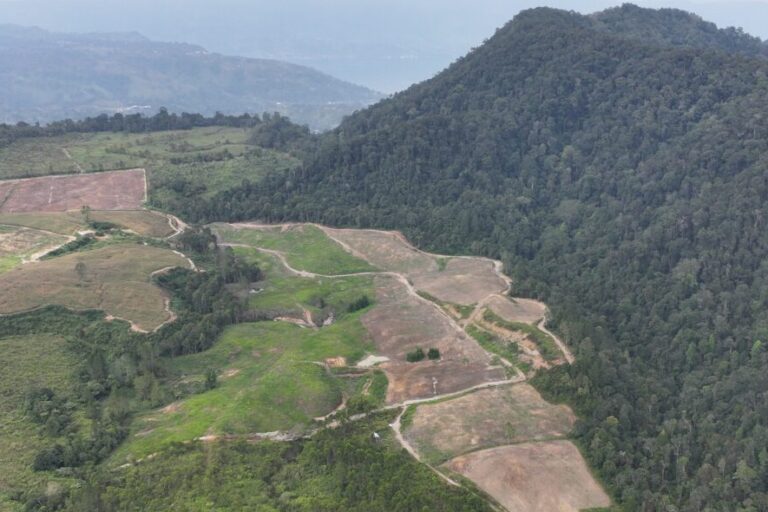
Floods Prompt Bold Government Action (Image Credits: Imgs.mongabay.com)
Deadly floods and landslides that struck Sumatra in November 2025 prompted authorities to act decisively. Officials blamed the disasters on breaches of forestry rules by companies like PT Toba Pulp Lestari, a pulpwood operator with a vast 167,927-hectare concession established in the 1980s. In January 2026, the government stripped the firm of its forest utilization permit, along with those held by 27 others.
Twenty-nine affected communities now seek the return of 37,219 hectares overlapping the concession. Some residents have already reoccupied portions of the territory, marking a tentative victory after years of tension. Sahala Pasaribu, 35-year-old head of Natinggir village, captured the sentiment: “We feel free to manage our own land without the intimidation we often faced.”
Pasaribu, who took over leadership following his father’s death in 2024, has started replanting with corn and vegetables on his village’s 1,496 hectares of customary land. Plans also include reviving a sacred forest long lost to eucalyptus plantations.
Decades of Displacement Fuel Determination
Families in villages like Sihaporas trace their roots back 11 generations, predating Indonesia’s independence in 1945. Mangitua Ambarita, the village head, demanded permanence: “TPL’s permit has been revoked, and it should be closed permanently, and our land returned.” His community, encompassing 2,000 hectares within the concession, has begun reoccupying the area.
In Dolok Parmonangan, Marinir Siallagan voiced persistent worries despite the revocation. Her village claims 851 hectares but uses only 15 for housing and farming. Security from the company lingered post-revocation, heightening fears. Her father endured a two-year prison sentence in 2024 for burning grass on disputed customary ground.
These stories highlight broader conflicts rooted in unconsulted land grabs. Customary forests, vital for water and spiritual life, fell to pulp production, displacing traditional practices.
State Management Plan Stirs Uncertainty
The government assigned the state investment agency Danantara to oversee the reclaimed concessions, spanning roughly 1 million hectares overall. Communities, however, fear this shift merely swaps one overseer for another. Pasaribu warned against moving “from the mouth of a tiger into the mouth of a crocodile.”
Some firms signal appeals, prolonging ambiguity. Community leaders met officials from environment and forestry ministries in February 2026 but received no firm commitments on customary rights. No responses came to inquiries from reporters.
Restoration Efforts Gain Momentum
NGOs like the Indigenous Peoples Alliance of the Archipelago (AMAN) Tano Batak and the Community Initiative Study and Development Group (KSPPM) rallied support. In mid-February, dozens of representatives convened to outline priorities:
- Reforest areas stripped for plantations.
- Expedite titling of customary lands.
- Verify indigenous status per ongoing processes.
- Invoke the 2012 Constitutional Court ruling excluding customary forests from state classification.
Jhontoni Tarihoran of AMAN Tano Batak insisted, “The revocation of the permit must be followed by the return of Indigenous peoples’ lands and the restoration of the damaged ecosystems.” Six communities secured 6,884 hectares and titles in 2022 under former President Joko Widodo.
Rocky Pasaribu of KSPPM emphasized releasing concessions from forest zones to honor court precedents.
Key Takeaways
- Permit revocations opened doors for 29 communities to pursue 37,219 hectares.
- Reforestation targets sacred forests destroyed by eucalyptus.
- Legal clarity remains essential to prevent renewed disputes.
Land reclamation offers more than territory – it promises revived ecosystems and cultural continuity for Batak people long sidelined by industry. Will authorities deliver lasting justice? Share your thoughts in the comments.