Forests in northeastern Gabon often appear pristine on satellite imagery, their dense green canopies signaling untouched wilderness across the Congo Basin. Yet beneath this canopy lies a rich tapestry of human history that global maps frequently overlook. The Massaha community recently turned this oversight into an advantage, using their own detailed mapping to defend an ancestral forest from industrial logging and secure its future protection.
The Myth of the Empty Wilderness
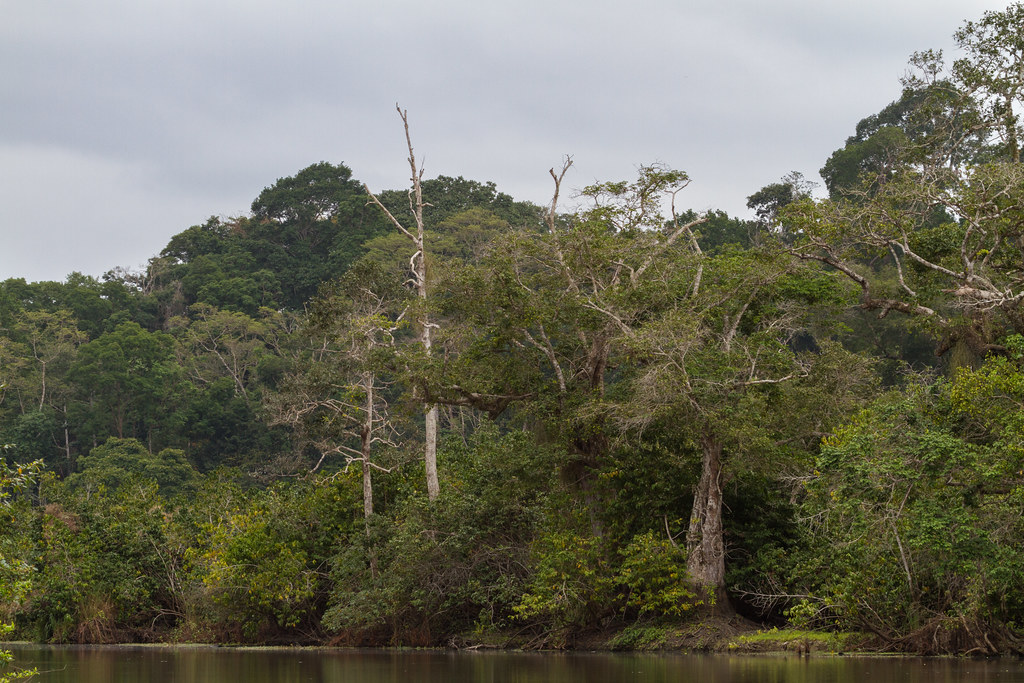
The Myth of the Empty Wilderness (Image Credits: Flickr)
Global conservation datasets labeled large swaths of northeastern Gabon as intact forest landscapes, free from significant human impact. These classifications relied heavily on satellite data that highlighted industrial disturbances but missed subtler signs of occupation.
Residents of Massaha village knew otherwise. Their forest, known as Ibola Dja Bana Ba Massaha, served generations through hunting, fishing, and farming. Sacred lakes, ritual sites, and remnants of old villages marked the landscape, elements invisible to remote sensing tools.
Colonial records from the late 19th to mid-20th century compounded the issue. Administrators focused on roads and resources, noting only a few nearby settlements while ignoring interior villages. This legacy shaped modern views, portraying the area as empty space ripe for concessions.
Crafting a Map from Memory and Footsteps
Massaha residents took matters into their own hands with participatory mapping. Elders projected satellite images onto walls and recounted oral histories of forgotten sites. Community members then trekked through the forest with GPS devices to verify locations.
The effort covered about 11,800 hectares and uncovered 15 ancestral villages, far more than colonial maps showed. Sacred clearings and wildlife-rich swamps, called bais, also emerged on the biocultural map. These features highlighted a deep-rooted presence that official records had erased.
- 15 ancestral villages documented, versus a handful on colonial charts.
- Sacred sites and ritual lakes absent from global datasets.
- Traditional fishing spots tied to customs like etoubili, using large wooden canoes.
- Forest boundaries defined by cultural memory, not just natural features.
- Patrol routes revealing logging roads missed by satellite alerts.
This map became evidence of enduring stewardship, challenging the notion of an uninhabited wilderness.
Patrols, Protests, and Government Response
Villagers organized patrols that spotted logging operations in July 2023, activities undetected by tools like Global Forest Watch from 2020 to early 2025. They submitted formal requests to declassify the concession, arguing for recognition as a community-managed area.
Independent journalism amplified their voice starting in March 2021, drawing international scrutiny to the Chinese company’s encroachment. Pressure mounted, culminating in a visit by Gabon’s environment minister in March 2022. He witnessed the mapped sites firsthand, including village traces and sacred groves.
The government acted swiftly. Officials halted operations and ordered the loggers to withdraw from the contested zone. This intervention preserved the forest and sparked talks on territories of life, community-led conservation aligning with global goals to protect 30% of lands by 2030.
A Model for Blending Local Insight with Global Tools
The Massaha case exposed limitations in satellite-dependent monitoring. While powerful for broad trends, such systems overlook understory activities and cultural layers. Community mapping filled these gaps, proving local knowledge as vital as technology.
| Mapping Approach | Strengths | Limitations |
|---|---|---|
| Global Satellites (IFLs) | Detects large-scale change | Misses cultural sites, small logging |
| Colonial Records | Historical baselines | Ignored indigenous settlements |
| Community Biocultural | Captures history, meaning | Requires local effort |
Researchers detailed these findings in a 2026 study, underscoring how such efforts reshape conservation narratives. The forest now stands as a precedent in Gabon, where communities push for rights under evolving forest codes.
Key Takeaways
- Local mapping revealed overlooked heritage, halting a logging concession.
- Journalism bridged community pleas to policymakers.
- Blending stories with satellites strengthens protection worldwide.
Massaha’s forest endures not as blank green on a screen, but as a living archive of resilience. Elders unearth ceremonial canoes from river mud, symbols of unbroken ties to the land. This victory reminds conservationists that true stewardship often starts on the ground. What do you think about blending local knowledge with tech in forest protection? Tell us in the comments.