Picture a dinosaur. Go on, close your eyes for a second. Chances are you’re imagining something scaly, possibly roaring, perhaps dragging its tail behind it through a swamp. Now here’s the uncomfortable truth: that image is probably wrong. Spectacularly, fascinatingly wrong. And the story of how we got from that creature to the real thing is one of the most thrilling intellectual journeys in the history of science.
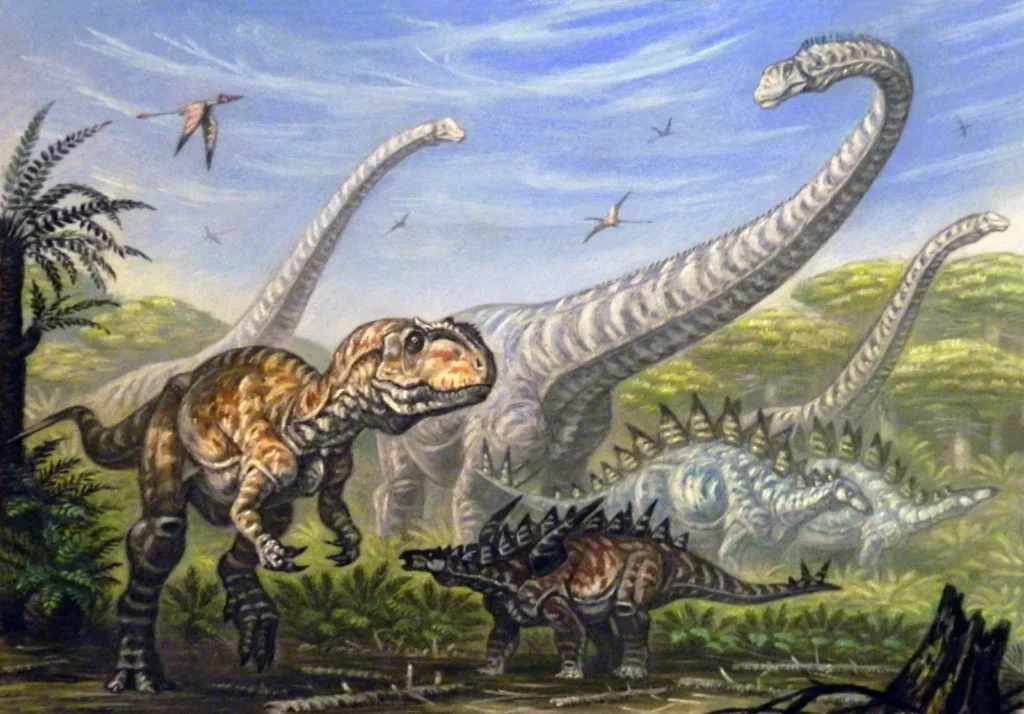
Paleoart sits right at the intersection of fossil bone and human imagination, a discipline where brush strokes and scientific data collaborate to bring the ancient dead back to life. It has shaped public perception more powerfully than almost any textbook, and it has changed radically over the past two centuries. Let’s dive into how that transformation unfolded.
The Very First Attempts: When Fossils Were Monsters
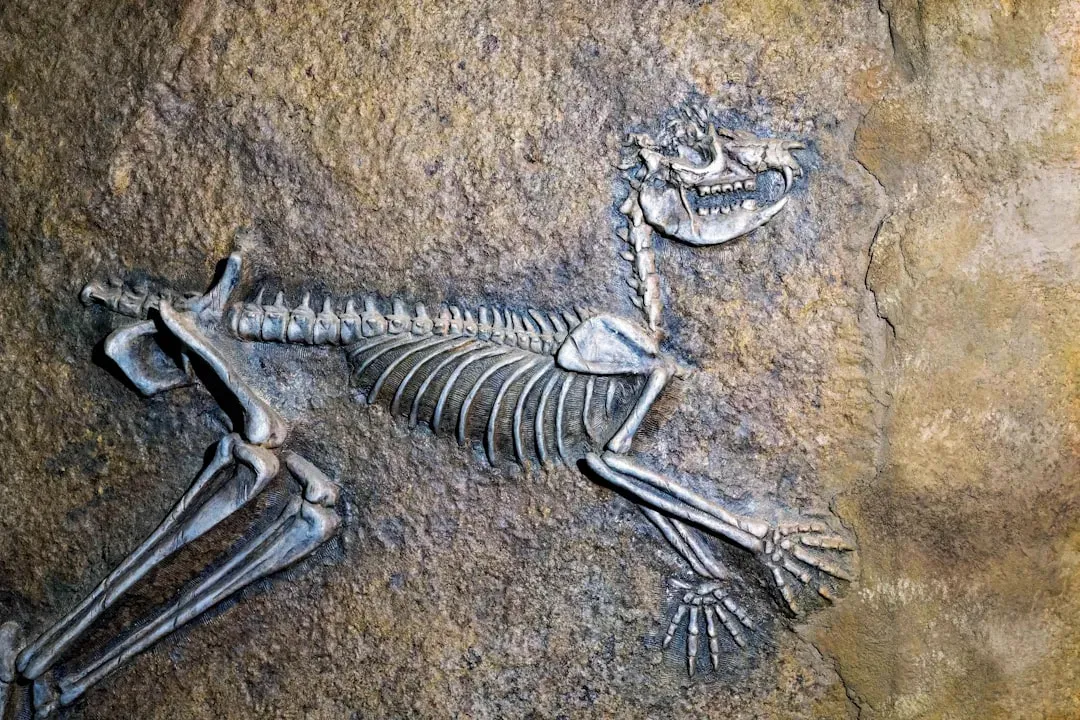
You might be surprised to learn just how old the impulse to visualize prehistoric life actually is. Some depictions can date back centuries, with 600-year-old rock art believed to depict dinosaur footprints known from Flag Point in Utah. Long before formal science had a name for it, people were trying to make sense of the enormous bones turning up in quarries and cliffs, and the explanations they reached were, honestly, wilder than anything a paleoartist draws today.
As the field was in its first years, before Darwin’s theory of evolution was established, dinosaurs were portrayed as hellish creatures that were meant to be wiped out via God’s wrath. Think about that for a moment. The framework for interpreting these bones wasn’t biology. It was theology. Mythology also played a role, as Gottfried Leibniz depicted disparate fossils as the remains of a unicorn in the 1660s. You almost can’t blame them. Without the context of deep time or evolution, a massive femur really does look like it might belong to something biblical.
The Birth of Scientifically Informed Paleoart in the 1800s
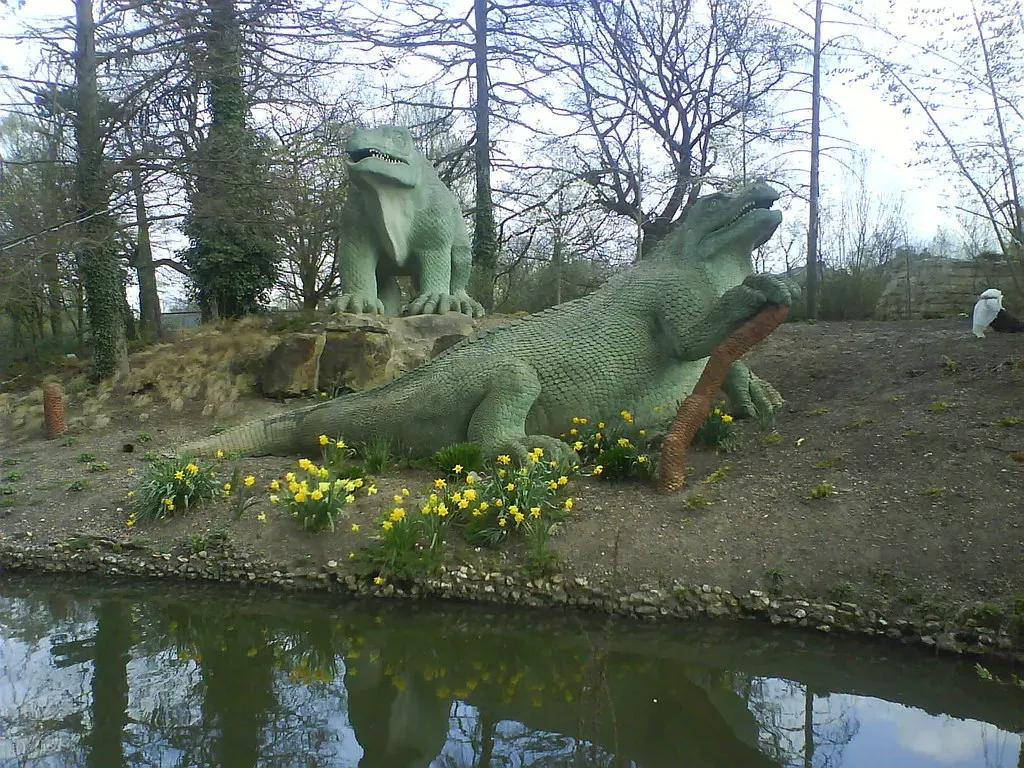
The 19th century is where things got genuinely serious. Paleoart emerged as a distinct genre of art with unambiguous scientific basis around the beginning of the 19th century, dovetailing with the emergence of paleontology as a distinct scientific discipline. These early paleoartists restored fossil material, musculature, life appearance, and habitat of prehistoric animals based on the limited scientific understanding of the day. It wasn’t perfect, but it was a real start.
The first scientifically-minded paleoart is usually said to be Henry De la Beche’s Duria Antiquior from 1830, a depiction of a marine ecosystem during the Jurassic period, based on fossils found by Mary Anning. Not long after, Benjamin Waterhouse Hawkins further popularized paleoart in the mid-19th century by sculpting life-sized models of dinosaurs for London’s Crystal Palace. However, many of these early depictions, heavily influenced by contemporary scientific beliefs, portrayed dinosaurs as slow, sprawling, reptilian giants. Those Crystal Palace statues still stand today, and honestly, seeing them in person is a strange and wonderful experience, like visiting a confident mistake frozen in concrete.
Charles Knight and the Age of the Majestic Monster
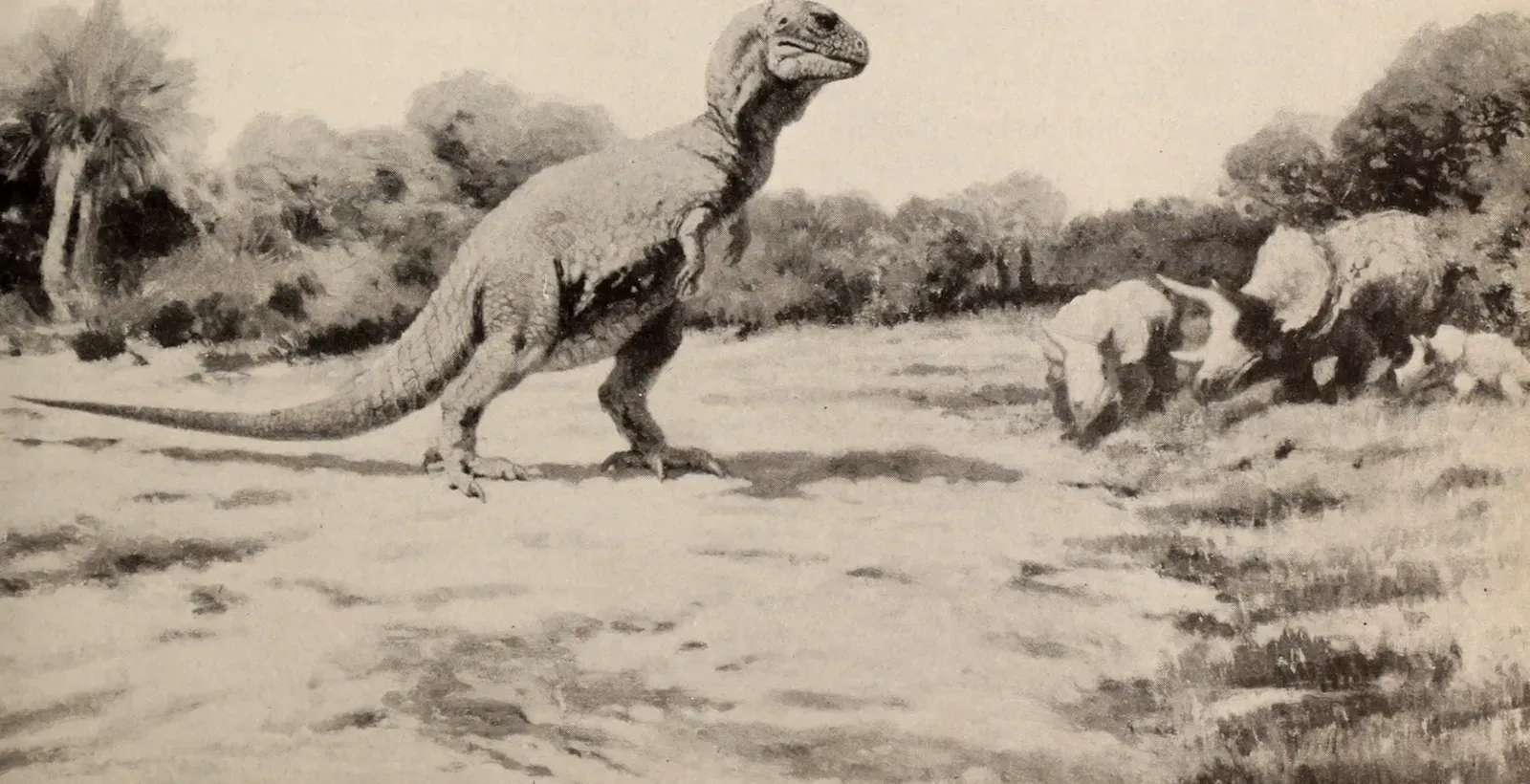
Here’s where paleoart gets its first genuine superstar. Paleoartist Charles R. Knight, the first to depict dinosaurs as active animals, dominated the paleoart landscape through the early 1900s. Knight was a genuinely gifted painter, and his vision of prehistoric life was so compelling and so widely reproduced that it essentially became the dinosaur in the popular imagination for decades. Think of it like the way a single iconic photograph can define how a generation understands an event.
One of Knight’s most famous pieces was his Leaping Laelaps, which he produced for the American Museum of Natural History in 1897. This painting was one of the few works of paleoart produced before 1960 to depict dinosaurs as active, fast-moving creatures. Yet even Knight’s brilliance had its limits. While Charles Knight’s palaeoart likely helped to set the scene, his depictions weren’t always accurate, with muscles and proportions unlike those that the fossils suggested. Despite this, many of these drawings have since become iconic, even if their message isn’t entirely helpful. The power of a great image, it turns out, can outlast its accuracy by decades.
The Dinosaur Renaissance: Everything You Knew Was Wrong
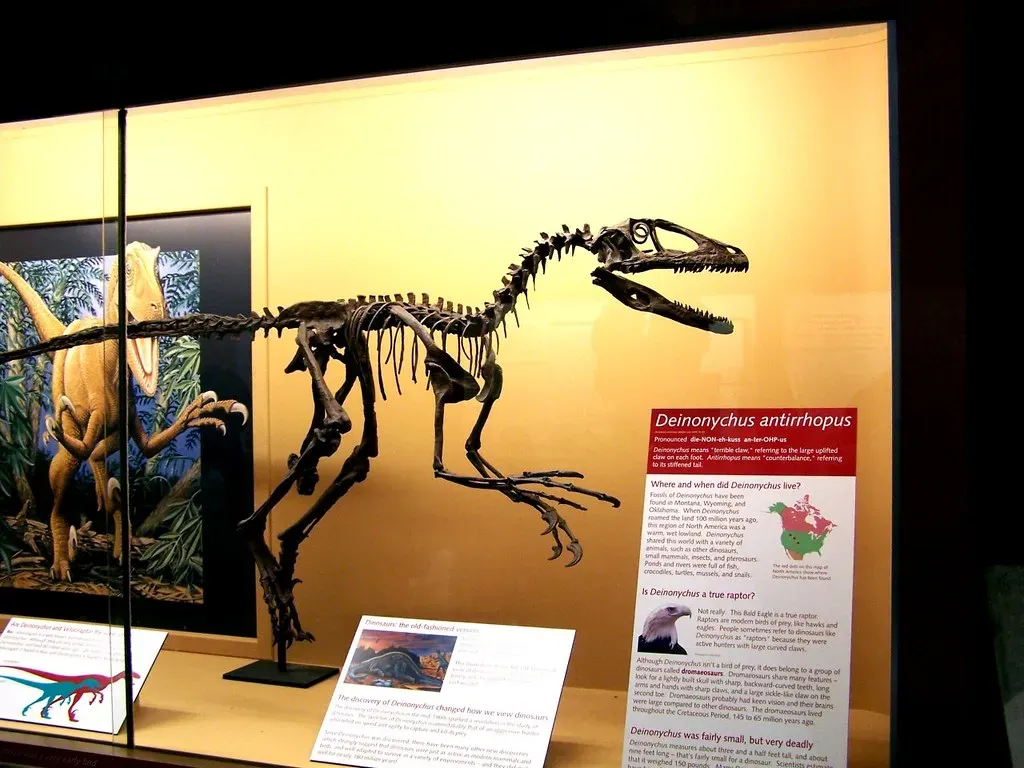
Now we arrive at one of the most genuinely exciting pivots in the history of science and art combined. The “Dinosaur Renaissance” refers to a key episode in the recent history of the scientific study of dinosaurs, which occurred between the 1960s and the 1980s. Its beginnings are associated with the discovery made in 1964 by John H. Ostrom of fossils belonging to a dinosaur baptized Deinonychus, based on which Ostrom described an agile animal, in clear contrast to the then consensual understanding of dinosaurs as slow reptiles. One discovery. One animal. An entire field turned upside down.
The dinosaur renaissance changed not only scientific ideas about dinosaurs, but also their portrayal by artists. Bakker, himself a talented artist, often illustrated his ideas in a lively fashion. Indeed, Bakker’s illustration of Deinonychus, made for Ostrom’s 1969 description, has become one of the most recognisable and iconic of dinosaur restorations. During the 1970s, restorations of dinosaurs shifted from being lizard-like to being more mammal- and bird-like. Artists started to show dinosaurs in more active poses and incorporated newer theories of dinosaur locomotion and behaviour. It was, genuinely, a revolution. Not just in science. In art. In the public imagination.
Jurassic Park and the Moment Paleoart Went Global
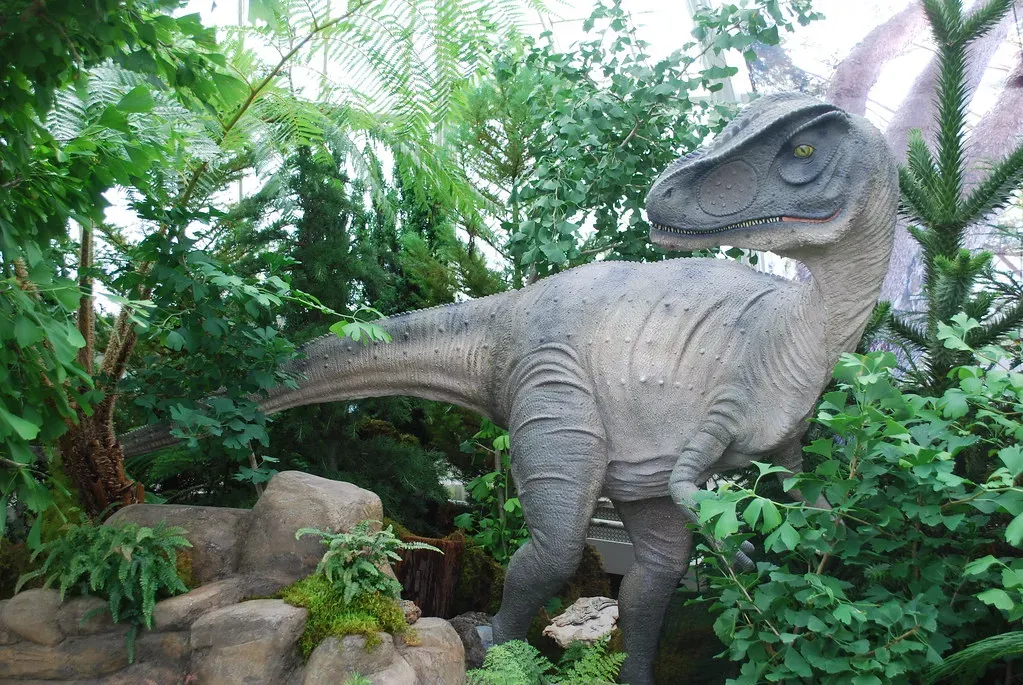
Let’s be real. For most people alive today, their entire foundational image of what a dinosaur looks, sounds, and moves like came from one movie released in 1993. One of the most significant moments in paleoart history came with the release of Jurassic Park. Steven Spielberg’s blockbuster film, based on Michael Crichton’s novel, introduced the public to dinosaurs depicted as fast, intelligent, and deadly hunters. The film’s impact on popular perception was enormous, arguably unprecedented for any single piece of media relating to science.
Michael Crichton, the writer of the Jurassic Park novel on which the movie was based, had been swept up in the “Dinosaur Renaissance” sparked by Ostrom’s discovery and the work of one of his students, Robert Bakker, and the paleoartist Greg Paul in the 1970s and 1980s. There’s a beautiful kind of chain reaction there. One fossil in Montana inspires a scientist, who inspires an artist, who inspires a novelist, who inspires a filmmaker who then inspires hundreds of millions of viewers worldwide. Ostrom’s work on Deinonychus influenced the “Velociraptor” portrayal in the Jurassic Park novel, and reflecting our evolving understanding, the sequels featured more feathered dinosaurs.
The Feathered Revolution: When Dinosaurs Got Fluffy
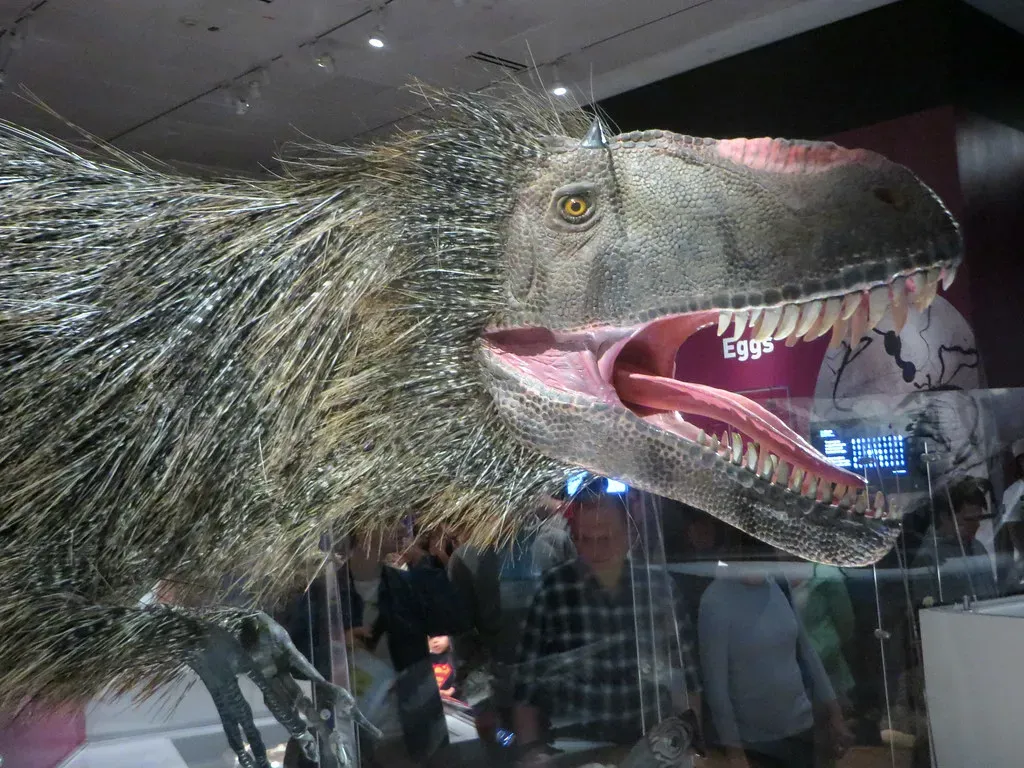
If the Dinosaur Renaissance was the moment we realized dinosaurs were active, the discovery of feathered fossils was the moment we realized they were practically birds. Starting from the 1990s, major discoveries of exceptionally preserved fossils contributed to research on dinosaur soft tissues. Chiefly among these were the rocks that produced the Jehol and Yanliao biotas of northeastern China, from which hundreds of dinosaur specimens bearing impressions of feather-like structures have been described. This is enormous. We’re not talking about one or two lucky specimens. Hundreds of them.
Until recently, palaeontologists had no way to know the colours and colour patterns that were displayed by ancient animals, and they thought they never would. Then, in 2010, two teams of researchers showed how to do it: exceptional fossils from China provided evidence of original colours deep in the structure of their preserved feathers. Think about what that means. You’re looking at a painting of a dinosaur and the colors you see aren’t guesses. They’re reconstructed from actual chemical pigment signatures preserved in stone for millions of years. Some paleoartistic reconstructions now show a furry T. rex, with researchers saying it’s likely that at least at one point in their lives, they probably had bodies that were partially or completely covered in feathers.
The “All Yesterdays” Movement and the Future of Paleoart
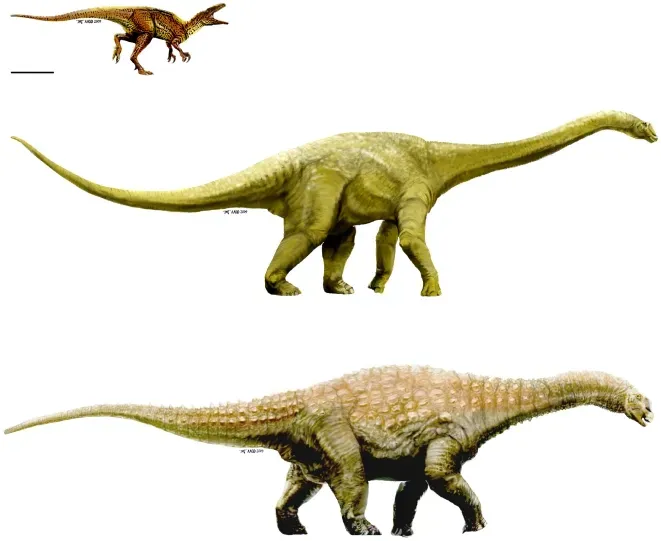
Even after all those revolutions, there was still one more conversation the paleoart community needed to have with itself. All Yesterdays: Unique and Speculative Views of Dinosaurs and Other Prehistoric Animals is a 2012 art book on the palaeoartistic reconstruction of dinosaurs and other extinct animals by John Conway, C. M. Kosemen and Darren Naish. A central tenet of the book concerns the fact that many dinosaur reconstructions are outdated, overly conservative, and inconsistent with the variation observed in modern animals. The book essentially argued that even modern paleoart had fallen into clichés. Dinosaurs were always fighting, always roaring, always showing teeth. Sound familiar?
This change of landscape led to a stronger emphasis on accuracy, novelty, and a focus on depicting prehistoric creatures as real animals that resemble living animals in their appearance, behavior and diversity. The “modern” age of paleoart is characterized by this focus on accuracy and diversity in style and depiction, as well as by the rise of digital art and a greater access to scientific resources and to a sprawling scientific and artistic community made possible by the Internet. Today, paleoart has reached new levels of accuracy thanks to collaborations between artists and paleontologists. Advances in fossil analysis, CT scanning, and biomechanical modeling have allowed for highly detailed reconstructions of prehistoric life. From religious monsters to feathered, behaviorally complex animals reconstructed with electron microscopes and computer modeling. That’s quite a journey.
Conclusion: The Most Honest Art Form in the World
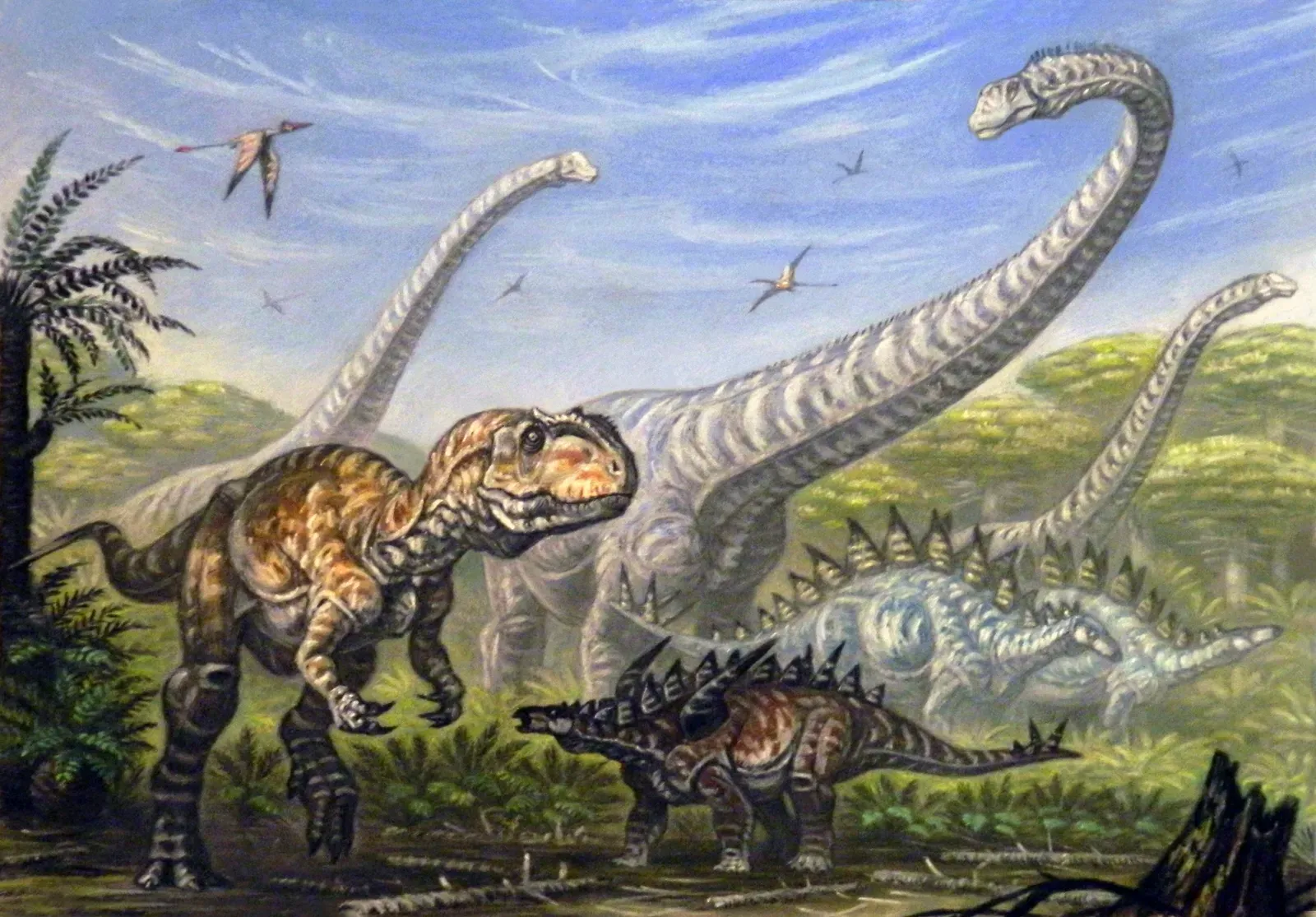
Paleoart is perhaps unique among all artistic disciplines because it wears its own limitations on its sleeve. Every image is, by its very nature, a best guess. A beautifully informed, scientifically rigorous, collaboratively constructed best guess, but a guess nonetheless. As a field, paleoart has always been challenged as unscientific, its works necessarily relying on a degree of speculation. As an artistic venture, it remains underappreciated, its works united by subject matter, not style or medium, and thus difficult to categorize. Short of a time machine, these paintings and sculptures are our best understanding of the ancient past, how dinosaurs and other extinct creatures actually lived and behaved during their lifetimes.
What paleoart teaches you, if you follow its history closely, is that science is not a destination. It is a process. Every confident illustration from every era has eventually needed updating. The Crystal Palace monsters. Knight’s sluggish giants. Even the featherless raptors of 1993. Each was the best available truth of its moment. Science, especially in dinosaur paleontology, is a continuous journey where each new discovery helps reconstruct ancient life and deepen our understanding. The dinosaur you imagine today will probably look outdated to someone reading this in fifty years. Honestly? That’s not a flaw of the science. That’s the whole point. So here’s a question worth sitting with: of everything you believe to be true right now about the prehistoric past, what do you think future generations will prove completely wrong?