Sixty-six million years ago, something happened so catastrophically violent that it reshaped all life on Earth in an instant. You’ve probably heard the basic story: a giant rock from space slammed into Mexico and wiped out the dinosaurs. Simple, right? Honestly, it’s anything but. The more researchers dig, drill, and analyze, the more they realize how layered and terrifying this event truly was.
What’s fascinating is that we keep uncovering new details that rewrite what we thought we understood. Every drill core pulled from beneath the Yucatán seafloor seems to deliver another shocking twist. So if you think you already know the full story of Chicxulub, get ready to think again. Let’s dive in.
The Rock That Changed Everything: What Actually Hit Earth
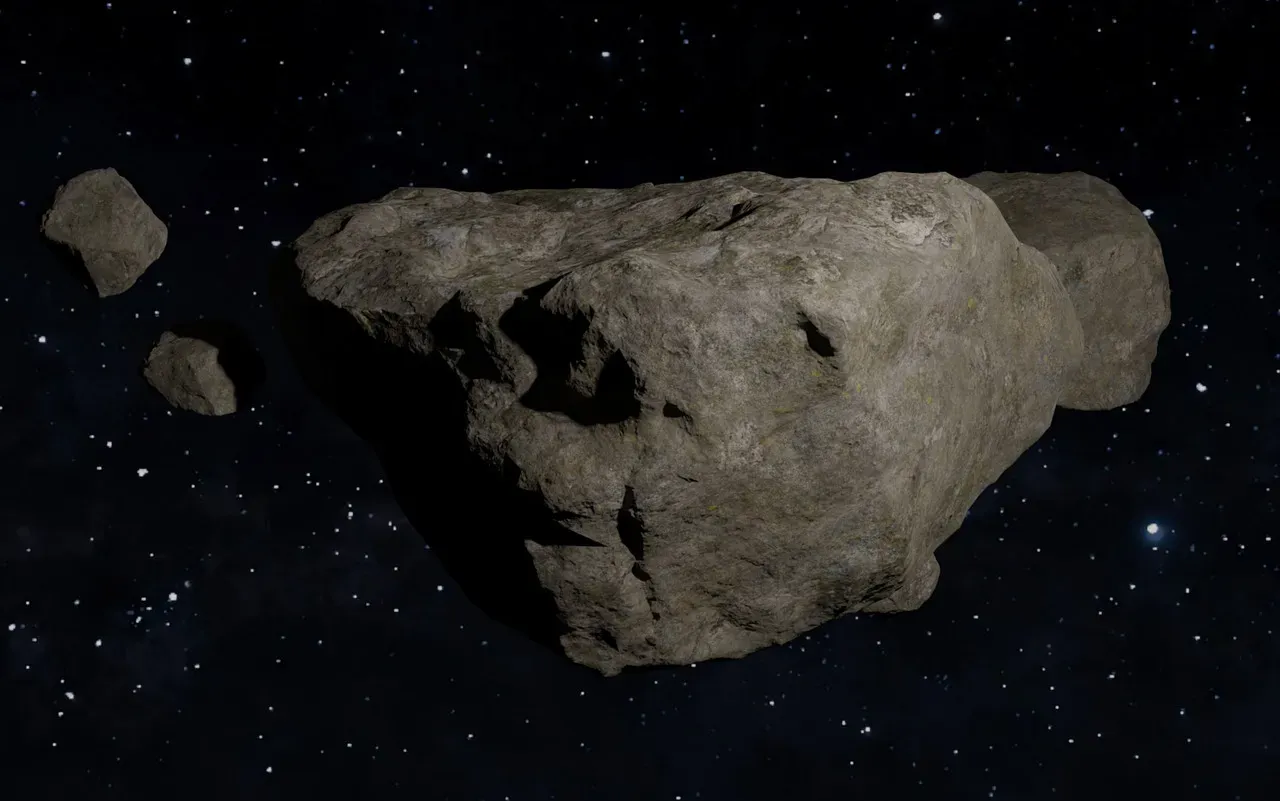
Here’s the thing about the Chicxulub impactor – its size alone should stop you in your tracks. An estimated 12 kilometer diameter carbonaceous chondrite struck a sloping marine target of Mesozoic carbonate and evaporite sediments overlying pre-Mesozoic granitic crust. To put that in perspective, you’re imagining a rock roughly the height of a mountain range hurtling at extraordinary speed directly into a shallow ocean.
One balmy spring day 66 million years ago, a space rock roughly 100 times the size of the International Space Station hurtled into what is now the southeastern tip of Mexico, vaporizing massive amounts of seawater and sulfur-rich marine rocks, creating a cloud of dust and aerosols that blanketed Earth and obscured the Sun. The result was a crater so immense that with a diameter of approximately 200 kilometers, Chicxulub is one of the largest and best preserved craters on Earth. That fact still gives scientists chills today.
The Immediate Inferno: Shockwaves, Firestorms, and Towering Walls of Water
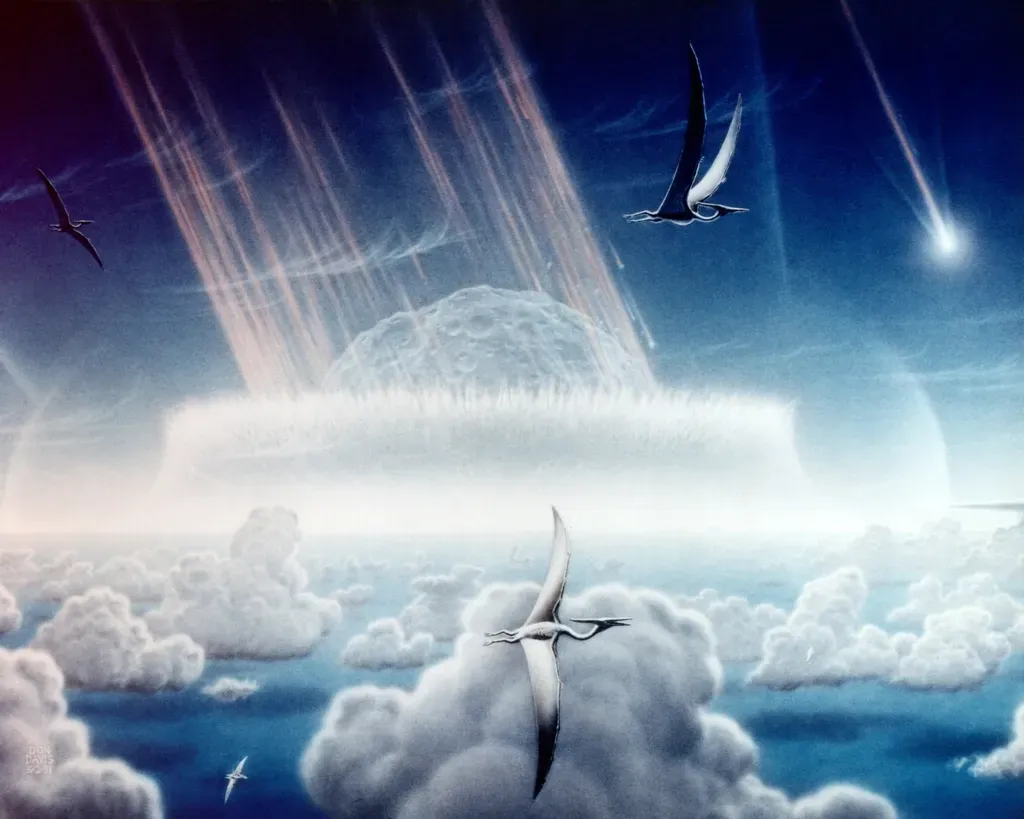
You might think the worst thing about an asteroid strike is the initial explosion. Think again. Such an impact would have instantly caused devastating shock waves, a large heat pulse, and tsunamis around the globe. The sequence of destruction that followed in those first minutes was almost incomprehensibly brutal.
The Chicxulub impact event was roughly a 100 million megaton blast that devastated the Gulf of Mexico region, generating a core of superheated plasma in excess of 10,000 degrees – and although that thermal pulse would have been relatively short-lived, lasting a handful of minutes, it would have been lethal for all nearby life. Then came the tsunamis. The Chicxulub asteroid impact produced a global tsunami roughly 30,000 times more energetic than any modern-day tsunami produced by earthquakes. Imagine every coastline on Earth being hammered simultaneously, and you start to grasp the scale.
The Sky Goes Dark: How Dust, Soot, and Aerosols Killed the Sun
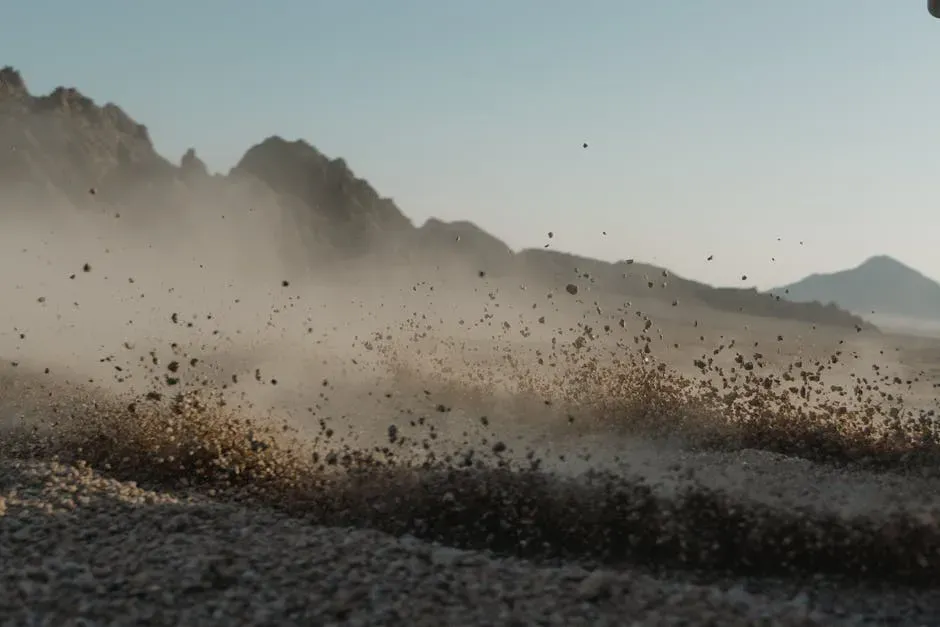
This is where things get truly chilling. The immediate destruction was horrific, sure, but what followed in the weeks and months afterward was arguably even more deadly for the long-term survival of life. Several thousand gigatonnes of asteroidal and target material were ejected at velocities exceeding 5 kilometres per second, forming a fast-moving cloud that transported dust, soot and sulfate aerosols around the Earth within hours.
Target rock-derived soot immediately contributed to global cooling and darkening that curtailed photosynthesis and caused widespread extinction, while PAH evidence indicates wildfires were present but less influential on global climate and extinction. Models suggest this was devastating on a scale hard to even fathom. The climatic forcing of this impact winter was about 100 times more potent than that of the 1991 eruption of Mount Pinatubo, with the onset of global darkness reaching its maximum in only a few weeks and likely lasting upwards of two years, while freezing temperatures probably lasted for at least three years.
The Sulfur Surprise: New Science Is Rewriting the Killer Recipe
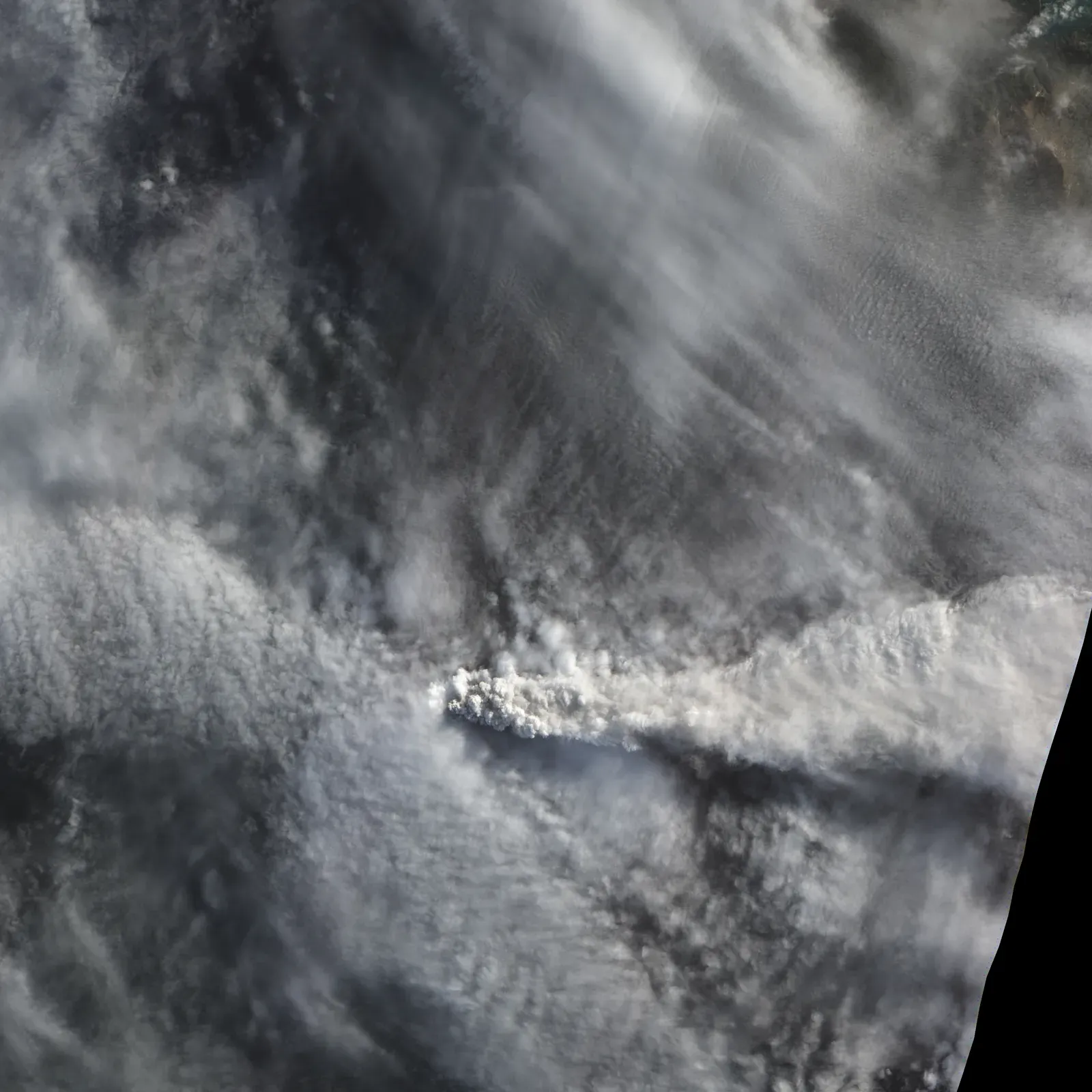
Instrument(s): EO-1 – ALIAura – OMI, Public domain)
For decades, scientists assumed that an enormous release of sulfur gases was the primary engine driving the post-impact winter and mass extinction. Recent research, though, has delivered a genuinely surprising plot twist. The average amount of sulfur released obtained through empirical estimates is roughly five times lower than previous numerical estimates, and this lower mass of sulfur released may indicate a less prominent role for sulfur emission, leading to a milder impact winter with key implications for species survival during the first years following the impact.
Still, sulfur’s role was far from insignificant. Research provides direct evidence for a long-hypothesized primary role for sulfate aerosols in the postimpact winter and global mass extinction. The difference is about nuance and proportion. Because the Chicxulub impact occurred in a region with rocks composed of the mineral anhydrite, a calcium sulfate mineral, sulfur vapor was also injected into the stratosphere, and that sulfur, reacting with water vapor, produced sulfate aerosols and eventually sulfuric acid rain. Getting those proportions right matters enormously for understanding exactly which species died and which managed to cling on.
Ocean Collapse and Tectonic Ripples: The Hidden Layers of Catastrophe
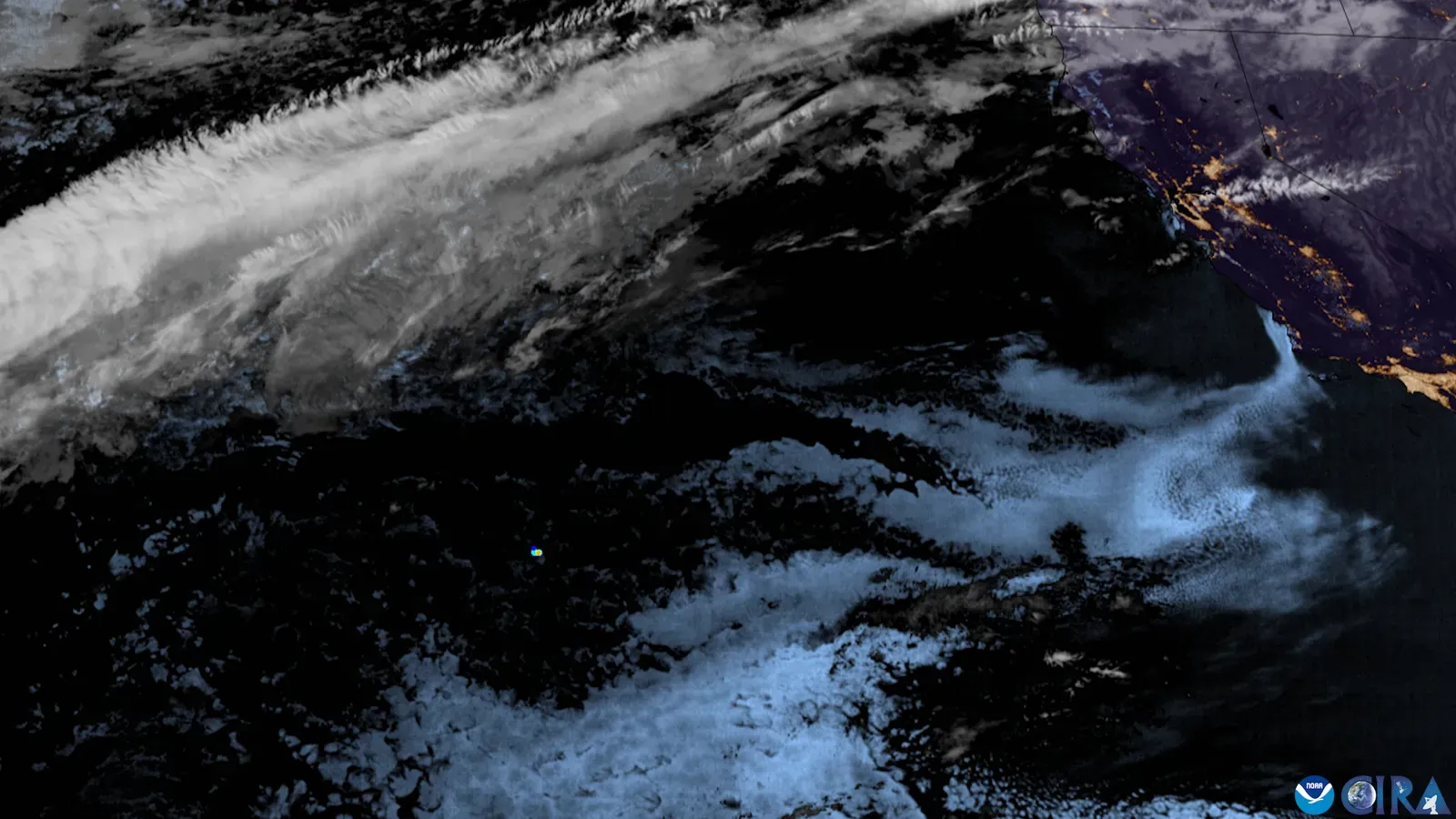
Most people focus on the sky turning dark when they think about what killed the dinosaurs. Yet below the waves, an equally devastating story was unfolding. The release of high quantities of dust, debris, and gases resulted in a prolonged cooling of Earth’s surface, low light levels, and ocean acidification that decimated primary producers including phytoplankton and algae, as well as those species reliant upon them. Take away the base of the ocean food chain, and everything above it collapses like a tower of cards.
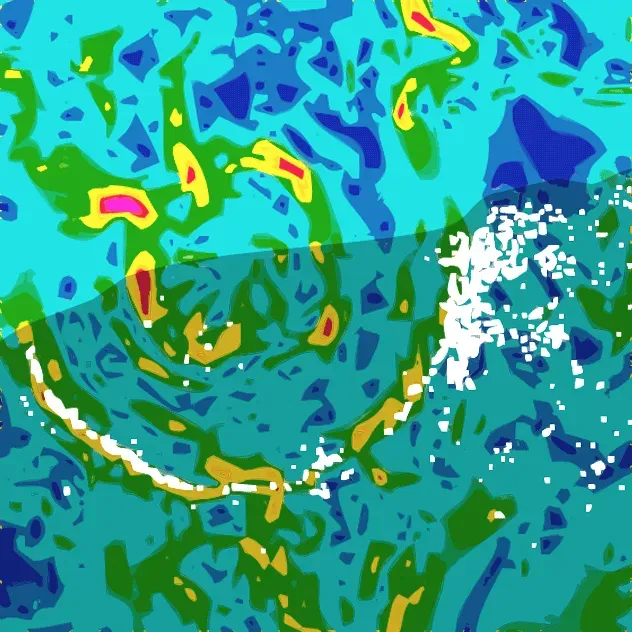
It turns out the devastation may have reached even deeper than the ocean surface. The Chicxulub asteroid triggered global catastrophic environmental changes and mass extinction, and while the contributions of this event towards changes in plate and plume geodynamics are not fully understood, geological observations indicate that the impact marked a tectonic turning point in the behavior of mantle plume and plate motion in the Caribbean region and worldwide. In other words, this single event may have literally shifted the ground beneath the continents. Large asteroid impacts, such as the Chicxulub collision, could trigger cascading effects sufficient to disrupt and significantly modify plate geodynamics. That’s a level of consequence that most of us never even considered.
Life Fights Back: The Astonishing Speed of Recovery
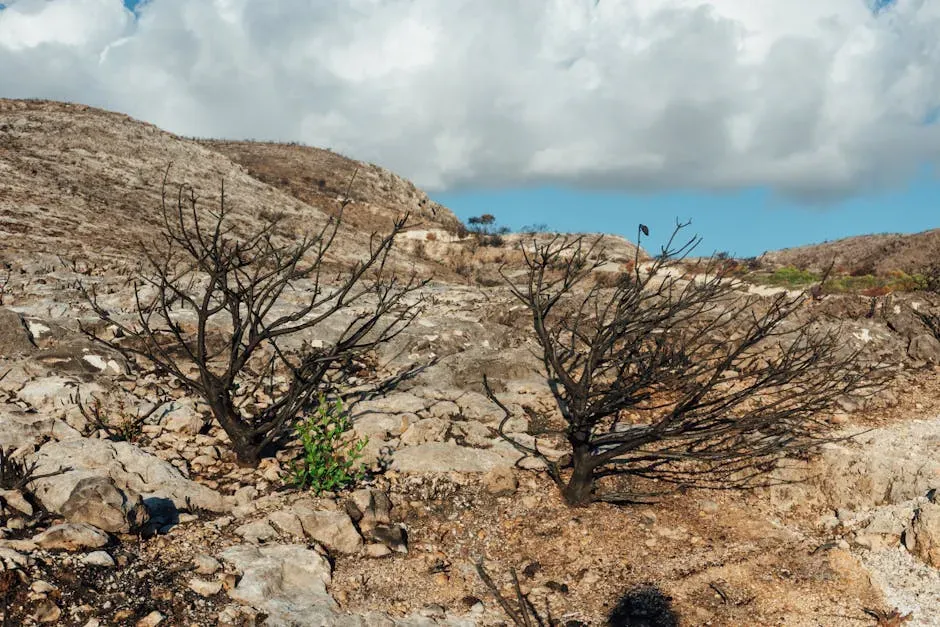
After all of that destruction, you might assume that Earth took millions of years to pick itself back up. Here’s where the story takes an inspiring turn. The asteroid that struck the Earth 66 million years ago devastated life across the planet, wiping out the dinosaurs and other organisms in a hail of fire and catastrophic climate change, but new research shows that it also set the stage for life to rebound astonishingly quickly – with new species of plankton appearing fewer than 2,000 years after the world-altering event.
I know that sounds crazy, but it gets even more impressive. Between 10 and 20 new species of foraminifera appeared within roughly 6,000 years of the impact, although paleontologists still debate exactly which fossils represent distinct species. Meanwhile, beneath the seafloor at the crater site itself, something equally remarkable was happening. A hydrothermal system created by the asteroid impact and its melt sheet buried beneath the seafloor likely played a role in recovery and sustenance of life for hundreds of thousands of years. The very catastrophe that killed the world may have also lit a pilot light for its renewal. Nature, it seems, is absolutely relentless.
Conclusion: A Catastrophe That Keeps Revealing Itself
What we now understand about the Chicxulub impact is richer, stranger, and more layered than any single textbook chapter could ever capture. You’ve learned here about the shockwaves, the planet-darkening clouds, the sulfur riddle, the collapsing oceans, the warped tectonics, and the stunning speed of life’s comeback. Each discovery reshapes the picture just a little more.
What’s remarkable is that scientists are still drilling, still analyzing, still finding surprises buried in 66-million-year-old rock. The full story of what Chicxulub truly did to our planet is still being written, piece by painstaking piece. Perhaps the most humbling takeaway is this: a single moment in time, lasting mere seconds when the rock hit, still keeps scientists busy and astonished more than four decades after the crater was first identified. What do you think – which part of this chain of events surprises you most? Tell us in the comments.