North America – Approximately 76 million years ago, vast coastal plains teemed with life during the Late Cretaceous. Among the giants roaming these landscapes stood Parasaurolophus, a distinctive hadrosaur whose elongated crest and robust build captured scientists’ attention. Fossils unearthed in Canada and New Mexico have provided crucial insights into this dinosaur’s daily existence, revealing adaptations that enabled it to thrive amid challenging environments and formidable threats.
Fossils Unlock Ancient Secrets
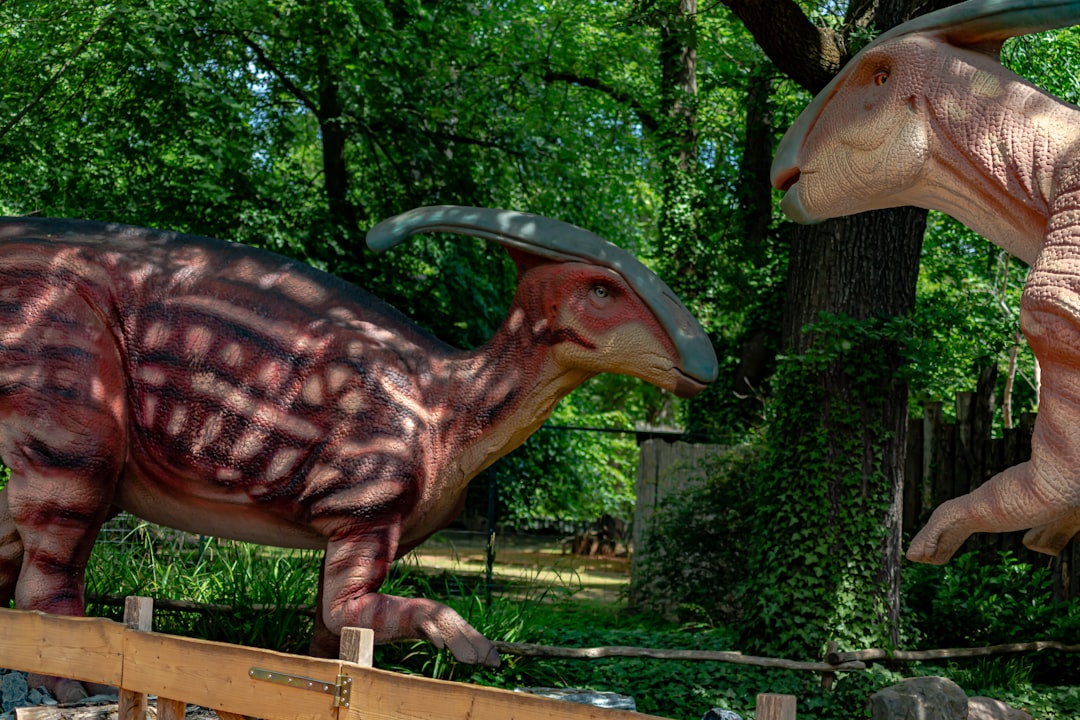
Fossils Unlock Ancient Secrets (Image Credits: Unsplash)
Discoveries spanning decades have painted a clearer picture of Parasaurolophus. In Alberta, Canada, the first specimens emerged from the Belly River Formation in 1920, naming Parasaurolophus walkeri. New Mexico yielded additional treasures, including Parasaurolophus tubicen from the Fruitland Formation in 1931 and Parasaurolophus cyrtocristatus noted in 1961.
A particularly well-preserved skull found in 2017 within New Mexico’s Bisti/De-Na-Zin Wilderness marked the second such discovery for P. cyrtocristatus in nearly a century. This find illuminated the crest’s development, showing how it expanded and curved backward as the dinosaur matured. Researchers noted its potential for vibrant colors, suggesting roles beyond mere structure.
A Plant-Powered Diet
Parasaurolophus sustained itself as a dedicated herbivore, relying on North America’s abundant vegetation. Its broad, duck-like beak sheared tough plants such as ferns, evergreens, twigs, and pine needles from ground level up to about 4 meters high. Cheek-like structures held foliage in place during processing.
Hundreds of teeth arranged in complex batteries performed the heavy lifting. These continually replaced structures ground fibrous material through a chewing motion, enabling the dinosaur to consume vast quantities daily. Such efficiency supported its massive frame, which stretched up to 10 meters long and weighed several tons.
Agile on Land: Bipedal and Quadrupedal Prowess
Mobility defined Parasaurolophus’ success in diverse terrains. It shifted seamlessly between quadrupedal and bipedal gaits. While foraging low vegetation in grasslands or forests, the dinosaur lowered itself onto all fours, conserving energy and accessing plants close to the ground.
Danger prompted a switch to hind legs alone. This posture allowed bursts of speed across open plains, essential for evasion. Powerful hind limbs propelled the adult forward, while a stiffened tail provided balance during rapid maneuvers. Such versatility suited both routine travel and urgent flights.
- Quadrupedal stance for steady, low browsing.
- Bipedal sprinting for high-speed escapes.
- Tail stabilization during turns and accelerations.
- Energy-efficient shifts between modes.
The Crest: A Tool for Communication
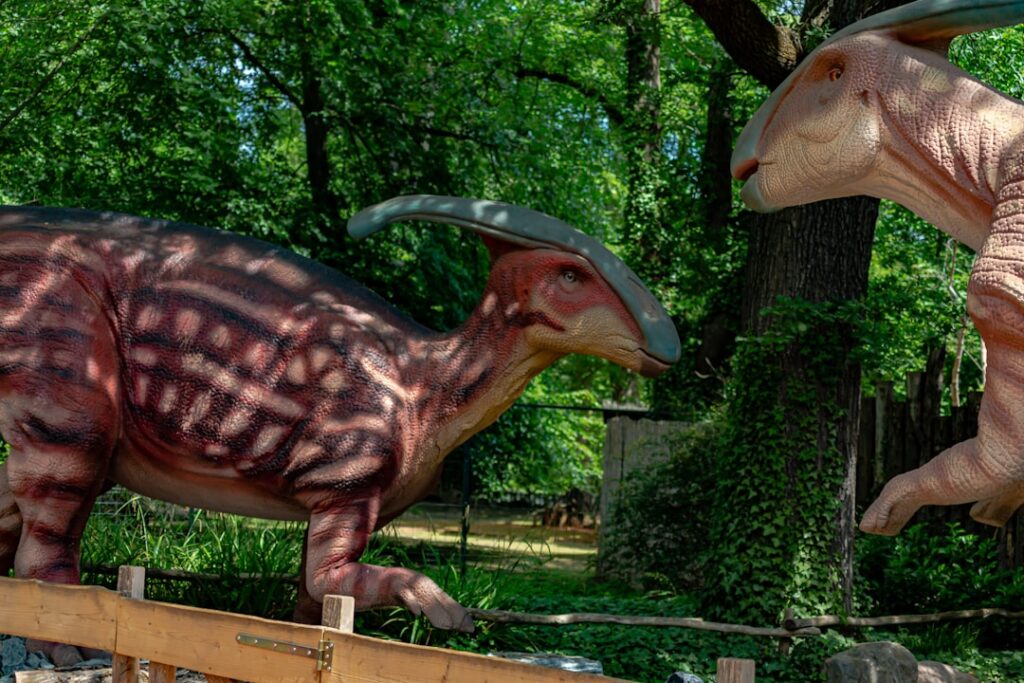
Parasaurolophus’ most striking feature, the backward-sweeping crest, extended up to 1.8 meters in adults. Early theories proposed snorkeling or combat uses, but evidence points to acoustic amplification. Air passed through nasal passages within the hollow crest, producing resonant, low-frequency calls akin to foghorns.
These sounds carried across foggy coastal plains, coordinating herds or signaling alarms. The 2017 New Mexico skull confirmed the crest’s growth from a simple tube in juveniles to a complex chamber in maturity, optimizing sound production. Visual displays likely complemented these vocals during social interactions.
Facing Predators: Herd Strength and Swift Retreats
Tyrannosaurids like Daspletosaurus and Gorgosaurus stalked the same habitats, posing constant risks. Parasaurolophus countered through group living. Herds offered safety in numbers, confusing attackers and allowing collective vigilance.
Individuals relied on speed when isolated. Bipedal dashes outpaced pursuers over short distances, while tail lashes and kicks deterred close approaches. Environmental awareness – sticking to open areas or dense cover – further bolstered defenses. Fossil bonebeds hint at mass deaths from floods rather than predation, underscoring herd dynamics.
Coordinated calls from crests likely rallied the group during threats, enhancing survival odds.
Key Takeaways
- Grinding dental batteries fueled a plant-based diet suited to tough Cretaceous flora.
- Dual locomotion enabled foraging efficiency and rapid predator evasion.
- Crest-generated calls fostered herd communication over vast distances.
Parasaurolophus exemplified adaptation in a predator-filled world, blending physical prowess with social ingenuity. These revelations from Canadian and New Mexican fossils continue to reshape our understanding of hadrosaur life. What strategies do you think proved most vital for its endurance? Share your thoughts in the comments.