Recent experiments have pinpointed the underwater hearing capabilities of Kemp’s ridley sea turtles, highlighting vulnerabilities to human-generated sounds in their ocean habitat.
Sea Turtles Tune In to Survival Sounds
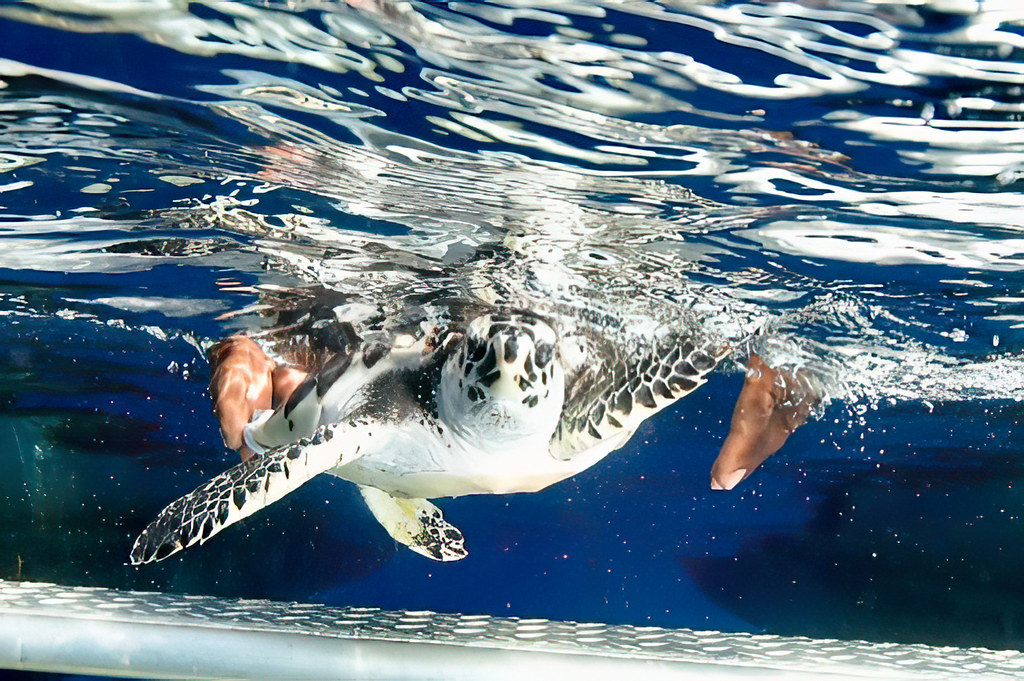
Sea Turtles Tune In to Survival Sounds (Image Credits: Flickr)
Marine animals like sea turtles depend on acoustic cues to orient themselves and detect threats in the vast underwater realm. These creatures process sounds that guide migration, foraging, and predator avoidance. Yet, gaps in knowledge about their auditory systems persisted until now.
Researchers addressed this void through targeted tests on Kemp’s ridley sea turtles, a species listed as endangered since 1970. The findings, detailed in a study published in the Journal of the Acoustical Society of America, mark a crucial advancement. This work underscores how sound shapes their daily existence.
Noninvasive Methods Unlock Turtle Hearing
Teams fitted noninvasive sensors to the turtles’ heads to monitor brain responses to various frequencies. They exposed the animals to tones spanning 50 Hz to 1,600 Hz underwater. Such techniques avoided harm while capturing precise neural reactions.
This approach revealed the Kemp’s ridley as a low-frequency hearing specialist. The tests confirmed sensitivity peaked within a narrow band. Results provided baseline data absent from prior studies on this species.
Hearing Range Aligns with Perilous Noise Sources
The turtles proved most responsive between 200 and 300 Hz. This range overlaps significantly with dominant sounds from human activities, which often fall below 400 Hz. Ships generate steady hums, seismic surveys blast impulses, and industrial operations emit rumbles – all within the turtles’ detection zone.
Exposure to these noises carries multiple risks. Physical damage can occur at high intensities. Behavioral shifts follow, including altered navigation paths.
- Ships: Propeller and engine vibrations disrupt long-distance travel.
- Seismic blasting: Air gun pulses used in oil exploration startle and disorient.
- Industrial development: Construction sounds mask natural cues for communication and hunting.
Conservation Calls for Smarter Noise Management
Armed with this auditory profile, experts now advocate for tailored protections. Noise pollution not only injures but also drives turtles from vital habitats and conceals essential environmental signals. Mitigation demands frequency-specific strategies, such as quieter vessel designs or timed operations.
Understanding these sensitivities forms the foundation for policy changes. Wildlife managers can integrate findings into habitat safeguards. Ongoing monitoring will track cumulative effects over time.
Key Takeaways
- Kemp’s ridley sea turtles hear best at 200–300 Hz, matching common human noise bands.
- Anthropogenic sounds risk injury, displacement, and sensory masking.
- New data paves the way for targeted conservation amid rising ocean activity.
These revelations stress the need to quiet our oceans for species on the brink. As human presence expands underwater, balancing development with wildlife needs grows urgent. What steps should industries take next? Share your thoughts in the comments.