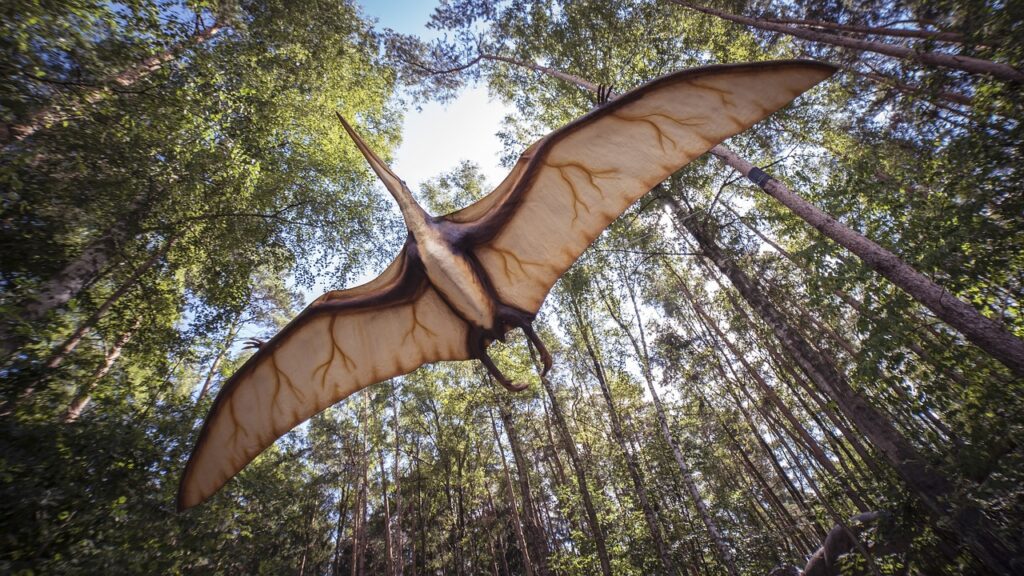
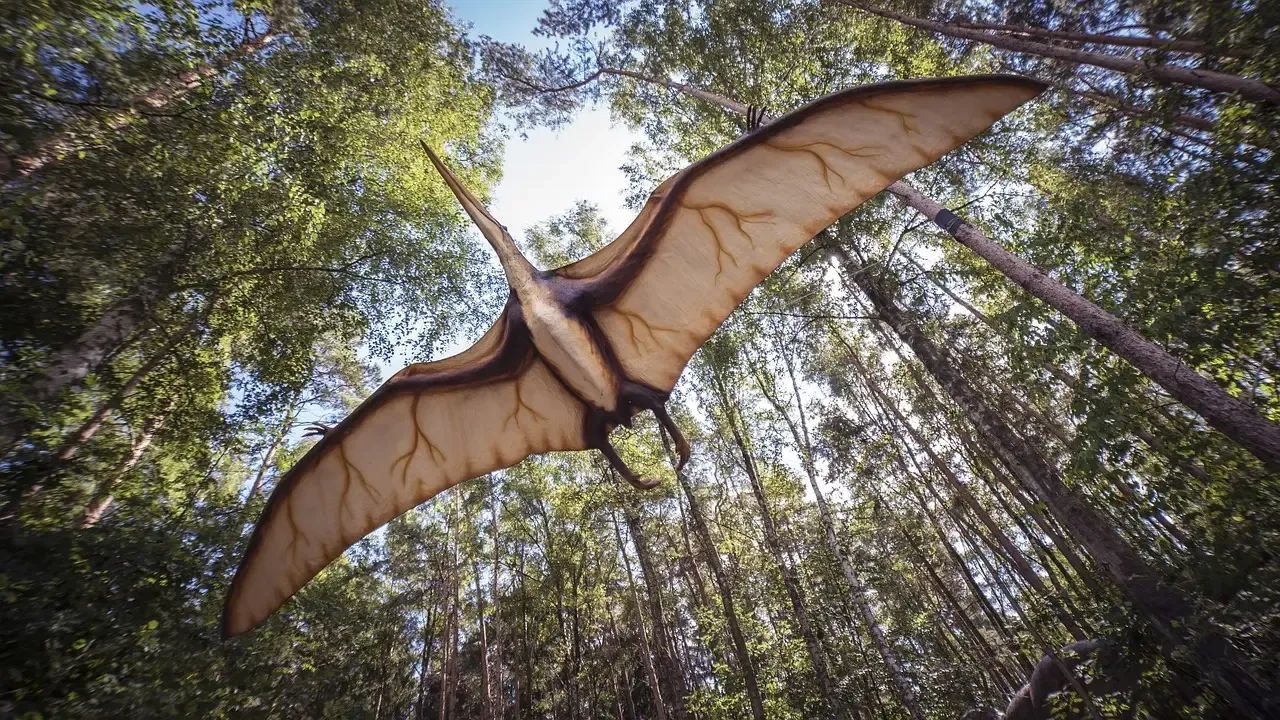
Picture yourself standing beneath a clear blue sky millions of years ago, only to witness a shadow sweeping across the landscape. The silhouette above belongs to a creature with wings spanning wider than a small aircraft, gliding effortlessly on ancient wind currents. These weren’t birds, and contrary to popular belief, they weren’t dinosaurs either. They were pterosaurs, the absolute masters of prehistoric skies.
These remarkable flying reptiles existed from the Late Triassic through the end of the Cretaceous period, roughly 228 to 66 million years ago, and they were the first vertebrates to evolve powered flight. Long before birds took to the air and millions of years before bats evolved, pterosaurs had already perfected the art of soaring. Let’s dive into the world of these astonishing creatures and uncover what made them such successful rulers of ancient skies.
The Revolutionary Wing Design That Changed Everything
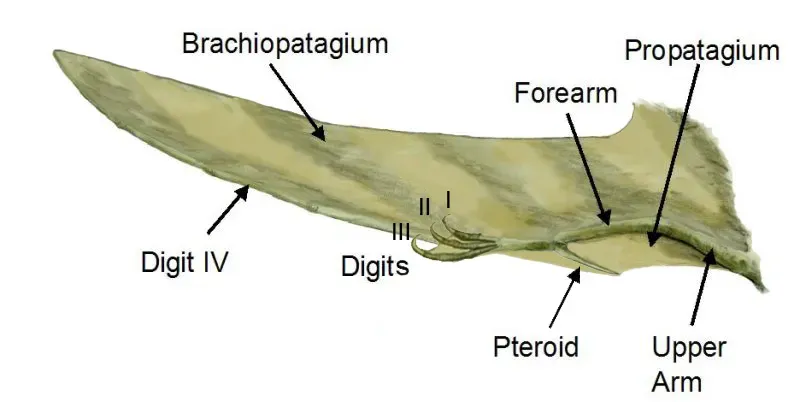
Unlike birds with feathers, pterosaurs developed wings formed by a membrane of skin stretched from the ankles to a dramatically elongated fourth finger. Think of it like the ultimate natural engineering marvel. This wing membrane wasn’t just a simple flap of skin either.
The outer wings were strengthened by closely spaced fibers called actinofibrils, which consisted of three distinct layers forming a crisscross pattern. The wing membranes also contained muscle tissue, fibrous structures, and a complex circulatory system of looping blood vessels. Honestly, when you look at the complexity, you realize these weren’t primitive gliders but sophisticated flying machines.
Hollow Bones and Lightweight Bodies Built for Flight
Pterosaur bones were hollow and air-filled like those of birds, providing higher muscle attachment surfaces for a given skeletal weight, with bone walls that were often paper-thin. Imagine the delicate balance required here. Too thin and the bones would shatter on landing. Too thick and they’d never get off the ground.
Pterosaurs possessed a highly effective flow-through respiratory system capable of sustaining powered flight, predating birds’ analogous breathing systems by roughly seventy million years, with body density reduction made possible by expansion of the pulmonary air sac system throughout the trunk and limb girdle skeleton. This respiratory innovation wasn’t just about breathing efficiently. It fundamentally transformed how large these creatures could grow while maintaining flight capability.
Brain Power and Flight Control Systems
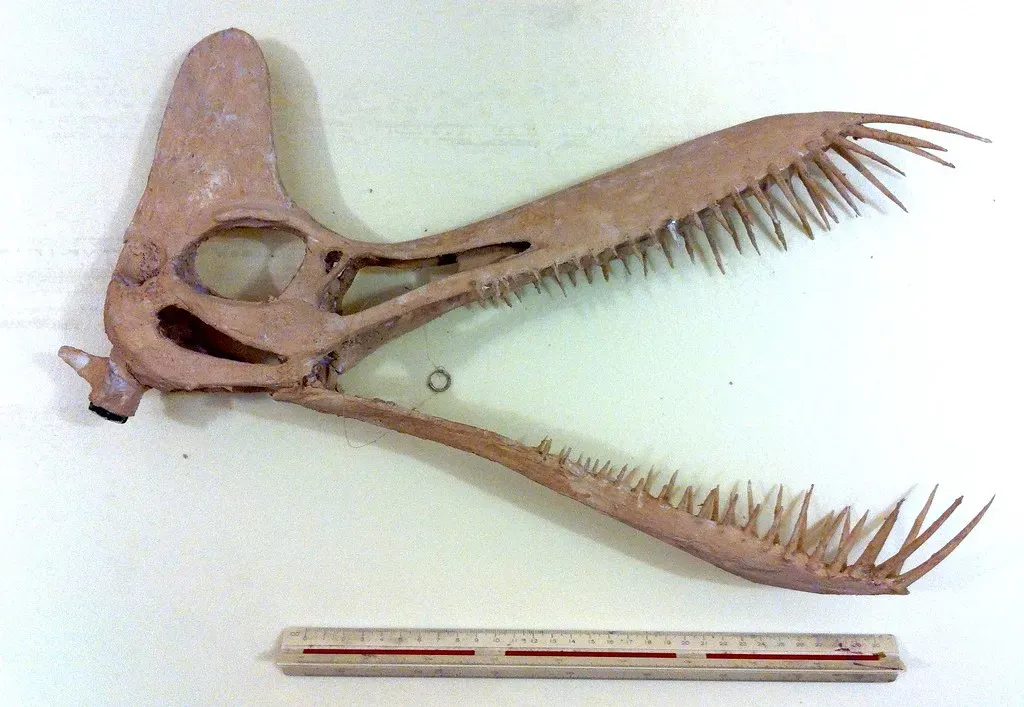
Here’s the thing: flying demands serious brainpower. Pterosaurs had large and keeled breastbones for flight muscles and enlarged brains able to coordinate complex flying behavior. Their neural architecture had to process information about wind speed, direction, altitude, and prey location simultaneously.
Recent research reveals that pterosaur brains quickly transformed, acquiring everything needed for flight from the beginning, whereas modern birds acquired flight through a more gradual, step-by-step process. The brain was large and comparable in structure to that of birds, with sight rather than smell appearing to be the dominant sense. This visual dominance makes perfect sense when you’re hunting from hundreds of feet in the air.
Size Diversity: From Sparrow to Aircraft
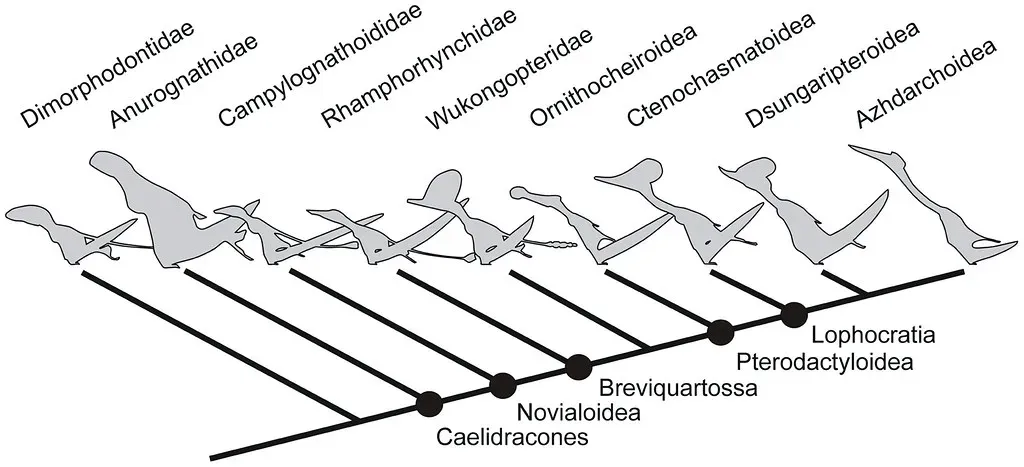
Pterosaurs colonized all continents and evolved a vast array of shapes and sizes, with the smallest measuring no bigger than a sparrow and the largest reaching wingspans of nearly 40 feet, wider than an F-16 fighter. Let’s be real, that’s an absolutely staggering range of body sizes for one group of animals.
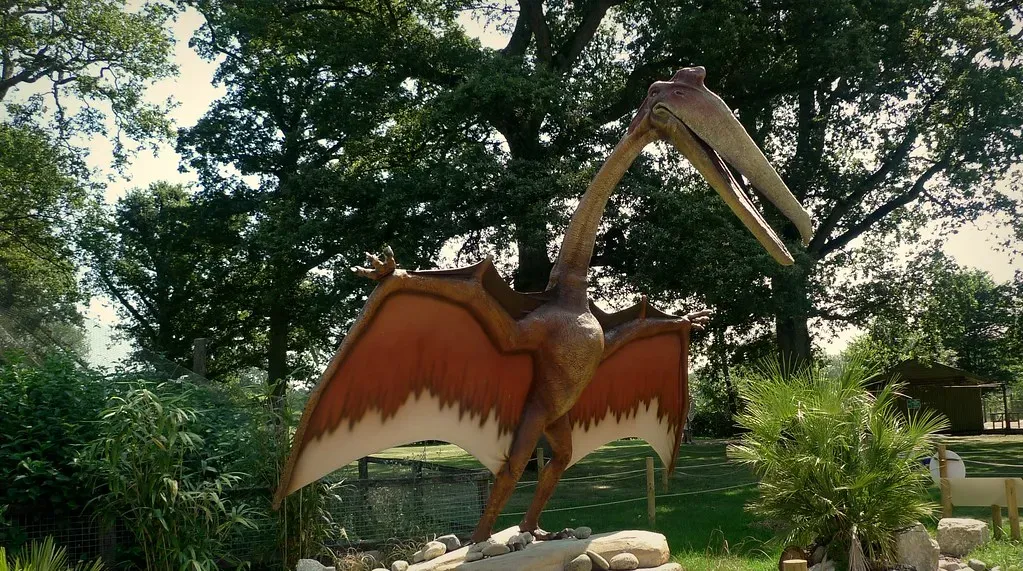
Quetzalcoatlus northropi, widely believed to have been the largest flying creature that ever lived, stood about 5 meters tall and had wingspans reaching up to 11 meters. By contrast, early genera like Eudimorphodon and Peteinosaurus from Italian Triassic deposits had wingspans of less than 1 meter, while Dimorphodon from Early Jurassic England measured about 1.5 metres from wingtip to wingtip.
Sophisticated Hunting Strategies and Diverse Diets
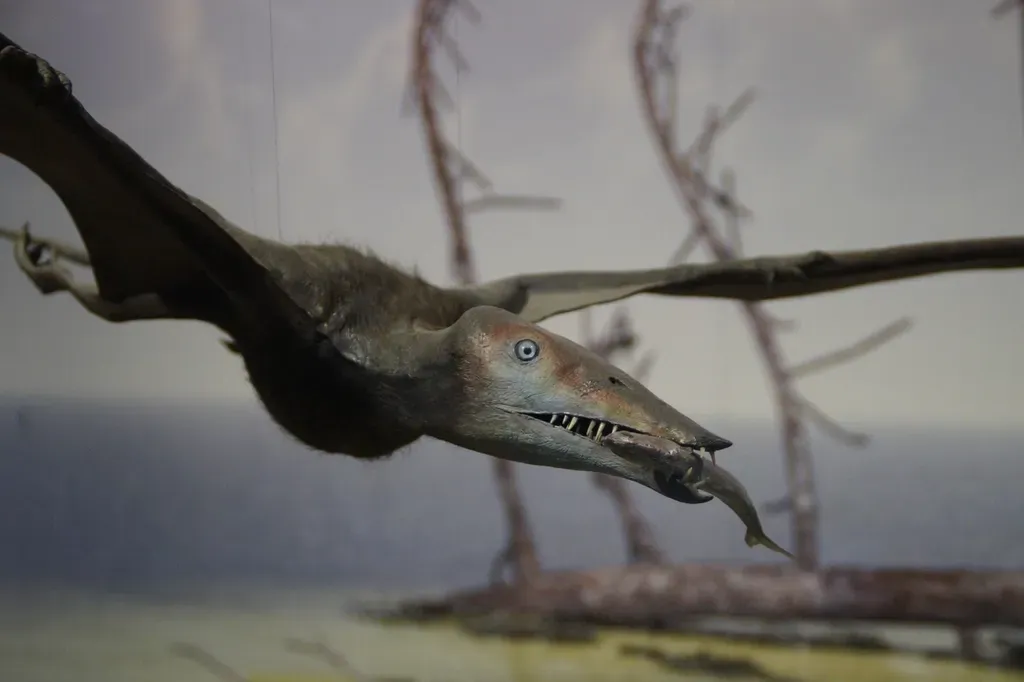
Traditionally seen as fish-eaters, pterosaurs are now understood to have included hunters of land animals, insectivores, fruit eaters, and even predators of other pterosaurs. Different species evolved remarkably specialized feeding strategies. Some had needle-like teeth for snatching fish, while others developed crushing jaws for shellfish.
Azhdarchidae are now understood to be terrestrial predators similar to ground hornbills or some storks, eating any prey they could swallow whole, with Hatzegopteryx being a robustly built predator of relatively large prey, including medium-sized dinosaurs. The discovery of a fossil squid with an embedded pterosaur tooth provided the first proof that pterosaurs also hunted squid, with the tooth fitting the size and shape for Rhamphorhynchus.
Flight Mechanics: Leaping Into the Air
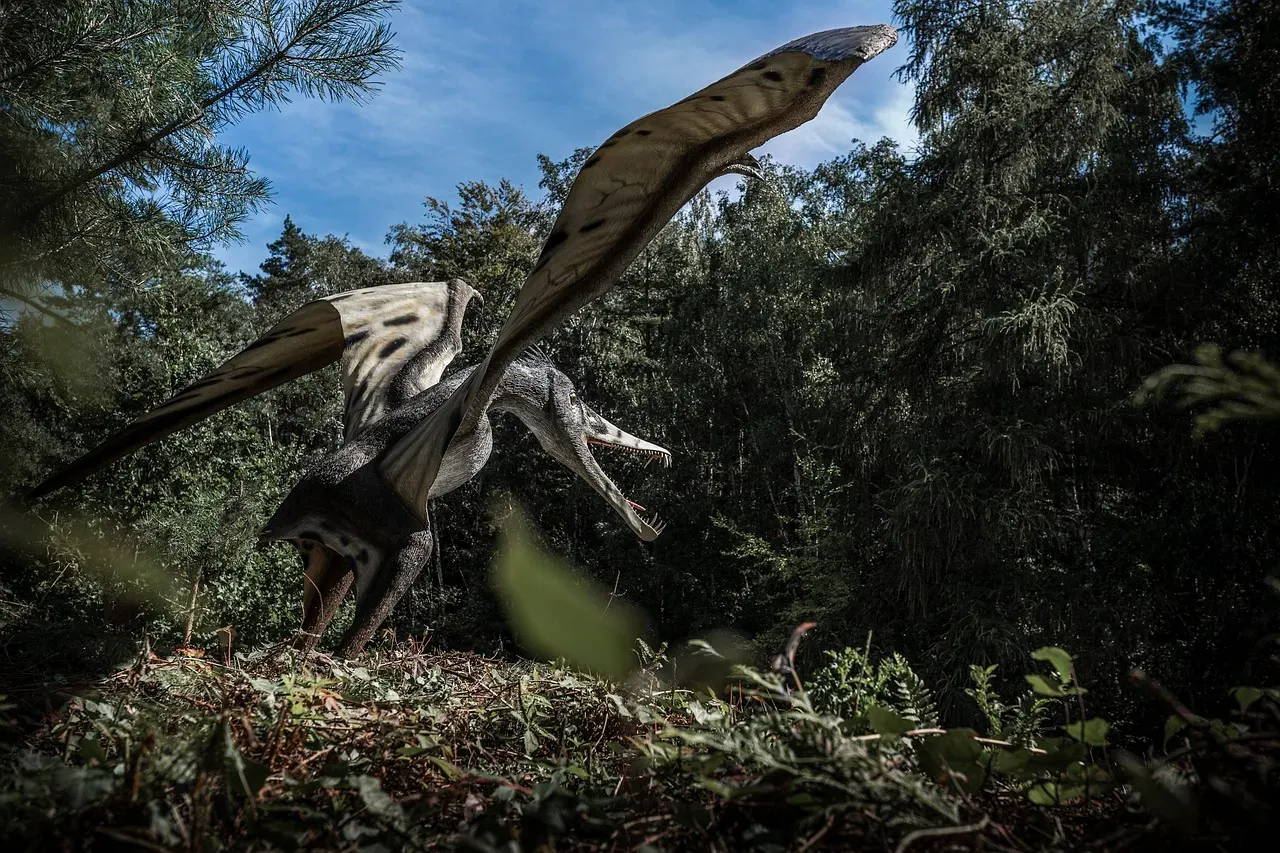
How exactly did these creatures get airborne? It’s hard to say for sure, but recent biomechanical studies have provided fascinating insights. Because of their massive wings, Quetzalcoatlus likely took off by leaping some 2.5 meters into the air, and with enough of a jump could flap powerful wings to reach an altitude at which it could soar like a condor.
Larger pterosaur species may have been like albatrosses, using air currents to generate lift and soar over long distances while only occasionally flapping their giant wings, whereas smaller pterosaurs with shorter wings would likely have been much more agile in the air. The variety in flight styles reflects the incredible adaptive radiation these animals underwent.
Social Behavior and Nesting Colonies
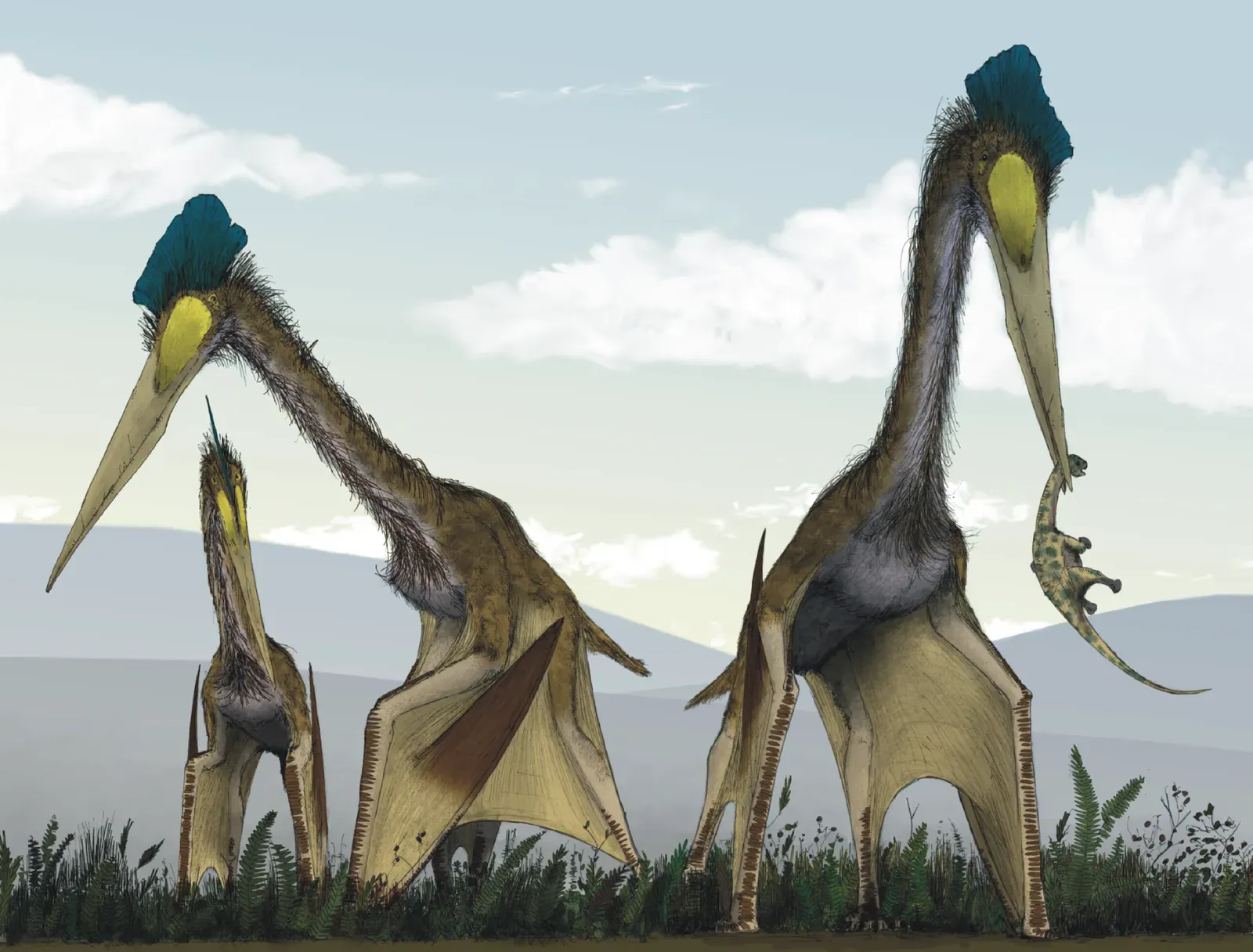
Were pterosaurs solitary hunters or social creatures? The larger Quetzalcoatlus might have lived like today’s herons, hunting alone in rivers and streams, while the smaller species appeared to flock together in lakes with at least 30 individuals found at a single fossil site. This suggests complex social structures.
Although pterosaur eggs are extremely rare in the fossil record, recent discoveries revealed that pterosaur eggs were soft and leathery similar to those of modern reptiles, with some fossil sites showing evidence of pterosaur nesting grounds suggesting communal nesting behaviors. Imagine colonies of these winged reptiles gathered together, caring for their young in prehistoric nesting sites.
Thriving Until the Very End

A diverse pterosaur assemblage from the late Maastrichtian of Morocco includes not only Azhdarchidae but the youngest known Pteranodontidae and Nyctosauridae, with 3 families and at least 7 species present, representing the most diverse known Late Cretaceous pterosaur assemblage. This discovery challenges the old notion that pterosaurs were in decline before their extinction.
Late Maastrichtian pterosaurs showed increased niche occupation relative to earlier faunas and successfully outcompeted birds at large sizes, with these patterns suggesting an abrupt mass extinction of pterosaurs at the Cretaceous-Paleogene boundary. Their extinction was likely caused by the same events that saw the demise of dinosaurs, associated with the Chicxulub bolide impact, and their history was not one of gradual decline but one of relatively high species diversity throughout.
Conclusion: An Evolutionary Triumph Cut Short
Pterosaurs first appeared during the Triassic period 215 million years ago and thrived for 150 million years before going extinct at the end of the Cretaceous period, an endurance record almost inconceivable compared with humans whose ancestors started walking upright less than four million years ago. Their reign over prehistoric skies represents one of evolution’s greatest success stories.
These magnificent creatures perfected powered flight long before any other vertebrate group, developed extraordinarily complex anatomy, and dominated aerial ecosystems across the entire Mesozoic Era. From tiny insect hunters to giraffe-sized apex predators, pterosaurs showcased evolutionary innovation at its finest. Their sudden disappearance 66 million years ago left the skies open for birds to diversify and eventually inherit the aerial realm.
What do you think would have happened if pterosaurs had survived the asteroid impact? Could they have coexisted with modern birds, or would competition have driven one group to extinction anyway?