Imagine an ocean where the water’s surface hides not just fish and sharks, but colossal, streamlined reptiles the length of school buses, gliding through the depths with bone-crushing force and extraordinary speed. Long before whales and dolphins inherited the seas, another dynasty reigned. It was a dynasty of scales, flippers, and terrifying intelligence, one that ruled the planet’s oceans for an almost incomprehensible stretch of time.
Long before whales and sharks, enormous marine reptiles dominated the oceans with unmatched power. These creatures left behind fossils that continue to astound scientists and rewrite everything we thought we knew about ancient life. The deeper you dig into their story, the more spectacular it gets. So let’s dive in.
From Land to Sea: The Evolutionary Leap That Changed Everything
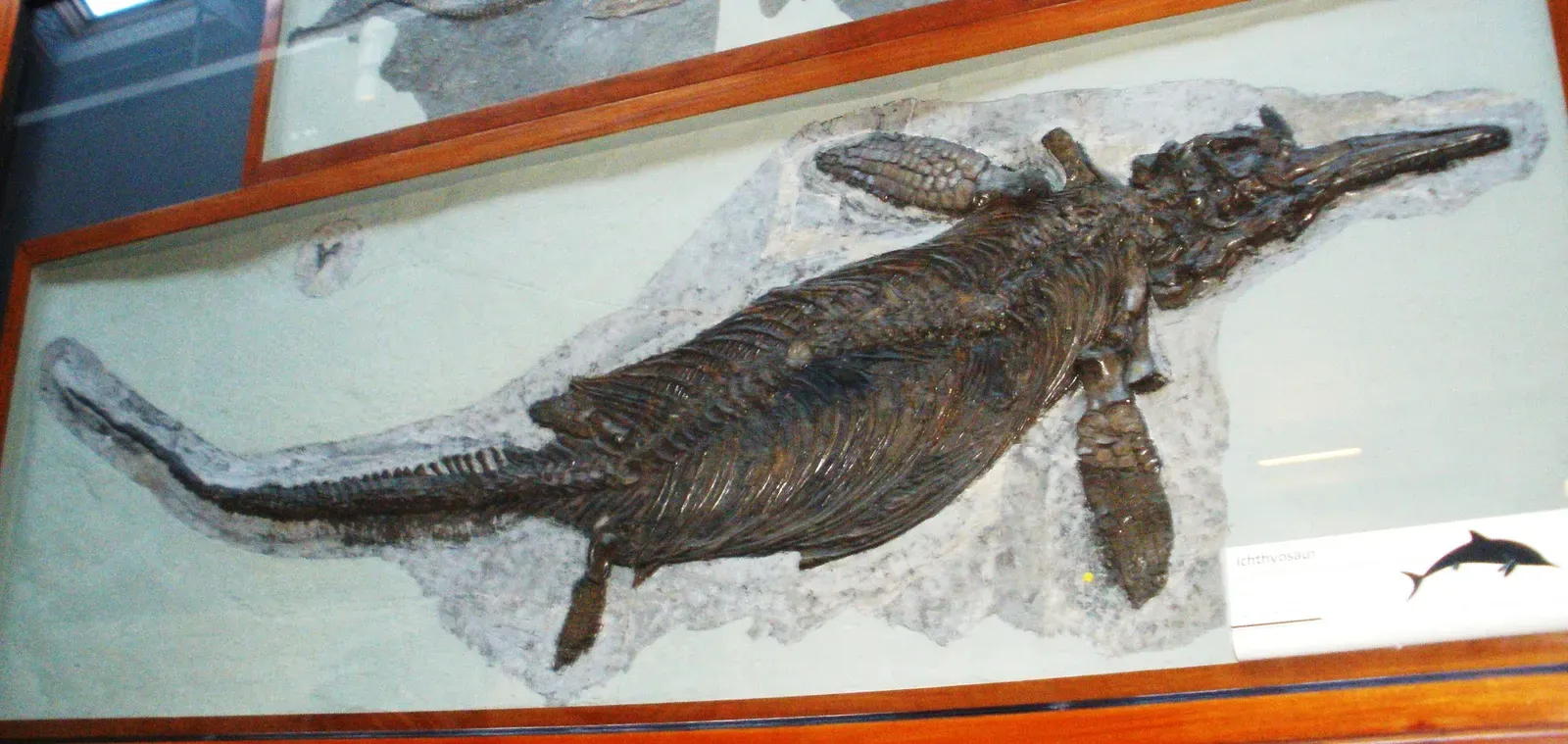
During the Early Triassic epoch, ichthyosaurs and other ichthyosauromorphs evolved from a group of unidentified land reptiles that returned to the sea, in a development similar to how the mammalian land-dwelling ancestors of modern-day dolphins and whales returned to the sea millions of years later, which they gradually came to resemble in a case of convergent evolution. Here’s the thing – that parallel is genuinely mind-blowing. Two completely separate lineages, separated by millions of years, arrived at nearly the same body plan simply because the ocean demanded it.
The earliest marine reptile was Mesosaurus, which arose in the Permian period of the Paleozoic era. During the Mesozoic era, many groups of reptiles became adapted to life in the seas, including such familiar clades as the ichthyosaurs, plesiosaurs, mosasaurs, nothosaurs, placodonts, sea turtles, thalattosaurs and thalattosuchians. What you’re looking at is arguably the most diverse aquatic takeover in Earth’s history, one that unfolded across hundreds of millions of years of relentless adaptation.
Ichthyosaurs: The Speed Demons of the Ancient Deep
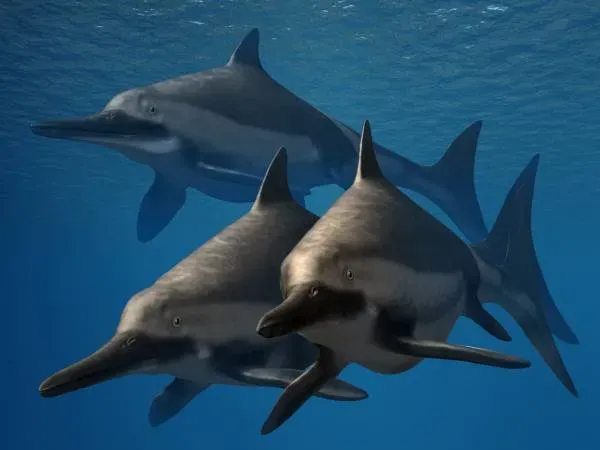
In 1994, researchers concluded that ichthyosaurs had been the fastest marine reptiles. Their length to depth ratio was between three and five, the optimal number to minimise water resistance or drag. Their smooth skin and streamlined bodies prevented excessive turbulence. Think of them as the sports cars of the Mesozoic ocean, built for efficiency from nose to tail.
Their hydrodynamic efficiency, the degree to which energy is converted into forward movement, would approach that of dolphins and measure about 0.8. Ichthyosaurs would be a fifth faster than plesiosaurs, though half of the difference was explained by assuming a higher metabolism for ichthyosaurs. Based on fossil evidence, they first appeared around 250 million years ago and at least one species survived until about 90 million years ago, into the Late Cretaceous. That is an extraordinary run for any animal lineage, honestly.
Plesiosaurs: Long-Necked Lords of 135 Million Years
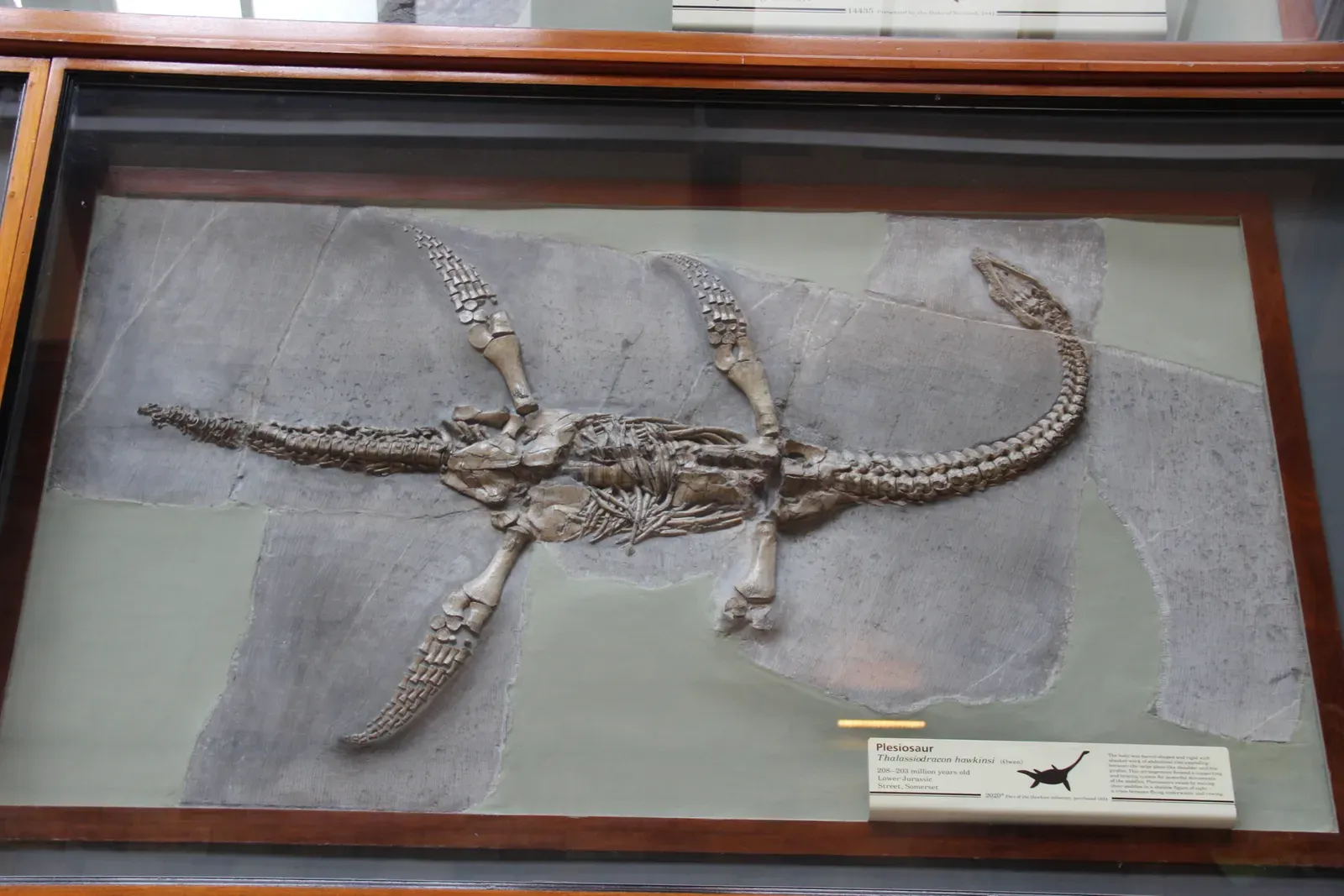
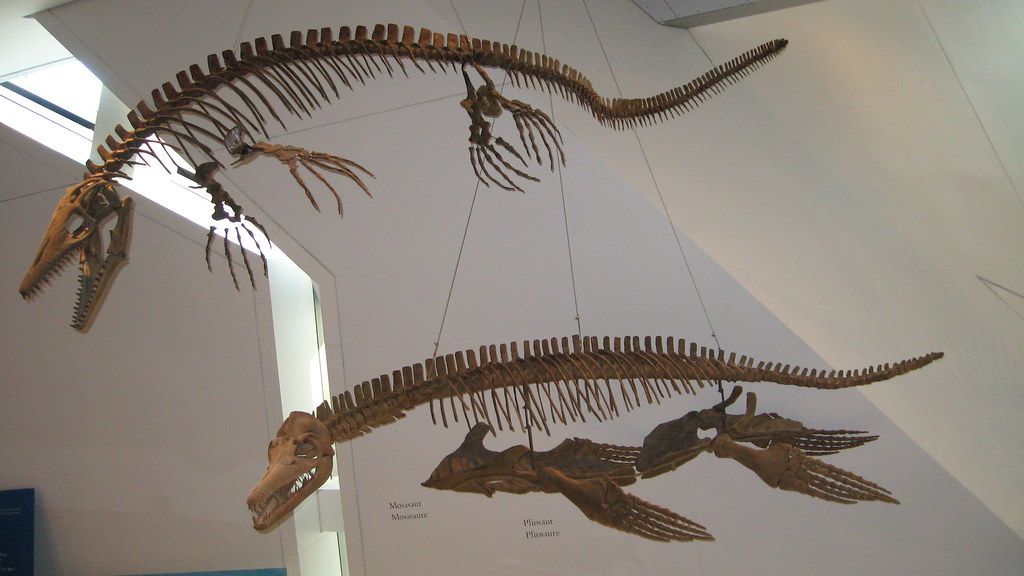
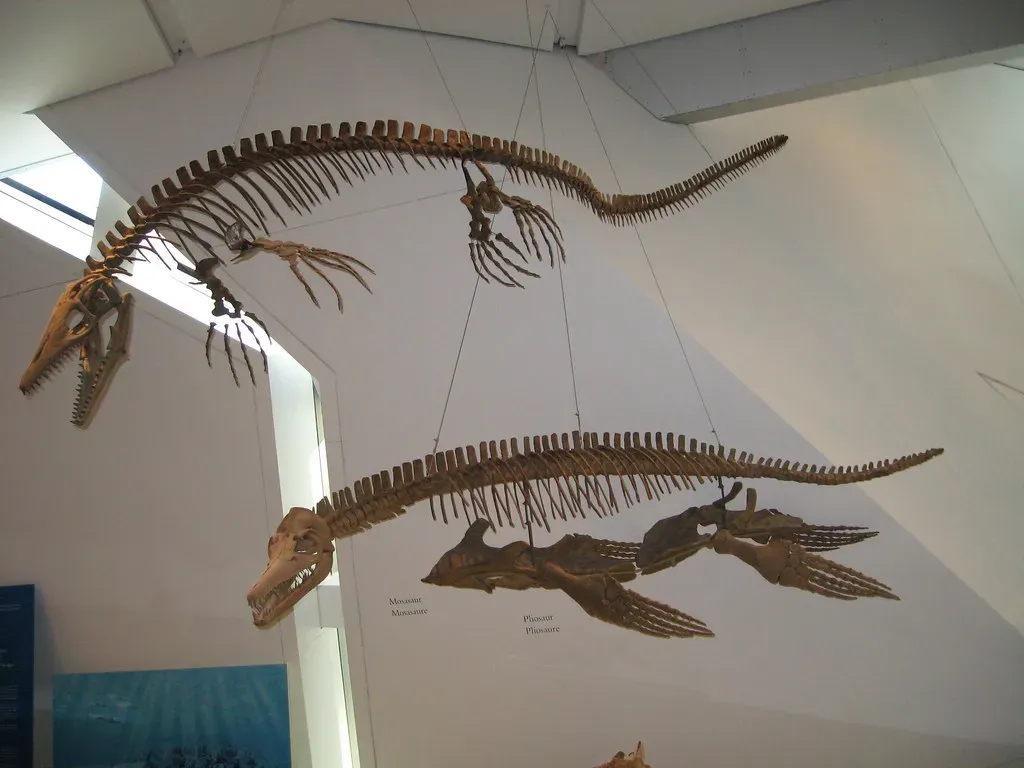
Few prehistoric animals are as instantly recognizable or as endlessly fascinating as plesiosaurs. With their long, flexible necks, compact bodies, powerful flippers, and tooth-filled jaws, plesiosaurs look almost designed to spark curiosity. They lived alongside dinosaurs, yet they were not dinosaurs at all. Instead, they ruled the oceans for over 135 million years, surviving multiple extinction events and diversifying into one of the most successful groups of marine reptiles in Earth’s history.
Some plesiosaurs had necks longer than their entire bodies, with as many as 70 or more vertebrae, more than any other known vertebrate animal. Others went in a completely different direction, abandoning long necks in favor of massive skulls, short muscular necks, and immense bite strength. These short-necked forms are commonly known as pliosaurs, and they represent one of the most extreme predatory body plans ever to evolve in the sea. Two radically different strategies, both spectacularly successful. Nature really does love variety.
Mosasaurs: The Late Arrivals Who Took Over Everything
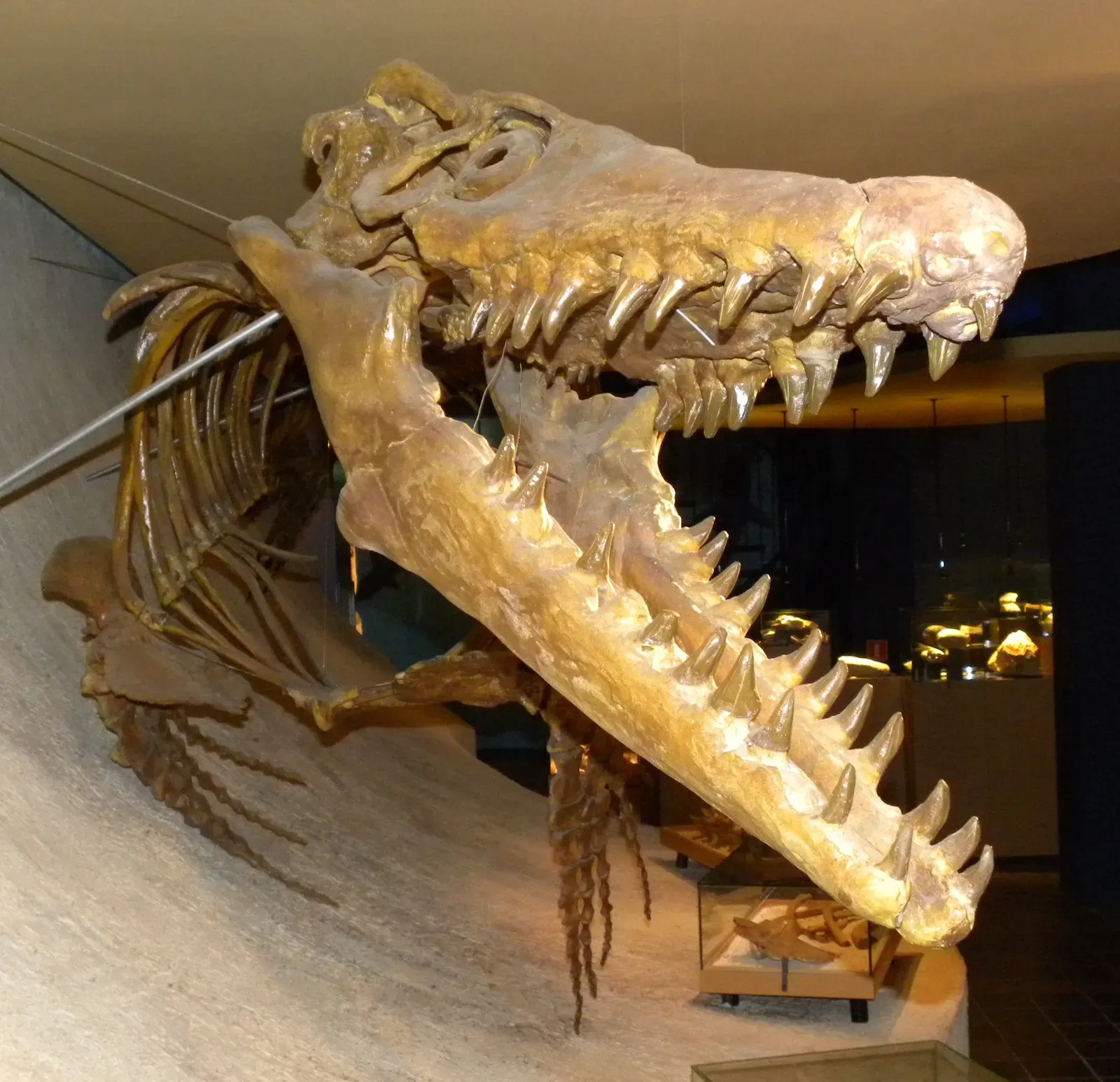
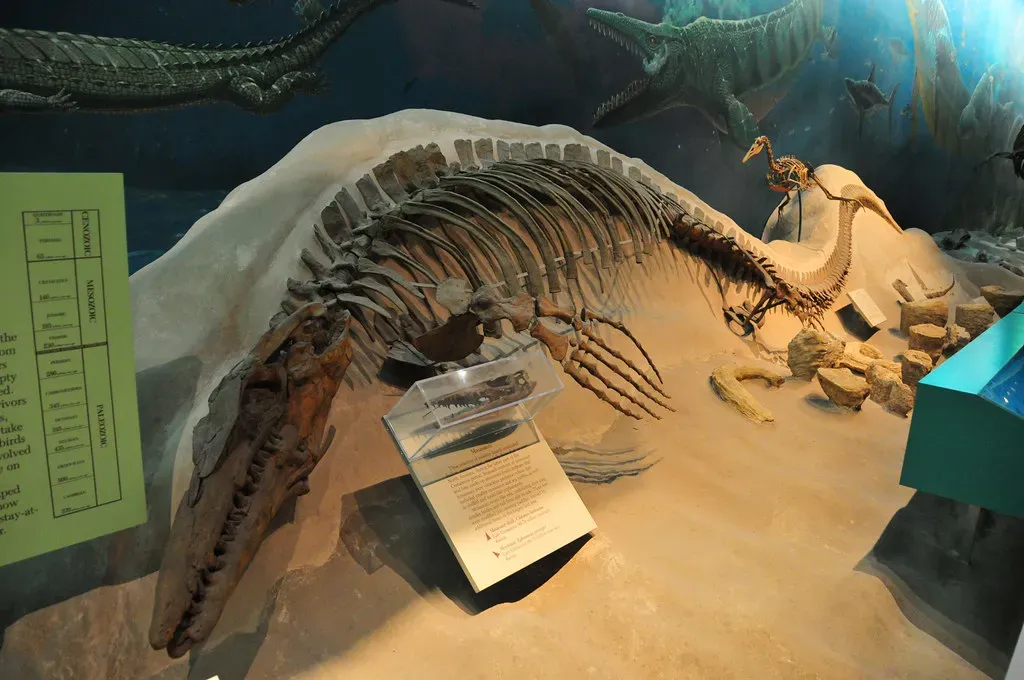
These extinct marine reptiles dominated the seas during the Late Cretaceous Period, roughly 90 to 66 million years ago, at a time when dinosaurs ruled the land and marine ecosystems were filled with equally dramatic giants. With some species growing to lengths of more than 50 feet, mosasaurs were the undisputed apex predators of their environment, powerful hunters that sat at the very top of the marine food chain.
The first mosasaurs appeared about 90 million years ago, evolving from land-dwelling reptiles closely related to modern monitor lizards. In fact, their closest living relatives include animals such as the Komodo dragon. Over time, these reptiles made a remarkable transition from life on land to life in the ocean. Their limbs transformed into paddle-like flippers, perfectly suited for swimming, and their bodies became streamlined for chasing prey through open water. The idea that something so closely related to the Komodo dragon once ruled the seas is, I think, one of the stranger and more wonderful facts in all of paleontology.
Warm Blood in Cold Water: A Physiological Revolution
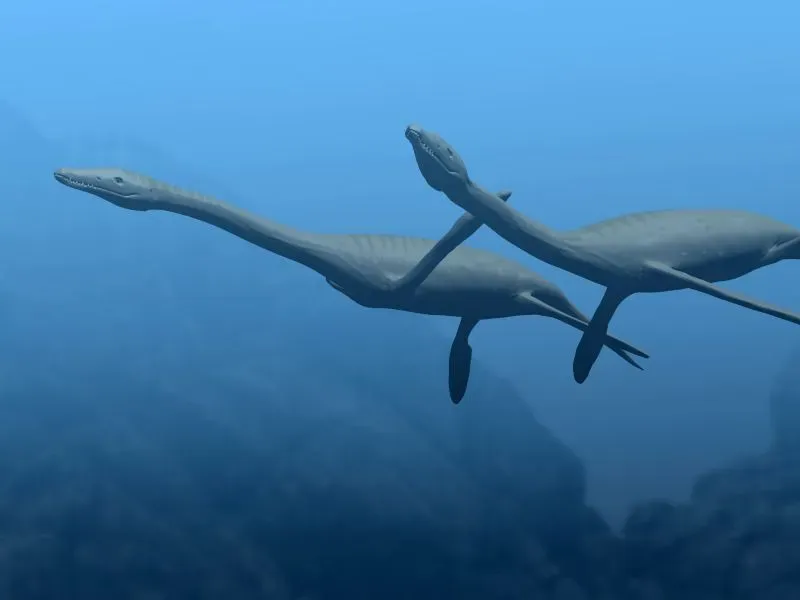
During the past half-century, paleontologists have realized that dinosaurs and other prehistoric reptiles once thought to be “cold-blooded” and similar to living reptiles actually maintained high, often constant body temperatures. The same realization has bubbled up around marine reptiles. This changes everything about how you picture these animals moving through the ocean, alert, active, and aggressively hunting around the clock.
A 2010 study of extinct marine reptiles compared geochemical proxies for temperature in fossil teeth with those found in the fossils of extinct fish, generally regarded as having body temperatures heavily influenced by ocean temperature. The researchers found that both ichthyosaurs and plesiosaurs had elevated body temperatures compared with the fish. The reptiles were likely warm-blooded, which is consistent with the idea that they actively pursued prey instead of hunting by ambush as a crocodile does.
The Hyper-Apex Predators: A Seventh Level of the Food Chain
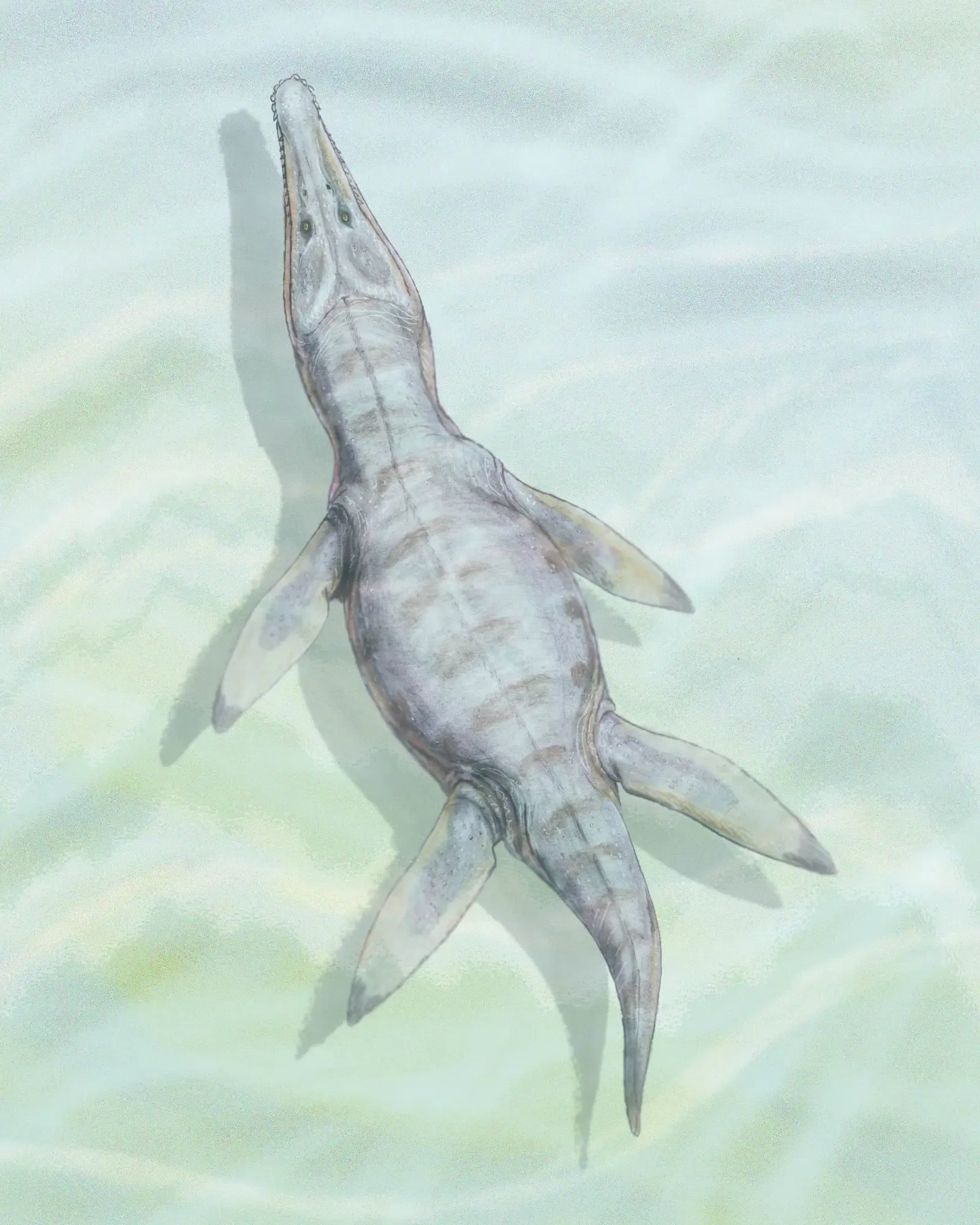
Ancient oceans once hosted super-predators so powerful they occupied a higher food-chain level than any animal alive today. Around 130 million years ago, the ocean’s most dominant hunters held far more power than any marine predator alive today. Recent research from McGill University reveals that during the Cretaceous period, some sea creatures sat at the very top of an extraordinarily complex food chain, surpassing modern standards of ecological dominance.
In today’s oceans, food chains typically reach six levels, with animals such as great white sharks and orcas sitting at the top. However, researchers discovered that there was a previously unseen seventh level that was filled with enormous marine reptiles. Some, such as Sachicasaurus and Monquirasaurus, could grow up to and beyond 10 metres long and are known as hyper-apex predators. That means these animals sat above anything that exists in the ocean today. Let that sink in for a moment.
Remarkable Adaptations: Bodies Built for the Deep
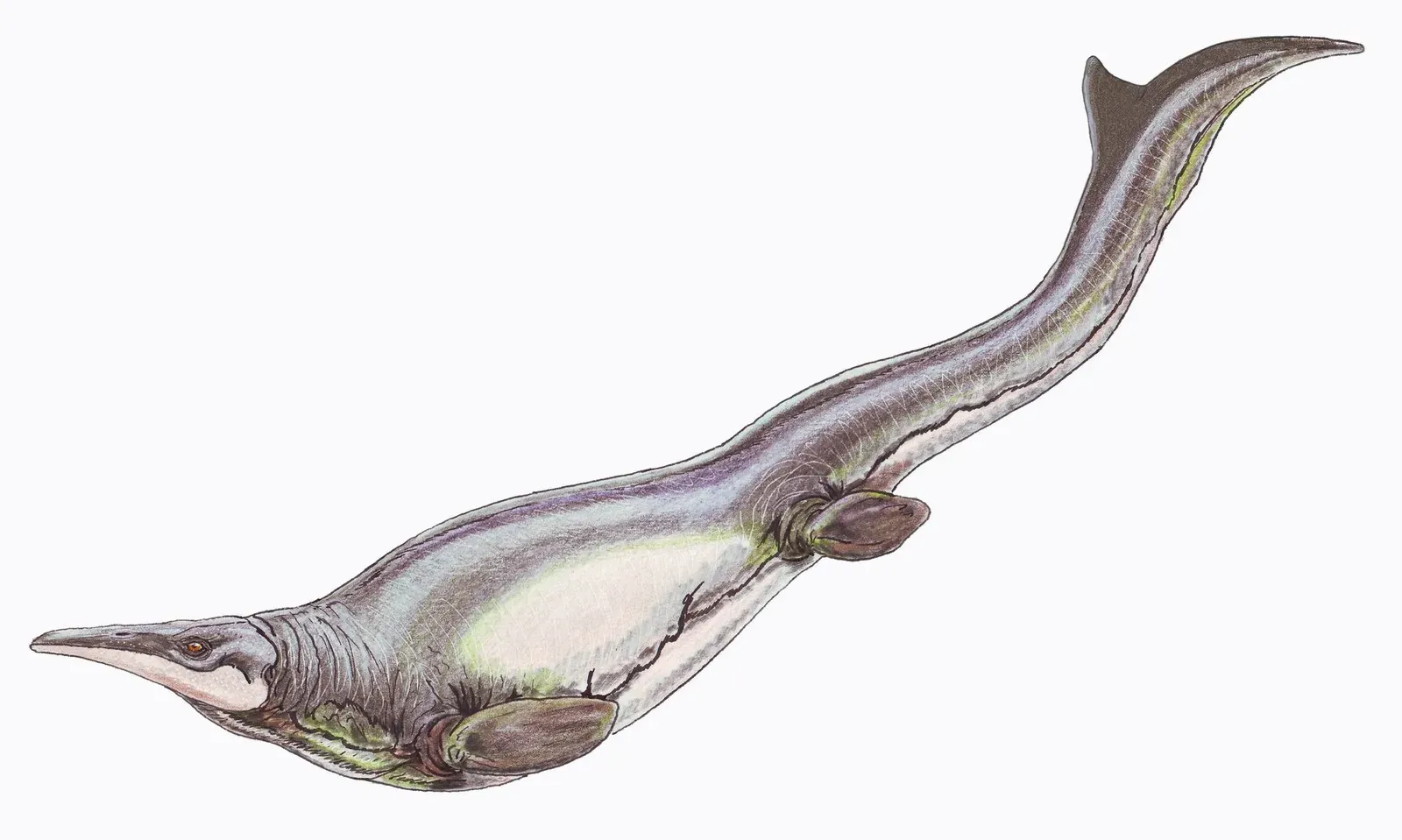
Prehistoric marine reptiles thrived due to a combination of evolutionary adaptations such as streamlined bodies, flippers for efficient swimming, and specialized feeding mechanisms. These adaptations allowed them to exploit various ecological niches in the marine environment, from shallow coastal waters to the open ocean. It’s a bit like comparing a Formula One car to a deep-sea submarine – different tools for wildly different depths and demands.
While ichthyosaurs slid through the water with slick skin, other marine reptiles evolved streamlined scales. A fossil of the large mosasaur Plotosaurus described in 2009 preserved fossil soft tissues along with the bones, including scaly skin. The scales of Plotosaurus were small and roughly similar to those of modern lizards, but they possessed an important specialization. These scales were keeled in such a way that they streamlined the lizard’s body and would have allowed it to swim with less effort, a critical adaptation for a predator thought to have cruised open waters.
Live Birth and Full Ocean Commitment
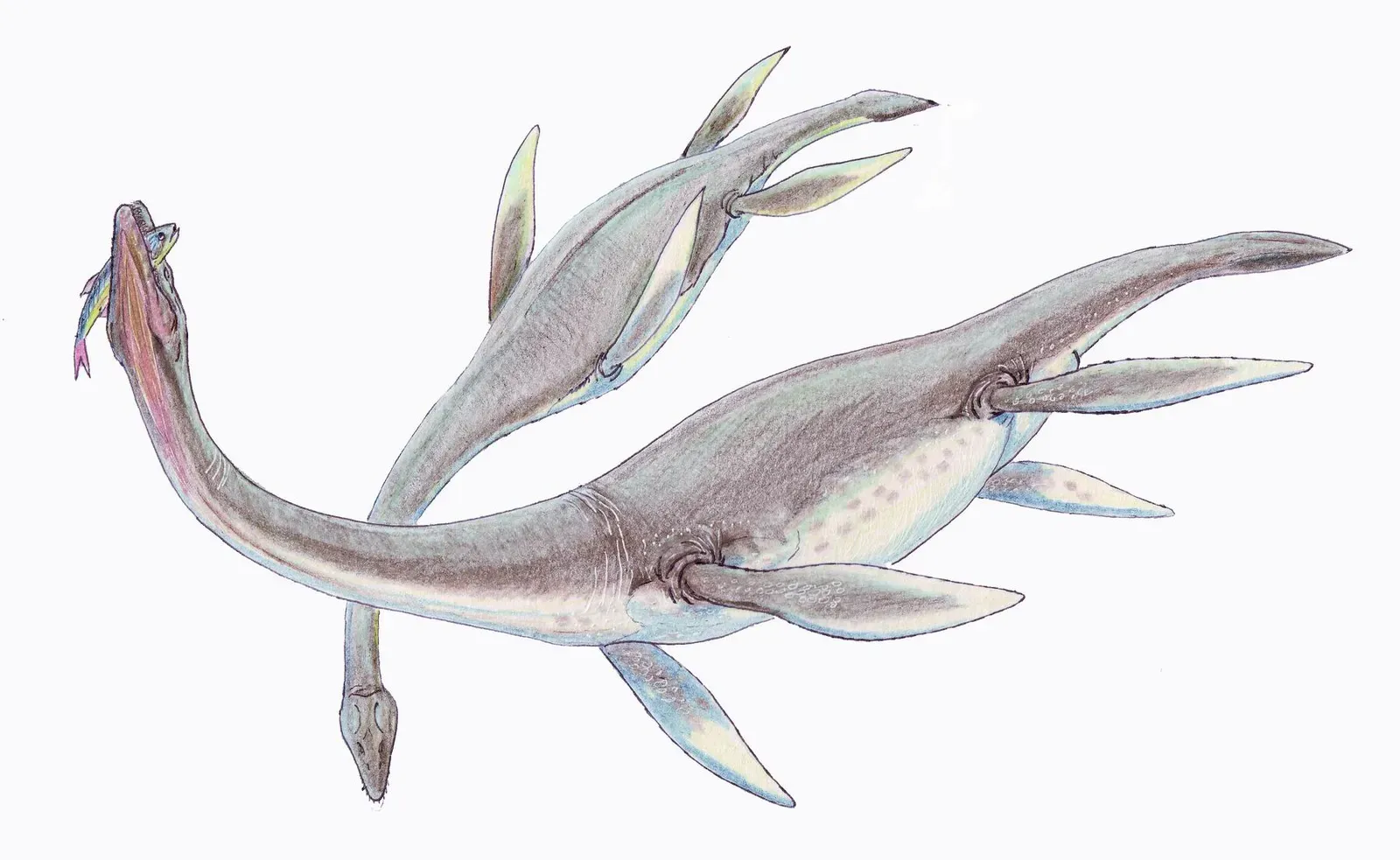
Some marine reptiles, such as ichthyosaurs, plesiosaurs, metriorhynchid thalattosuchians, and mosasaurs became so well adapted to a marine lifestyle that they were incapable of venturing onto land and gave birth in the water. Others, such as sea turtles and saltwater crocodiles, return to shore to lay their eggs. This biological split tells you everything about the different levels of ocean commitment among these groups.
Evidence that plesiosaurs gave live birth further reinforces their fully aquatic lifestyle. This reproductive strategy meant adults never needed to return to land, allowing both plesiosaurs and pliosaurs to exploit offshore feeding grounds throughout their lives. Juveniles were likely born relatively large and well developed, increasing their chances of survival in predator-rich oceans. It’s hard not to feel a little in awe of how completely these animals committed to their world beneath the waves.
Extinction and the Legacy Left Behind
While the plesiosaurs and ichthyosaurs were able to survive the end-Triassic extinction, they didn’t last forever. The last ichthyosaurs died out around 90 million years ago during the Cretaceous after they were unable to adapt to changes in the ocean and the extinction of some of their food sources. Plesiosaurs, meanwhile, lasted until the end of the Cretaceous. They were eventually wiped out during the same extinction event that killed the non-bird dinosaurs.
The extinction of marine reptiles paved the way for the rise of marine mammals in the Cenozoic Era. Marine reptiles dominated Mesozoic oceans, evolving from land-dwelling ancestors. By analyzing isotopes and minerals within their fossils, scientists can reconstruct the climate and environmental conditions of bygone eras, contributing to our understanding of Earth’s ever-changing climate. In other words, even in extinction, these animals are still teaching us something extraordinary about our planet.
Conclusion
Honestly, the story of prehistoric marine reptiles is one of those chapters in natural history that makes the modern ocean feel almost quiet by comparison. You had warm-blooded giants cruising at dolphin-like efficiency, seven-tiered food chains that no living ecosystem can match, and bodies so perfectly engineered for water that land became an impossibility. These were not primitive, lumbering beasts. They were finely tuned, endlessly adaptable rulers of a world that no longer exists.
Their fossils are more than bones. They are blueprints of what life can become when evolution has enough time and enough pressure to work with. The next time you look at the ocean, spare a thought for the giants that came before the whales, the sharks, and everything you think of as powerful today. They were, by almost every measure, in a league of their own.
What do you think is the most astonishing thing about these ancient ocean rulers? Drop your thoughts in the comments below.